

Wrist Support for Arthritis: What to Wear While Cooking, Writing, and Sleeping
Sep 18, 2026


Wrist Support for Arthritis: What to Wear While Cooking, Writing, and Sleeping
When Wrist Pain Changes Ordinary Routines
Wrist pain affects more than just your ability to prepare food, write letters, or get a peaceful night’s sleep. For an aging parent, wrist pain interferes with their daily routines and creates the fear of losing their independence. Arthritic wrist pain affects joints differently from other chronic pain conditions. The goal of a wrist support system is to provide the joint with the correct amount of support and stability during purposeful wrist use, while maintaining pain-free, unrestricted, joint range of motion during all other activities of the day.
Many families think that one brace for all activities is the most convenient option. Cooking, writing, and sleeping each put a unique demand on the wrist, so a support that is comfortable to wear at night could easily be too cumbersome to wear in front of the stove. A supportive writing brace could easily not provide the stability required for chopping. Supportive brace designs, size, comfort for long-term wear, and other control features allow your parent to remain active and involved.
What Arthritis-Related Wrist Pain Feels Like
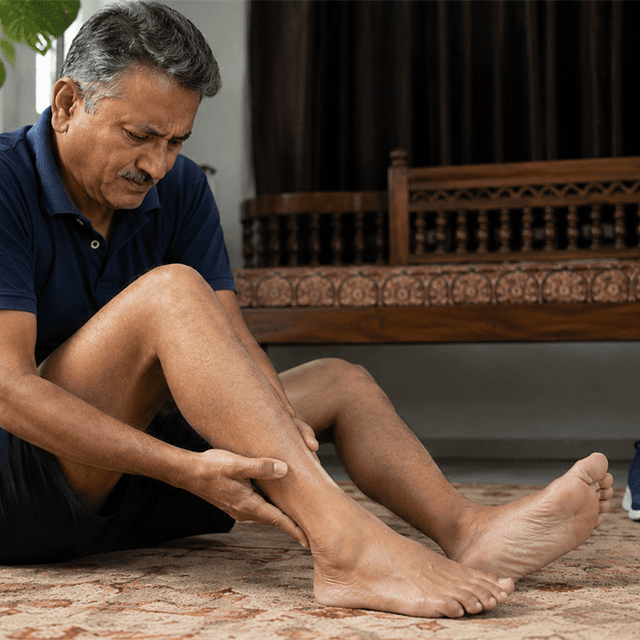
Arthritis in the wrist or thumb joints increases pain, stiffness, swelling, decreased grip, and discomfort with pinching or turning. Your parent may have increased difficulty opening jars, holding a pen, lifting a glass, or turning the faucet on or off. Pain and stiffness are largely activity-dependent, meaning they may increase with activity and ease with rest, although the pattern for each person is unique.
Not all wrist pain is caused by arthritis. You have to rule out the possibility of a recent fall, inflammation or irritation of tendon or nerves, inflammatory diseases, fractures, or more concerning causes such as cancer. Swelling that does not resolve, warmth, redness, numbness, color changes or pain following an injury, weakness, and the onset of tingling should be evaluated by a physician. A brace should support your treatment plan.
Supporting Your Wrist for Cooking
Movements required for cooking can place extra stress on a sore wrist. Support for the wrist that does not completely immobilize the wrist is preferred.
Consider a support that has:
- Small and low profile
- A position that is slightly flexible
- A design that does not cover areas that are exposed to heat and steam
- A way to stay in place without tightness
- Fabric that feels comfortable and safe to wear in the kitchen
Wearing your support for an extended period of time can be uncomfortable, so try not to do this. Instead, help your parent by asking them to take a few breaks and perform tasks that are safer to do with one hand.
Using smaller pots can make lifting significantly easier. Position ingredients at the front so you can avoid excessive lifting. Move large cooking pots to the front of the cooking surface since you do not need to lift them. Use kitchen tools that require limited grip to open jars, and prepare food with an electric food processor instead of doing all the chopping yourself.
Do not wear a wet brace near a flame or hot surface. Check the skin after cooking, especially for your parent with fragile skin or reduced sensation. If the skin surrounding the brace becomes painful, tingly, changes color, or swells, the fit needs to be evaluated and the brace must be removed.
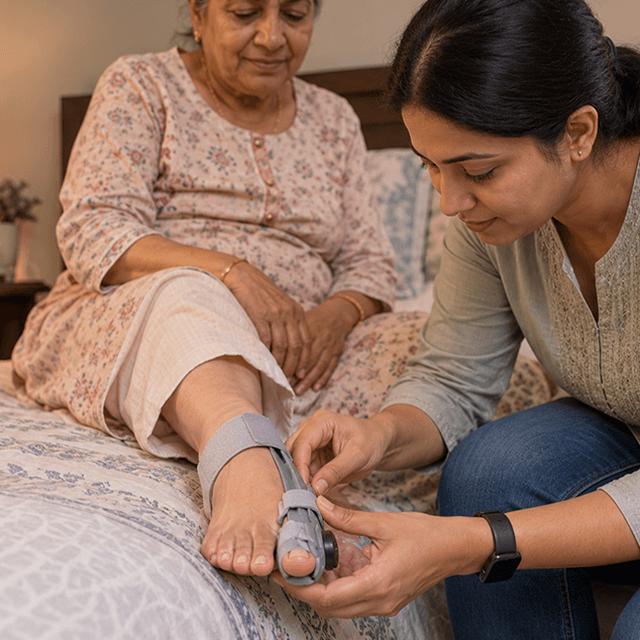
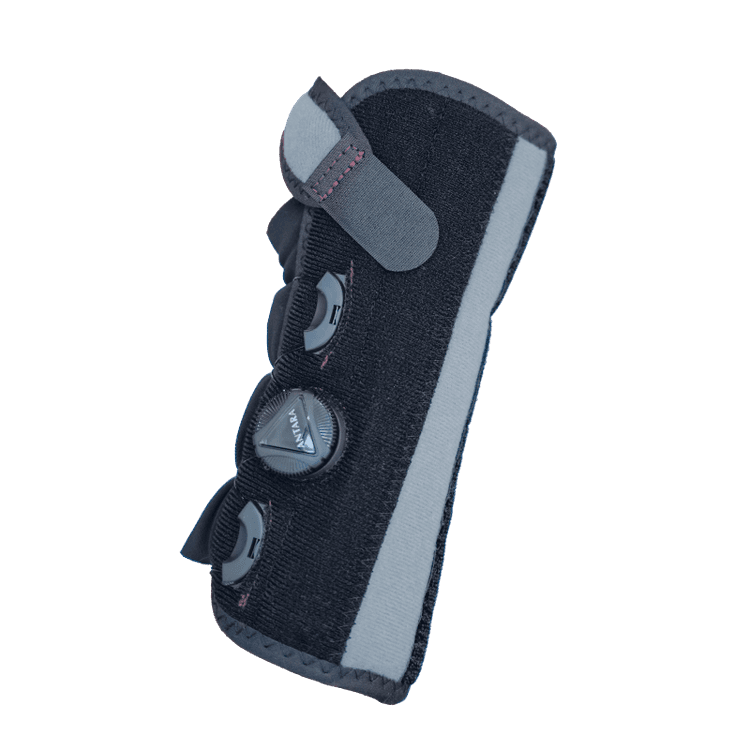
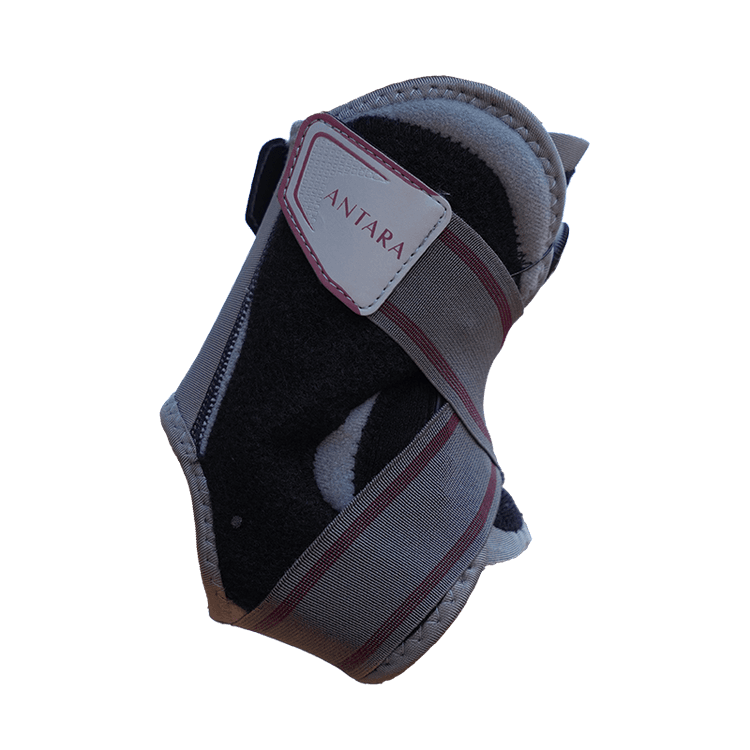
The AGEasy EasyTwist Wrist Brace with Adjustable Dial may be another option to consider for easily adjustable wrist support. It should be thought of as a positioning and comfort aid for specific activities. Following the instructions that come with the product, you should adjust to the size of your parent’s wrist. Discontinue use immediately if any of the following signs or symptoms worsen: pain, swelling, numbness, irritation of the skin, or weakness. The brace does not correct or manage arthritis, and a professional is needed to manage the symptoms.
Brace for Writing and Reading
Writing is a repetitive task for the wrist. To help reduce the pinch grip, a pen with a wide, soft grip, or a pen grip insert is helpful. A sloped writing surface helps writing with less hand bending. Writing sessions should be kept short with plenty of breaks.
Wrist supports for writing should allow finger movement and not add pressure to the palm. The support should not add too much resistance for your parent to hold the pen with a light grip. The support must not negatively affect control of handwriting or cause a deep mark on the skin.
Holding reading materials for long periods should be avoided. Reading materials can be placed on a stand or a cushion. Using a tablet stand also helps. Reading can be supported further with voice typing, larger pens, and lightweight notebooks. These adaptations help the task become less demanding and help your parent be more independent.
Wrist Support While Sleeping
Different approaches are needed for support during the night. Bending the wrist during sleep can increase stiffness when the joint is in an awkward position. Some individuals might benefit from a support that reduces strain during the night when the wrist is in a neutral position.
Do not think that a tight-fitting brace is better support for your parent. The fingers should feel normal, and the hand should not be cold with a change in the normal color. Check each finger in the morning. Remove the brace if you see swelling, numbness, or signs of poor circulation with pain or aching. Forearm support may also relieve discomfort in the shoulder and elbow. Position the bedding loose away from the brace and from tight clothing. If your parent has trouble removing the brace on their own, consult a healthcare professional about nighttime use.
How Caregivers Should Check the Fit
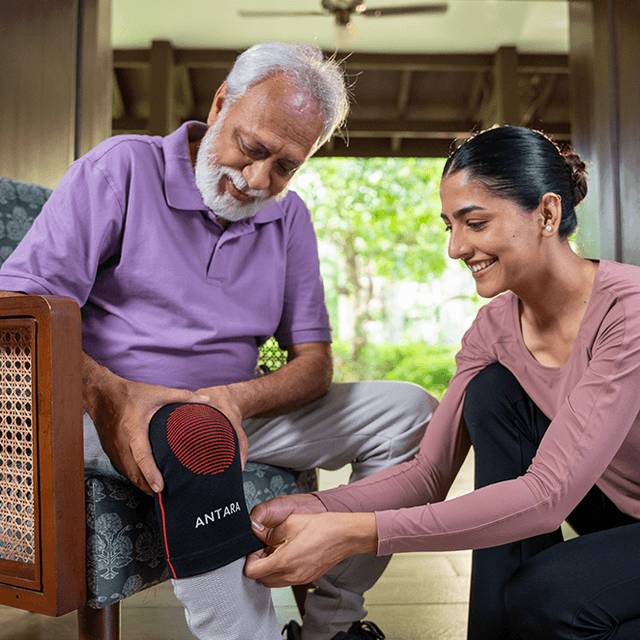
Find a calm moment for your parent and put on a support. Assess the wrist, and ask questions about pressure, movement, and comfort later. A good fit will hold the wrist in place without digging into the skin or causing pain, while still allowing movement, flexion and extension of the fingers. The fingers should be able to flex and extend of their own accord unless otherwise instructed by a clinician.
Look at the back, the web and the thumb. Red marks disappear immediately after removal. Marks that stay and show up are of concern. Take a look again after activities like writing, cooking or sleeping. Follow the washing and drying instructions and have a back-up handy in case the brace gets soiled or gets wet.
Whatever the brace is supposed to alleviate, this diary is going to help the doctor or physiotherapist more, and help your family make the right call regarding one support vs no support or one support vs the need for further assessment.
When a Wrist Brace Is Not Enough
See a doctor for persistent or worsening pain or pain that limits daily activities. For pain that appears in the support area after a fall or swelling or bruising beyond the support area, go to the emergency department. There is a medical emergency if there is sudden hand weakness, double vision, facial drooping, speech difficulties, excessive swelling in the hand, and change of color of the hand to blue or pale.
A healthcare specialist will assess the wrist pain by checking the wrist, thumb, grip, all sensations, and movements. The treatment will depend on the diagnosis and can include adjusting activities, exercises, or reviews of medications and other interventions. A physiotherapist or occupational therapist can offer your parent more options and adaptive ways to do household tasks, write, and even cook.
The aim with the support is to help make daily living tasks easier, not to force a parent to put themselves in more pain. You can help your parent feel in control by asking what is safe and comfortable. Maybe try adjusting the level of support and see if that improves the situation. The level of support should help your parent be able to safely take part in everyday life.
Disclaimer
This article is for general information only; it does not provide medical advice, diagnosis or treatment. Pain, swelling, numbness, weakness or worsening of wrist symptoms require a visit to a healthcare professional. If skin changes or pain worsens when using any wrist support, discontinue use and follow product instructions.