

Dowager's Hump After 60: Why the Upper Back Curves and What Reverses It
Sep 8, 2026
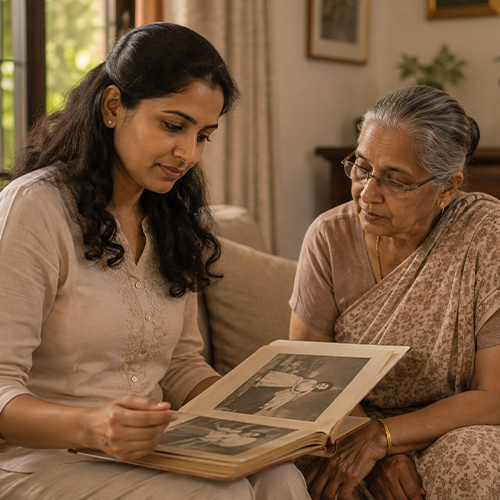
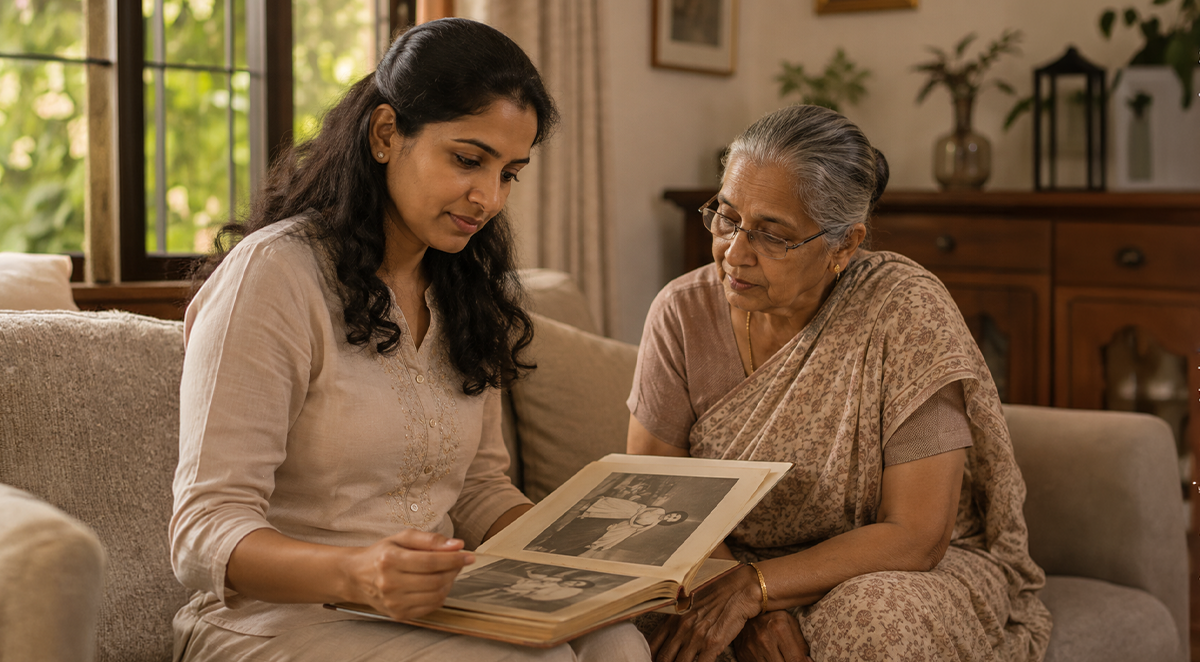
You may not notice the change at first, but signs of ageing in your parent can sometimes appear as subtle changes in posture. Rounded shoulders, a forward-leaning neck, or an upper back that appears more curved than before may become noticeable in family photographs or during everyday activities.
A rounded upper back can have several possible causes. Poor posture and reduced muscle strength may contribute, but changes in bone density, pain, reduced activity, spinal conditions, and vertebral compression fractures can also play a role.
There is no one-size-fits-all solution to a rounded upper back in older adults. The earlier you notice changes in pain, height, balance, strength, or movement, the easier it is to seek appropriate professional assessment and support.
What Is a Dowager's Hump?
A Dowager's hump is a term commonly used to describe an excessive forward curve in the upper back. Clinically, this may involve an increase in thoracic kyphosis.
The curve can have different causes, including postural changes, skeletal changes, joint and muscle changes, and changes within the structures of the spine.
To observe your parent's posture, ask them to stand in a relaxed position without deliberately pulling their shoulders back. Look for a forward-sloping upper back, changes in head position, or difficulty looking upward. Do not force the upper back into a straight position while checking posture.
A new, painful, or worsening curve, particularly when accompanied by changes in movement, should be assessed by a doctor or physiotherapist.
Why Does the Upper Back Curve After 60?
Several factors can contribute to an increasingly rounded upper back, and more than one may be present at the same time.
- Prolonged sitting in a slumped position, including during phone or television use.
- Reduced strength in the back and shoulder muscles.
- Limited flexibility and movement in the upper back, chest, hips, or shoulders.
- Osteoporosis and weakened spinal bones.
- Vertebral compression fractures.
- Spinal arthritis and other age-related spinal changes.
- Poor balance or vision.
- Reduced activity or prolonged periods of being sedentary.
- Changes following an illness or a prolonged recovery period.
Osteoporosis is particularly important because weakened vertebrae can become more vulnerable to fractures. These fractures may occur after relatively minor movements or falls and can contribute to height loss, back pain, and a lasting change in posture.
A forward-leaning posture can also be influenced by balance or vision problems. In these situations, the forward position may be only one part of a larger mobility issue that needs to be assessed.
What Helps a Dowager's Hump?
What helps depends on the underlying cause and whether the spinal curve is flexible or fixed.
Flexible postural changes may benefit from a structured approach involving strength, balance, mobility, breathing, and consistent daily routines. A fixed bony change may not be completely reversible. Even when complete correction is not possible, treatment can focus on reducing discomfort, improving functional ability, preserving independence, and limiting further loss of function.
When Should You See a Doctor or Physiotherapist?
If the curve is progressing, painful, or associated with loss of height, your parent should receive a medical assessment. A clinician may investigate the cause of the back pain and assess factors such as bone health, medicines, previous falls, eyesight, walking ability, and other relevant health concerns.
An assessment of bone health may also be appropriate when symptoms suggest a spinal or bone-related problem.
Seek urgent medical care after a fall if your parent develops:
- Sudden severe back pain.
- Numbness or weakness.
- Loss of bladder control.
- Difficulty breathing.
- Fever.
- Sudden difficulty walking.
Use Supervised Exercises for Strength and Mobility
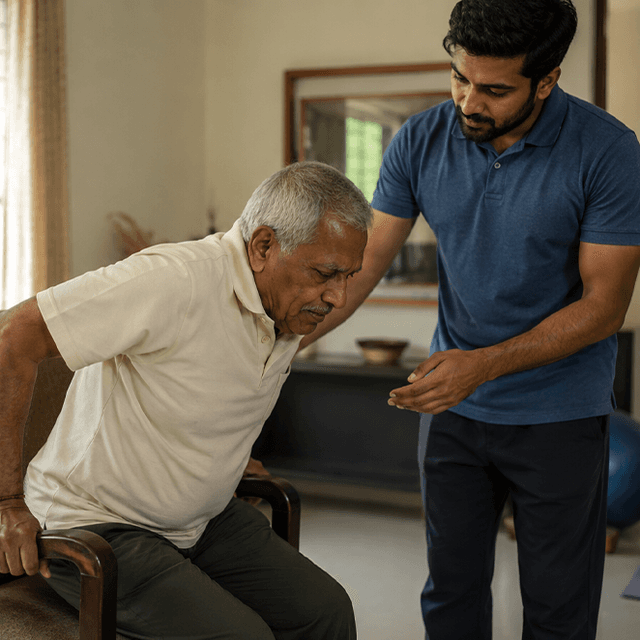
Exercises should be selected after considering your parent's pain, balance, joint and soft-tissue mobility, and risk of fracture.
Depending on the individual's assessment, a programme may include gentle upper-back extension movements, shoulder-blade strengthening, chest and hip mobility, balance practice, and walking.
The aim is controlled movement rather than forcing the spine into a particular position. Exercises should remain within a comfortable range.
Stop an exercise and seek appropriate support if it causes sharp pain, tingling, unusual sensations, dizziness, or a significant increase in symptoms.
Do not simply copy exercises from online videos without first considering whether they are appropriate for your parent's spine, bone health, balance, and other medical concerns.
Build Better Posture Habits Into Everyday Activities
Small changes can often be more practical than repeatedly telling an older adult to “sit straight.” The goal is to make comfortable, functional posture easier during everyday activities.
- Bring reading material closer to face level.
- Use a firm, supportive chair.
- Keep both feet comfortably on the floor while sitting.
- Encourage frequent position changes during television, meals, and desk activities.
- Keep frequently used items within arm's reach to reduce unnecessary bending and twisting.
- Take short movement breaks during long periods of sitting.
A short walk, gentle shoulder movements, or prescribed exercises can help interrupt long periods of inactivity. Focus on encouraging consistency and effort rather than making appearance the primary goal.
Support Bone Health and Reduce Fall Risks
Ask your parent's treating clinician whether an assessment for osteoporosis or fracture risk is appropriate. Follow the recommended nutrition, medication, exercise, and follow-up plan.
Fall prevention around the home is also important. Keep floors clear, improve lighting, secure rugs, and add appropriate support where recommended.
Stronger legs and better balance can support safer walking and everyday functional activities. If your parent needs a mobility aid, the appropriate device should be selected according to their balance, strength, and walking ability.
Can a Posture Corrector Reverse a Dowager's Hump?
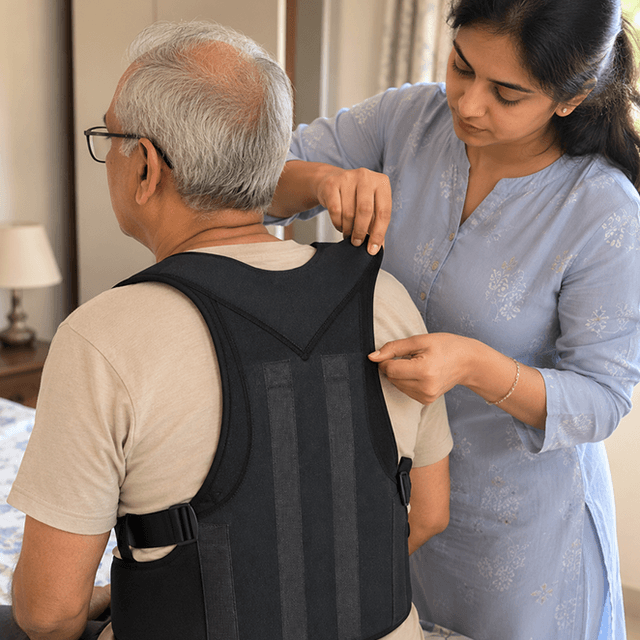
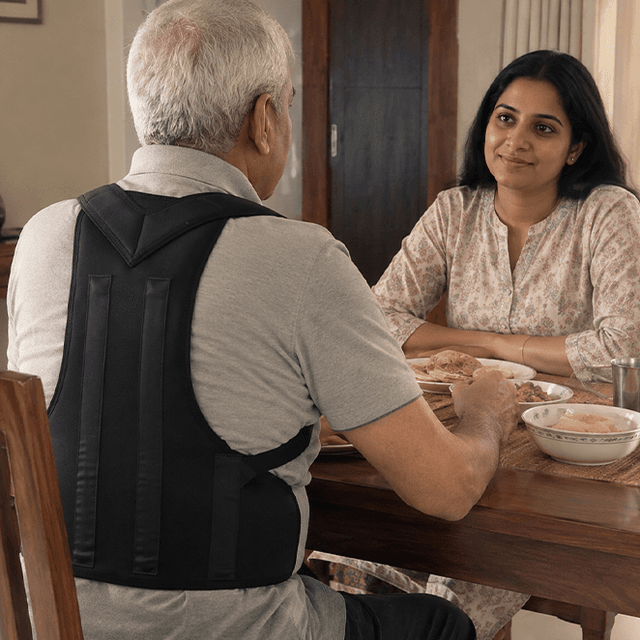
A posture corrector should not be viewed as a way to reverse a Dowager's hump. It can provide posture awareness and gentle support around the shoulders and upper back, but it does not build bone, repair fractures, or reshape a fixed spinal curve.
A posture corrector is therefore better considered a comfort and awareness aid rather than the primary treatment for a rounded upper back.
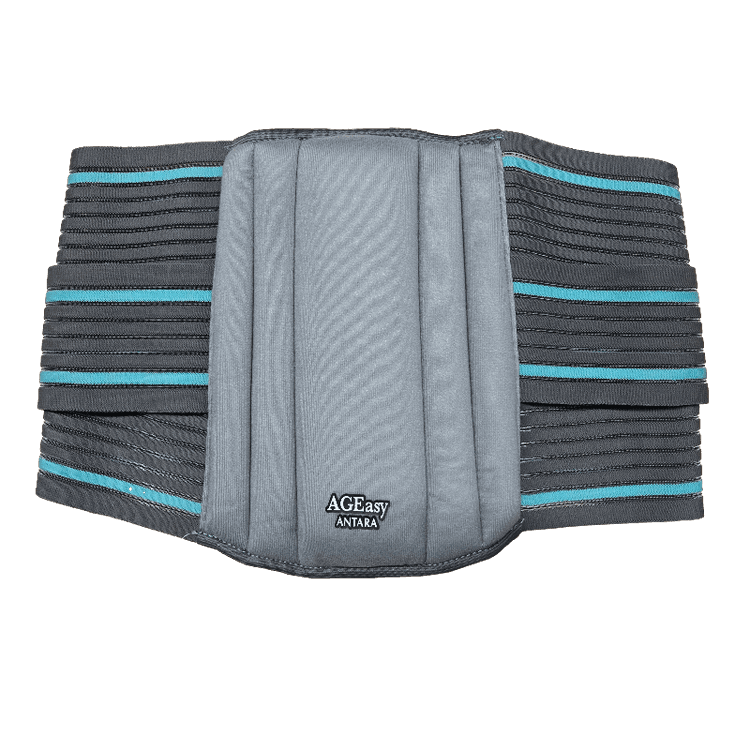
The AGEasy ErgoLift Posture Corrector provides gentle support to the upper back and shoulders. It is adjustable and includes a breathable back panel for use in different sitting and standing situations.
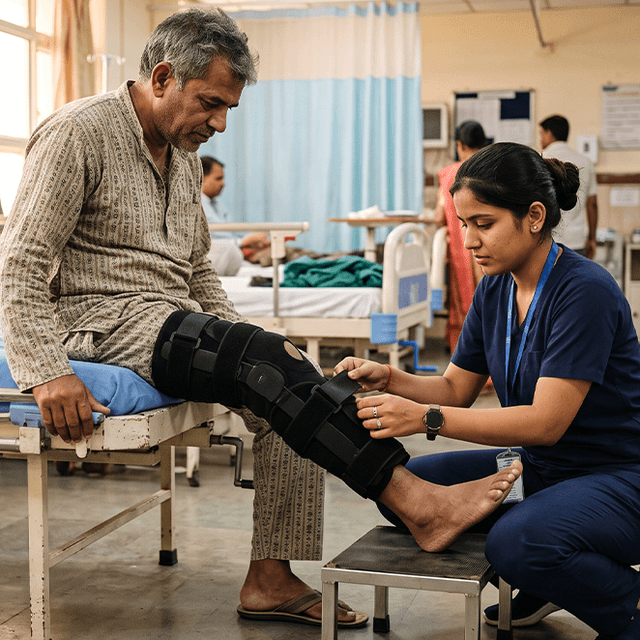
If an older adult has pain, weakness, balance problems, a spinal condition, or has recently undergone surgery, the use of a posture corrector should be discussed with a doctor or physiotherapist first.
Make sure the corrector fits properly and follow the manufacturer's instructions. Remove it if it causes skin irritation, numbness, breathing difficulty, or restricted movement.
A posture support should not be used to force the shoulders into one fixed position. Older adults need to be able to breathe comfortably and move their arms freely. Professional guidance is particularly important when a spinal problem or fracture is suspected.
How Caregivers Should Track Progress
Instead of judging progress from a single photograph, track practical changes in everyday function.
- Pain during daily activities.
- Walking tolerance.
- Confidence during transfers.
- Time spent sitting comfortably.
- Ability to complete prescribed exercises.
- New falls.
- Changes in height.
- New numbness or weakness.
- Changes in breathing.
Share these observations with your parent's doctor during scheduled appointments.
Progress may appear as less pain, easier standing, better balance, or greater participation in daily activities. The upper back may still remain partially curved even when function improves.
When Should You Schedule a Review?
Arrange a review if the curve continues to progress, pain persists, exercises become more difficult, or your parent starts avoiding walking or everyday activities.
Arrange an assessment more quickly after a fall or when there is new pain, new weakness, or unexplained height loss. A change in posture deserves attention even when your parent says it is not particularly bothersome.
The caregiver's role is to observe changes and support a safe routine. Avoid forcing stretched positions, pushing the shoulders backward, or suggesting that a product can reverse the curve.
A safer approach is to encourage appropriate movement, support comfort and independence, and seek timely professional assessment when changes occur.
The Bottom Line
A Dowager's hump after 60 is not necessarily just a result of poor posture. It may be related to muscle weakness, reduced mobility, spinal changes, osteoporosis, or vertebral compression fractures.
A posture corrector can provide a reminder and some support, but it cannot reverse a fixed bony curve or replace medical treatment. The most useful approach combines professional assessment, appropriate exercises, safer daily habits, bone and fall-risk management, and carefully considered use of supportive products when appropriate.
Disclaimer: This article is for general educational information and should not be substituted for medical advice, diagnosis, or treatment. Before using any healthcare product for an older adult with pain, weakness, balance problems, back or spinal issues, recent surgery, or another medical concern, consult a qualified healthcare provider.