


Sciatica: Causes, Symptoms & Relief for Older Adults
Article by: Lavi
Jul 22, 2026. 9 min read
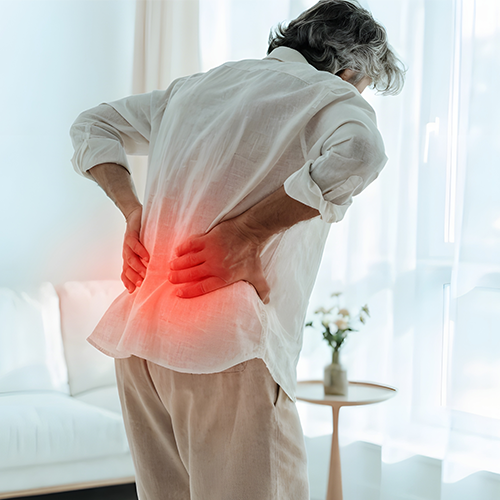
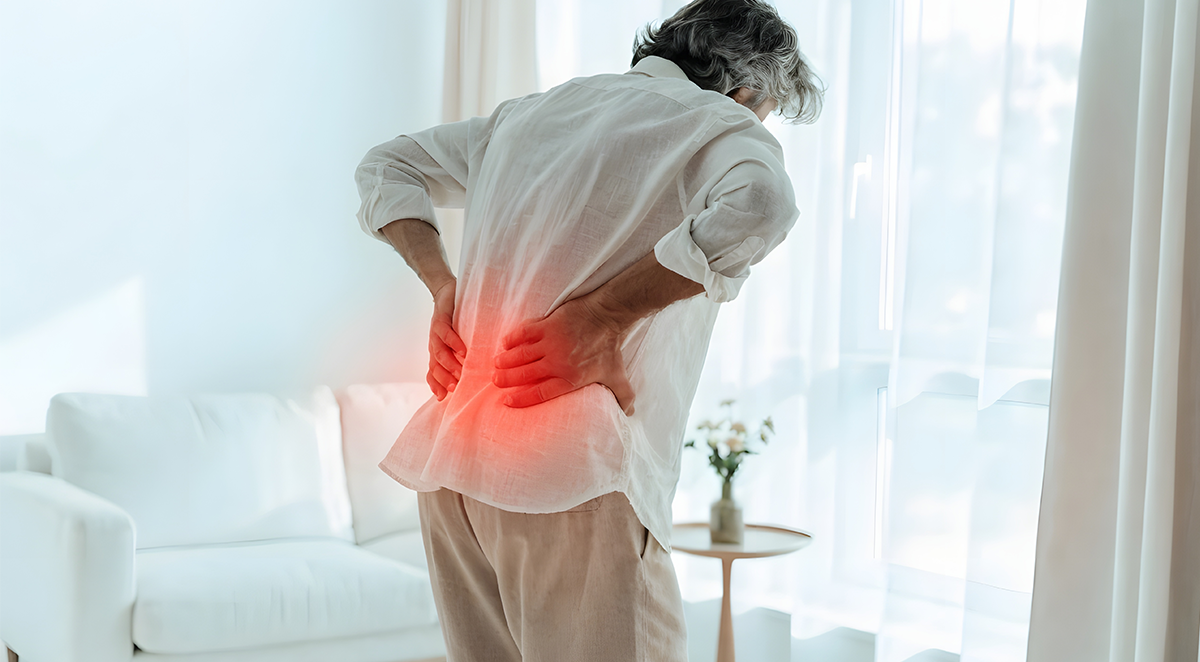
Can back pain cause shooting pain in the legs?
Unfortunately, yes. It can.
While standing up from a chair, bending down to tie your shoes, or walking, you may experience a sharp or burning pain that radiates from your lower back and down to your hip, thigh, or foot.
Many people tend to think that pain in the leg means there is something wrong with their leg. Usually, it isn't.
The underlying issue is usually the lower back area where a nerve is either pinched or inflamed. This issue is worsened by prolonged sitting and all changes in how you move can bring more relief than you'd expect.
Thus, brief relief from the pain does not mean you have addressed the core issue.
The good news is that through the right posture, stretches, and movements, along with the proper amount of rest, these adjustments can help relieve pressure on the sciatic nerve and help you move with greater ease and comfort.
Whether you have recently experienced the sharp shooting pain or have been suffering from sciatica for an extended period of time, this guide covers the main causes of sciatica, why prolonged sitting worsens the symptoms, and things that can be done to manage the condition through sitting fixes, gentle exercise, and self-care.
The Definition of Sciatica
Sciatica is not a diagnosis on its own but refers to the particular pain related to the sciatic nerve. The sciatic nerve is the longest nerve in the body and is made from a bundle of nerve roots that exit the spinal column and travel through the pelvis and gluteal region. The nerve then travels down the posterior region of the thigh and legs to the feet. Because of this long path, pain does not remain localized to the injury.
That explains why the discomfort in your calf may not be induced by a problem in the calf. Common symptoms include:
- One sided pain that extends from the back to the thigh and glutes and down the leg
- Shooting or burning leg pain
- Numbness, pins and needles, or weakness in the leg or foot
- Pain that gets worse while sitting for a longer period or worsens while sneezing and coughing
About 10% of the population experiences symptoms of sciatica in their lifetime and the pain usually resolves on its own in about a month and a half with the right treatment.
Causes of Sciatica
- Herniated or bulging disc: This is the most usual reason. The soft nucleus of the disc bulges and pushes the nearby nerve root.
- Spinal stenosis: As we get older, the age related changes in our spine lead to a narrowing of the spinal canal which leads to a decreased space for the nerves. This is frequent after 60 years of age, and is usually the reason for the development of pain while walking and relief from pain while sitting, which is the opposite of the usual pattern.
- Changes in the disc due to degeneration: The discs lose their hydration over decades, which diminishes the cushioning effect between the vertebrae.
- Piriformis syndrome: A muscle in the deep gluteal region becomes tight and irritates the underlying sciatic nerve. This syndrome is frequently misdiagnosed as a disc disease.
- Spondylolisthesis: This involves vertebral slippage and irregularities along the spine that may narrow the exit points of nerves.
The factors that increase the risk include age, prolonged sitting, being overweight, and jobs that are physically demanding with repetitive lifting, twisting and diabetes, which directly impacts nerve health.
Impact of Sitting
The pressure on the lumbar discs while sitting is greater than the pressure caused while standing. In particular, slumped sitting causes even more pressure.
When slouched, the natural curve of the lower back is flattened and can even be reversed. This causes uneven compression of the discs at the back, where the nerve roots exit. An hour in this position will irritate the nerve and give it no time to settle.
Long sitting also leads to an inactive state of the gluteal muscles. This means the lower back muscles have to do more work than they are designed for. Additionally, the muscles in the front part of the hips (hip flexors) shorten which can pull the pelvis into a tilt. This can cause more strain.
These problems are compounded for anyone who has long sitting hours due to work, or prayer or travel.
Sitting Adjustments
The goal is to maintain the normal lumbar curve. Your back should have a gentle arch while sitting, not a slumped rounded position. This change removes a lot of pressure.
For most people, a firm cushion makes it easier to maintain this posture for long periods of time, as they do not have to consciously hold the curve. Memory foam lumbar supports, like the AGEasy Lumbar Back Support are also designed to be used without any conscious effort to maintain the proper position. While users report an immediate change in posture, it takes an average of 7 days of daily use before they notice a change in the pain associated with poor posture.
Make sure that both feet are resting flat on the floor. Your knees should be at approximately the same height as your hips, or slightly lower. If your feet are dangling, place a footrest underneath them. Avoid crossing your legs, as this shifts the pelvis and should be avoided while symptoms are active.
Take off any pressure that is put on the tailbone. If sitting is the trigger, a coccyx cushion with a cutout at the back allows the tailbone to float instead of bearing weight. AGEasy Coccyx Cushion for Tailbone Pain Relief is a good option for this.
Stand up every 30 minutes. Even standing for 60 seconds will help. If you need it, set a timer. This matters more than achieving the perfect sitting position.
Be careful while driving. Long drives can make the condition even worse because of the combination of vibration, reclined sitting, and hip flexion. A portable lumbar support pillow is useful to make long flights and drives much more comfortable.
Movement Is Beneficial
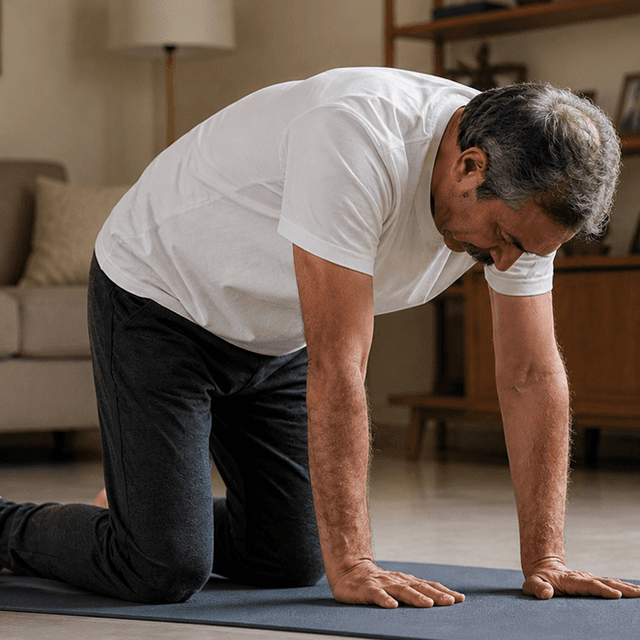
Bed rest longer than two days will make your sciatica worse than it already is rather than making it better. Gentle and consistent movement is the correct method to follow.
- Walking: It should be done for ten minutes two times a day to start. From there, you should gradually increase the amount of time spent walking, always on flat ground and in comfortable shoes.
- Knee-to-chest stretch: Stretching one knee to your chest while lying on your back is one exercise you can do. Hold this position for 20-30 seconds before switching to the other side. This should be done three times on each side.
- Piriformis stretch: Another stretch is to lie down and cross the ankle on the affected side over the knee on the opposite side and pull that knee toward you. You should feel the stretch in your buttock and not in your back.
- Pelvic tilts: This is another exercise you can do. While lying on your back with your knees bent, you should flatten your lower back into the floor, hold that position for five seconds, then release the pressure. You should do this a total of ten times. This will help activate the deep core muscles that stabilize the spine.
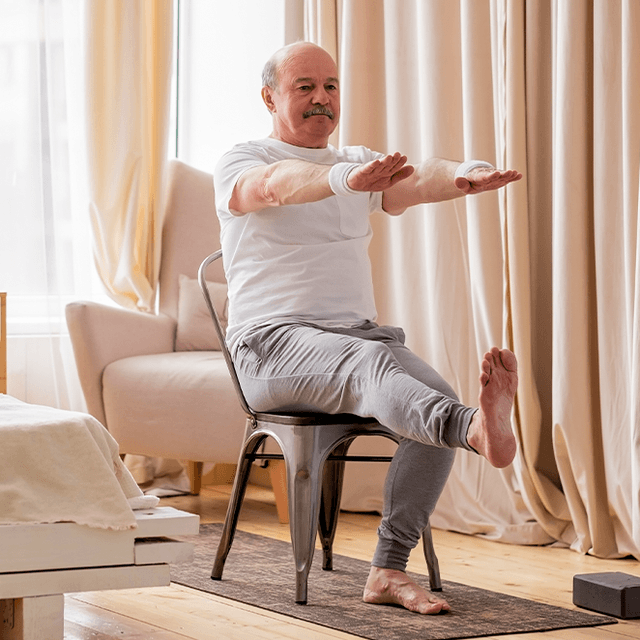
- Nerve gliding: While seated, extend one leg and pull the foot back (dorsiflex). Hold and then relax. Perform this in a slow and controlled way, for a total of 10 repetitions. This exercise will allow for uninhibited movement of the nerve within its sheath.
As a general rule for all exercises described in this blog, if you experience discomfort other than soreness, then do not continue and visit a doctor.
Self-Care at Home
- Apply ice for 15 minutes for acute flare-ups of pain for the first 48-72 hours. After this, applying heat can relieve tight muscles and increase blood circulation. Many people find alternating hot and cold therapies to be helpful.
- Topical pain relief products work as well. For addressing tight muscles in the lower back and buttocks before stretching, AGEasy Pain Relief Gel is a quick absorbing option.
- To sleep, lie on your side with a pillow between your knees (or keep your knees together) or lie on your back with a pillow under your knees. Both positions relieve strain on the lower back.
- A back support belt can be helpful for specific activities, such as lifting, prolonged standing, or traveling. Use it only during those activities, not all the time. Wearing a support belt during the day can cause the muscles that would normally support you to weaken, so it can work against you in the long run. Remove it before sleeping. The AGEasy back support range can be used for support during any of the activities mentioned. We have both lumbo-sacral and spinal belts with varying degrees of compression.
When to Consult a Physician
Most cases of sciatica pain improve with the methods listed above. However, you should consult a physician without delay for the following:
- Back pain that doesn't improve after six weeks despite self-care attempts.
- Back pain that occurs after a fall, accident, or injury.
- Back pain associated with unexplained weight loss or fever.
- Back pain accompanied by progressive weakness in a leg or foot or difficulty in dorsiflexion.
You should seek emergency medical services without delay for a loss of bladder or bowel control or numbness in the groin and inner thighs as this could suggest the presence of cauda equina syndrome, which is a rare but urgent situation that requires emergency medical services.
Reiterating that sciatica is not a condition in itself, but rather a warning sign of an underlying issue in your spine. Make a couple of changes to your sitting position and the quality of your lower back support. Add regular gentle movements and be consistent for at least a few weeks, after which, if you don't notice any improvement, stop waiting, and sort it out properly with the help of a doctor.
Recommended Blogs

















You May Also Like
 No products found
Article by:

Lavi
Article Category:
General Wellness