

Adult Diaper Rash: The Real Cause and How to Prevent It
Article by: Kunal
Article Category: General Wellness
Jul 28, 2026

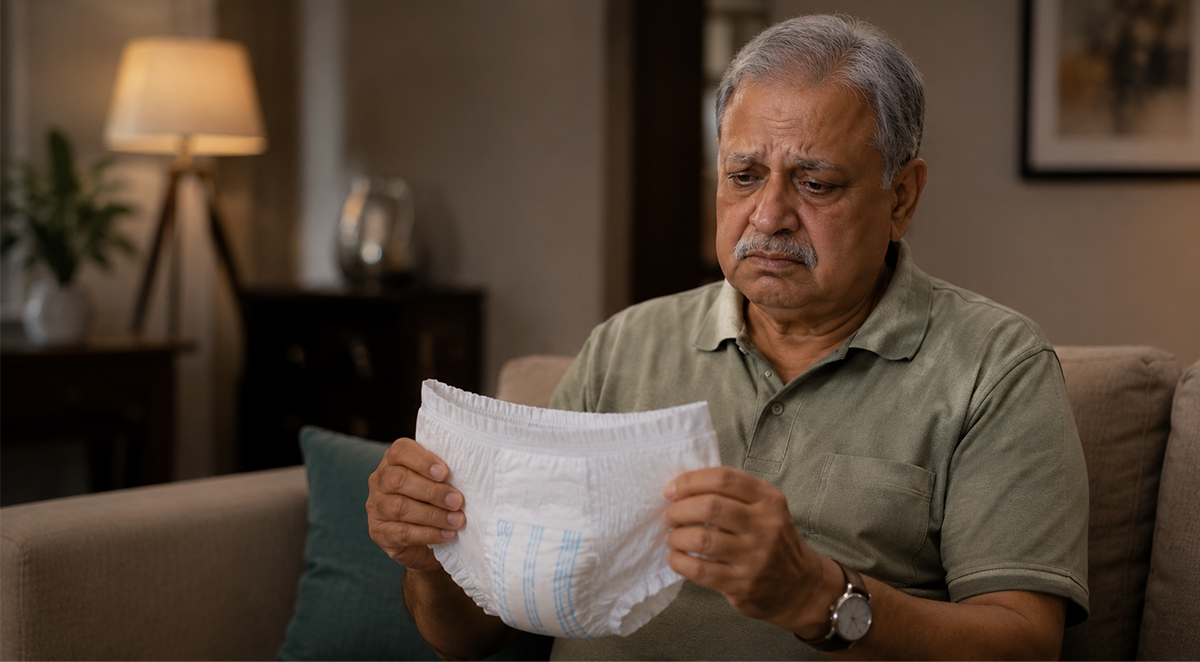
When it comes to nighttime incontinence, the laundry isn't the hardest part. It's the interrupted sleep. This is true for both your parent's sleep and your own.
One leak turns into a clothing change, a bed change, and then becomes a "helping your parent resettle" situation. By morning, neither of you are rested.
The biggest mistake is thinking that overnight care means selecting a thicker diaper. It doesn't.
This problem is not going to be solved by the most absorbent diaper, waking your parent to check, changing diapers during the night, or hoping tonight is better than last night.
What works is a bedtime routine based on 4 pillars:
- A nighttime diaper
- The correct size before bed
- Habits in the evening that minimize disturbances
- A combination of protection, comfort, and sleep
A good care night isn't determined by how many times you get up. It's determined by how many times you have to.
By continuing to respond to nighttime leaks, your parent is deprived of the rejuvenating deep sleep that is vital for their health. They wake up feeling tired and uncomfortable, they become anxious about sleeping through the night, and start to lose confidence in wearing protective products.
With the right overnight routine, your parent will be able to stay dry until the morning, keep their skin protected, sleep more comfortably, and wake up rested and ready to start the day.
This guide describes how to select overnight adult diapers, establish an evening care routine, and identify practices that lead to leaks, skin irritation, and interruptions to sleep for both your parent and you.
Why Nighttime Incontinence Differs From Daytime Incontinence
Diapers designed for daytime use are made for active, short periods of wear. Your parent can be seated, mobile, or active, which means the diaper only needs to be functional for a few hours before a change.
Nighttime use is a different story. Your parent will be lying down motionless for 6 to 8 hours, and fluid retention increases urine output at night because of how the body manages liquid. This is the reason why a daytime diaper used overnight will cause leaks. Plain and simple, the daytime diaper was not designed for a long period of wear, nor was it designed to hold that much fluid.
Overnight protection is more than just a thick pad. It requires a balance of absorbency, fit, and skin contact for an extended period of time.
Selecting Overnight Diapers
There are three things to consider when choosing an overnight diaper.
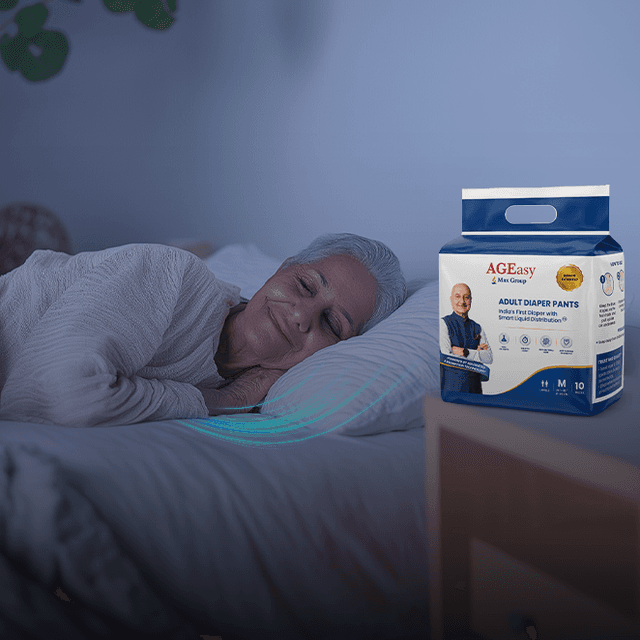
The absorbency needs to be designed for extended wear. Some diaper pants, for instance, the AGEasy Adult Diaper Pants, use a Smart Liquid Distribution system that promotes even soaking across the layers of the absorption pad. Unlike other adult diapers that become heavy and bunched up in the middle with liquid, AGEasy reduces the possibility of your parent experiencing side leaks during the night.
A design that accommodates your parent's mobility:
- If your parent can walk and get around by themselves, then pant-style diapers are appropriate because they are like normal underwear, and stay in place even with movement.
- If your parent has difficulties getting around and requires assistance with turning over in bed, then it is usually more manageable to use a tape-style diaper. The adjustable tapes allow you to check and change without needing to fully undress or reposition your parent, which is really helpful during the night at 3 a.m. when everyone is half asleep.
A breathable and soft top layer. Skin that remains in contact with moisture for prolonged periods of time is more prone to injury. A top layer that is soft and moisture-wicking, which is referred to as a dry-lock or bubble top layer, reduces friction, and keeps the skin drier even during prolonged nighttime use.
Diaper Fit Instructions
A diaper that was loose at 9 p.m. will fit differently at 3 a.m. after several hours of movement. Prior to your parent going to bed, please ensure the following.
- Waistbands are not too loose, as they create gaps for leakage to escape, and not too tight as that may leave uncomfortable marks. Ensure the waistband is snug but not tight enough to fit more than 2 fingers comfortably underneath.
- Ensure the leg elastics are flat against the skin. Folded or twisted leg elastics are a primary cause of leakage, even more so than the diaper not being absorbent enough.
- Check the sizing regularly. This can change due to illness, weight fluctuations, or lack of activity. A diaper that may have been a perfect fit a few months ago, may not be today.
- A good fit even reduces the number of times you need to get out of bed.
Setting Up a Night Time Routine That Minimizes Disturbances
Your products and routine deal with the problems of absorbency and the other things surrounding it.
Plan the intake of fluids in the hours leading up to bedtime. Encourage your parent to drink most of their fluids early in the evening, and draw back on the fluid intake closer to bedtime. This does not mean not drinking water during the day, but rather moving the times of drinking so that the body won't have to process as much during the night.
Do a bathroom visit right before bed. The last thing to do before shutting off the lights should be to go to the toilet. This means that the adult diaper will be able to deal with less in that first stretch of sleep. This is also when your parent is likely to have their most restful and restorative sleep.
Your parent deserves a dry bed and relatively leak-proof diapers. Put a disposable undersheet on your parent's mattress for extra peace of mind. If there is a leak, you will only have to take one sheet off in the morning, instead of stripping and washing the whole bed. This can help with the anxiety of nighttime accidents.
If your parent's skin is sensitive, applying a barrier product may be a good idea, as barrier cream can be placed on the skin before bed to help provide a protective layer against moisture and is especially useful for parents who may have thinner or more sensitive skin.
Set the Temperature Appropriately
A room that is warmer can cause more sweating, which can also increase the moisture level in the area and make an already well-fitted diaper feel worse. A room that is cooler and well-ventilated can increase comfort and provide a drier environment.
When Waking Up to Check Helps and When It Doesn't
Many caregivers believe that a check during the night is a safer option. More often than not, this is counterintuitive.
Waking your loved one can disrupt a sleep cycle and cause them to take longer to get back to a more restful state. It can also cause anxiety about being observed or monitored, which can make your loved one even more uncomfortable about wearing protective undergarments.
Scheduled checks are necessary in very few cases, such as when a new brand or size of diaper is implemented, during illnesses with higher than normal urination, or when a specific medical issue has been prescribed by a doctor. Otherwise, trust a well-fitted, absorbent diaper to do its job overnight.
Look for Patterns and Perform Tracking to Avoid Unwanted Actions
- If leaks or discomfort have been an ongoing problem, try to notice a pattern instead of changing the diaper every night.
- Pay attention to when leaks occur most often, as this will help you understand if the diaper is not fitting correctly or if the diaper is too full.
- An issue with fit, like an uneven cuff, rather than absorbency, may be indicated by one side leaking more than the other.
- If there are signs of skin irritation, rashes, or discomfort, note it. If you document issues as you go, you can modify the routine before it becomes a bigger problem.
- Recording your parent's health and blood pressure daily, in addition to the care routine, can assist the medical team in identifying patterns, like sleep disruption due to leaks and its impact on blood pressure. A wrist blood pressure monitor makes it effortless to record blood pressure without interfering with your parent's daily routine.
When to Consult a Physician
Most nighttime incontinence in seniors can be improved with the right products and care routine. If you notice a sudden increase in your parent's nighttime urination, talk to your parent's physician. Sudden increases in urination, especially if there is blood, or if the person has pain or burning when they urinate, exhibits signs of a urinary tract infection (like fever or changed mental status), or has skin breakdown and it is not getting better despite using barrier cream and more frequent changes, are all reasons to consult a physician.
A physician should be consulted if the signs point to an underlying condition that needs a treatment plan beyond routine care, issues like urinary tract infections, prostate enlargement, or medication side effects may also need to be addressed.
A Routine That Benefits Everyone
Overnight incontinence care is not about finding the one best product. It is the combination of fit, timing, bed protection, and small habits that come together so that your parent is dry, and you both get a full night's sleep.
Begin with the bed protection, the well fitted diaper that suits your parent's mobility, the adjusted evening fluid intake, and record the patterns instead of guessing. A series of small adjustments over time to a routine is far more beneficial than continuous changes to the products.
Disclaimer: This article is intended for general information only and is not a substitute for professional advice. Speak to your parent's doctor for information specific to their situation.