


Diabetic Foot Care at Home: The 5-Minute Daily Check That Prevents Amputations
Article by: Sourabh
Jul 17, 2026. 8 min read
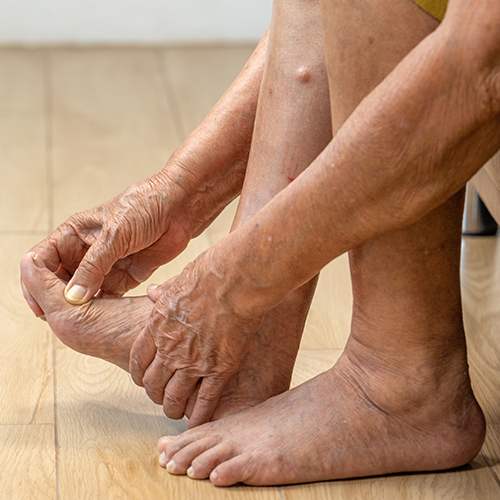
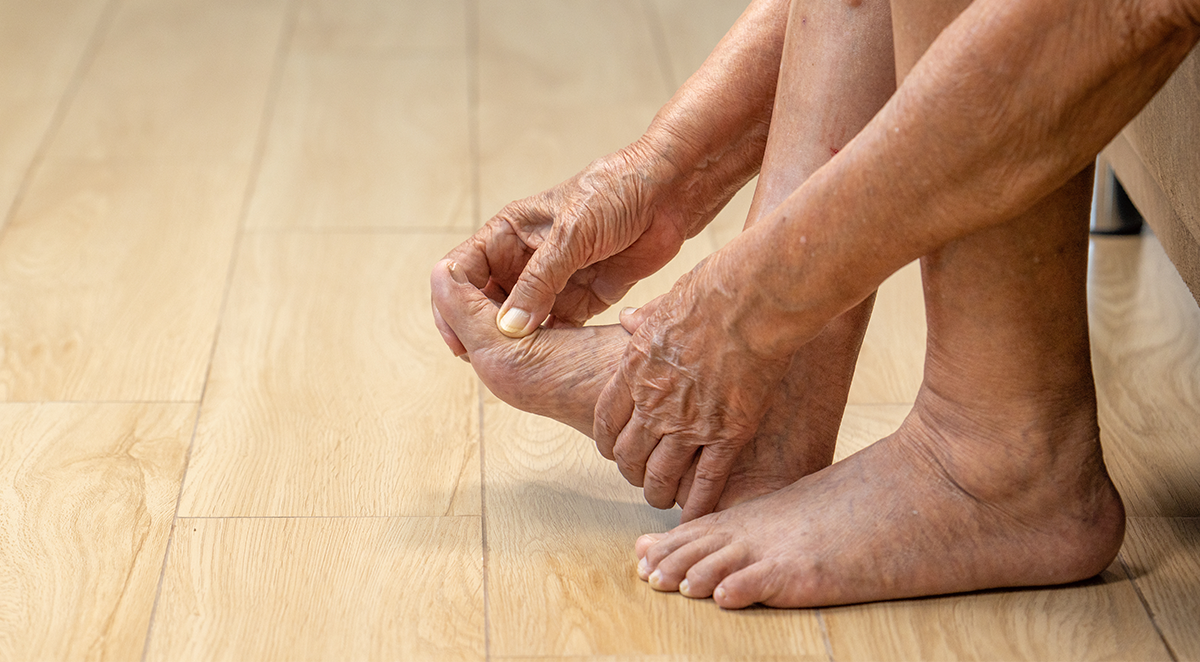
The wound that changes everything is usually the one you never felt.
Consider the damage caused by a tiny stone in your shoe, a blister, a tiny cut, or a crack in your heel. Most injuries are properly addressed and treated, but if you have diabetes, you may not be able to detect the injury because of the loss of warning signals, and you may not be aware of the damage until it is serious.
Most people do not understand the cause of the amputations, assuming a very large injury to warrant such extreme measures; this is not the situation. Amputations start from a seemingly small injury, an injury that cannot heal due to a lack of blood circulation.
This is the reason why foot examinations are essential. Most medical conditions are a result of a lack of foresight. It only takes five minutes to check for any injuries or complications. This commitment could save you from serious medical problems, infections, or even amputation. Foot complications are possible to prevent, but it is essential to make an active commitment.
Living with diabetes is difficult, but this guide will teach you how to check your feet daily, what symptoms to pay attention to, and how to maintain your feet and independence for a long time.
The Dangers of Diabetes
Diabetes leaves feet vulnerable due to diabetic neuropathy (nerve damage) as well as poor circulation (peripheral vascular disease).
When there is loss of sensation due to neuropathy, blisters or cuts can happen and go undetected for a long time. Because circulation is poor or non-existent, wound healing is impaired, and subsequently, infections can occur. Poor circulation also leads to a high susceptibility to the adverse effects of poor wound healing. With diabetes, the wound healing damage cycle is very slow and the patient is unaware of the wound.
A well documented and known fact in diabetes care is the consequence of neglecting to check one's feet and the resulting poor foot care. Because of this, podiatrists have made specific foot checks a standard habit, particularly for diabetic patients.
The Five-Minute Daily Foot Check
Do not worry, no training is required. You will, however, have to be determined. You can choose to do this in the morning after your shower or right before bed.
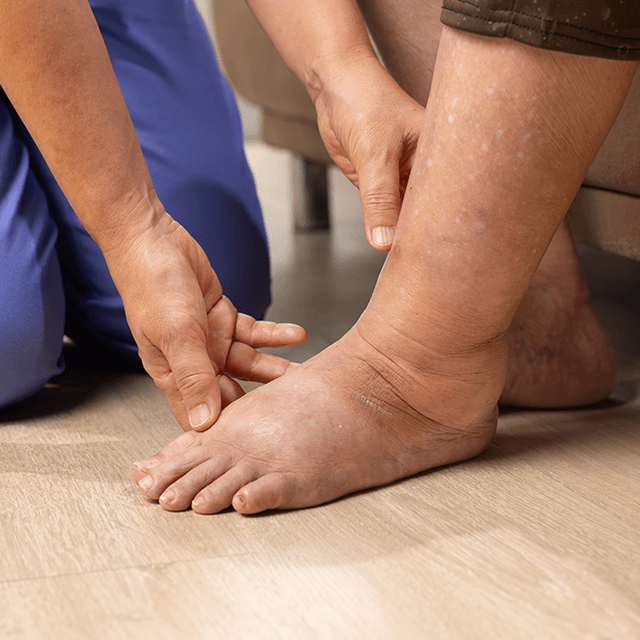
- Look at the top of both feet: Check for swelling, redness, cuts, or other discoloration.
- Check between all of the toes: The moisture build up in this area presents a high risk for fungal infections and skin breakdown.
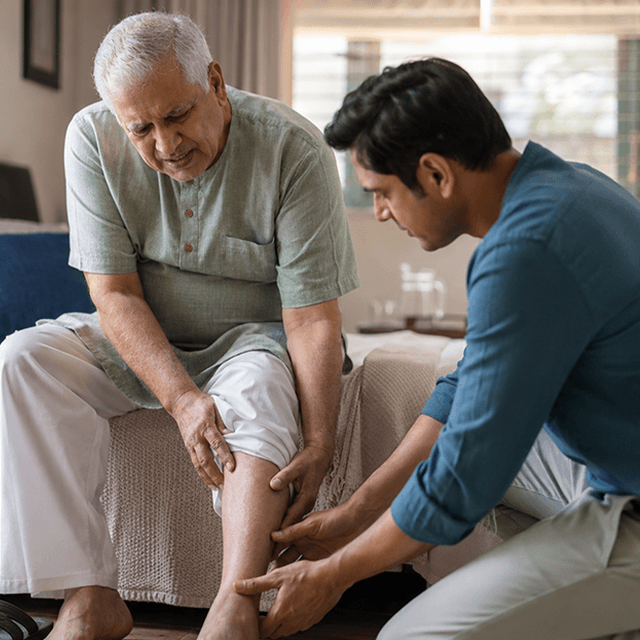
- Check the soles and heels: From a standing position, check underneath the front of your foot. If you can see the bottom of your foot, check for cracks, blisters, or calluses, or other abnormalities as you bend. If you have trouble doing this, you might need assistance from a family member.
- Each foot should be checked for unusual temperature: If one foot is significantly warmer or cooler than the other, this could indicate an issue with circulation. It could also be a sign of an infection.
- You should have your feet checked gently: If you cannot feel touch anymore, this is something you need to bring to your physician's attention. Not being able to feel touch is one of the earliest signs of neuropathy.
- Before putting on your shoes, check to make sure you don't have any little rocks that will rub against your skin: You should check for seams or rough patches.
For seniors and people with limited mobility, such as people who have difficulty standing or bending, using a long-handled mirror can aid these inspections. Some families use non-slip mats to assist foot inspections, like those from AGEasy's foot safety range. This is particularly useful for seniors who may fall when standing on one leg to do foot inspections.
Ignoring the Warning Signs
If foot issues are caught early, they will be able to be treated satisfactorily. Here are some issues that need immediate attention from a medical professional:
- an open sore or blister that has not healed in a couple of days
- an increase in redness or warmth around a wound
- wounds that have a foul odor, or contain pus
- unforeseen wounds that you do not remember (you may be experiencing sensory loss)
- a wound that is accompanied by persistent numbness or pins and needles
- wounds where the skin is pale, bluish, or shiny
- wounds in which one foot is swollen and the other is not
- wounds that do not get better, and may actually become worse, after one week of treatment at home
The above problems should cause people to visit a medical professional as soon as possible. Issues with diabetic wounds can quickly evolve, and what appears minor may be more problematic than you think.
Daily habits that protect the feet
Along with daily inspecting your feet for possible problems, the following practices may also help protect your feet:
- Wash and dry feet thoroughly: This will help prevent the growth of fungus. Use lukewarm water and a mild soap to wash your feet, and dry them thoroughly, especially in the areas that tend to retain moisture (such as the area between your toes).
- Avoiding moisture between your toes is important: While a moisturizer can prevent dry, cracked skin on your heels, which opens the door to possible infections, it does not mean that you should apply moisturizer on your toes, as that will create problems.
- It is important to protect your feet: Never walk barefoot at home, as just one cut could lead to an infection, and if there is numbness involved, the situation can become worse.
- Choose supportive and comfortable footwear: Shoes that are too small, too large or have rough seams on the insides can create pressure sores. If you have flat feet or suffer from problems related to uneven pressure distribution, then insoles such as AGEasy's ArchPro, which are made to be custom fit, should be used, as they promote even redistribution of pressure across the foot. This is critical for people with diabetes, as pressure ulcers can develop on exactly the spots where diabetic foot conditions exist.
- Be careful when trimming your toenail: Don't cut them too short and try to do it straight across. You should also file the corners so they aren't sharp. If you have difficulty reaching your feet, this can be performed by a podiatrist or an appropriate caregiver.
- Managing blood sugar levels is crucial to prevent nerve damage and delayed healing of wounds: If you monitor your blood sugar levels, you will be able to take measures to protect your feet. The Antara CGM is a continuous glucose monitor that shows blood glucose levels and is free from the finger-prick blood tests.
- Do not forget to see your Doctor: Foot checkups are very important to identify any new complications. While annual foot checks are important to identify the complications to previously existing conditions like insensitivity, which you are unable to notice.
Knowing When to Engage a Caregiver
When thinking about supervision or assistance for a loved one, you could try and see how help from a caregiver would be integrated when thinking about foot checks. This is a medical task. Instead, do it along with something they do, like after a shower or before bed, and it will reduce the effort on their part.
Wearable health trackers that can be adjusted to fit your parent's wrist or ankle are meant to provide additional peace of mind. These trackers are designed to monitor the user's activity and will alert the wearer when activity is detected. Any health-related changes must be reported to the physician.
Conclusion
Complications involving the feet in diabetes are hardly ever considered emergency situations. Alternatively, and perhaps more concerning, disregard for the issue or unawareness of changes taking place can lead to serious problems. Investing just five minutes each day can help to identify issues before they become insurmountable.
This habit will not replace medical attention, but can be the deciding factor between problems that can be addressed in less than a week and issues that will become serious enough to require a visit to the emergency room.
This content is for informational purposes only and is not intended to be a substitute for the professional advice of a qualified medical professional. Any and all content that may be misconstrued as a substitute for medical care should be disregarded. If any of the signs and symptoms listed above occurs, it is advised that you contact a medical physician or a podiatrist.
Recommended Blogs














You May Also Like
 No products found
Article by:

Sourabh
Article Category:
General Wellness