

Home Blood Pressure Monitoring: A Routine for a Parent Who Lives Alone
Jul 27, 2026
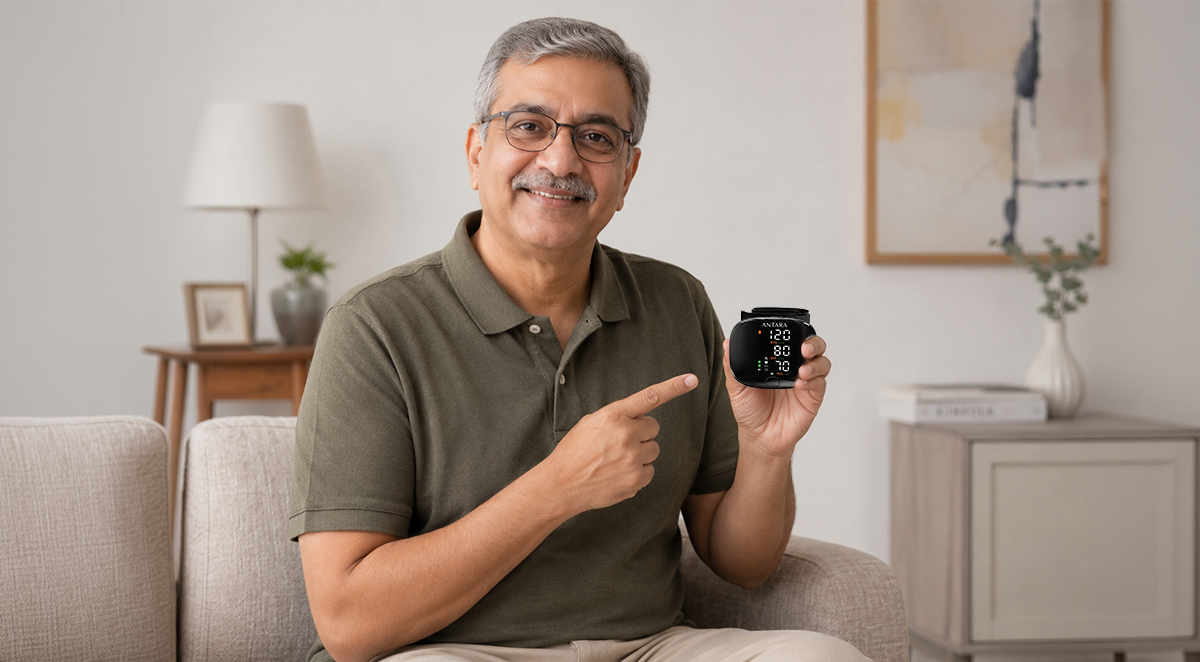
You cannot physically be there to tell your parents to check their blood pressure every day. You can't be there for them if they feel dizzy, miss a dose of their medication, or if they just have that feeling something is wrong. What is possible is helping them set up a daily routine for them.
When older adults live alone, high blood pressure is a dangerous health risk, because typically there are no symptoms until serious damage is done. Establishing a home monitoring system will provide more than just numbers. It provides a daily habit and early warning system, better treatment decisions, and peace of mind between doctor visits.
The routine can be simple. With a reliable blood pressure monitor, a set time each day, some simple instructions on how to measure, along with a method for recording and reporting the results, your parents can become engaged with their own health and continue to live independently.
Why Home Monitoring Is Important for a Parent Who Lives Alone
Blood pressure fluctuates naturally throughout the day. It increases with stress, food consumption, sleep, and activity. A reading obtained in a doctor's office is a snapshot in time. Many older people experience this phenomenon as they record higher readings, which physicians refer to as white coat hypertension. On the other hand, readings taken consistently over several days and weeks, provide a truer picture of how your parent's heart functions in everyday life.
Regular home checks help in 3 ways. Firstly, it helps you find a rising trend early before it turns into a stroke, heart attack, or kidney damage. Secondly, they show whether a medicine is working or needs adjustment. Thirdly, they give your parents a sense of control which keeps them engaged in their own care instead of waiting for the next appointment.
The World Health Organization recommends home monitoring as part of managing high blood pressure in older people. When managing high blood pressure, home monitoring becomes a habit that helps high blood pressure easily integrate into everyday life.
Choosing the Right Blood Pressure Monitor
The blood pressure monitor that you decide on influences the entire process. A device that has very small buttons, poor screen visibility or a complicated setup will be placed in a drawer. On the other hand, a device designed for the hands and eyes of the elderly will be more likely to be used on a daily basis.
When choosing a model keep an eye out for large and clear numbers, an easy one-touch button, well fitted cuff that provides automatic deflation, and a voice read back feature. The voice read back feature will help parents who have poor eyesight, as the device will read the result out loud. Also make sure to check that the device has memory storage so that past readings are saved.
Monitoring Daily Accuracy
For home use upper arm monitors are the most accurate since the cuff is level with the heart. The AGEasy Arm BP Monitor is suitable for this. It has one-touch operation, a comfortable cuff, and a talk back feature, so the senior can get a result quickly and without the need for assistance. The AGEasy Advance Digital BP Monitor gives quick readings and has a simple single button design. It is suitable for parents who want something that has a bright and easy to read screen.
The One Touch Digital BP Monitor has clearly demonstrated accuracy, as it measures within a margin of about 3 mmHg and is powered by either AAA batteries or a Type-C USB connection, so you do not need to worry about a dead battery on check day.
Mobility With Wrist Monitors
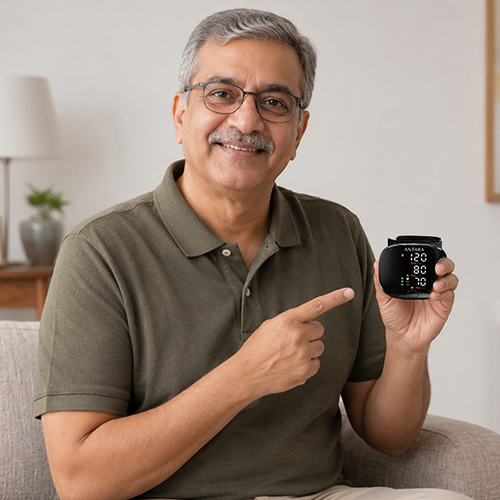
Some older adults can find an arm cuff tight or hard to position alone. They can use a lighter option like a wrist device. The AGEasy Wrist BP Monitor uses one-touch operation, and has a voice talk back feature, which makes daily checks easy for a parent who is living alone. Remember that wrist readings are most accurate when the wrist is level with the heart.
The complete range of devices is found on the AGEasy blood pressure monitors collection which consolidates devices specifically designed for use by seniors.
Setting a Consistent Time Each Day
Reading taken at different times shows different results. To make the numbers useful, guide your parents to check the blood pressure at the same times every day. Most doctors recommend two time slots: one morning check, before taking the medication and eating breakfast, and one evening check, before dinner.
To keep it consistent, a note near the monitor or a reminder on the phone can be pretty helpful. Consistency will provide a trend that a doctor can read with confidence.
Measuring the Right Way
In most cases, technique can impact results more than expected. A few small habits will keep readings honest and comparable from day to day.
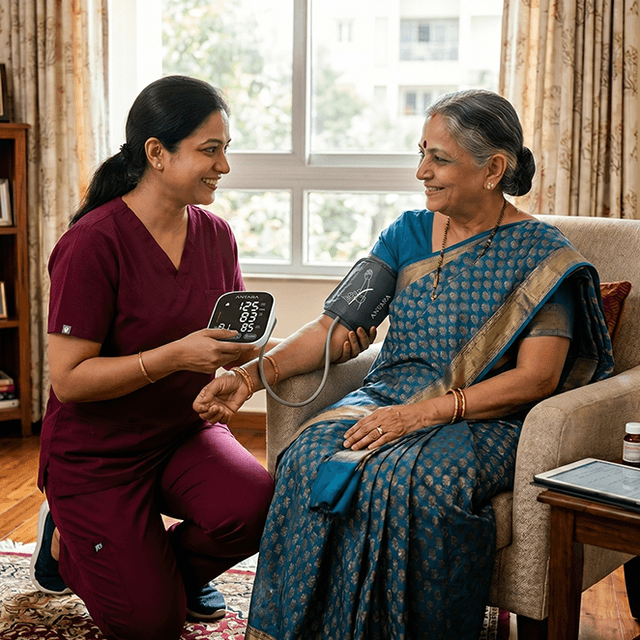
Suggest your parents to sit quietly for five minutes before a reading, with their back supported and feet flat on the floor. The suggested position for the arm is at heart level on the table. The cuff should be placed on bare skin, and not over a sleeve. They should not move or talk during the check, as movement and speech can push the numbers up.
Taking two separate readings a minute apart, and noting both, will give a steadier average. A full bladder, a recent cup of coffee, or a cigarette in the last 30 minutes will all raise the result, so checking right before those things works best.
Recording and Sharing Readings
Numbers are only useful when someone looks at them. Keeping a simple record for daily checks provides useful information for the doctor.
The old format of handwritten log books is acceptable to a big segment of the older adult population who can write down in each line the date, time, top number (systolic), bottom number (diastolic), and pulse. If a parent is comfortable using a phone, he can use a no-cost blood pressure application that will log the blood pressures and provide a trend report that can be sent via text.
Establish a rhythm of communicating. Weekly photographs of the log book to you will suffice so you do not have to answer phone calls each day. Bring the entire log book to all physician visits. Recordings of 30 days of home blood pressures are far better for instructing treatment than a single measurement taken at the clinic.
Understanding Which Numbers Are Problematic
A parent knowing what the numbers indicate creates the best adherence to a blood pressure routine. Ideal home blood pressure readings are under 135 over 85. When a reading is 135 over 85 to 160 over 100, that is a time to call the physician to discuss adjusting medications.
There are also some readings that require even more urgent action. A reading at or above 180 over 120 accompanied by chest pain, shortness of breath, weakness on one side, blurred vision, or severe headaches requires immediate emergency medical assistance. Make these safety thresholds clear to your parent, and have them readily available to reference by the blood pressure monitor, so the parent knows when the monitor is guiding them toward more action.
Incorporating Safety Into the Routine
Keeping blood pressure readings within acceptable limits is just one of the many safety measures to incorporate for an aging parent who lives on their own. When combined with the risk of falling, which is one of the leading causes of serious injuries in the elderly, the risk for an elderly adult experiencing sudden dizziness or a drop in blood pressure is even more concerning.
A wearable safety device provides additional protection between check-ins. The AGEasy smartwatch includes fall detection. GPS allows the watch to send an SOS alert along with the watch's location so help can be dispatched to your parent. When combined with a daily blood pressure monitoring feature, it addresses both long-term and short-term risks.
Bottom Line
When a parent lives alone, it's impossible to ignore every worry. What you create instead is a dependable system that your parents can manage: a safety device, a daily check-in, reliable recording, monitoring, and a routine.
For the time in between, the safety device allows your parents to maintain their independence and you to retain peace of mind. Start with a daily check-in and device this week, then let the routine develop from there.