

Wrist Brace for Seniors: How the Adjustable-Dial Design Solves the Velcro Problem
Sep 18, 2026


Wrist Brace for Seniors: How the Adjustable-Dial Design Solves the Velcro Problem
A loose wrist brace can keep an older adult up at night in discomfort. Some older adults may also avoid wearing wrist supports because fastening them can be difficult.
An adjustable-dial wrist brace may be easier to use because it replaces multiple Velcro-style straps with a dial-adjustment system. Instead of fine-tuning each closure, the wearer can rotate the dial to adjust the fit. This can make it easier for older adults with weak fingers or reduced hand dexterity to achieve a controlled fit.
A good brace should be comfortable without slipping or restricting circulation. It should provide support while helping the wearer maintain as much independence as possible.
A Wrist Brace Should Not Be an Added Burden
A properly fitted brace should comfortably support the wearer. It should not cut off circulation or slip during use, and it should not unnecessarily reduce the person's independence.
Most Velcro wrist braces are tightened using a system of straps. This requires the wearer to have sufficient finger strength, visual ability, and mobility in both hands. These abilities may become more difficult with age.
Why Traditional Velcro Braces Can Be Difficult for Seniors
Older adults may experience reduced grip strength, joint stiffness, arthritis, tremors, reduced tactile sensitivity, poor vision, or difficulty performing tasks that require both hands. These challenges can make it harder to tighten and position a wrist brace correctly.
With prolonged use, Velcro can also lose adhesion, allowing the strap to become loose. This may affect the fit and contribute to discomfort.
Caregivers may need to help an older adult fasten a Velcro wrist brace. However, relying on assistance for a task that could otherwise be performed independently can add to the caregiver's responsibilities and reduce the wearer's independence. Velcro fastening can also become inconvenient when the brace needs to be adjusted outside the home.
What Is an Adjustable-Dial Wrist Brace?
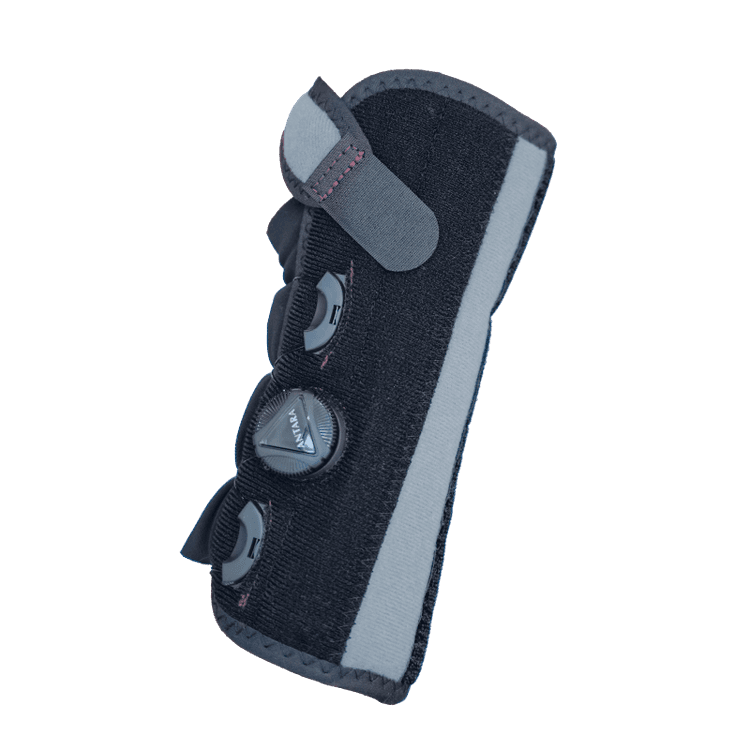
An adjustable-dial wrist brace uses a small internal dial connected by wires or straps. To tighten the brace around the wrist, the wearer rotates the dial. To loosen it, the dial is rotated in the opposite direction.
This design allows the fit to be adjusted gradually, which can make it easier to avoid an excessively loose or tight fit compared with repeatedly adjusting multiple straps.
The AGEasy Wrist Brace with Adjustable Dial is designed to address some of the practical challenges associated with traditional Velcro-fastened straps. Instead of repeatedly pulling and aligning multiple straps, the wearer can gradually tighten the brace around the wrist for a customized fit.
The design may be particularly useful for older adults with dexterity issues, stiff joints, or reduced finger strength that can make one-handed fastening tasks more difficult.
Senior Hand Strength and Ease of Use
One of the main benefits of an adjustable dial is that it simplifies the fastening process. A single dial can provide control without requiring the wearer to repeatedly pull and align several Velcro straps.
The gradual tightening mechanism also allows small adjustments, helping the wearer find a comfortable level of support rather than relying on a single fastening position.
This type of design may be relevant for seniors experiencing:
- Wrist pain or stiffness
- Hand weakness
- Limited hand or finger joint range of motion
- Reduced hand dexterity
- Finger joint arthritis
- Tremors
- Weakness in one hand
- Poor vision
An easier-to-adjust design may also reduce how frequently a caregiver needs to assist with fitting, helping support greater independence during everyday use.
What to Check Before Buying a Wrist Brace
Wrist braces are personal and should be selected based on factors such as hand strength, wrist size, and daily activities. Consider the following before purchasing one.
Fit and Sizing
Measure the wrist according to the product instructions before purchasing. The fit can affect whether the brace stays in place, feels comfortable, and avoids excessive compression that may contribute to numbness or skin problems.
Ease of Use
Your parent should be able to reach, grip, and turn the dial, even if the other hand is being used. The dial should be sufficiently large and firm to grip comfortably.
Support Level
Some braces restrict wrist movement more than others. The amount of movement restriction required depends on the individual's condition and should be guided by a healthcare professional when necessary.
Material and Comfort
Thin, soft, and breathable materials may be more comfortable for everyday use. Edges should not dig into the skin. Older adults may have thinner or more sensitive skin, so check the wrist after removing the brace, particularly during the first few days of use.
Cleaning
Follow the product's instructions for cleaning and drying. Dirt and moisture, particularly sweat, can contribute to skin irritation. A simple cleaning routine can help maintain the brace during everyday use.
How to Help Your Parent Use It Safely
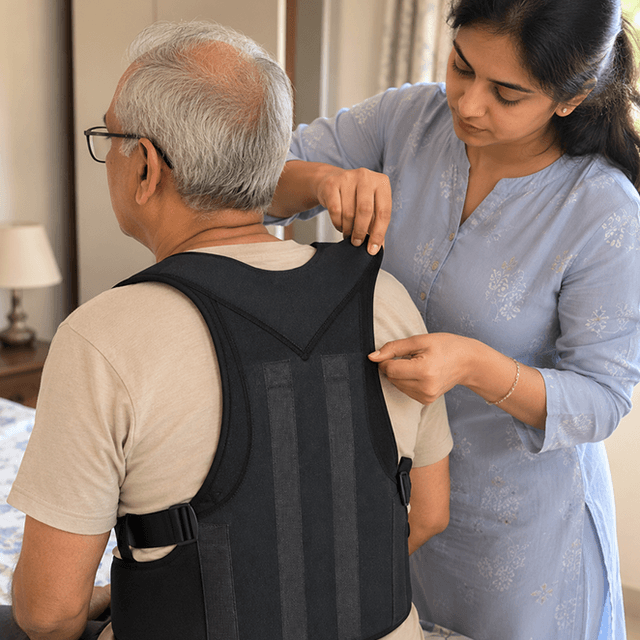
Go through the product instructions together with your parent. Demonstrate the positioning of the brace, how to adjust the dial, and how much tension should be applied. Fit the brace while your parent is seated comfortably, with the wrist in a neutral position.
The brace should feel supportive without causing pain or numbness. Watch for hesitation in movement, cold fingers, or changes in skin colour. Unless otherwise advised by a clinician, normal movement should not be unnecessarily affected.
If the brace feels too tight during routine fit checks, loosen the tension dial. Keep the area underneath the brace dry and check for redness, pressure marks, blisters, or skin irritation after use.
Continuous use should only be done under a doctor's instructions. Night-time use is not generally recommended unless specifically advised by a doctor or permitted by the product instructions.
Signs Requiring Medical Evaluation
A wrist brace can provide support and symptom relief, but it does not diagnose or treat the underlying cause of wrist pain or injury.
Seek medical attention if your parent's pain is severe, there is rapid swelling with deformity, numbness, weakness, or pain following a fall. Symptoms following an accident or trauma should be assessed by a healthcare professional, particularly when a fracture is suspected.
Consult a medical professional if pain continues for a prolonged period, swelling keeps returning, or pain increases when the hand is used. These symptoms may require more than simply changing how the brace is fastened.
A doctor can advise whether a brace is appropriate after surgery or a fracture, when nerve-related symptoms are present, or when there is a diagnosed joint condition. They can also advise on how long the brace should be used and which activities may require support.
Why the Adjustable-Dial Design Can Be Practical for Seniors
A wrist brace with a dial design addresses an important practical challenge: some older adults may find complex braces difficult to use independently. A simpler adjustment mechanism can be adapted to people experiencing reduced hand strength or coordination.
Instead of repeatedly fastening several straps, the wearer can rotate the dial to adjust the brace. This can reduce the effort required to achieve a comfortable fit.
For caregivers, a simpler adjustment mechanism may also reduce the need for assistance. A properly fitted wrist brace should provide support while allowing your parent to carry out everyday activities as comfortably and independently as possible.
Disclaimer
The information in this article is not a substitute for medical advice, diagnosis, or treatment. Please consult with your parent’s healthcare professional before using a wrist brace, especially if your parent has tingling, swelling, or pain, reduced hand mobility, or has had an injury or surgery.