
The Best Sleeping Position for Back Pain (and the One Hurting You)
Jul 31, 2026
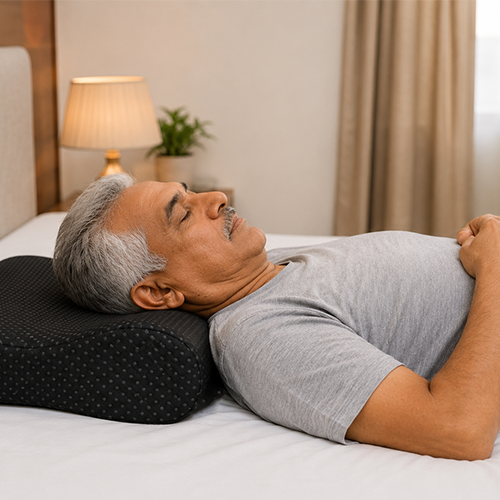
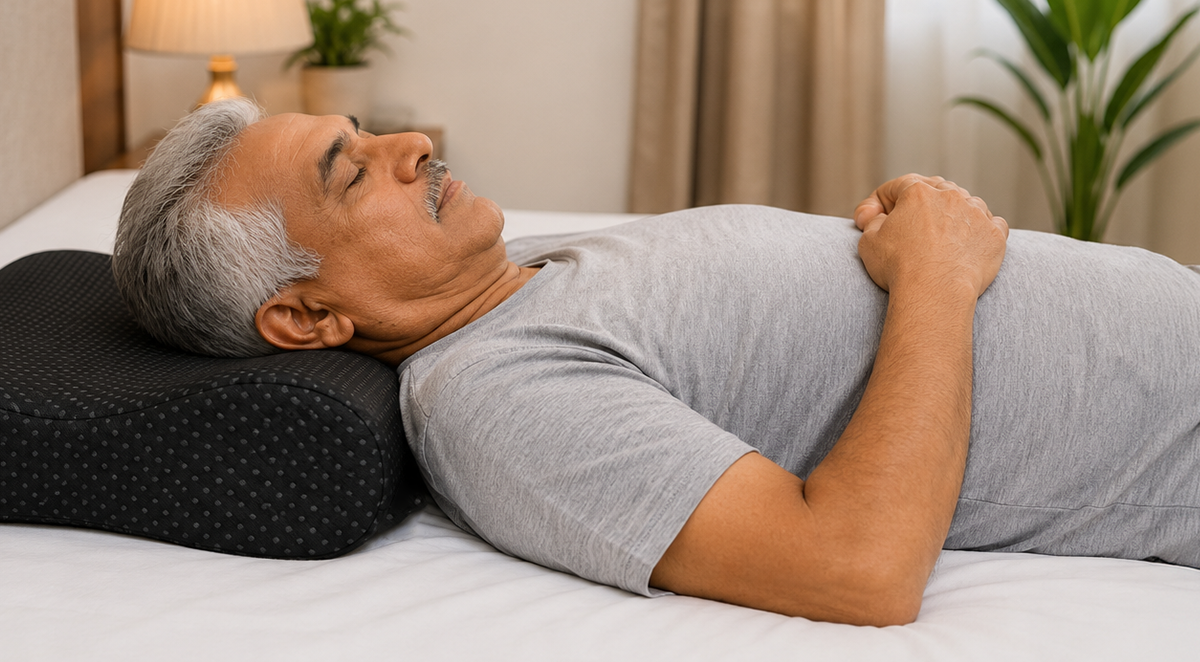
Sleep positions can affect how your back feels when you wake up.
Yet many parents continue to wake up with back stiffness, not knowing what went wrong. They try taking a few steps, and often wait for the discomfort to ease itself. Some even think that this is just part of the aging process.
Don't blame the mattress without considering how your parent sleeps. Some people sleep in positions that directly aggravate the situation.
It is not just about purchasing a new mattress, getting new pillows and using aggressive analgesics. First and foremost, you need to understand how your parent sleeps.
- Is he/she lying in a position that may aggravate the pain?
- Is the lower back situated in a position that will provide relief in the lower back region?
- Is it possible that a minor adjustment in their sleeping posture may make their life a little easier in the morning?
Inadequate posture sleeping can help increase back pain, or can help to prevent the problem from happening. Sleeping posture can directly affect your parent.
The result is
- simply waking up with the same stiffness associated with the phenomenon,
- becoming reliant on analgesics to accomplish the few things one needs to do,
- simply increasing sitting, or reducing activity, simply because moving has become uncomfortable.
Sleeping posture directly impacts the aging process. The result is reduced morning stiffness that makes getting out of bed more comfortable, and may simply improve one's ability to do so. Assist your parents in waking up prepared for action, rather than merely waking up from slumber.
This article covers the most helpful sleeping positions for alleviating back pain, positions that aggravate it, and other incremental changes that might assist your caregiver to sleep better as well as reducing their pain upon waking.
Why Your Sleeping Position Matters More than the Mattress
A mattress provides support to the body. A sleeping position determines how that support is used.
Even the costliest mattress cannot adjust a spine that remains twisted for 8 hours. If your caregiver sleeps on their stomach or curls up tightly on one side without knee support, the lower back will endure stresses that are not alleviated by additional cushioning.
The spine is designed with natural curves in the neck, mid-back, and lower back regions. When your caregiver lies down, the aim is to keep the curves as close to their natural shape as possible. A position that flattens or overly straightens these curves applies strain to the discs, joints, and muscles surrounding the spine. Over a full night, that strain builds up.
This is also the reason why 2 people can have the same mattress and end up feeling entirely different. One will wake up feeling relaxed and refreshed, while the other will feel stiff and if they're experiencing lower back pain, they'll be supporting their back before they even sit up.
The Position That Increases Likelihood of Back Pain
Stomach sleeping is the position that most medical practitioners reference when discussing back pain and how it's typically experienced first thing in the morning.
When you lie on your stomach, your head is forced to turn to one side for hours on end, straining your neck. It also has the effect of flattening the natural curve of your lower back and causing the spine to arch in the wrong direction, especially if your stomach is sinking into a soft mattress. For anyone who is already experiencing lower back pain, this position will result in the muscles working overtime to support the spine. Keep an eye on your parent for these signs of poor sleep posture.
They wake up with concentrated pain in the lower back or neck. They have trouble standing upright without discomfort and it takes several minutes. They reach for pain relief before they start their day. They slept on their stomach, even though they fell asleep on the side or back. If this sounds familiar, the solution usually involves training the person to sleep in a different position rather than getting a new bed.
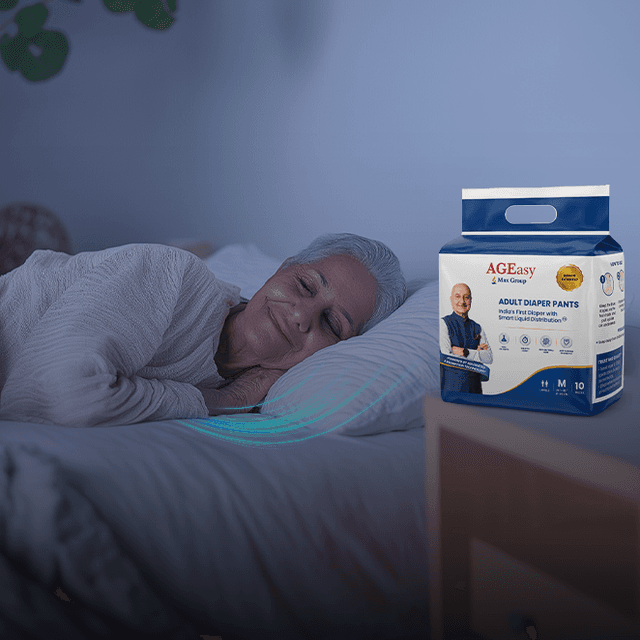
Sleeping on your back with knee support is a good position to do if you have back pain. This keeps the spine in a neutral position.
Sleeping on your back with a pillow under your knees is a good position because it supports you more. It will relieve the tension on your back and also help you feel more secure.
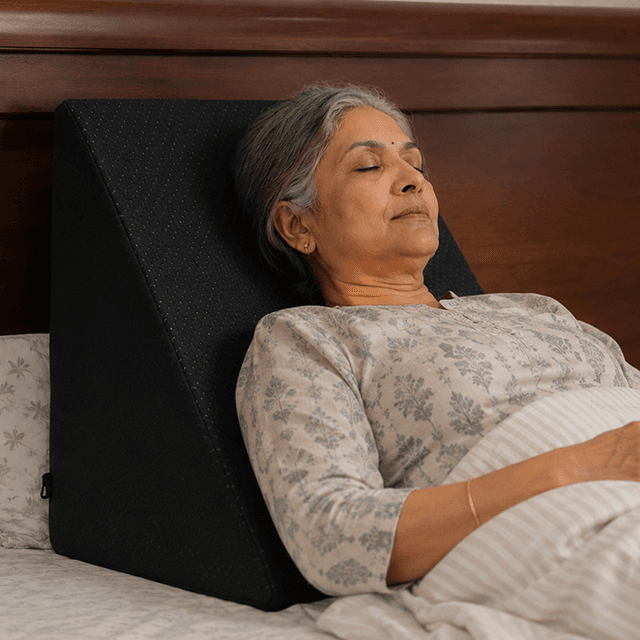
For older adults who experience acid reflux, shortness of breath, or leg swelling combined with back pain, slight upper body elevation can be beneficial. The AGEasy Wedge Pillow provides this elevation without having to use three or four regular pillows that can shift during the night. The same wedge can be used to elevate the legs to help reduce foot and ankle swelling as this condition can disrupt sleep.
Sleeping on the Side with a Pillow Between the Knees
One of the most common and most forgiving sleep positions is side sleeping, with the proper support of the knees and neck.
Without a pillow placed between the knees, the top leg becomes dominant, pulls forward and rotates the hip and lower back out of proper alignment. A good knee pillow between the knees helps to keep the hips stacked and the spine straight from neck to tailbone.
In this position, the head also needs a lot of support. If a pillow is too thin, the neck drops down towards the mattress too far. If it's too thick, the neck is propped up at a steep angle. The AGEasy Cervical Pillow is designed with a specific contour meant for back and side sleeping positions. This keeps the neck in line with the spine without tilting in either direction. Many parents who have switched to a properly contoured pillow experienced a significant decrease in stiffness within the first week.
Avoiding the Curled, Tucked-In Position
Falling asleep while curled into a fetal position may feel comforting, but it keeps the spine in a rounded position for an extended period of time. This position can be bad for your back because it removes the back's natural curve and can make it harder to breathe.
Instead, try to lie on your side with your legs bent slightly and a pillow supporting your knees. This provides a similar sense of security but without the undue strain on the back.
Small Changes That Make a Big Difference
You do not need to completely transform your bedroom to see benefits. Targeted small changes will add up over time.
- Instead of using several loose pillows, put one supportive knee pillow for side sleeping between the knees.
- Use an adequately supportive contoured pillow for head and neck and not a flat and worn out one.
- Keep a wedge pillow on hand for anyone with reflux, breathlessness, or leg swelling to use at night.
- Encourage your parent to notice which position they wake up in, instead of simply which one they fall asleep in.
- Avoid letting the stomach-sleeping habit continue unchecked, even if it feels familiar.
None of these changes will require your parent to completely relearn how to sleep. Most people will make the change in under two weeks of consistent use.
Daytime Activities That Aid Nighttime Recovery
Sleep posture does not work in isolation. What happens during the day affects how the back feels at night.
- Poor lower back support and long hours of sitting can lead to nighttime stiffness as a result of spinal muscles remaining tense due to daytime strain. The AGEasy Lumbar Back Support is a product that can be used on an office chair, car seat, or recliner, and it helps support the back's natural lumbar curve, helping the back maintain the lumbar curve at work and at night. If the back has less strain during the day, then it will be able to start the night in a better state.
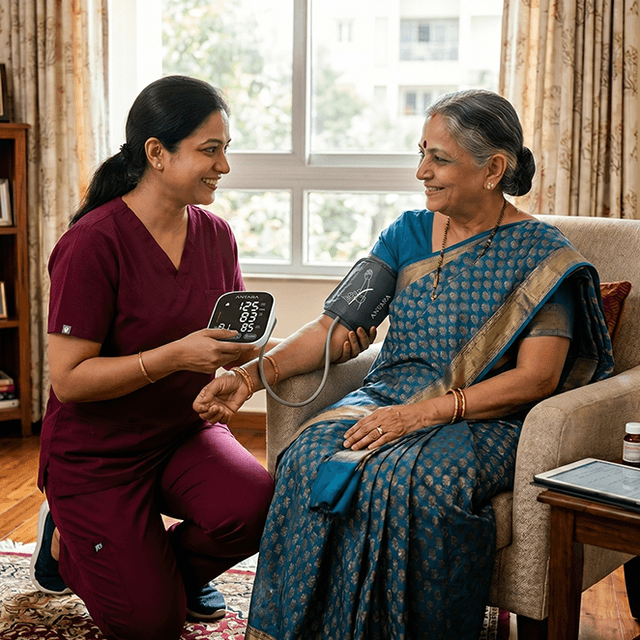
- It is important to keep track of other health indicators as well. Sleep deprivation, chronic back pain, and stress can lead to higher blood pressure. The AGEasy Wrist BP Monitor is a simple way to monitor your blood pressure, and it only takes a few seconds to complete. Its lightweight cuff and one-touch operation streamline the process and make it easy for seniors to take it themselves, even if they are still in bed.
When to See a Doctor
Most stiffness that is caused by sleeping positions typically improves in a few weeks with correct posture and the appropriate support. There are some signs that do require a doctor's attention and may go beyond a simple pillow change.
If your parent exhibits any of the following symptoms, please consult a doctor:
- Pain that radiates into one or both legs, or there is numbness or tingling in the feet.
- Back pain that is severe enough to wake them up from their sleep, and it is not exclusively in the morning.
- Leg weakness, impaired balance, or unsteady during walking.
Pain that is persistent despite rest, and is unaffected by changes in posture, or has lasted longer than several weeks.
Back pain that develops suddenly and worsens after falling or sustaining an injury is a concern.
These symptoms may indicate involvement of the nerves or one of a number of other conditions that require more than just a simple adjustment to the sleeping arrangement.
Begin Simply
Your parent's sleep routine can not be completely improved at once so start with one change. For example, placing a pillow between the knees or using a contoured cervical pillow can be a good start. Use a wedge for additional elevation. Observe how mornings change over the next week.
Small and consistent changes to sleeping position can help alleviate back pain more than buying a new mattress. Each morning, your body will show whether the adjustment is effective.
Disclaimer: Information in this article is NOT a substitute for professional medical advice. If your parent has a known spinal condition, has had recent surgery, or experiences pain that is severe or is worsening, consult your doctor or physiotherapist before making any significant changes to sleeping position.