

Setting Up a Bedridden Care Corner at Home: The Complete Equipment and Routine Checklist
Article Category: General Wellness
Article by: Priyasha
Jul 24, 2026


Parents spend long periods of time in bed while sick. Families focus their attention on the parent's illness and overlook post care needs.
Daily routines of caregivers can include helping the parent sit up, change positions, assist in washing, and administering meds, while also keeping bedsore prevention as a priority. Without the proper setup, caregiving becomes exhausting and your parent becomes uncomfortable.
Your home does not have to be changed into a hospital of sterile rooms and medical equipment. With the right equipment, some simple organizational planning, and a daily routine, you can provide for your parent's needs while honoring their dignity while providing safety and comfort.
A Bedridden Care Corner, or bedside care station, is a space designed for care that will enable your parent to receive optimum care in their familiar surroundings while also reducing your burden and, most importantly, preventing complications to your parent's health.
Here's the step by step guide on how to set up a bed care corner at home.
1. Choosing a Room
Supply purchases cannot be made until a room has been selected. The best option for a care corner is a room with natural light and good space for movement on all sides of the bed. Also consider accessibility to an adjacent bathroom. Don't choose a room that is far from the middle of the house, as this will be a high traffic area, ideally ten to fifteen times a day.
In order to assist your parent and to create an unobstructed path from the bed to the door, there should be a pathway of at least 3 feet. All loose rugs, trailing wires, and low furniture should be removed, as these could cause falls, especially if your parent has limited mobility.
A sturdy chair should be kept in the room as you and your guests will need somewhere to sit during long feeding or talking sessions.
2. Set Up the Bed for Safety and Pressure Relief
Make sure to get the bed right as it will be the most important part of the room.
Bed Height and Positioning
Ensure the bed is positioned so that you can reach your parent from both sides. If caregiving is done from one side only, it will result in awkward twisting movements, and back injuries among family caregivers start here. The height of the bed should be such that the top of the mattress is at or near your mid thigh level so that you can perform lifts and turns without deep bending.
Pressure Relief
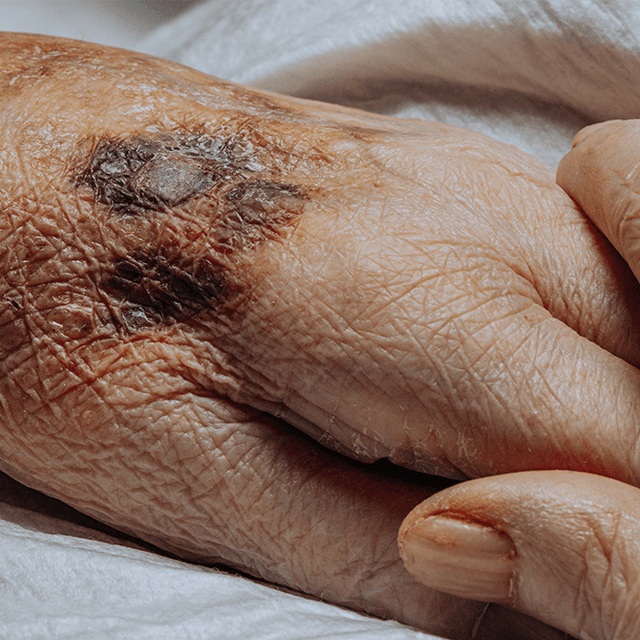
Bed sores or pressure ulcers are injuries to skin and underlying tissue caused by prolonged contact with a surface. Initially, the skin's surface may become discolored but after a while, an open wound can develop. Pressure ulcers are easier to prevent than to heal.
An alternating pressure air mattress is the single most useful item for a bedridden person. AGEasy air mattresses are highly rated because they utilize a very quiet pump to cycle air between cells. Because of this, no part of the body will be allowed to bear weight for prolonged periods which is helpful in preventing pressure ulcers. This air mattress will also decrease the number of times that you will need to do manual pressure reliefs for your parent. However, it still does not eliminate the need to reposition your parent.
3. Fall Protection
Even if a patient is bedridden, they can still move around and attempt to get out of bed during the night. To assist with bed mobility, your parent can use safety bed rails to help keep them from rolling out of bed as well as give them something to hold on to when changing positions or sitting up. When buying bed rails, be sure to buy a rail that accommodates standard home beds and not just hospital beds.
4. Positional Assistance
A wedge pillow can be used so that your parent can remain seated for meals and medication to be taken, which can help decrease the chances of choking and aspiration. It is also helpful to keep 2-3 regular pillows nearby to help position knees, support the back, and aid in the side-lying position.
5. Establish a Hygiene Station Near the Bed
Hygiene is the toughest part of caregiving for a bedridden person. Set up a shelf or trolley so that it is within reach of the bed. You will need to restock it weekly to ensure their hygiene.
6. Daily Cleaning
Daily cleaning is important for maintaining healthy skin. Bed bath wipes allow your parent to clean one body part at a time, without water, soap, or rinsing. Choose non-alcoholic wipes that have moisturizers like aloe vera. Sensitive skin wipes are best, as tears and dry skin will be preserved.
7. Caring for Incontinence
A unique challenge for the caregiver is the incontinence of bedridden patients, which requires a systemic response. To reduce the frequency of complete bed linen changes to once a day, and the frequency of incontinence changes to once a day, protective, disposable undersheets can be placed underneath the patient. The skin is prone to breakdown and infection when there is prolonged contact with skin that is in a moist environment.
8. Hygiene Checklist
Make sure the station has enough undersheets, diapers, skin barrier cream, disposable gloves, hand sanitizer, a small covered waste bin, and a flashlight for nighttime checks to avoid running out of supplies at 2 am.
9. Medicines and Essentials
To create an effective bedside table, divide the space into 3 sections.
- In the first part, place items that your parent can use independently, such as water, spectacles, a phone, and a bell or buzzer to call you.
- The second section can contain daily medications in an organised pill box which is labelled by day and time.
- The last section is for your caregiving log.
The log is very important, and its value is often underrated. It is necessary to write down the time that medications were administered along with the details of when food and drink were consumed, bowel movements, skin changes (redness) that occur during the care routine, etc. The notes created over a period of 2 weeks will provide a doctor with far better insight into the situation than your memory will. Any changes to the skin should be recorded using your phone as it is almost impossible to describe it over the phone.
10. Toileting Plans and Limited Mobility
Patients can still participate in some capacity. Bed bound patients can participate in assisted toilet trips which are extremely important to preserve patients' muscle tone in addition to maintaining their dignity.
Patients with limited mobility who require assistance should use bathroom grab bars and raised toilet seats to reduce the amount of strength needed to assist standing. Wheelchairs, walkers, and mobility chairs should be used to cross the distance as this is a safety issue. Anti-slip flooring in the wash area is recommended as well as the toilet.
In the event that the patient can no longer leave the bed, a bedside commode is used to keep toileting manageable without excessive lifting.
11. Routine Care and Moving
The better the routines, the better the care.
You should move your parent every 2 hours during the day, alternating being on their back and either side. This is the minimum standard recommended to prevent pressure sores and to maintain the effectiveness of an air mattress. Use your phone alarms to remember.
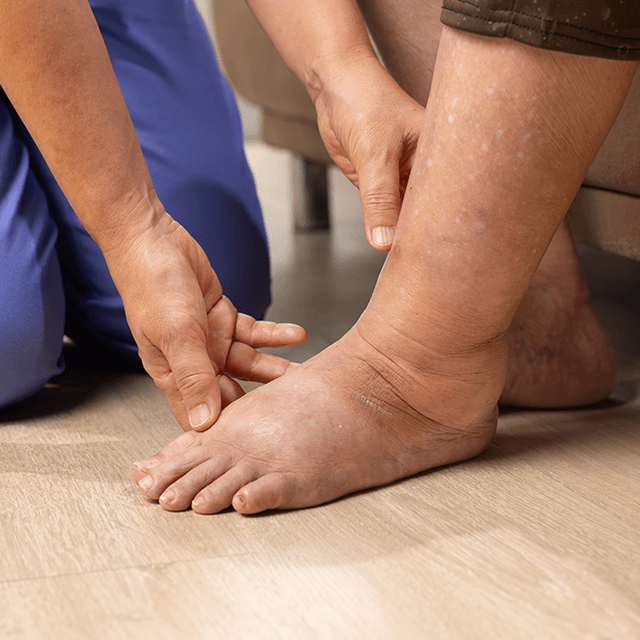
With every turn, inspect the pressure points. These are the tailbone, heels, hips, shoulders, and back of head. Redness that has lasted longer than 30 mins is a warning sign and should be informed to a physician.
Here is an example schedule that you may find useful:
- Each morning, you will need to give a bed bath, change the diaper and undersheet, dispense medications, and provide seated breakfast.
- Make sure to move your parent to give fluids, serve lunch, and do some passive limb movements (to prevent stiffness) in the afternoon. Also, your parent may need to be repositioned during this time.
- During the evening, you will need to wash your parent, give them dinner and medications, and do a skin check in good lighting. You will need to do brief checks one or two times at night; this is where the torch and undersheet system will come in handy.
You should encourage your parent to drink more fluids to avoid dehydration. Dehydration is a serious issue, especially for the elderly, as it can cause urinary infections, constipation, and confusion. These issues can develop quickly, and often people do not realize it is happening.
You should also take care of yourself. Caregiver burnout is real, and you shouldn't feel weak for stepping back and taking care of yourself. It's a good idea to share the caregiving responsibilities with another family member, even if just on weekends.
If you get injured, you won't be able to provide care, so it is important to take it easy and use any assistive equipment you may have. If you have the means to do so, hiring a professional caregiver for just a few hours each week can help give you time off and give your parent some variety in their care.
When to Contact a Doctor
Your home care setup has to do with daily activities, not medical decision-making. You should contact a physician when there is broken/discolored skin over bony areas, fever, decreased urination, confusion, not eating for more than a day, or increased work of breathing. Keep the physician's contacts and other medical records (recent medication, relevant medical history) taped inside the caregiver's log so family members can retrieve them easily to make emergency calls.
The Bottom Line
A bed care corner needs 3 things from a home care setup.
- Safety, so that no complications arise.
- Comfort, so their days are not unbearable.
- And dignity, so while illness takes over the body, it cannot take over the person.
Achieving these 3 is just a weekend of setup and a consistent routine.
Disclaimer: This article provides general information related to caregiving and is not medical advice. All patients have unique needs, and it is important to evaluate your setup and routines with the treating physician or a home health nurse, especially in the initial weeks.