

India's Record Heat Is Hitting Your Parents Hardest
Article Category: General Wellness
Article by: Uttam
Jul 23, 2026
A checklist for caregivers in emergencies
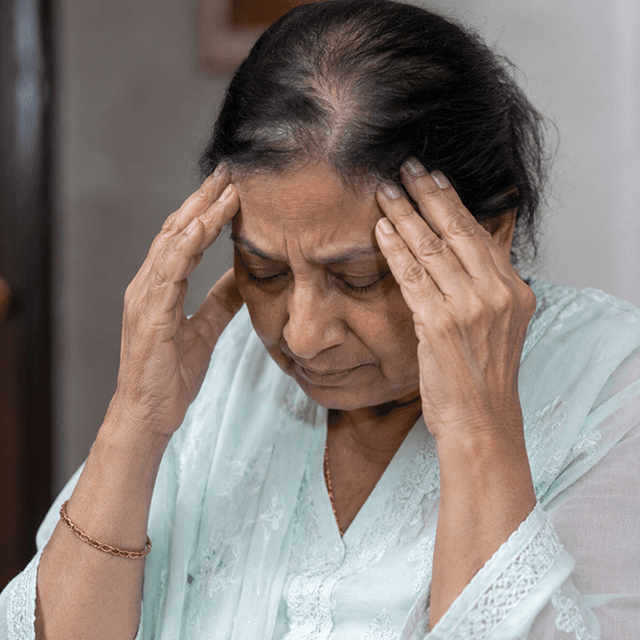
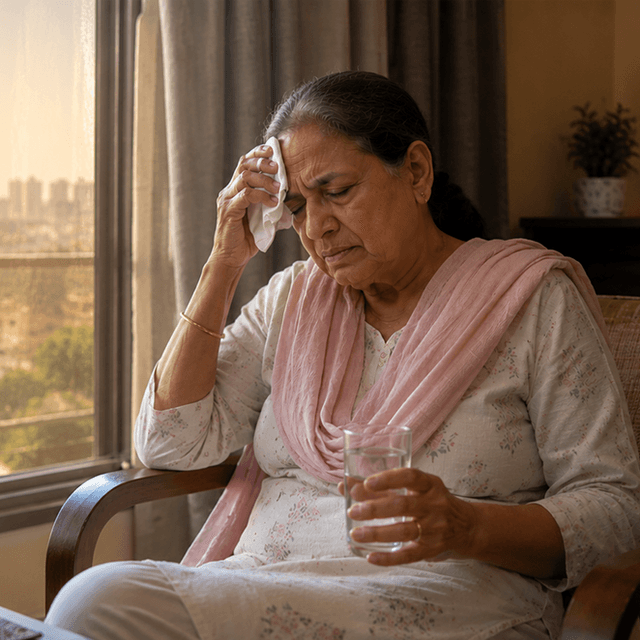
My mother called yesterday.
"Oh, I'm just a little tired," she said.
She didn't talk about the headache she'd had since noon. She didn't say she had no water all day, and she definitely didn't say it was above 38°C in her flat.
Does that sound familiar?
Missing a glass of water or a long nap without anyone around to notice is how heat emergencies begin in older adults.
India hit its peak temperature for 2026 at 48.2°C. That is the highest recorded temperature in recent history.
In April of 2026, every single one of the world's 50 hottest cities was in India.
There is an estimate of 380 million Indians living in conditions above the physiological limits of human survival, which is a wet-bulb temperature of 35°C.
For 40 days in a row, India saw a temperature of above 40°C before the national Heat Wave Action Plan was activated.
Of all the people caught in such circumstances, your parents are in the highest risk category. Your understanding of this will determine your level of action. Let's dive in.
Why Older Adults Are Particularly Vulnerable to Heat
The most concerning issue here is that adults above a certain age threshold do not speak about being dehydrated. That physiological response is absent.
Many older adults stop receiving such signals. The thirst mechanism becomes less sensitive as a person ages. Accordingly, on the 44°C afternoon, it could be possible that your father is in a state of potentially hazardous dehydration without having that feeling. He isn't even being stubborn. The reality is that the body is simply not sending the signals.
And this is just the start. The kidneys are less able to retain water. The body's mechanism of cooling through sweat becomes less effective. The cardiovascular system has been working hard, and, in addition, the body must push heat from the core to the skin.
If your parents are suffering from hypertension, diabetes, or any cardiac issues, they are in a much worse state when the temperature rises, and so is the system.
Medications
Older adults take multiple medications. Diuretics. Beta-blockers. Antihistamines. Blood pressure medications can also impair the body's ability to sweat, control fluids, or respond to temperature. While a person may have taken these medications with no complications for years, under extreme heat, these combinations become dangerously problematic.
Older adults are not weak. There are biological reasons for why older adults struggle more than others during hot days.
What India Is Facing This Summer
Although these numbers may seem a little empty, it is their very nature that is the cause for concern.
| Region | Heatwave | Severe Heatwave |
|---|---|---|
| Plains | 40°C+ | 47°C+ |
| Coastal Areas | 37°C+ | Not Defined |
| Hilly Regions | 30°C+ | Not Defined |
A heatwave is also declared when the regional temperatures are 4.5°C or more than the average. In late May 2026, we recorded 48.2°C surpassing the severe heatwave threshold.
Currently, the recorded deaths due to heat this season is at 37, but this is almost certainly lower than the actual number due to the way these deaths are categorized. Most heat-related deaths are recorded as heart attacks, kidney failures, or strokes, because that is the first symptom the body presents without recording the cause, which is heat.
Furthermore, daytime heat is not the only problem. Average nighttime temperatures have been rising across India at a rate of 0.21°C per decade since 1961. Nights need to cool off in order to have that recovery from daily stress, but when nights are hot, recovery is incomplete and the body pays the price.
Warning Signs Every Caregiver Must Know
Heat illnesses are difficult to catch in elderly adults as signs are not dramatic. Confusion, irritability, weakness, and faintness are not signs of a heat emergency. They sound like a hard afternoon, a shift in blood sugar, or a simple bad sleep, which in turn is exactly why heat illness in elderly goes unnoticed.
2 stages are present and the difference between the two is the difference between 'act now' and 'call an ambulance'.
Heat Exhaustion
The alarm goes off for the body. It is serious but this can be turned around if you act quickly.
- Heavy sweating (or less than expected)
- Cool, pale, or clammy skin
- Unusual weakness or fatigue
- Dizziness, or near faint
- Nausea, vomiting
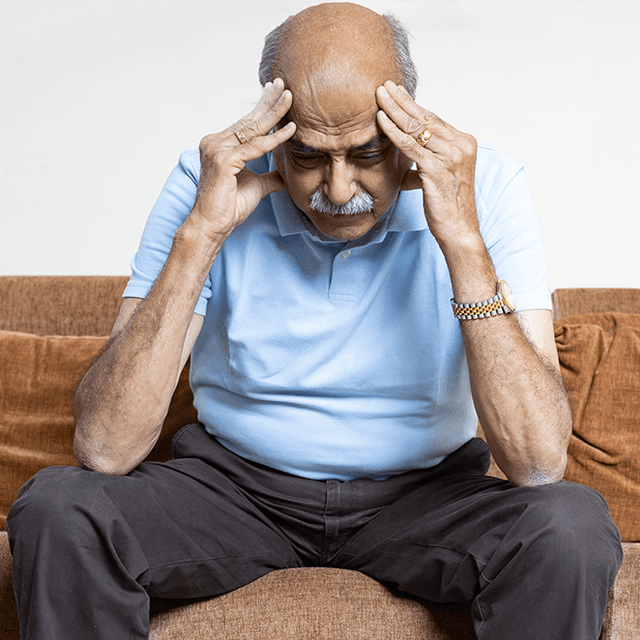
- Leg cramps, headaches
- Fast but weak pulse
Heat Stroke — Call 108
- Cooling system has stopped
- Core temp above 40°C. Not a "monitor at home" situation.
- Body temp above 40°C
- Confused? Slurred speech? Disoriented?
- Hot, red, dry skin (sweating may have stopped)
- Rapid, strong pulse
- Loss of consciousness or seizures
While Waiting for Help
Move them to the coolest space available. Apply cool wet clothes to the neck, armpits, and groin. Do not give fluids to someone who is unconscious or confused. Heat stroke can cause permanent brain damage or death within minutes. Call 108 first. Don't drive them yourself and hope for the best.
One thing that surprises caregivers: some older adults experiencing heat stroke will still be sweating. Don't use absence of sweat as your only indicator. When something feels wrong, treat it as urgent.
Is Your Parent at Higher Risk?
Not every older adult is equally vulnerable. However, some combinations can create a situation where the margin for error gets very thin, very fast in the case of a heat emergency. Your parents are at elevated risk if they have:
- Diabetes
- Hypertension or heart disease
- Kidney disease
- Diuretics, beta-blockers, antihistamines, or certain antidepressants
- Living alone
- Limited mobility
- Social isolation
- Dementia or cognitive impairment
- Age above 75
3 or more from this list, and the checklist below stops being optional. It becomes necessary.
The Checklist for Caregivers
The acts of prevention may not seem especially grand, but are nonetheless very important. It could be bringing them an unsolicited glass of water, drawing the curtains before noon, or making a phone call to them at the same time every day. These may not seem overly important but they all can make a big impact. Please go through this before the temperatures rise even more.
If for any reason your parent has already spent time out in the heat today, or something has already occurred, or something came close, here is exactly what you need to do right now.
- Get them out of the heat before you do anything else. Place them in the coolest room you can find, ideally one with an AC, or set up a fan in the room. This step is more important than all the others combined.
- If at any point they become confused or are losing consciousness, do not give anything by mouth. Small sips of cool ORS water, NOT a large glass.
- Cool the body directly. Place cool, damp cloths on their neck, armpits, wrists, and groin. If they can manage it safely, have them take a cool (not cold) shower. You can also place a bucket of cool water on their feet.
- If you have a thermometer, take their temperature. If it is above 38.5°C you need to take action urgently. If it is above 40°C, call 108 right now.
- If they are confused, have slurred speech, or have lost consciousness, or have a temperature above 40°C, call 108. Do not try to drive them. Wait for help while keeping them cool.
- Even if the symptoms are milder, you should still call the doctor, especially if your parent has any other health issues. Rest is not sufficient for heat exhaustion; it requires a medical assessment.
The instances in which you take action and nothing bad happens are often forgotten. Care is preventative, and the benefits are often unseen.
There are explanations in science for the effects of an overheating body. There's just no way for science to decide, to drop the curtain, or to provide the cooling water. That is still in our hands.
The items in the checklist above are not promises. Nothing ever is. But they do represent a series of insignificant actions that, in an extremely large quantity, shift the possibilities in favor of your parents staying crisis-free this summer. That is what it means to care, to do it on a hot Indian afternoon. It is calm, without any show, and most importantly, it is completely worth it.
CRITICAL: When to Call 108
If any of your parents is confused, unresponsive, or has lost consciousness, call 108 immediately. You may also call if they stop sweating despite the outside temperature.
While waiting for assistance, move your parent to the coolest area possible. Use wet cool cloths on the neck, armpits, and groin, and do not give any fluids to someone who is unconscious or confused.
Heat stroke can cause permanent brain damage or death within minutes. Do not drive them yourself and hope for the best. Call 108 first.
A Note on Home Blood Pressure Monitors
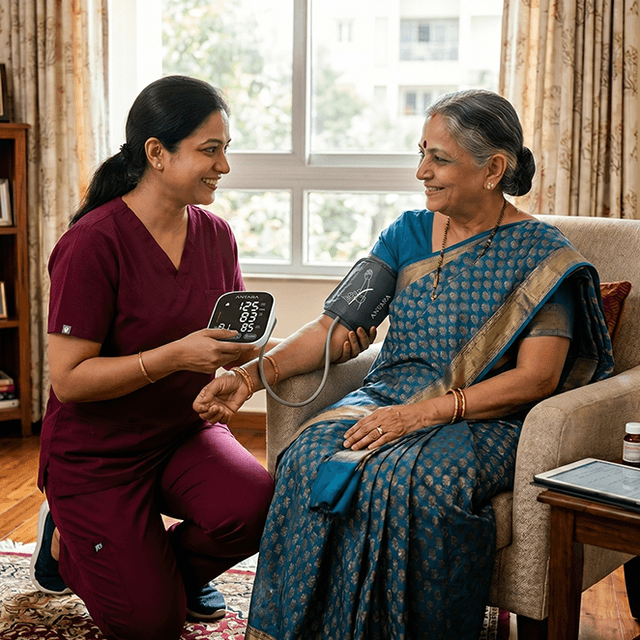
Understanding your parent's baseline blood pressure allows you to track changes over time. During heatwaves, this visibility can mean the difference between making a doctor's appointment or going to the emergency room. AGEasy offers clinically validated monitors designed for easy use in the home environment, including large display models specifically designed for seniors.
On Grab Bars and Non-Slip Mats
Falls are the leading cause of injury-related hospitalisation in adults over 65 in India. Heat makes them more likely by lowering blood pressure and impairing balance. Wall-mounted grab bars, as well as textured non-slip mats, are types of simple interventions that are easy to install and are able to prevent the kinds of falls that can set back an individual's recovery by several months. AGEasy offers a home safety range that is aimed at Indian bathrooms and kitchens.
Sources and References
This article draws on data from the following sources:
- India Meteorological Department (IMD): 2026 Heatwave Advisories and Historical Trend Data (1961 to 2026)
- Harvard South Asia Institute: Physiological Limits Research on 380 million Indians living in conditions exceeding wet-bulb survival thresholds
- World Weather Attribution: India Heatwave Season 2024 to 2026 Analysis
- Al Jazeera, Business Today, Business Standard, The Wire, Down to Earth: Field Reporting, Temperature Records, and Death Toll Data (April to May 2026)
- IEEFA and Carnegie Endowment: Power Demand and Grid Stress Data, May 18 to 21, 2026
- National Institute of Health Sciences (India): Heat-Related Illness in Older Adults, Risk Factors and Clinical Management
- Ministry of Health and Family Welfare (India): Heat Wave Action Plan Guidelines
This article is for informational and educational purposes only and does not constitute medical advice. For any health emergency, contact your physician or dial 108.