
Peak Flow Meter: How to Use It and Establish Your Parent’s Personal Best Reading
Oct 21, 2026

Peak Flow Meter: How to Use It and Establish Your Parent’s Personal Best Reading
Your parent blows into the peak flow meter and a number appears. The useful question is whether the reading matches their usual result.
The reason peak flow meter monitoring is confusing to some is that a low number on their chart does not tell you what is normal for your parent. In this case, their personal best reading gives you a more accurate baseline.
Don't base your conclusion on one of your parent’s readings, another person's result, an online chart, or a range by age. The best way to manage their baseline is to consider what happens when your parent’s breathing is stable.
Their reading should be your baseline. Once you know their best reading, you need to know how much they score on other readings. If they score low, it is a sign that they have increased airway obstruction. It can also provide information on the asthma action plan your parent's doctor provided.
Technique is also important. Inconsistent or weak blows with poor lip seal lead to unreliable readings. The meter could guide your focus to the wrong place and make you worry when your parent has symptoms that need to be addressed.
A properly used peak flow meter will give you a clear baseline, track changes, and provide more information to the doctor in your parent's next appointment.
Learning to use a peak flow meter is simple, and once you understand how to do so, you’ll be able to set your parent’s personal best and identify changes. Peak flow meter readings should always be used in combination with symptoms, and within the context of the action plan that your parent’s clinician has made for them. They shouldn’t be used to make a diagnosis.
What is a Peak Flow Meter?
A peak flow meter is an apparatus that measures how much air a person can forcefully exhale from their lungs. This is measured as peak expiratory flow (PEF).
Doctors will recommend peak flow measurement for patients with asthma and other breathing issues to record changes in peak expiratory flow. A lower peak expiratory flow measured with the device could be coupled with one of the following symptoms: wheezing, coughing, chest tightness, and shortness of breath.
A peak flow meter shouldn’t be used by a clinician to diagnose the reason behind a person’s breathing difficulty. It shouldn’t be used as a substitute for a breathing assessment, oxygen measurement, a chest assessment, or a complete examination of the lungs. Your parent’s symptoms and history still matter.
The meter should be used according to their care plan. Ask your parent’s clinician when and how often to take readings, and what to do when readings fall outside of their expected range.
How to Take a Reading
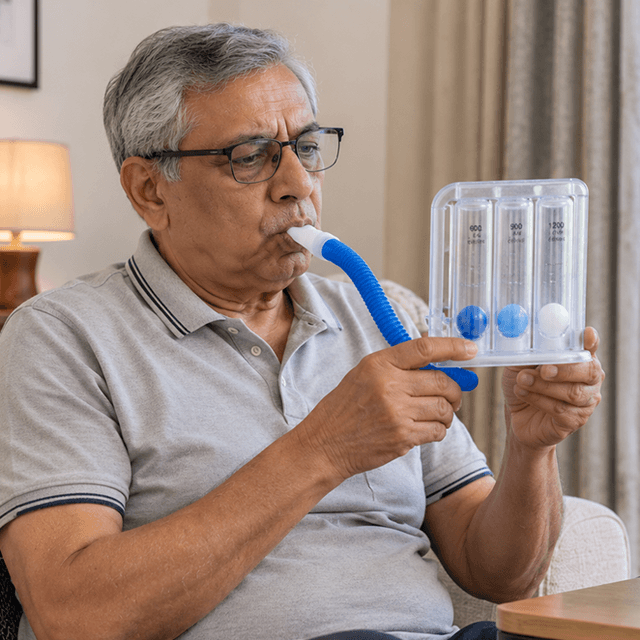
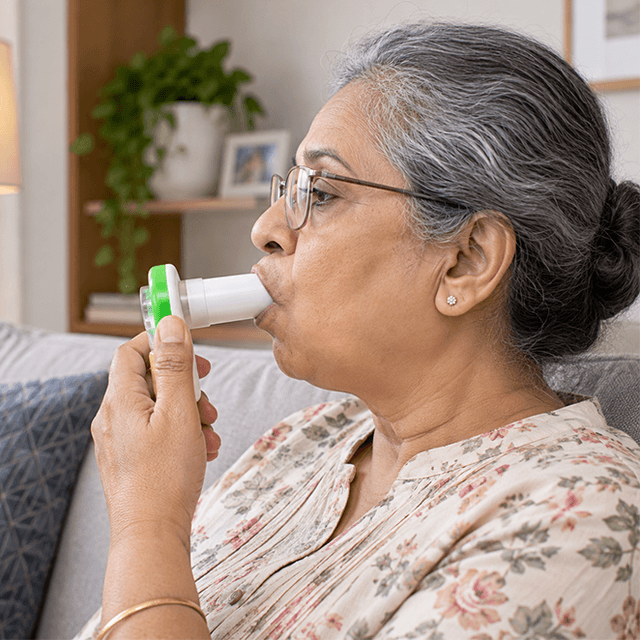
- Your parent should be comfortable. It is often better for them to be in the standing position, but if this causes them to be unsteady, then it is better for them to sit. The device should be level, and the marker should be reset or put in the starting position.
- Your parent should take a normal breath of air, and then put the meter away from their mouth. Then, they should take a reading.
- Put the mouthpiece inside the teeth.
- Close the mouth around the mouthpiece.
- Keep the tongue away from the opening.
Dentures may prevent a seal. Consult a healthcare professional if this is the case. Stop the test if your parent gets dizzy, faints, or feels unusually out of breath.
How to Use a Peak Flow Meter Correctly
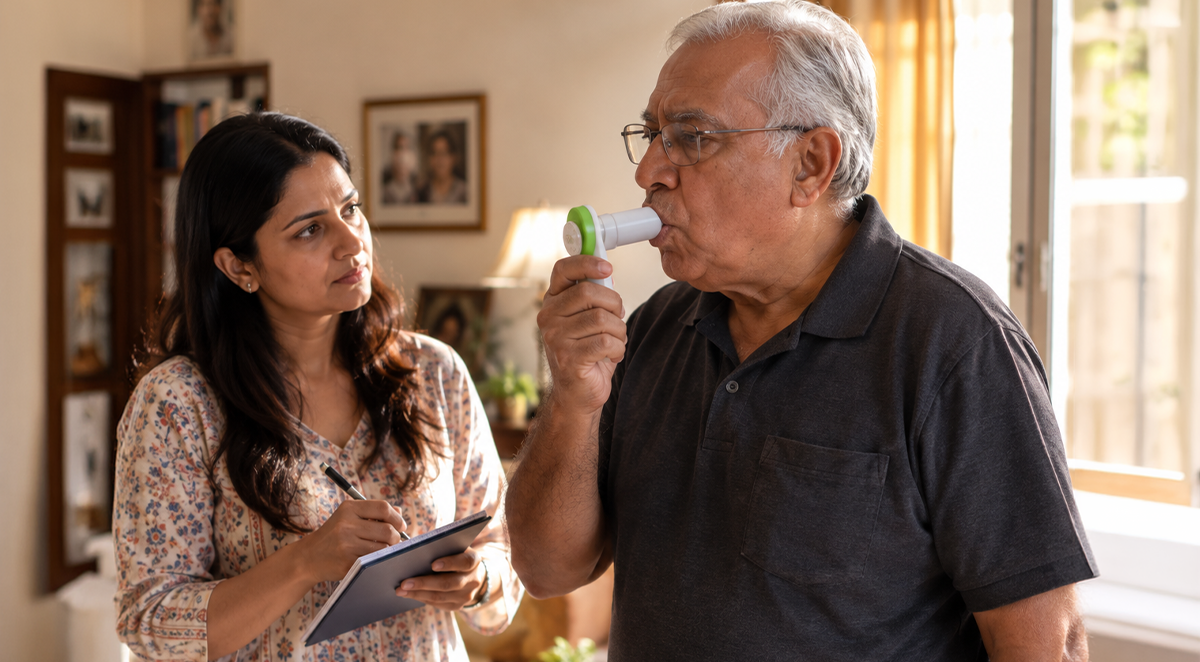
Your parent needs to take a deep breath to comfortably open the lung and blow into the mouth piece. This should be performed as fast and as hard as possible.
The goal is a forceful, quick blow. Reliable results are not shown on a slow, gradual blow.
Record the result. Then reset the device and repeat the process two more times. The highest of the three recordings is what is considered the final peak flow value.
Repeat the whole process at the same time to obtain regular readings. Some record peak flow in the morning and evening. Others record before or after the medicine is taken.
Do not change the time of the activity done to obtain higher results. Testing Darling will provide the doctor with very helpful and consistent information.
Common Pitfalls when Executing a Technique
The result is a direct relation to the technique. Look out for these common mistakes:
- Not blowing hard enough and instead blowing slowly
- Not sealing the lips around the mouthpiece
- Covering the opening with the tongue
- Coughing while blowing
- Bending over for one test and then standing up straight for the next
- Not resetting the meter
- Recording the first result rather than the best result
- Only trying to accomplish it one time
A caregiver can observe the process, then issue a gentle reminder. Do not suggest to your parent that they blow harder than what they consider to be comfortable.
If your parent is unable to conduct the test reliably, a nurse, doctor, or respiratory therapist should show them the correct method of performing the test. A supervised demonstration typically corrects the issue.
How to Create a Personal Best Reading
A personal best refers to the highest peak flow reading your parent has had in the period when their breathing has been stable and when their symptoms have been under control.
A personal best is not one reading. A clinician often recommends daily testing for a period of 2 to 3 weeks. Record the best reading from each daily testing session.
A personal best should not be established during a chest infection, asthma flare up, or at other uncontrolled breathing times. A reading during these times would lead to an artificial low baseline.
Record the details listed below each time you participate in a session.
- The date and time
- The highest reading of the session
- The symptoms you are experiencing
- Medications you took prior to testing
- Potential triggers, like dust, smoke, pollen, or exertion
Keeping a diary of these records works well.. However, caregivers may prefer connected tech. One example is an app that runs on a dedicated device.
Using the AGEasy Premium Peak Flow Meter
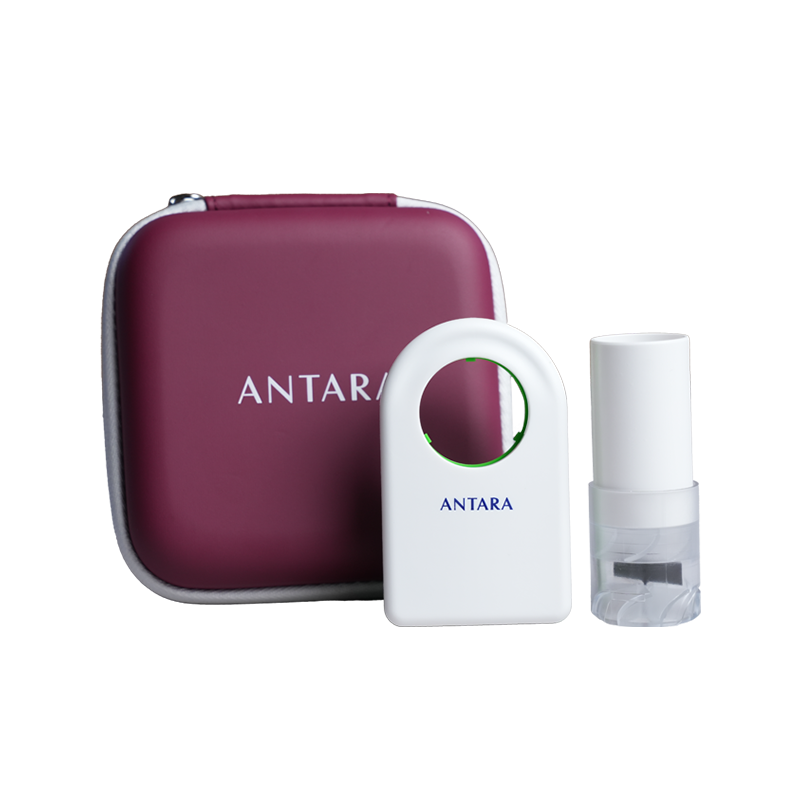
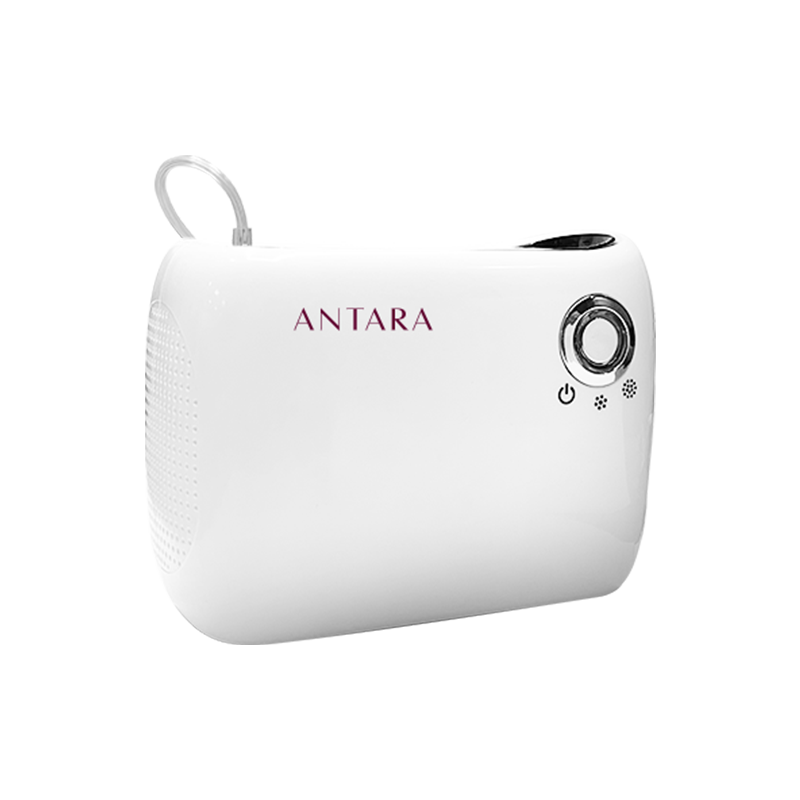
The AGEasy Premium Peak Flow Meter is a Bluetooth enabled home respiratory tracking device. The product page states the device is small, lightweight, and battery operated with an accompanying application for data tracking and reporting.
The meter includes 2 AAA batteries, a pouch, a turbine, a mouthpiece, a user guide, and a warranty card. AGEasy states the weight is about 300 grams.
The application may be helpful for families to record data and view results over time, rather than maintain multiple journals.
Record keeping aids are helpful, but the system is only as reliable as the technique. If your parent does not create a good seal, or does not blow forcefully, a connected device will still result in an inaccurate reading.
Ask your parent's doctor how to interpret the readings as part of your parent's care plan.
Understanding Peak Flow Zones
Clinicians usually rely on a patient’s personal best peak flow readings to assign zones. The upper and lower limits are illustrated in the written Asthma Action Plan.
The green zone generally marks the area where the peak flow velocity is quite close to the personal best and signifies that the airflow is balanced and stable with high intensity symptoms controlled.
The yellow zone is a noticeable drop from the personal best. You may notice cough, chest tightness, wheezing and shortness of breath. Call your physician and follow what is outlined in the action plan.
The red zone indicates a significant drop from personal best. Immediately follow what is indicated as urgent in the action plan and contact your doctor.
Percentages should not be applied to zone determination without proper evaluation. The zones are incredibly subjective and based on your personal and current circumstances.
Consider Symptoms along with the Reading
A peak flow reading is just one of the many components of the assessment. There may be severe breathing symptoms, even when the reading is almost the same as the usual reading. A low reading may be attributed to poor technique.
Emergency medical services are required if your parent:
- Has severe difficulty breathing
- Is having severe breathing difficulty and is only able to speak in short phrases
- Lips have a bluish or grey tint
- Becomes confused, faint, or unusually drowsy
- Is not responding to the prescribed emergency plan
No urgent care should be delayed while you wait for the app to update and repeat the reading.
Call the doctor when readings do not return to your parent’s normal range, there are worsening symptoms at night, coughing persists, or if your parent needs to use their quick-relief medication more than they should.
Care and Maintenance of the Device
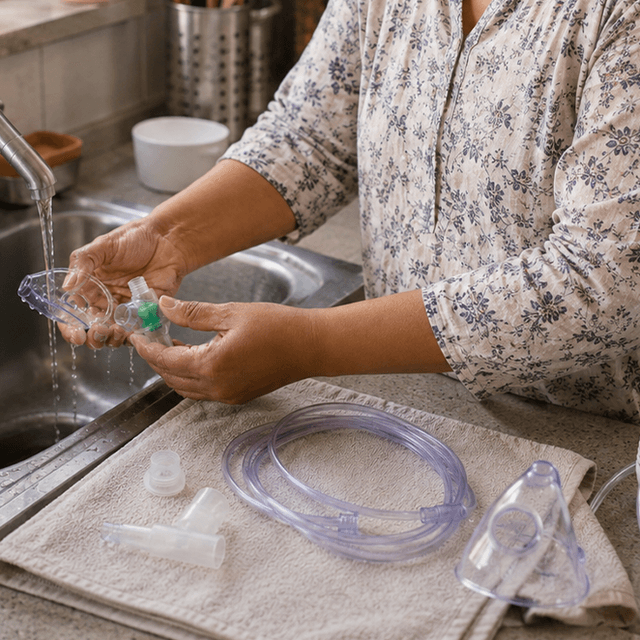
Clean the device as the manufacturer instructs. Rinse and dry the reusable mouthpiece and turbine according to the instructions. Do not use the mouthpiece unless you have cleaned it.
Store the device in a clean, dry area. If the display stops working or the device shows unexpected results, check the batteries. Keep the manual and warranty card in a safe place.
A peak flow meter becomes more useful when it is used at consistent times. Help your parent test at the agreed upon times, perform three attempts, record the highest number, and note any symptoms.
The goal is not to get the highest number every time. The goal is to get a sense of your parent’s breathing routine and look for changes that may be significant to your parent’s health, and then present this information to their doctor in an organized fashion.
Disclaimer
This article is informational only and should not be used as a substitute for professional medical advice, diagnosis, or treatment. Follow your parent’s clinician-provided action plan and seek urgent medical care for severe or sudden breathing difficulty.