
How to Use a Steam Vaporizer Safely: Water Level, Distance, Burns and Additives
Oct 21, 2026
How to Use a Steam Vaporizer Safely: Water Level, Distance, Burns and Additives
As vaporizers produce steam, they reduce coughing caused by a dry throat. However, they can also cause steam burns, which are dangerous for older people with limited mobility or dementia. The risk of a burn is why you should not rely only on the relief a vaporizer brings. You should consider placement, safe water levels, and adequate distance from the device.
The most important precautions come before you plug it in. In addition, the distance between the vaporizer and the user’s face is critical. Add-ins should be treated as an extension of the vaporizer, with the understanding that they can be dangerous. The precaution you take by checking common-sense safety rules helps reduce burns for your parent while increasing comfort and safety.
What Is a Steam Vaporizer?
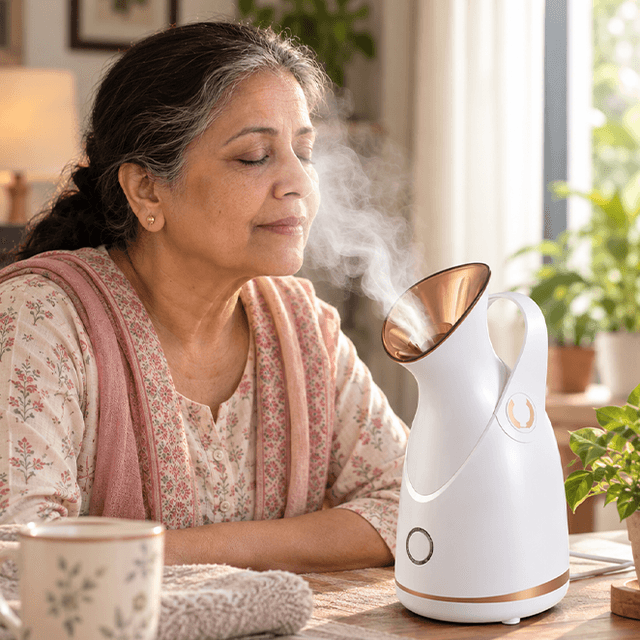
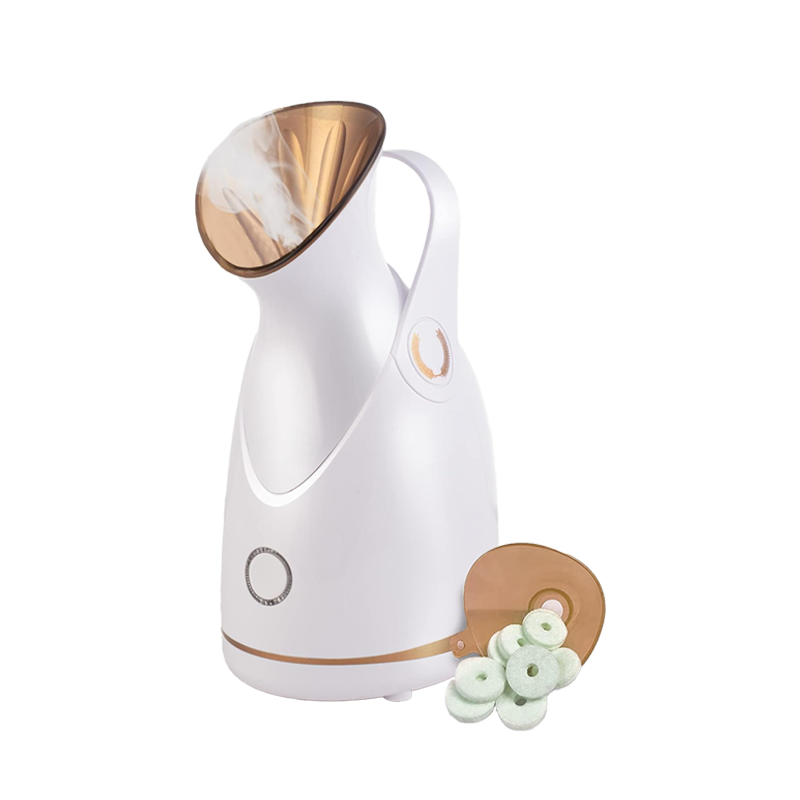
A steam vaporizer is an appliance that boils water to produce steam. The steam is dispersed in the air for relief of symptoms from a blocked nose, nasal congestion, or dry cough. It does not treat an underlying cause of coughing, like the common cold, an infection, or asthma.
Steam differs from cool-mist humidifiers in a few important ways. To start with, steam devices boil water, so the container, the electrode, and the surrounding air are all hot. This becomes an issue when you are buying an appliance for an older parent. A cool-mist device also needs to be cleaned, but boiling steam can lead to an injury if you're not careful.
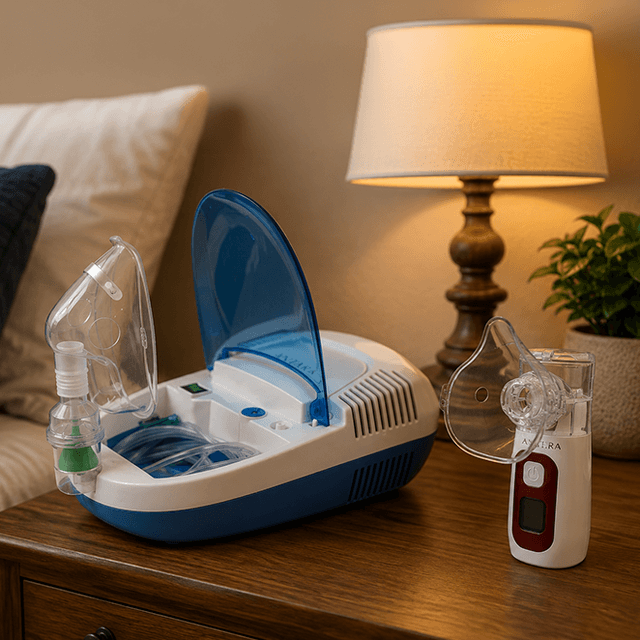
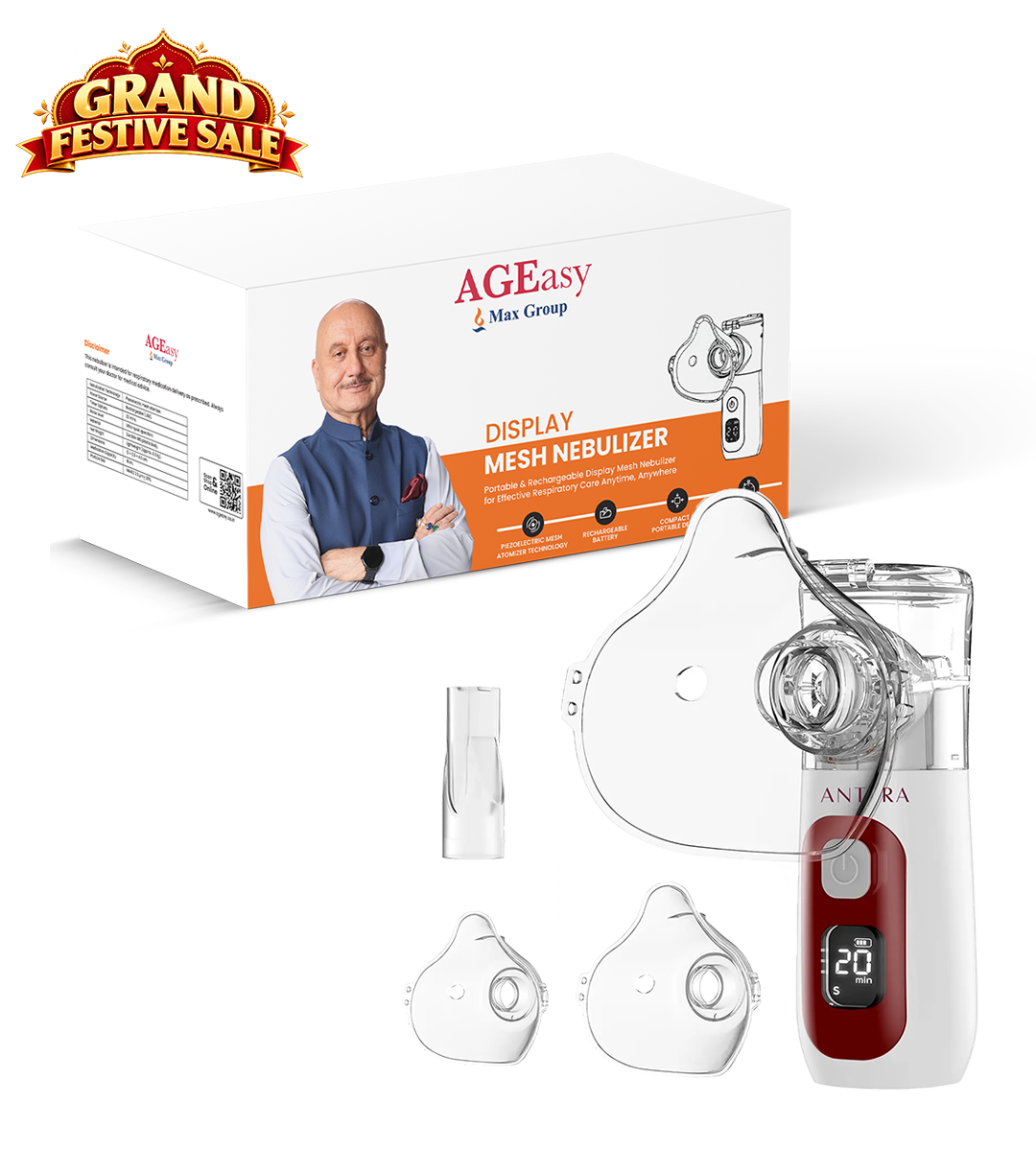
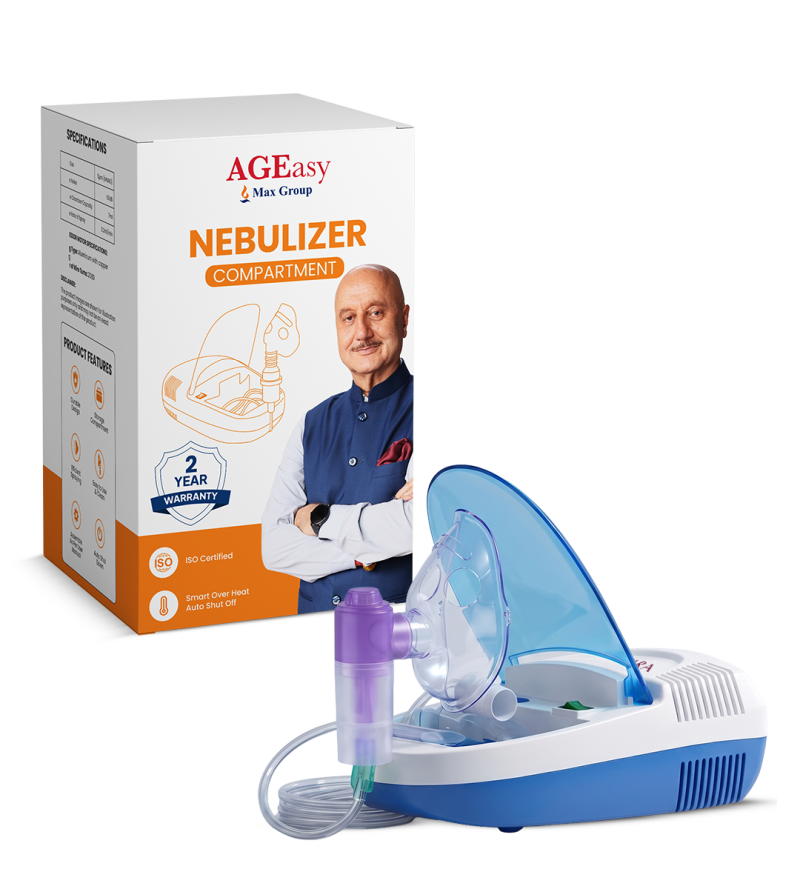
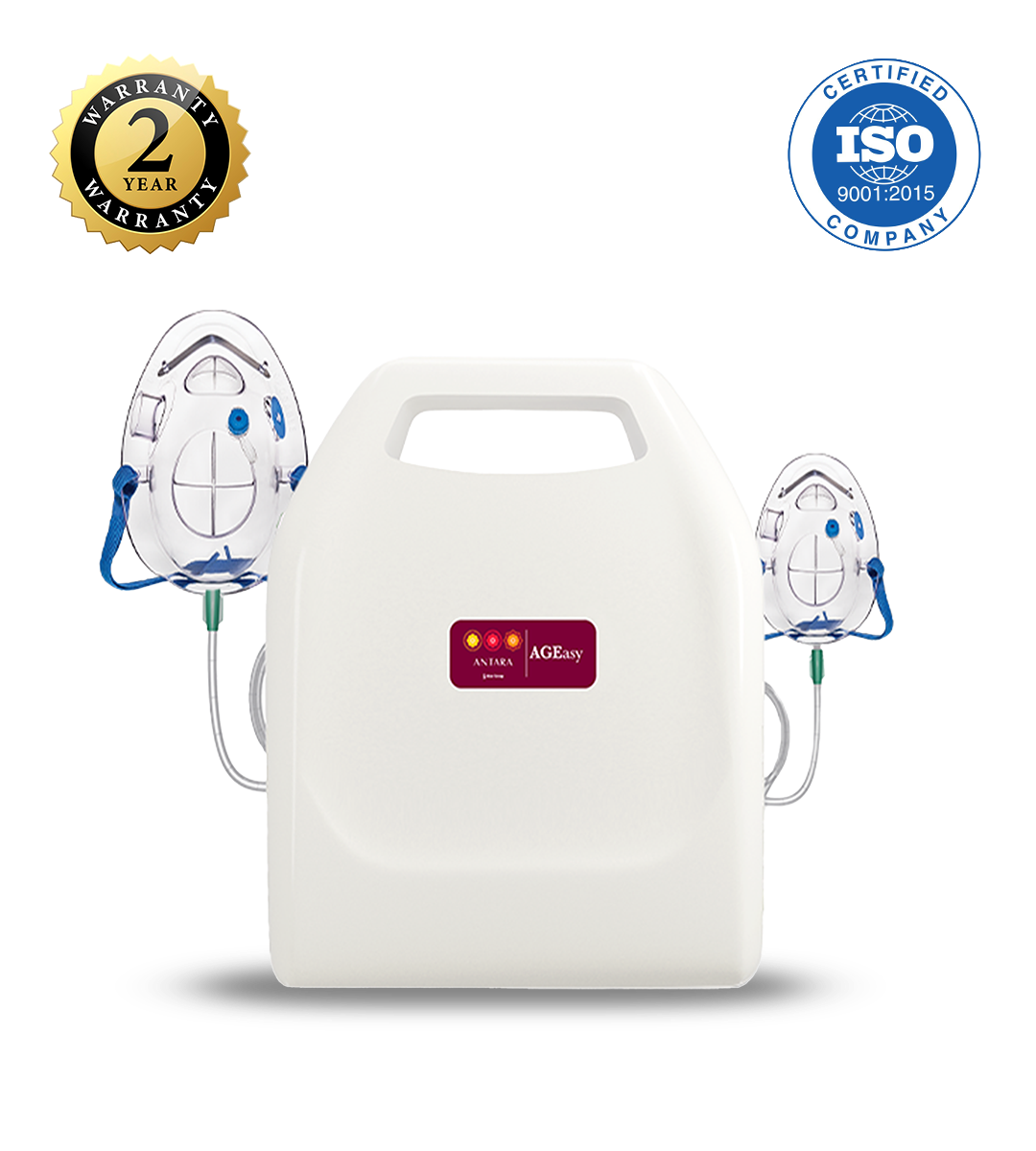
Make sure you read the instructions for any product that you buy. Check if the device is a room humidifier, a personal inhaler, or both. The AGEasy Advanced Multi-Functional Steamer is one of the many case study devices for this purpose. Make sure you read the latest safety instructions, follow the instructions for water, operation, and cleaning of the device, and use the provided additives for the device.
Always Check the Water Level Before Each Use
Only use the water volume as stated in the user manual. Never fill the steam tank to the top. A full tank leaves no room for water movement or bubbling. This increases the chance of hot water spilling as you move the tank to a new spot or when you carry it.
Before filling the tank, place it on a flat, dry, and heat-resistant surface. Place the tank away from the edge of a surface. Never fill the tank while it is plugged in and while it is still hot. Always unplug the tank and wait until the water and the container have cooled down before handling the tank.
Use fresh water for each session unless instructions say otherwise. Discard remaining water. Water that sits too long allows vegetation to grow and leaves mineral build-up in the unit. Be sure to follow the manufacturer’s directions for cleaning if the unit contains a heating plate, nozzle, or cup that can be removed.
Fabric or paper near a hot steam outlet could cause a fire. Keep the towel, tissues, and other objects away from the steam outlet. Make sure the power cord is not in a walking path. Inspect it for damage.
Keep a Safe Distance From the Steam Outlet
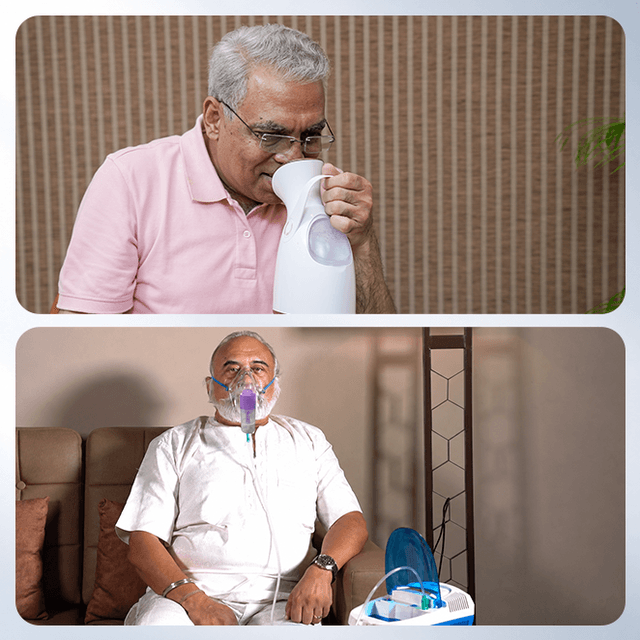
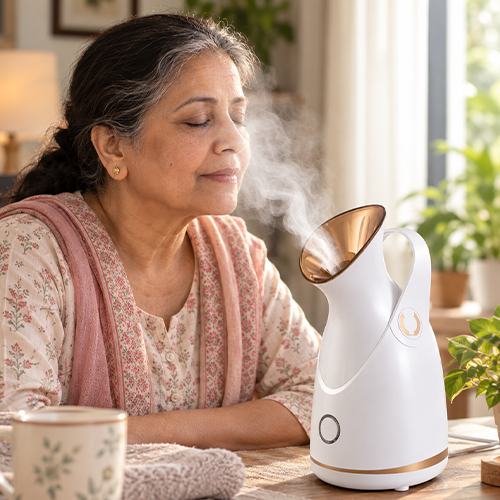
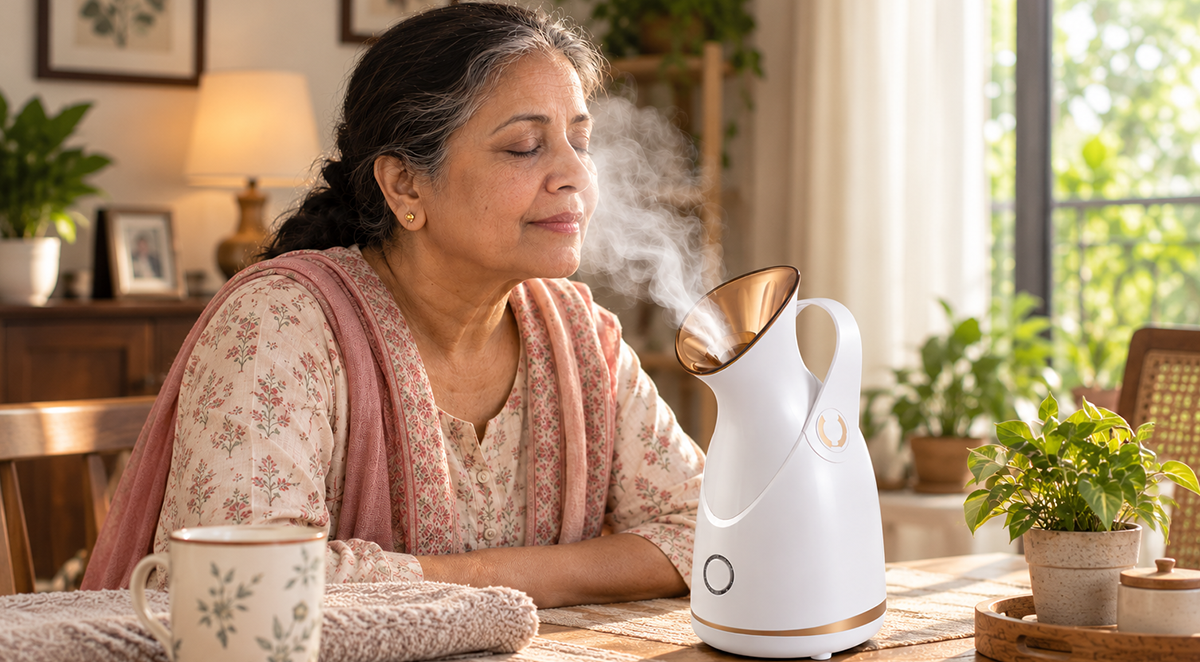
The steam should never be directed toward your parent’s face. Steam from an outlet can burn skin, eyes, nose, mouth, and even the airway. A person may lean toward the steam, not realizing how close they are. Inhalation and steaming can become a safety concern if not used properly.
The unit should be utilized in a well-ventilated room away from the body, curtains, bedding, furniture and people. The unit should not be covered with a cloth or used under a blanket. A covered unit traps heat and may cause a safety concern.
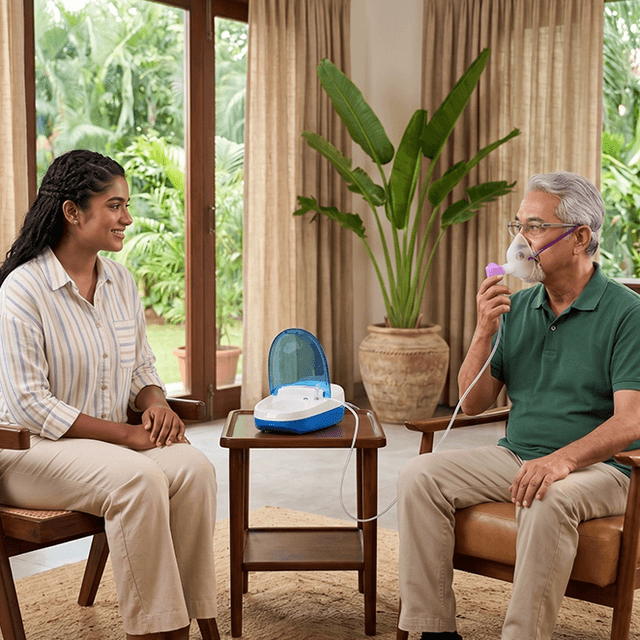
The vaporizer should also never be held by an elderly adult. Supervision is necessary for an elderly patient that suffers from dementia, or diminished sight, sensation, balance or tremors.
Keep kids, pets, and guests away from the device, as someone or something can pull on the cord and bring a hot unit crashing down. Move everything to get the parent standing as needed, then stay in the same room and don't leave until the unit cools down.
Preventing Burns/Scalds
The majority of injuries sustained from a steaming device occur from contact with scalding water or hot surfaces and knocking a device down. In order to minimize this risk, a simple safety check should be done:
- A stable, heat-resistant surface should be used to place the vaporizer.
- Water level should be checked and the lid, if required, should be closed.
- The cord and outlet should be free of obstruction.
- The device should be switched on after the parent has been positioned safely.
- Avoid touching the steam outlet and hot container, and keep the face away from them
- Following use, the device should be switched off and unplugged.
- Cooling should be allowed before the device is emptied, cleaned and stored.
The elderly are more likely to sustain burns and injuries. Diabetes and some nerve conditions can reduce sensitivity. Certain medications can worsen the risk by decreasing alertness. Falls, confusion and severe frailty should be of concern to you, as should reduced sensation. In these cases, steam therapy is best avoided until a health professional has been consulted.
Move away if contact with hot water or steam causes burns. Cool the burned area with running, cool water if possible for 20 minutes. Do not put anything like ice, butter, toothpaste, oil, or bandages on a burn and seek immediate medical care if burns happen on the face, hands, feet, eyes, genitals, joints, cause deep burns, or if burns are large.
Stop the session if you notice wheezing, chest tightness, headache, eye irritation, dizziness, rash, nausea, and/or worsening breathlessness, and move your parents to an area free of smoke.
Be Careful With Additives
Do not use essential oils, balm, camphor, menthol, salt, medicines, or any other herbal liquid until you are told by a doctor to do so. A product that is only safe to use with water may not be safe if other substances are used with it. Additives may also change the vapor that your parent inhales and can cause irritation or other symptoms in the eyes, nose, throat, or lungs.
Essential oils in particular also require caution. Just because something is natural does not mean there is no risk. Oils can cause coughing, an allergic reaction, and irritation, and there is also a risk of poisoning, especially for those with memory issues. Keep oils away and out of reach from children and adults to avoid confusion with drinking liquids.
Do not add a medicine to the water unless a doctor or pharmacist is able to prescribe a specific product and say that it is safe to use with the intended device. You should not assume that medicine will be effective with steam vapor as a delivery system. There are harmful and irritating substances. Some things may harm the device and leave an irritating residue.
Stop the session if you notice wheezing, chest tightness, headache, eye irritation, dizziness, rash, nausea, and/or worsening breathlessness, and move them to an area free of smoke. Seek medical care. The symptoms listed above are all considered an emergency, and thus require an immediate response.
When Steam Use Needs Medical Advice
If your parent is older and suffers from any of the following chronic health problems: asthma, COPD (chronic obstructive pulmonary disease), congestive heart failure, severe allergies, dysphagia (difficulty swallowing) or recurrent episodes of difficulty in breathing, steam therapy is not considered safe. In addition, steam therapy is not an adequate replacement for prescribed inhalers, antibiotics, or oxygen therapy.
New breathing symptoms warrant a visit to the doctor and include shortness of breath, coughing up blood, blue or grey discoloration of lips and skin, confusion, fainting, difficulty breathing, difficulty swallowing, chest pain, irregular heartbeat, vision discolouration, persistent cough that disrupts sleep, excessive fatigue, black or blood-tinged phlegm, and a new cough that is accompanied by a decreased appetite and sedentary behavior.
Create a Simple Caregiver Routine
Leave instructions for a caregiver such as what the water level should be or how many cycles need to be performed. Set a timer to limit how long the therapy is to be administered in case the instructions state so.
After the therapy is complete, write down what the parent used and if the symptoms were better or worse. This will be of help to the doctor during the examination, and help prevent further use of additives that may be provoking symptoms.
Store the device in a safe spot that is out of the way and puts an end to any possibility of your parent using it on their own, examples of which may be leaving the device on, or plugged in, and so on. Regularly check the cord, plug, lid, and outlet. If the device starts to malfunction, leaks, or sparks, dispose of the device.
Disclaimer: This article provides general health information and does not replace advice from a doctor, pharmacist, or other qualified healthcare professional. Follow the instructions supplied with your vaporizer. Seek medical care for breathing difficulty, a serious burn, or worsening symptoms.