
Do Air Purifiers Actually Help Ageing Lungs? What to Measure Before and After
Oct 21, 2026
Do Air Purifiers Help Ageing Lungs? What to Measure Before and After
You buy an air purifier to help your parent breathe air that is not as polluted. You put it in your parent’s bedroom, turn it on, close the windows, and assume it is working.
The unit might have a number displayed, and the room may smell better. You can’t be sure the purifier is working to remove the fine particles your parent breathes.
To evaluate the performance, you have to measure the PM2.5 before and after you turn on the purifier. See how fast the number drops, and then monitor the number to see if it remains low during your household activities.
A purifier is useful only if it cleans the room your parent uses the most. For older people, pollution is a big health risk inside and outside the home. Unless you take measurements, you may run the purifier in the wrong room, leave pollution from cooking or incense, or change the filters unnecessarily.
With a few measurements, you can determine the PM2.5, and you can take the right measures to evaluate:
- Placement of the unit
- The amount of ventilation
- The operation of the device
This article discusses what air purifiers do, what you should measure before and after using the purifier, what the results show, and what you should do to see if the purifier is helpful in improving air quality.
Why Ageing Lungs Need Better Air Quality
Older people's lungs need help. Ageing lungs, and the body in general, lose a little of their ability to respond to irritants and become sensitive to pollutants of all kinds.
Older adults have higher rates of asthma, chronic pulmonary disease, cardiovascular disease, and respiratory infections that require improved indoor air quality.
PM2.5 refers to fine particulate matter that is 2.5 micrometers in diameter or less.
Accumulation of these particles occurs from:
- Automobiles
- Smoke
- Cooking
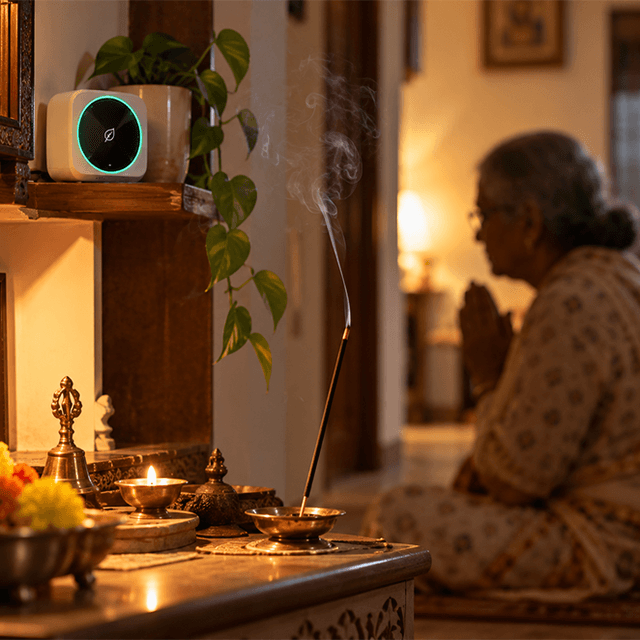
- Incense
- Candles
- Tobacco
- Outdoor pollution entering your home
These particles are able to reach the lower regions of the respiratory system.
Poor air quality does not directly cause all breathing problems. An air purifier is not meant to treat, nor is it a cure for, lung disease. It is wise, though, to reduce avoidable exposure to improve air quality as part of the overall air care plan.
Prescribed medications and the advice of your physician should be followed by your parent.
What an Air Purifier Means and Doesn't Mean
Most air purifiers used in households contain a filter, mostly a HEPA filter.
Purifiers are able to help lower PM2.5 levels in a room if enough airflow is pushed through the filter. There are many factors that affect the outcome, including:
- The size of the room
- Filter capacity
- Fan speed
- The condition of the filter
Purifiers in large open areas take longer to reduce airborne particles compared to a smaller closed area.
Purifiers do not address all indoor air quality issues. Carbon monoxide, excess humidity, mold, and other volatile organic compounds (VOCs) are all affected.
You still need adequate control ventilation, proper cooking methods, routine cleaning, and attention to moisture control.
A PM2.5 reading does not indicate complete protection either. It represents a decrease in particles measured at one specific point in time and at one specific location.
What to Measure Before the Purifier Is Switched On
Prior to activating the purifier, take a baseline measurement.
Place a PM2.5 monitor in the room that your parent spends most of their time in.
Ensure the PM2.5 monitor is not in the direct airstream of the purifier or any other airflow from:
- Windows
- Kitchen exhausts
- Ceiling fans
- Other sources of direct airflow
Adjust the PM2.5 monitor to the breathing level of your parent when they sit or lie down.
Take a reading for 15 to 30 minutes and document:
- The PM2.5 level
- The time
- The name of the room
- The position of the window
- Any recent activities that may affect the reading
Activities that may affect particle levels include:
- Cooking and frying
- Using incense and mosquito coils
- Sweeping
- Vacuuming
- Smoking
- High levels of outdoor traffic
Also note the status of other appliances, such as:
- Air conditioners
- Exhaust fans
- Purifiers
Take More Than One Reading
A single reading is often not sufficient.
If you can, take several readings over a period of 2 to 3 days at different times of the day:
- Morning
- Afternoon
- Evening
- Night
This helps identify the normal PM2.5 pattern of the room.
After-and-Before Test Instructions
After taking the baseline measurement, activate the purifier.
Set the purifier at medium or high, unless the manufacturer provides different instructions.
Maintain the same position of the windows and doors during the test.
Take PM2.5 readings at:
- 15 minutes
- 30 minutes
- 1 hour
- 2 hours
Note whether the reading has fallen.
If the reading has stayed the same or is still high, it may be that:
- The room is large
- The airflow is slow
- The starting level of particles was high
- The purifier is not completely offsetting pollution from other sources
Keep the Monitor in One Spot
Keep the monitor in one spot when doing the test.
Moving the monitor closer to or further from the purifier will change the reading and make comparisons less useful.
After you do the first test, do the measurement again with everyday household activities.
For example, do the test before, during, and after cooking.
This shows how fast particles settle and how much the purifier reduces particles.
What the Results Show
A good test looks at more than just the final number.
Look at 4 factors:
- The starting PM2.5 level
- The lowest PM2.5 level achieved
- The time to reach the lower level
- How fast PM2.5 levels start to increase again
For example, if the room starts at 80 micrograms per cubic meter, falls to 25 after an hour, and stays around 25 with the purifier, then a reduction during the test is noticeable.
If the reading changes only slightly, check:
- If the purifier is appropriate for the room
- If the filter is new
- If the monitor is placed well
- If there could be external factors such as cooking, smoke, incense, and/or an open window
Measurements can read differently on different monitors.
Do not compare readings from different monitors. Instead, do before-and-after testing with the same unit.
While these monitors are good for making decisions at the household level, they should not be used in place of lab-based tests or assessments made by a healthcare professional.
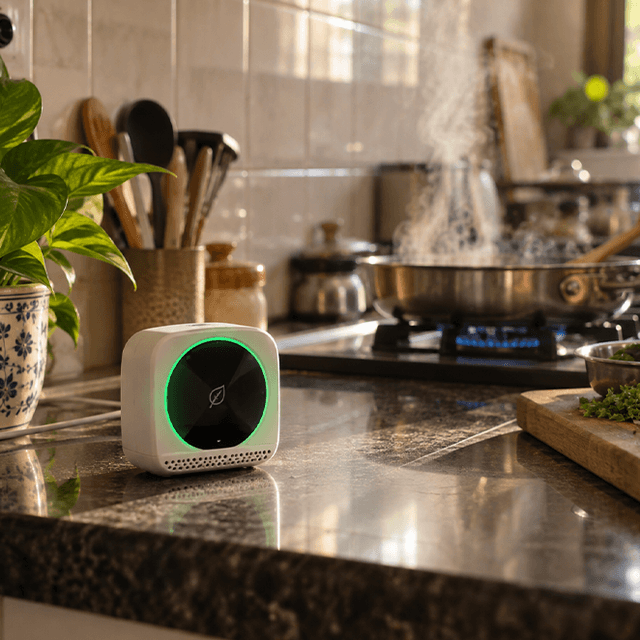
How to Use the AGEasy PM2.5 MonitorHow to Use the AGEasy PM2.5 Monitor
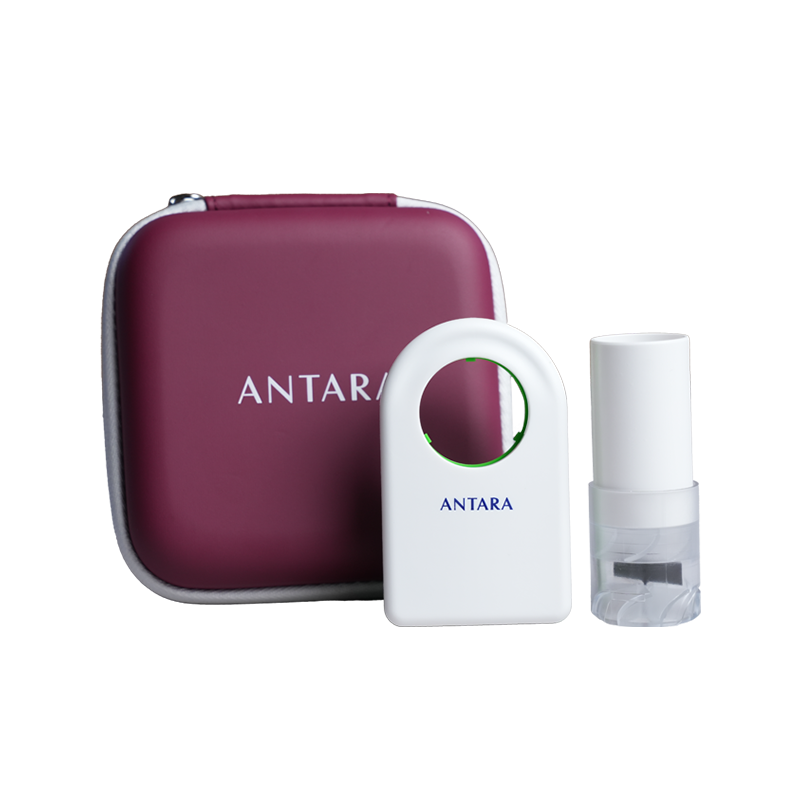
The AGEasy PM2.5 Monitor is designed to provide users with real-time indoor PM2.5 measurements. It allows you to check on pollution levels, compare rooms, and record readings, even when you aren't experiencing symptoms or using a purifier's display.
It can be placed in your parent’s bedroom to record the levels in the living room, study, and dining room. Using this device can help you determine the most polluted rooms.
A high reading means there is pollution and helps you determine if you need to increase air circulation. At no time should this device be used to determine or not determine a lung condition.
The Purifier's Placement
The purifier should be placed in the room that your parent uses the most, especially for sleeping and resting.
Leave a buffer area around the air intake and outlet of the purifier.
Do not place the purifier against:
- The wall
- Curtains
- The bed
- A cabinet
The purifier should not be placed in an area that is in close proximity to direct smoke, splashes, or other hazards. It should be placed away from a path to ensure it does not create a hazard.
If your parent has limited mobility, place the purifier’s power cord against a wall so that the power cord’s length is used to the maximum extent.
Test the purifier with the bedroom door closed.
A closed room tends to first display more apparent changes, but an open door allows air from different regions of the house to circulate.
Pick the option most convenient for your parents' routine.
Reducing Indoor PM2.5 at the Source
A purifier becomes more efficient when new source particle emissions are reduced.
If you have a kitchen exhaust fan that vents to the outdoors, use that.
Keep your parents well away from the kitchen when frying or high-heat cooking happens.
Don't allow the following in the house:
- Smoking
- Incense
- Candles
- Mosquito coils
- Aerosol sprays
Vacuum and sweep wet; do not sweep dry.
Wash bedding frequently and remove all dust you see.
Keep the windows closed when outdoor air pollution is at its peak.
Increase ventilation when air pollution is at its lowest.
Change purifier filters in accordance with the manufacturer's guidelines.
Shortened filter life happens when there is a combination of:
- Very high air pollution
- Construction dust
- Smoke
- Prolonged use
Purifiers choke when the filters are loaded, and performance suffers.
When to Call the Doctor
Call the doctor if your parent develops worsening or new symptoms of:
- Breathlessness
- Wheezing
- Coughing
- Chest tightness
- Confusion
- Fatigue
- Blue lips
Call if symptoms are severe.
Air quality measurements help plan and reduce the risk of symptoms. They do not replace the need to see a doctor.
A Simple Routine
A simple routine can help you understand how well your purifier is working:
- Take a reading before turning on the purifier.
- Record the reading and household activities.
- Run the purifier and take multiple readings.
- Perform the test before using the purifier when cooking or engaging in other everyday activities associated with elevated PM2.5.
- Create a daily log for a week.
In the log, indicate:
- Room
- Time
- PM2.5 concentration
- Purifier setting
- Open or closed windows
- Activity being performed
The log will assist in determining:
- The placement of the purifier
- The required running time
- The pollution sources of concern
Better Air Starts With DataBetter Air Starts With Data
Knowing PM2.5 concentration before versus after purifier use accounts for a better way to understand performance and results in a safer, more comfortable environment for your ageing parent.