
Pursed-Lip and Diaphragmatic Breathing: 2 Techniques That Ease Breathlessness
Oct 21, 2026

Pursed-Lip and Diaphragmatic Breathing: 2 Techniques That Ease Breathlessness
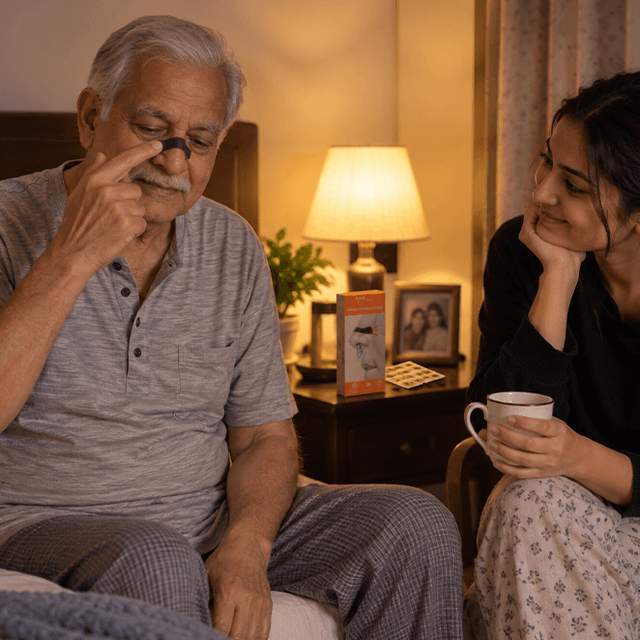
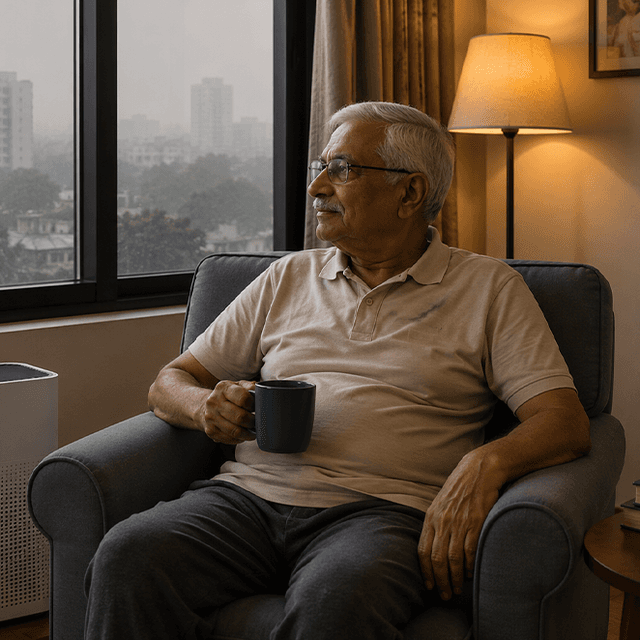
Breathlessness can turn a short trip to the kitchen into a moment of panic. It can leave your parent leaning against a wall, frozen in mid-sentence, tense in their shoulders.
The usual response of people dealing with breathlessness is to take quick, shallow breaths. However, this can worsen their anxiety and cause them to panic more.
Pursed lip and diaphragmatic breathing reverse this pattern. Pursed-lip breathing helps reduce breathlessness by slowing and easing breathing. Diaphragmatic breathing relaxes the belly and uses the lower ribs.
For all family caregivers, supporting an older adult, learning these techniques can help them create a practical care plan and practical support for different activities of daily living that require a significant amount of energy, including exercise.
What Breathlessness Brings
The medical term 'dyspnea' means difficulty of breathing. It is commonly associated with chronic obstructive pulmonary disease (COPD), asthma, cardiovascular disease, chest infection and other conditions like anemia, anxiety, a lack of physical conditioning, and other conditions that may occur in combination with these. The feeling of breathlessness itself cannot help in determining the underlying cause.
Have your parent describe when he or she experiences the symptom, how long it lasts, and things that make it better and worse. Make sure to record symptoms during rest, walking regularly, climbing stairs, bathing, and sleeping. Be sure to include symptoms of wheezing, coughing, fever, pain in the chest, swelling in the legs, dizziness, bluish lips, and changes in the state of alertness. Be sure to take this record to their doctor. It is important to see your doctor for any new symptom or change in the pattern of a previous symptom.
Technique 1: Pursed-Lip Breathing
Pursed-lip breathing works by keeping airways open during a prolonged exhalation and also by slowing the breathing rate. This allows your parent to achieve the goal of fully emptying the lungs before the next inhalation.
How to Practise
Begin by assisting your parent in adopting an upright position with the feet maintained at a comfortable distance. A slight forward lean with the forearms resting on a table or on the knees works well. Relax the neck and shoulders.
- Gently breathe in through the nose for a count of 2.
- Shape the lips as if blowing on a candle or tea to cool it down.
- Slowly release the air through the lips for a count of four.
- Repeat the exercise until you achieve a steady breathing rate.
In time, people can extend the duration of exhalation to greater than that of inhalation. For this exercise, a count of 2 for inhalation and four for exhalation can be useful, but comfort and relaxation should take precedence over the counting.
After your parent feels comfortable, you can begin the exercise for a few minutes. The exercise can be employed after climbing stairs, walking, changing clothes, and during recovery from any activity.
Caregiver Guidance
Give your parent quick instructions and do so calmly. One example is saying, “Breathe in through your nose and exhale out through your lips.” Avoid saying something like, “Take a big breath.” Watch for signs of shoulder raise, holding their breath or forcing air out. Focus on relaxing the face and exhaling gently as opposed to counting.
Stop using this technique if it causes lightheadedness and return to normal breathing. Discomfort and dizziness should not be ignored. The use of Pursed-lip breathing should never replace an inhaler, ventilatory support, or emergency care, or a call for emergency services, for the onset of symptoms, or as a substitution to prescribed antibiotics, heart treatment, etc.
Technique 2: Diaphragmatic Breathing
Diaphragmatic breathing targets relaxation of the diaphragm located just below the heart and under the lungs. When we relax and take a deep breath in, the diaphragm displaces down slightly, thus expanding the lower ribs and lungs.
How to Practise
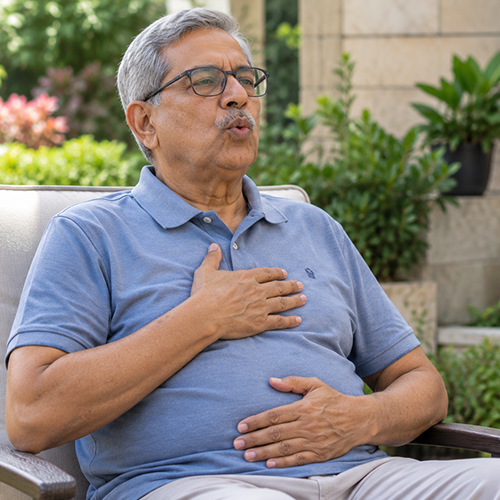
Techniques become easier when the person performing the technique is relaxed. In a semi-reclined position, either sitting or lying down with knees bent (if lowering yourself to the floor is safe to do), gently place one hand on your upper chest and the other hand placed on the belly, just below the ribs.
- Gently inhale through your nose so that your lower hand moves with the gentle inflation of your belly, while the upper hand remains still.
- Exhale through your lips and relax the belly. Alternatively, exhale while pursing your lips.
- Once complete, rest for a couple seconds and repeat 5 to 10 times.
Some people lose touch with their diaphragms due to shallow or rapid breathing, such as elderly people. Try to avoid pressing the abdomen or instructing a deep breath.
A small breath is fine to start. Try practicing it for 5 minutes at least once or twice a day and work up to using it throughout the day during an activity like reading. A respiratory physiotherapist can do specific instruction for people with lung diseases, pain, weakness or any other reason there might be a limitation on a person’s ability to breathe like surgery.
How the Two Techniques Work Together
| Technique | Primary focus | How it is used |
|---|---|---|
| Pursed-Lip Breathing | Prolonged exhalation and slowing the breathing rate | Helps your parent achieve the goal of fully emptying the lungs before the next inhalation |
| Diaphragmatic Breathing | Relaxation of the diaphragm and expansion of the lower ribs and lungs | Focuses on gentle breathing with movement of the belly and lower ribs |
Diaphragmatic breathing begins below the neck while Pursed-lip breathing focuses on the act of breathing out. For this reason, your parent might use diaphragmatic breathing for relaxing, breathing out during movement with Pursed-lip breathing. A combination of these two techniques is gentle breathing in through the nose, allowing the ribs and belly to expand and breathing out slowly through pursed lips.
It is important to practice breathing techniques before a panic attack. Rehearse the techniques through the day in the quietest time. This may be done before going to the bathroom or getting in the shower. Keep the room well ventilated and safe by eliminating any hazards of falling. Sitting will help your parent get some rest and prepare to continue the task.
When a Breathing Aid Fits the Care Plan
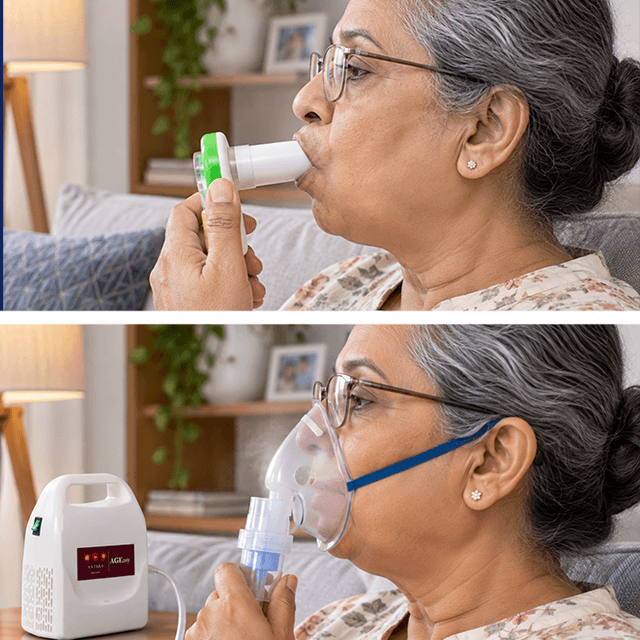
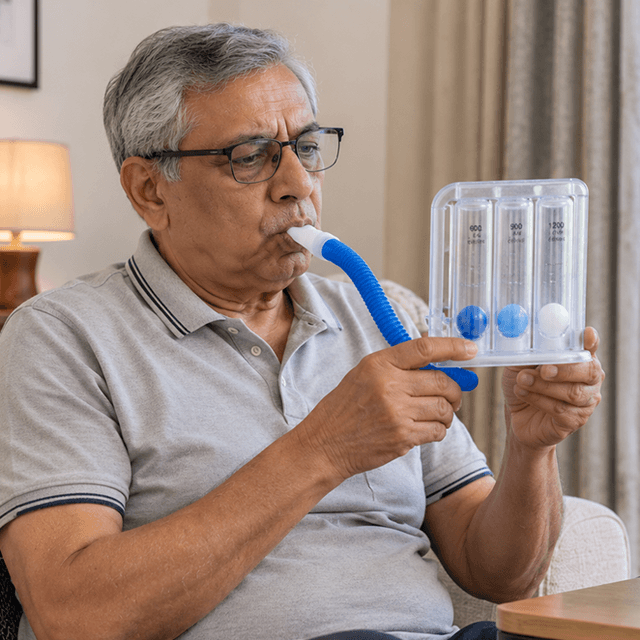
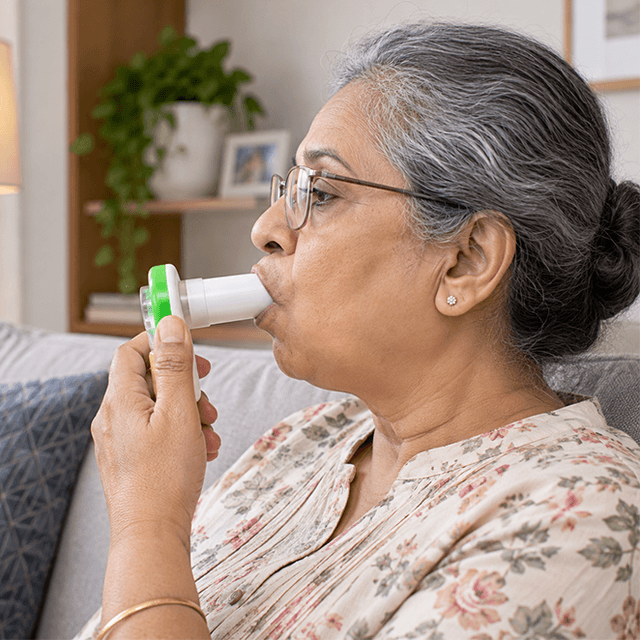
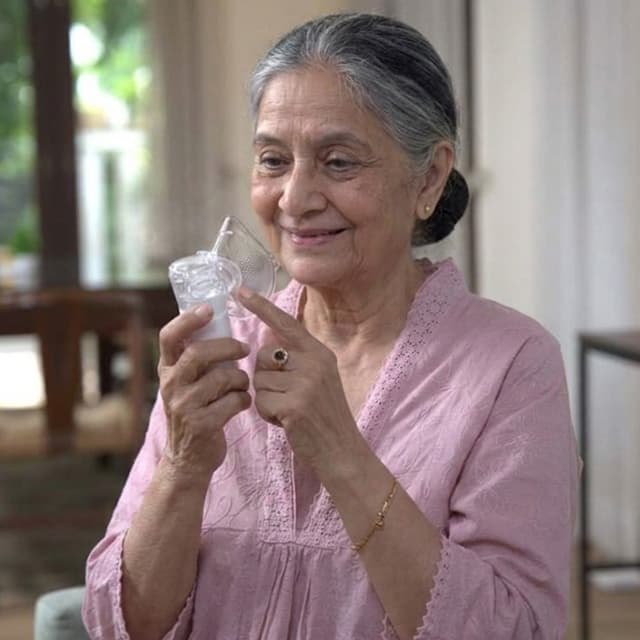
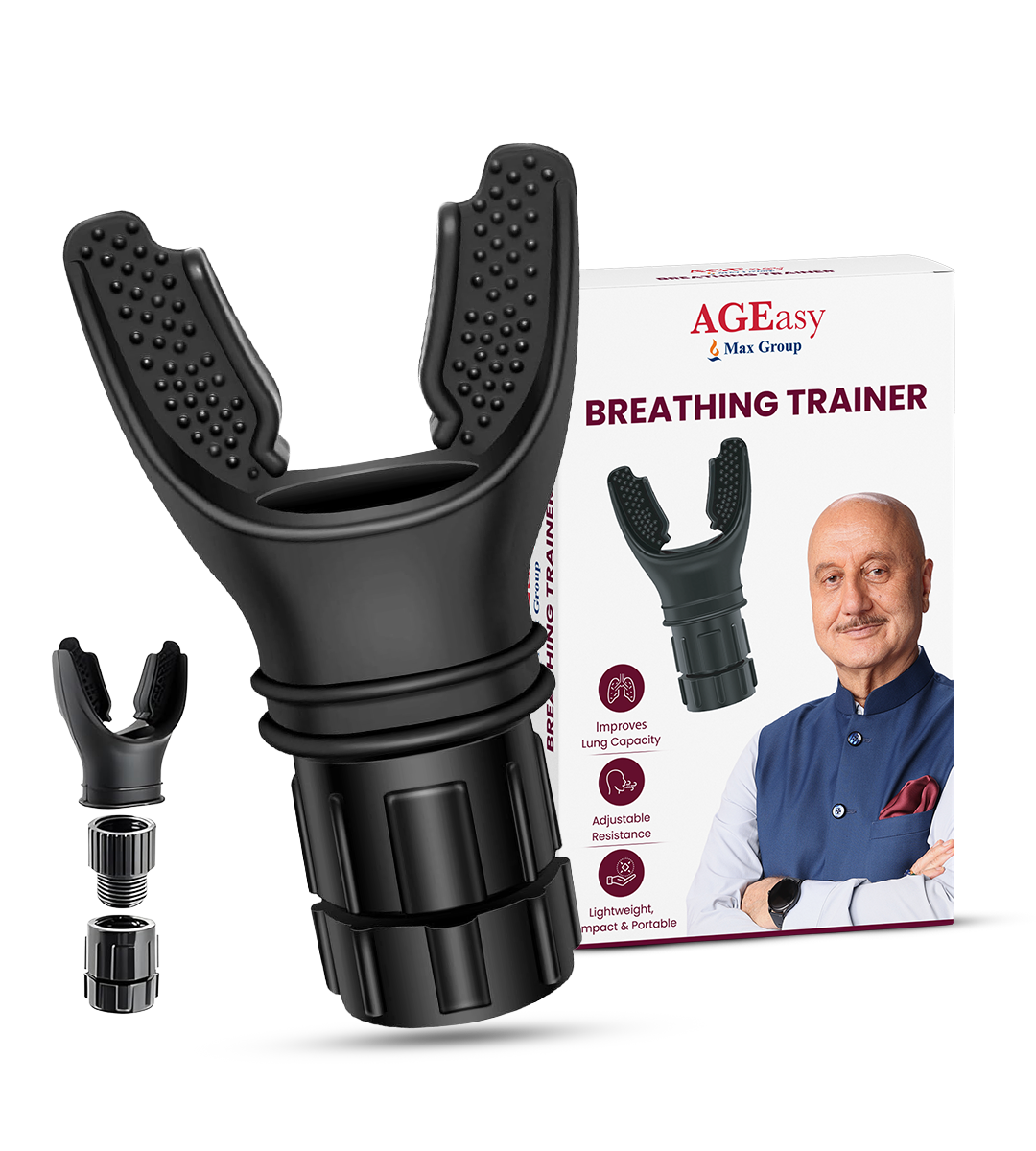
The AGEasy Breathing Trainer can help your parent regain normal breathing rhythms again by helping with controlled breathing exercises. Consult your parents' doctor or respiratory physiotherapist before using the device as part of daily care.
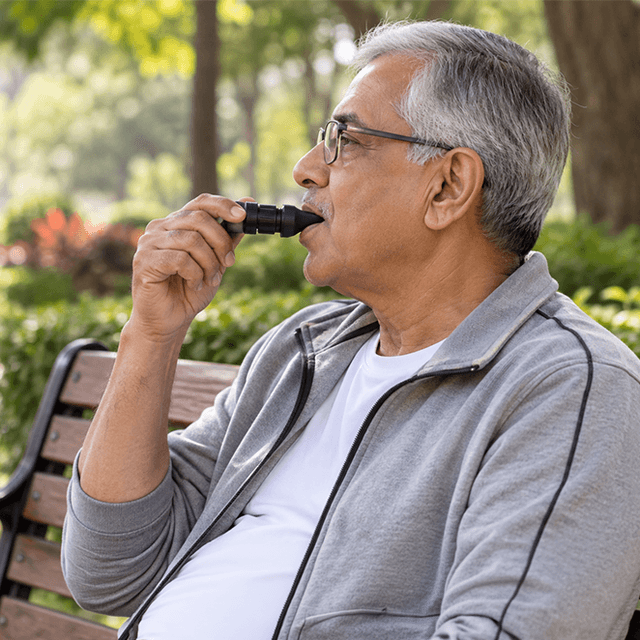
Some families also ask about home measurements. A clinician may suggest a peak flow meter for a person with asthma or a similar condition in which peak-flow monitoring is a part of the treatment.
Use the doctor's recommended device, peak flow meter, peak flow zones, and action plan. Avoid changing medicines based on a single peak flow reading. Record the peak flow with the accompanying symptoms, trigger, and treatment along with the care team's instructions to provide a complete picture.
When to Seek Urgent Help
Call the emergency services if there are new onset symptoms of breathlessness which have become severe or if there is a sudden onset of breathlessness along with chest pressure, fainting, confusion, blue or grey lips, severe weakness, or coughing blood or if the patient becomes unable to complete sentences.
Seek medical attention for fever, new wheezing, swollen legs, breathlessness at rest, breathlessness after a fall, or if there are any other symptoms which are a clear change from your parents' normal symptoms.
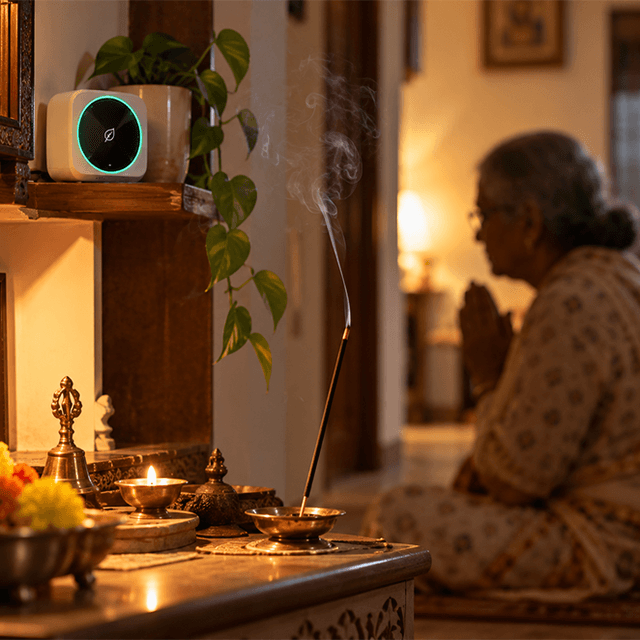
Do not direct them to take breathing exercises while you suspect this is an emergency. Instead, have them stay as upright as possible, stay with them, take the measures outlined in their emergency response plan, and arrange for emergency care. If they have prescribed oxygen, follow the directions given by the clinician. Keep oxygen away from potential fire hazards like smoking, cigarettes, incense and heat.
A Simple Daily Practice
Pick a time of day when your parent is resting. Ask them to take five diaphragm breaths and then five pursed lip breaths. Do not do this while they are already feeling fatigued. Do this slowly during a walking activity between two chairs.
Record the activity, any fatigue or symptoms and the amount of time it took for them to recover. Bring this record to every doctor's appointment.
Remain nearby for their support, however let them do this on their own due to the important nature of independent practice for them. Before adjusting their posture, seek their permission first and keep praise constructive as observing their practice is most important. Over time through careful practice and intention an improvement in their ability to safely breathe will be noticed.
Disclaimer
This article about health information for caregivers should not be used as a substitute for the advice of a healthcare professional for a respiratory related condition. You are advised to seek immediate help for severe, sudden and/or worsening symptoms.