
Incentive Spirometer at Home: How Many Breaths, How Often, and What the Ball Level Means
Oct 21, 2026
Incentive Spirometer at Home: How Many Breaths, How Often, and What the Ball Level Means
After surgery, a shallow breath is frustrating and alarming to both the older adult and the caregiver. Incentive spirometers allow breathing to be a visual task, but often, the level for the ball or marker is confusing to the caregiver.
You watch the ball and wonder if your parent is using the device properly. You count the breaths, time the breaths, watch for improvement. You support the routine, respect your parent’s comfort, and follow the directions from the health care team.
An incentive spirometer does not measure the oxygen level in your blood. The goal of the device is to help the user take slow deep breaths to help keep the lungs open, and to help aid recovery from surgery or illness, or from a prolonged period of no or low activity.
What an Incentive Spirometer Does
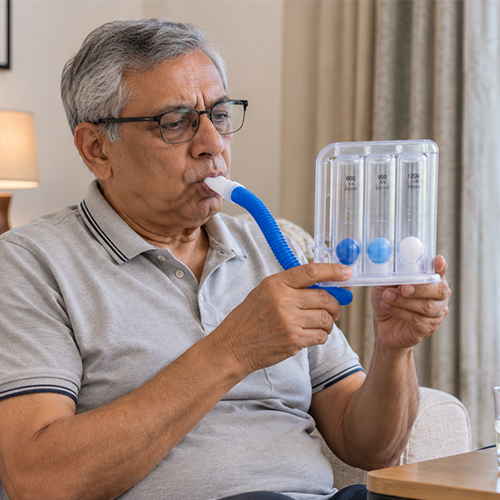
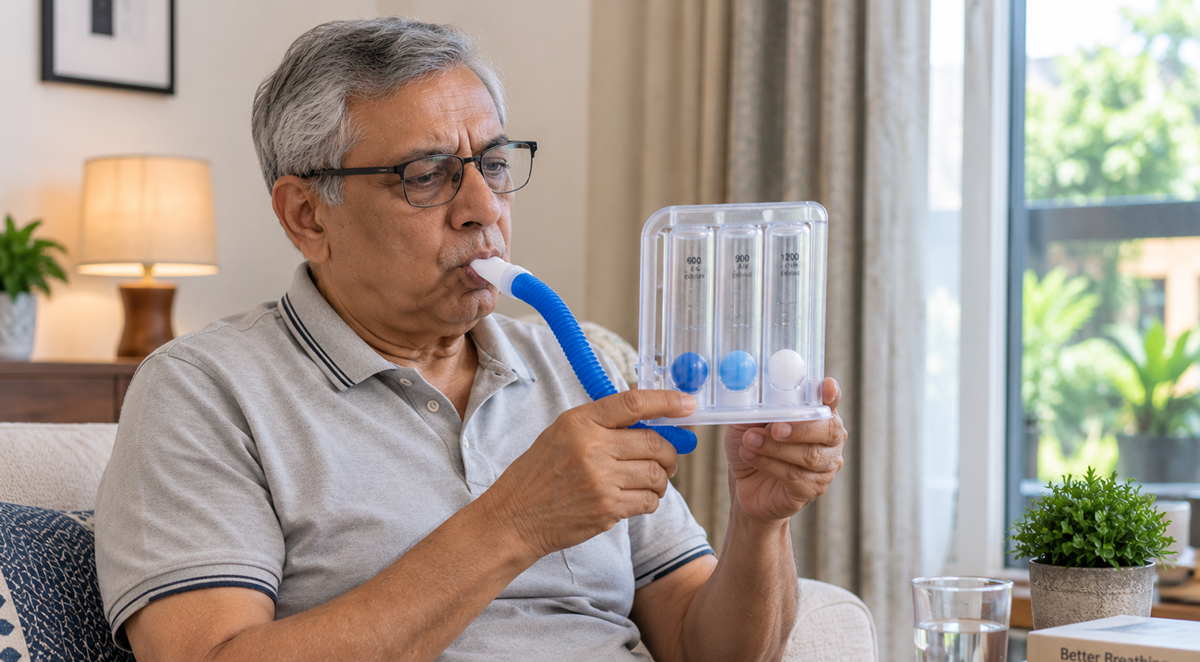
An incentive spirometer is a handheld breathing device that gives visual feedback on breathing. It typically has a ball, piston, or marker that rises in a chamber on slow deep breathing.
Slow deep breathing helps increase the amount of air in the lungs and decreases the risk of shallow breathing. Typically, shallow breathing occurs after abdominal surgery, surgery of the chest, pain, long periods of being sedated, or prolonged periods of time lying in bed.
The device does not replace medication, other therapies, or guidance from a healthcare professional.
How Often Should You Take Breaths?
Hospital recovery plans often recommend taking about 10 slow breaths per session, but the frequency varies. Some healthcare teams recommend using the spirometer every hour while the patient is awake after surgery.
The 10 breaths are starting points that may vary. Your parent’s doctor, nurse, or respiratory therapist will determine the specific recovery plan based on the surgery, current lung condition, pain level, mobility, and overall recovery.
A routine looks something like:
- Breath 10 times.
- Have your parent rest in between breaths if they feel tired.
- Repeat as directed by the healthcare team.
- Only use it when your parent is awake unless directed differently by the care team.
Do not unnecessarily wake an older adult at night to use the spirometer; it can disrupt their sleep and recovery. Other recovery measures, such as pain control, staying hydrated when permitted, and safe movement, may also support recovery.
If your parent feels dizzy, light-headed, breathless or unusually tired, stop the session and let them rest. Get in contact with the healthcare team if the symptoms do not stop or get worse.
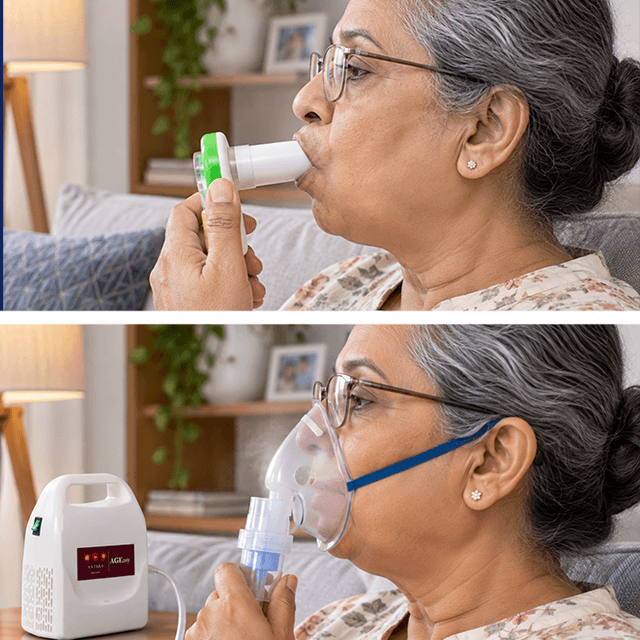
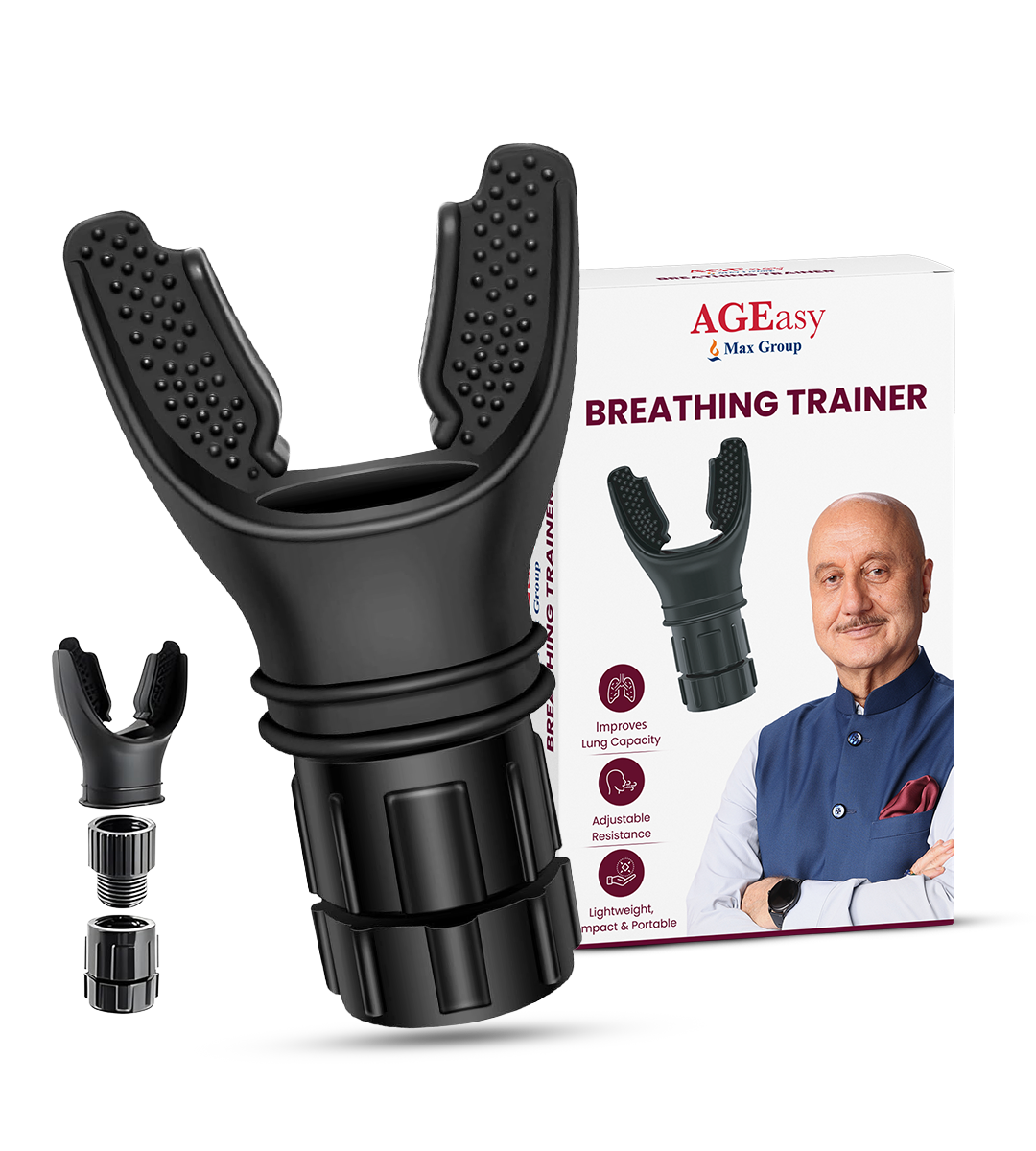
The AGEasy Breathing Trainer enhances lung capacity and respiratory health through adjustable resistance training and can help your parents slowly gain breathing normally and steadily.
How Many Breaths Should You Take at Home?
After you leave the hospital, take the breaths as described in the recovery plan. Usually, this means taking 10 slow breaths during each session, often once every hour while awake.
Follow the schedule provided by your healthcare team. However, some people have different plans which may include multiple sessions at a time.
Routines work best when they’re short and comfortable instead of long and potentially distressing. Caregivers will place the device on the adjacent surface of the chair or bedside table. It is ideal that your parent doesn’t have to stretch or walk unsafely to reach for the device.
Associate device use with another routine. For example, after the parent takes their pain medicine, after eating a meal, or after taking a short, supervised walk. Adhere to prescribed dosing to prevent using the spirometer in between doses.
What Does the Ball Level Mean?
The ball indicates the speed at which air is moving through the device. If your parent inhales quickly, the ball will indicate a rapid movement. If your parent inhales slowly and steadily, the ball will move to the top in a slower fashion.
The key point to remember is that you want controlled inhalation. You do not want your parent to inhale as quickly as possible to get the ball to the top.
The ball determines the rate at which air is traveling through the device. It does not measure the strength of your parent’s lungs, the saturation of their blood with oxygen, or the amount of oxygen that is reaching the body.
Some spirometers come with an additional piston or marker. Usually, this piston/marker is placed at the end of the spirometer and indicates the volume of air that the patient is able to inhale. A healthcare provider may set a target for the piston or marker.
Your parent’s goal should always be a slow, deep inhalation. This is more important than a fast inhalation.
During the recovery process, the target may change due to various factors such as pain, fatigue, limited airway capacity, and posture. Always refer to your parent’s target to determine the reading value, rather than comparing it to someone else’s target.
Using an Incentive Spirometer
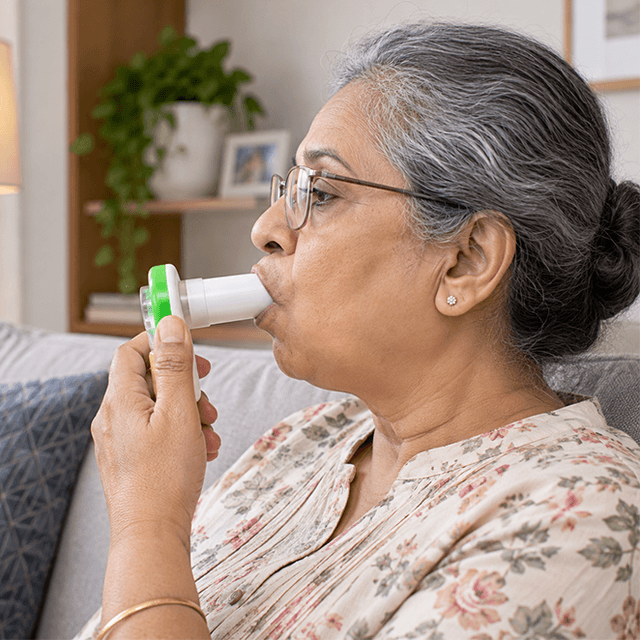
Have your parent sit in an upright position. Adjust the back and the feet, if needed. There are 9 steps to do this correctly. They are:
Step 1. Hold the spirometer vertically.
Step 2. Slowly exhale away from the mouthpiece.
Step 3. Seal the mouthpiece with the lips.
Step 4. Slowly breathe in and raise the ball or marker in a steady manner.
Step 5. Inhale slowly until your parent’s lungs feel comfortably full or the prescribed target is reached.
Step 6. Hold the breath for about 3 to 5 seconds, or for the duration recommended by the healthcare team.
Step 7. Remove the mouthpiece and slowly exhale.
Step 8. Rest or take normal breaths for a short period.
Step 9. Do this as instructed.
If your parent has a surgical wound, you may need to elevate the wound area with a pillow when deep breathing or coughing is recommended by the healthcare team. The healthcare team will be able to assist you with any techniques that may alleviate the pain.
The Importance of Coughing
Deep breathing is almost always done in conjunction with gentle coughing. Coughing is important to expel mucus that has built up in the airways as a result of surgery or a chest infection.
You may need to lace a pillow or folded blanket over the incision to support the area when coughing, if recommended.
If coughing causes severe pain or bleeding, or if your parent has difficulty breathing, stop and seek medical care.
Common Caregiver Mistakes
Usually, this is a sharp, fast inhale, and sends the ball up and out of control without a deeply controlled breath first.
Other caregiver mistakes include:
- Using the device while lying flat.
- Not creating a seal around the mouthpiece with the lips.
- Quickly taking several breaths in succession without pausing.
- Trying to reach someone else’s goal.
- Holding the breath for too long.
- Ignoring signs of severe discomfort and dizziness.
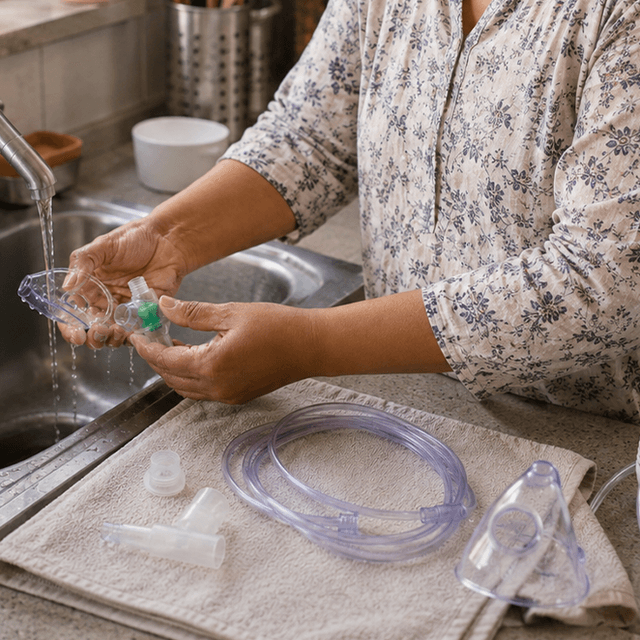
- Using the device without cleaning it per the manufacturer’s instructions.
Show the technique once and step back. Allow your parent to lead the rest of the way. Older adults need support with positioning and reminders, however, they still need a great deal of control. Ask for permission first before trying to correct their technique.
When to Call the Doctor
Call right away for severe trouble breathing, lips that are blue or grey, confusion, fainting, chest pains or discomfort that is new, blood in the sputum, or a sudden decrease in the alertness of the person.
Fever, increasing trouble breathing, coughing up thick, foul-smelling sputum, increasing pain when breathing, repeated fainting, and a decrease in the ability to exercise tolerated calls for a trip to the healthcare provider.
A low ball reading by itself does not indicate a major concern. A reading may be low due to poor technique, pain, fatigue, or slouched position. Reading with new symptoms calls for a call to the healthcare provider.
A spirometer may be used as a tool for recovery as part of a more comprehensive recovery program. Resting the parent between activity, safe movement, medications as ordered, fluids as allowed, good pain control, and more follow up appointments are also prescribed as part of recovery.
Disclaimer
This article is for informational purposes only and should not be substituted for the recommendations of a doctor, nurse, respiratory therapist, or other qualified healthcare professional. Seek medical care for a parent in respiratory distress.