
Hiring a Home Attendant in India: Real Costs, Vetting Questions, Training and the Trial Week
Aug 23, 2026
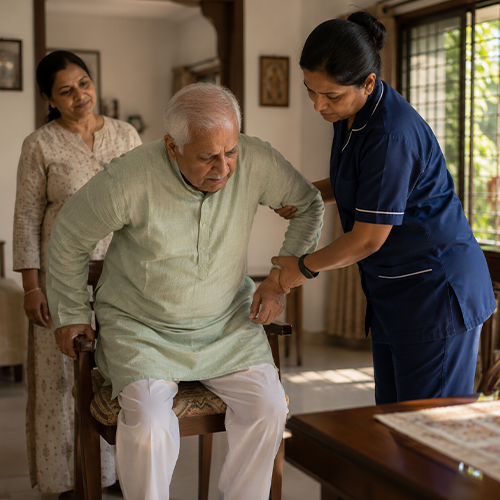
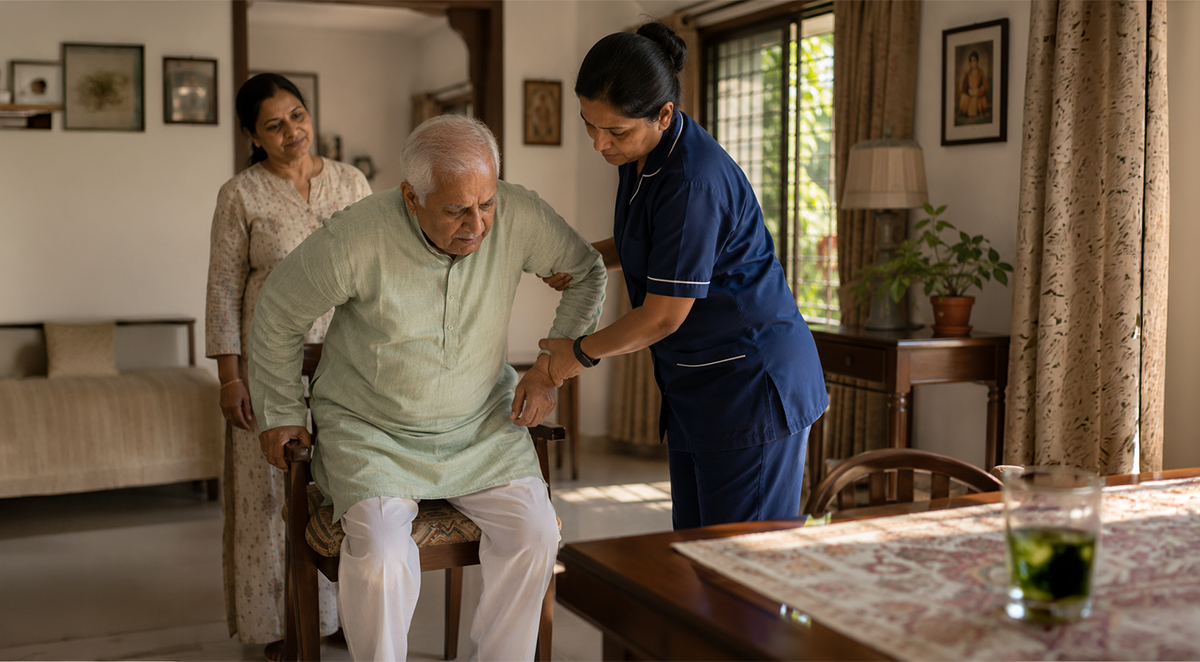
When your parent requires assistance for bathing, dressing, walking, meals, medication, and bed/ambulation, the primary concern is no longer the requirement of assistance, but how that assistance can be ensured in a way that instills confidence.
Hiring a home attendant seems to be a rather simple process, but the initial steps of the search reveal that it is actually rather complex. Agencies charge varied prices, job titles have varying levels of responsibility, and a caregiver who is a good companion may not possess the skills required to assist an adult. For working families who live away from their parents and contend with varying levels of care required, the consequences of an improper selection may be stressful.
The right home attendant is a combination of many factors. They may not be at the extreme ends of a cost spectrum or the most experienced. They should have the required skills, be reliable, appreciate and respect the needs of the older adult, and understand their role from a safety perspective. Understanding the costs, verifying the background, asking the right interview questions, required training, and a trial week helps make a safe selection for a long term arrangement.
What Does a Home Attendant Do?
A home attendant renders assistance with routine daily activities to an older adult. The responsibilities include assistance with bathing and dressing; personal grooming; toileting; assisting with ambulation and transfers from bed to chair; meal time assistance; light housekeeping; and providing companionship.
Some assistants remind older adults to take their medication. Attendants should not give medical advice or change dosages or cease a treatment plan unless the attendant has specific instructions from a healthcare professional.
The support needed is based on your parent's particular needs. A person with no cooking skills and assisted walking differs from a person with post-stroke/surgery/fracture care support and post-hospital/post-surgery support. A person who is living with dementia or incontinence or a person with support for restricted mobility needs a different level of support as well.
Prior to hiring, outline what responsibilities you expect from the attendant. Use a list to detail what the attendant, family, and the nurse/physio/doctor (or other allied professional) will/will not do.
Knowing the Cost
Hiring a home attendant in India varies by the factors of city, working hours, experience, duties, full-time vs. part-time, and live-in vs. not live-in. Typically metro cities are more expensive, and small cities are less expensive. Post-hospital support, care for a person with dementia, and care for assisted mobility can also affect the cost of hiring a home attendant.
An estimate for monthly hiring costs of a home attendant may look like this:
- Support for a few hours each day: around ₹8,000 to ₹18,000
- Support for a full day: around ₹15,000 to ₹28,000
- Live-in support: around ₹20,000 to ₹35,000 or more
Keep in mind that these figures may not be applicable across agencies, so use it as a guide. Prior to hiring, make sure to get a formal written quote. Check if the quote includes food, room, transport, agency administrative fees, cover for staff replacements, weekly time off, overtime and festival payments.
Low rates often omit necessary costs. A higher quote may include identification verification, replacement staff, supervision, and support from a care coordinator. Consider the full service and avoid comparing only the monthly salary.
Hiring Questions
When considering an attendant, ask about their previous work and the older adults for whom they have provided support. Consider the following example questions:
- How many years have you been a home attendant?
- Have you assisted someone with limited mobility, dementia, incontinence, or a recent hospital discharge?
- What daily assistance are you trained to provide?
- How do you assist someone to rise from a seated to a standing position?
- What would you do if the person started to feel dizzy?
- What would you do if the person started to refuse to take, eat, or bathe?
- Have you taken a first aid and basic care training course?
- Are you OK with abiding by the family's written routine?
- Who should be contacted in the event of an emergency?
- What if you get sick or have to take a leave?
When comparing responses, avoid general answers. The best answers will provide specific examples and the reasoning behind their answers. It is important to understand the threshold of their training and when they need to seek assistance.
Background Checks and Reference Checks
Provide specific requests for ID, contact information, and references from previous employers. Ensure you call each reference. Ensure you ask the following:
- Attendance and punctuality
- How they handle money
- Their professional boundaries
- How they communicate
- How they behaved during tense situations
Ask for each of these specific examples to determine the best candidate.
When considering a live-in arrangement, use police verification. Keep your certificates and other pertinent documents in a safe and secure location. Agencies should provide a written description of their verification process and a replacement policy.
Do not give the attendant your bank cards, PINs, passwords, jewelry, or a large cash amount. Be clear on how you permit the attendant to spend money on household supplies/expenses, who may visit, and how they may gain access to your personal records and documentation.
Other family members should review the agreement within the first few weeks to provide support to your parents. If your parent reports evidence of neglect, pain, emotional discomfort, missing items, or unexplained injuries then you should immediately intervene.
Training the Attendant
An attendant, regardless of experience, needs to have a description of your parent’s routine. You should show and provide instruction on how to assist your parent with walking, bathing, dressing, and meal time assistance.
If your parent uses a walker, wheelchair, commode, oxygen, hearing aids, or other medical assistive devices, then you should professionally show the attendant how to use the devices.
You should not expect the attendant to learn by themselves how to perform medical duties and procedures.
You should prepare a care note that includes:
- Your parent’s routine
- Your parent’s diet
- Your parent’s scheduled medications
- Your parent’s mobility restrictions
- Emergency contacts
- Your parent’s allocated healthcare providers
- Your parent's recorded allergies
- How your parent may show pain, discomfort, or confusion
- Tasks the attendant is restricted from doing
Separate the instructions for your parent’s medication and follow the orders of your parent’s assigned healthcare provider. A pill organizer is useful, but is a supplementary control to prevent neglect and should not be used in place of medical supervision.
Creating a Safe Space for Your Parent
Convenience and safety are key components of a parent’s daily routine. Hazard-free pathways allow frontline service staff to navigate more efficiently. Eliminate wires, unsecured furniture, and clutter from paths. Make sure that frequently accessed items are within arm’s reach.
Falls and injuries are especially concerning when they happen in the bathroom. AGEasy Secure Hold Grab Bar requires some installations into the wall surface. Grab bars can assist with providing stability and preventing falls during transfers, however, they should not be relied on as a substitute for hands-on support or proper techniques.
To assist with stability on a wet bathroom surface, you might also consider AGEasy Anti-Slip Mat With Foot Scrubber . Be sure to place the mat in a location that does not create a ledge and also does not obstruct movement. Be sure to inspect the mat regularly to check for moisture and loss of friction.
The AGEasy Anti-Slip Socks are also available for assisting with safety for users during foot movement around the home. Remember, these should not replace good footwear or supportive walking aids.
The Trial Week
A lot of families have success in scheduling a trial week. It provides everyone with some extra time to review and evaluate the new routine. A detailed agreement outlining the expectations in relation to the trial period, compensation, paid time off, working hours, and notices should also be drafted.
During the week, determine if the attendant:
- Comes at the right time
- Sticks to the established routine
- Is respectful
- Keeps your parent’s confidentiality
- Uses the right transfer technique
- Is ready to report changes in your parent’s appetite, mood, pain, sleep, and movement
- Keeps the home and bathroom tidy
- Is ready to receive feedback without getting defensive
Ask your parents to provide feedback of the attendant privately, particularly if they are able to verbally describe what happens. Many older adults refuse to complain about the services provided for the fear of losing support and think it will be of no benefit to them. Observe changes in mood, anxiety, unexplained bruising, withdrawal, missed meals, and poor personal hygiene.
Review the attendant’s service delivery at the end of each day. Discuss what needs to be improved, as well as any other comments relating to the particular day’s service delivery. Capture all important details as you may forget to do so at a later stage.
The attendant should follow the emergency plan and call the family when the parent falls, faints, becomes weak, has difficulty in breathing, chest pain, becomes suddenly confused, has seizures, or uncontrolled bleeding.
The attendant must not wait for the family to return from their diagnosis and correction missions. Emergency contacts must be visible to all, the attendant must know the hospital/clinic to call, and a medicine list must be displayed in a visible place.
A Good Match Protects Everyone
Hiring a home attendant requires finding the right person for your parent’s unique health needs, personality, routines, habits, and even home environment. Written job descriptions, thorough verification, situational training, low risk equipment, and a structured week-long trial decrease the risk for your family.
As your parent's needs change, review the care arrangement. An attendant who might have been a good match for light daily support might not be appropriate after your parent has fallen, been hospitalized, or had a change in their mobility. Involving your family members on a regular basis helps to ensure that your parent’s safety, dignity, and comfort are maintained.