
Does Your Parent Find It Hard To Stand Up From A Chair? Here’s What You Should Know
Oct 30, 2026
Does Your Parents Find It Hard To Stand Up From A Chair? Here’s What You Should Know.
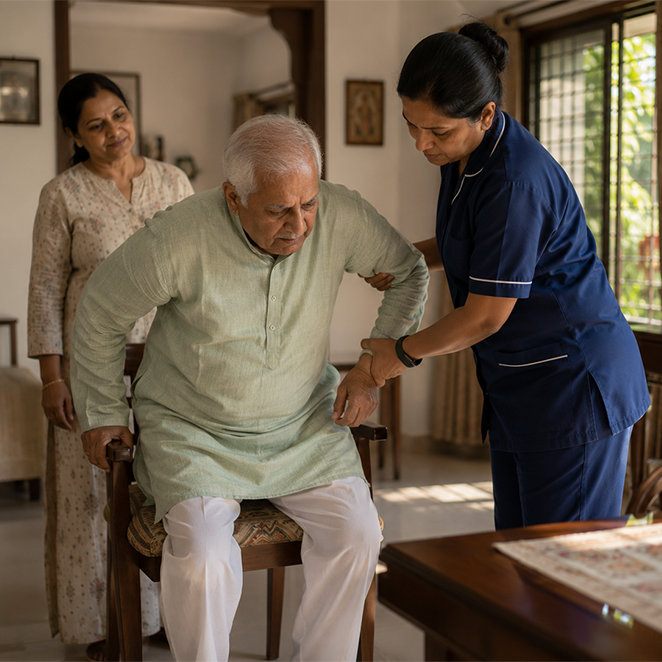
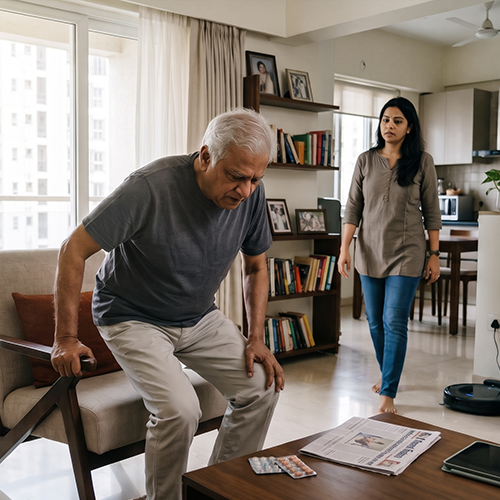
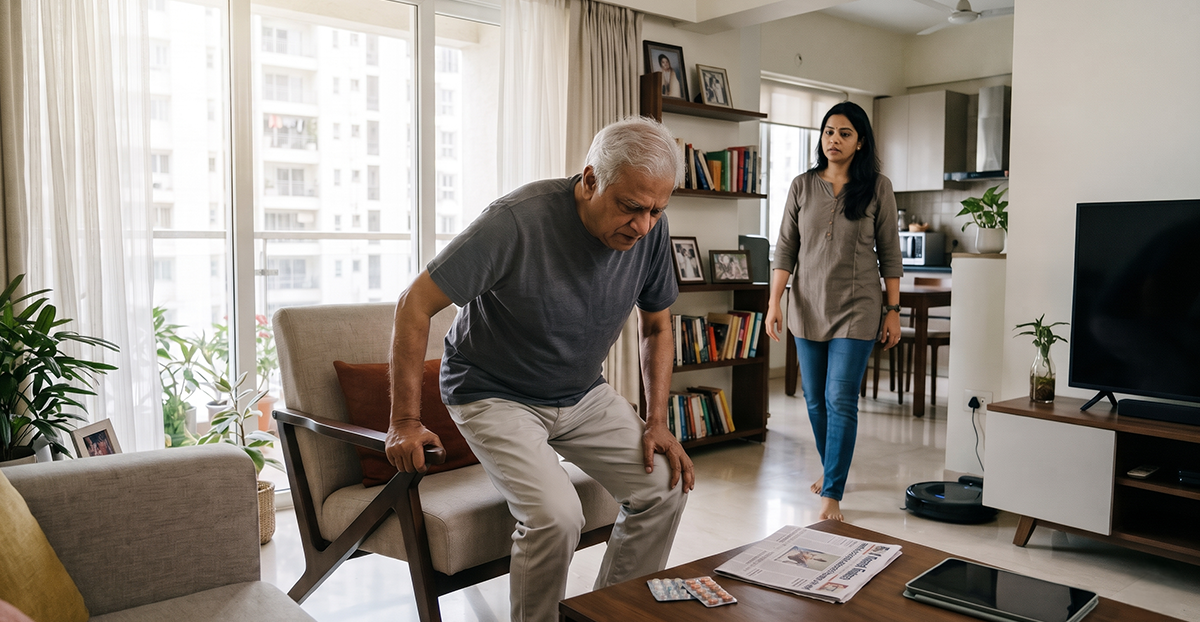
Have you noticed a moment of hesitation every time your mother or father tries to stand up from the sofa? Maybe they rock back and forth once or twice to build momentum, press their hands heavily against their knees, or freeze for a second after standing to catch their balance.
It is easy to brush this off as just another sign of getting older. But difficulty standing up, what doctors call rising from a seated position, is rarely just about old age. More often, it is a combination of muscle loss, joint discomfort, or simply the wrong furniture at home.
You can help your parents move painlessly with a few simple lifestyle adjustments. But first, you need to understand why they are struggling in the first place. Here are five common reasons older adults find it hard to get out of a chair, along with safe ways to help.
Age Weakens Their Thighs and Core
Standing up requires far more physical strength than walking. It relies heavily on the quadriceps (the front thigh muscles), glutes, and lower back. As people age, muscle mass naturally decreases, especially if daily activity slows down.
When those leg muscles lose power, pushing upward from a low seat becomes a strenuous workout. Your parents might start avoiding getting up altogether, which unfortunately makes those same muscles even weaker over time.
How you can help:
- Encourage simple, low-impact daily movement, such as short regular walks or gentle leg lifts while watching TV.
- If safe, encourage your parent to practice rising from a firm, high dining chair a few times a day using their legs rather than just pulling with their arms.
- A physiotherapist can design safe, simple exercises targeted at strengthening key leg muscles without straining their joints.
Knees or Hips are Too Stiff and Tired to Stand Up
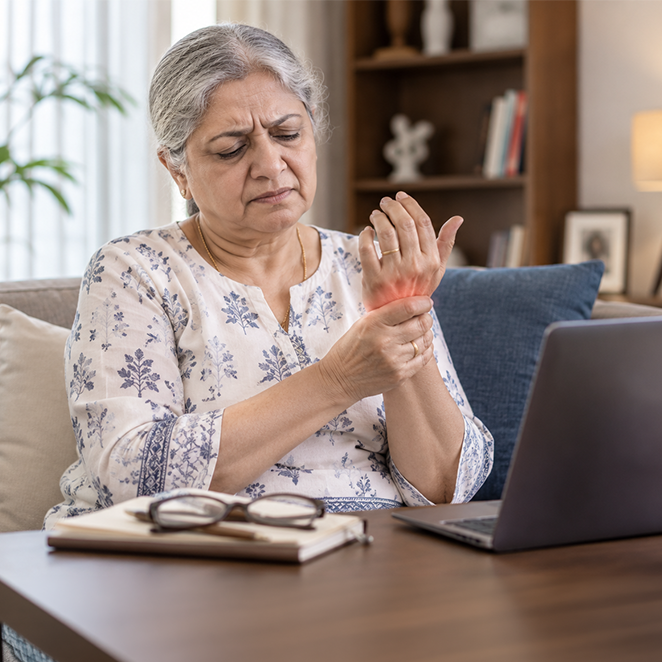
If your parents live with osteoarthritis or joint wear-and-tear, bending their knees to sit and then straightening them to stand can be painful.
Sitting in one position for long periods causes joint fluid to settle, leaving the knees feeling stiff or locked. When your parents try to stand up, that sudden pressure on stiff joints can cause a sharp pang of pain, making them pause or sit back down.
How you can help:
- Encourage your parent to stretch their legs or shift positions every 45 to 60 minutes so their joints do not lock up.
- Placing a warm lap blanket over their knees before they stand can to relax tight muscles around the joint.
- If joint pain regularly prevents them from moving freely, speak with their doctor about adjusting their routine or medical care.
Soft, Deep-Cushion Sofas and Low Seating Make Movement Difficult
Sometimes, the issue isn't your parent's body; it is probably in your living room setup. Popular plush sofas, low armchairs, and soft couches allow people to sink deep into the cushions.
When a seat is too low or overly soft, a person's hips drop below their knees. Pushing up from this angle requires almost double the muscle force compared to standing from a firm, level seat.
How you can help:
- Check where their hips sit when they sit down. Look for firm chairs with straight backs where their knees stay at or slightly below hip level.
- Place a firm orthopedic booster cushion like AGEasy’s Coccyx Cushion on low sofas to raise the seating height naturally.
- Make sure the chair has strong, non-slippery armrests so your parent has something stable to push against.
Dizziness or Low Blood Pressure Cause Vertigo
Does your parent stand up successfully, only to pause and hold onto the armrest with a look of hesitation? They might be experiencing a momentary dip in blood pressure upon standing up, known as orthostatic hypotension.
For other seniors, inner ear issues, eye changes, or general unsteadiness cause their heads to spin and make standing up feel scary. When someone is afraid of falling, they instinctively hesitate or struggle to rise.
How you can help:
- Encourage your parent to move to the edge of the chair first, pause for 5 to 10 seconds, take a deep breath, and then stand up slowly.
- Keep the floor around their seating area completely free of loose rugs, footstools, and electrical cords.
- Mention any dizzy spells to their doctor, as blood pressure and heart medications can sometimes contribute to lightheadedness.
Low Friction or Grip Between Feet and Floor
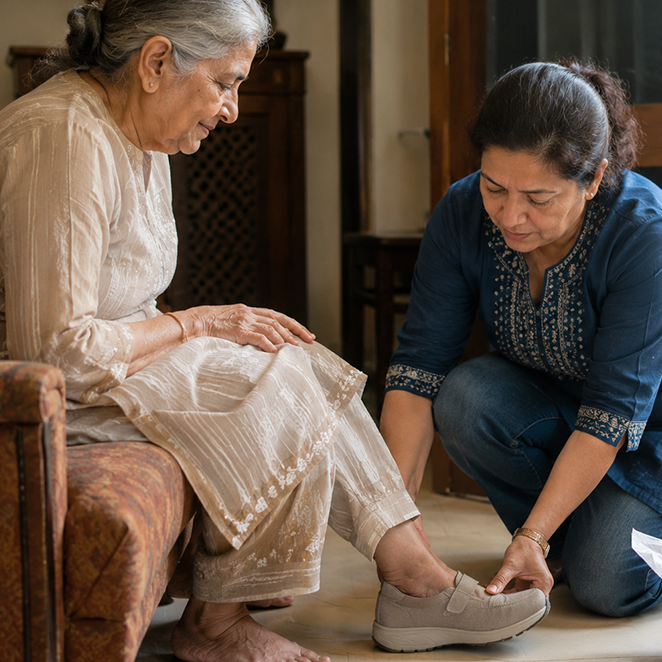
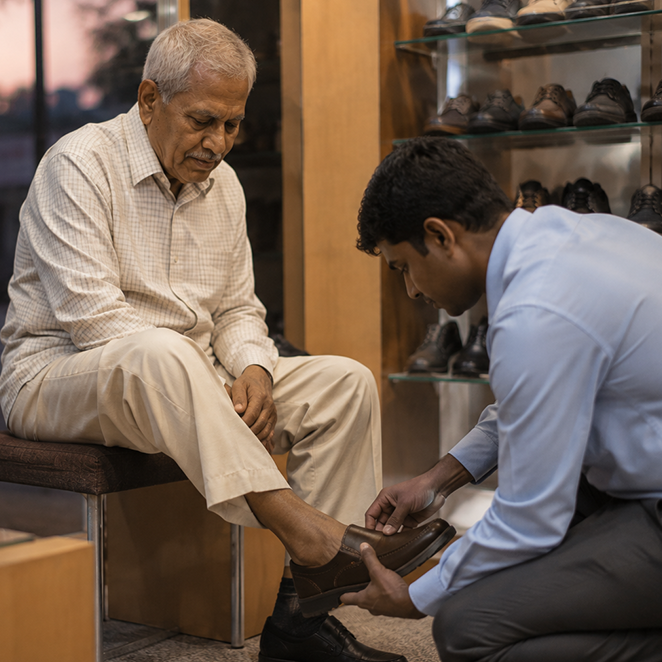
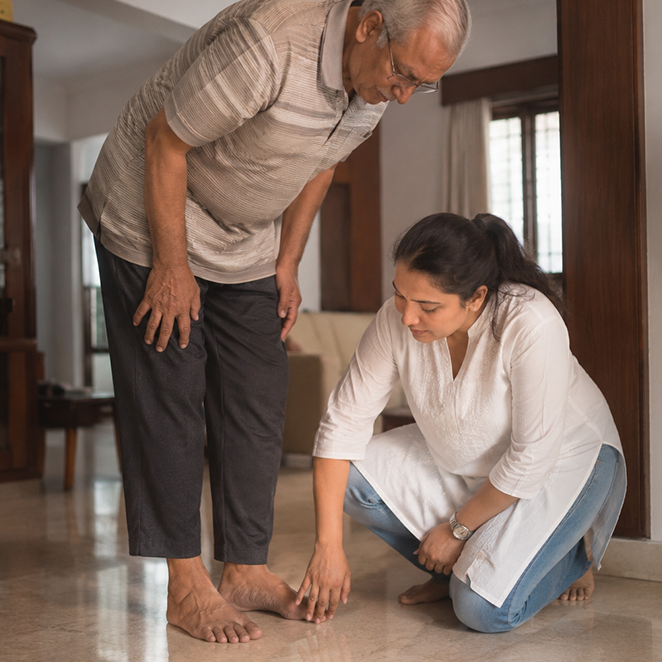
To stand up straight and safely, we need good traction on the floor, and it is especially important for aging parents. If your parents are wearing loose slippers, smooth-soled socks, or backless footwear, their feet might slide slightly as they try to drive their weight downward.
Glossy tile, marble, or polished wooden floors can also lack grip. If your parents feel their feet slipping beneath them, they will naturally feel insecure and struggle to push themselves up.
How you can help:
- Switch to well-fitting, anti-skid indoor shoes or AGEasy non-slip grip socks at home. Avoid smooth-bottomed slippers for your parents.
- Use AGEasy’s rubber-backed non-slip mats in front of their favourite seating spots.
- Keep floors clean, dry, and free of wax or polish that reduces foot traction.
When Is a Doctor’s Visit Necessary?
You can help your parents’ mobility easily with supporting tools like AGEasy walkers or AGEasy walking sticks. But it is recommended that you always get sudden changes in their movement checked by a healthcare professional first, especially if your parents:
- Suddenly struggles to stand up over just a few days.
- Expresses severe, sharp pain in their hips, back, or knees when rising.
- Feels dizzy, faint, or lightheaded every time they stand up.
- Shows sudden weakness on one side of their body.
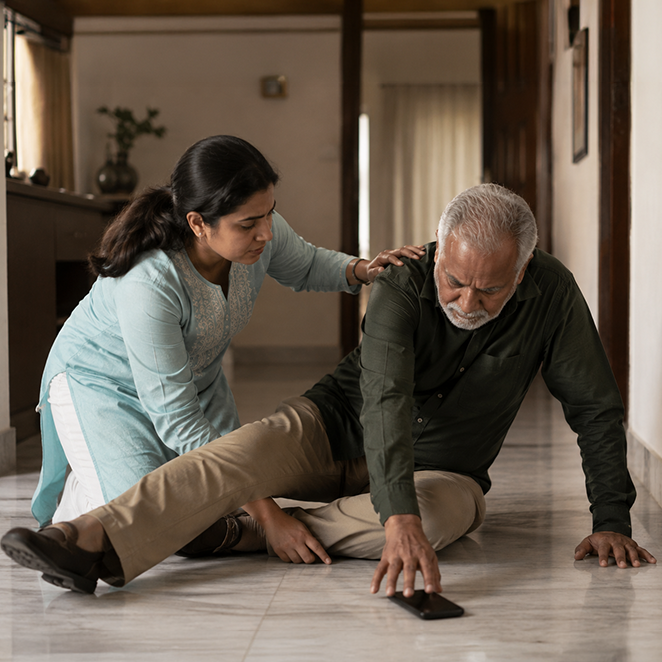
- Has experienced a recent fall or near-fall while getting up.
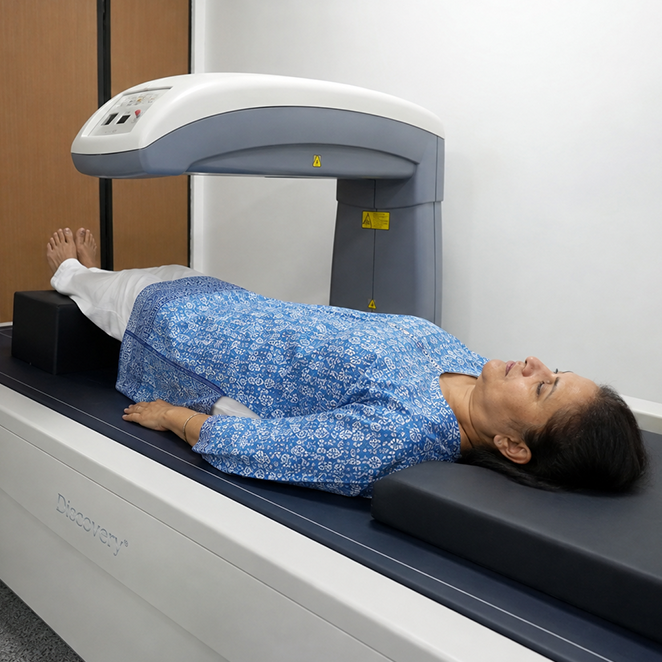
A qualified physiotherapist or doctor can evaluate their strength, balance, and gait to determine if a walking aid or specialized support is needed.
Note: Always involve your parent in these choices. When you make changes together, you help them stay safe while preserving their dignity and independence at home.
Helping Your Parent Stay Independent at Home
Finding it hard to get out of a chair can quietly erode an older person's confidence. It makes simple, enjoyable moments, like greeting a guest, making a cup of tea, or moving to the dinner table, feel like a hurdle.
Rather than lifting them up every single time, look at what is making the movement difficult in the first place. Swapping a soft couch for a firm chair, adding a supportive cushion, or making sure their shoes have a good grip can make a world of difference.
At AGEasy, we design products with seniors in mind to make daily living easier, safer, and more comfortable. From supportive seat cushions and back supports to mobility aids, our products are built to support active, independent ageing.
Explore AGEasy’s comfort and mobility solutions to help your parent move with confidence, and consult a healthcare professional whenever mobility challenges persist.