
Does Your Ageing Parent Live Alone? 5 Things To Keep In Their Emergency Kit
Oct 30, 2026
Does Your Ageing Parent Live Alone? 5 Things To Keep In Their Emergency Kit
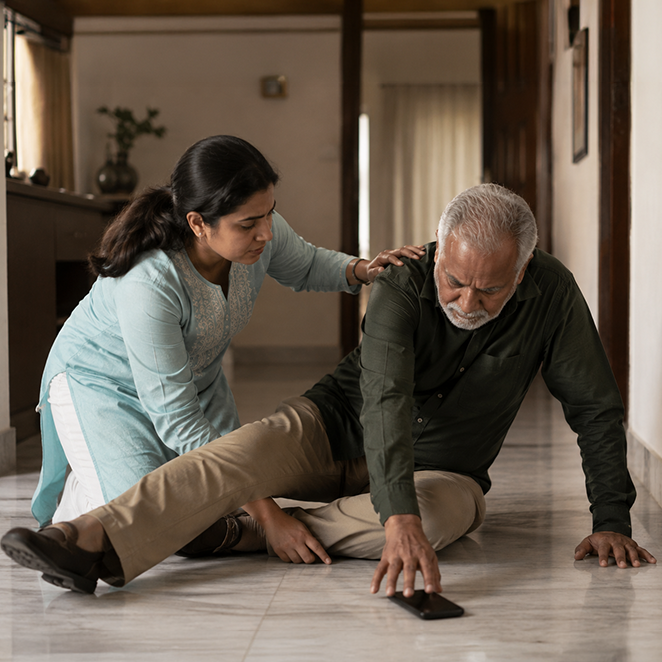
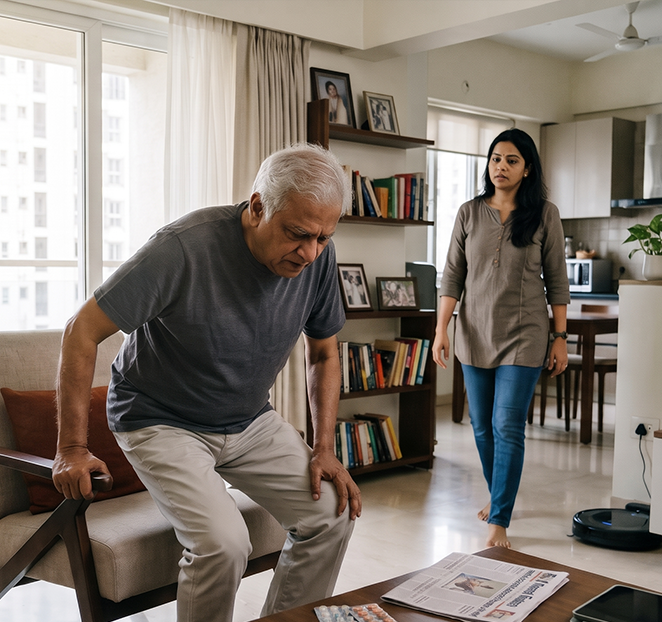
Imagine your mother getting up from her chair and suddenly feeling dizzy. She reaches for the table to steady herself, but her legs feel too weak to walk comfortably. She wants to call someone for help, but her phone is in another room, out of charge. Or imagine your father, who takes several medicines every day, suddenly struggling to remember which tablet he needs to take and at what time. His prescription is somewhere in a drawer, but he cannot find it.
Now, if you are home and there to help, these problems go away as quickly as they come. But in case you are not, and an ageing parent needs urgent help, looking through drawers and searching for important information is the last thing anyone wants to do.
A small home emergency kit can go a long way in keeping your parents from panicking in such situations. It doesn’t need to be expensive or filled with complicated medical equipment. Just keep a few useful things together, in a place your parent can reach easily.
Here are five essentials you can keep in the home emergency kit for easy access.
Emergency Numbers and Important Medical Details
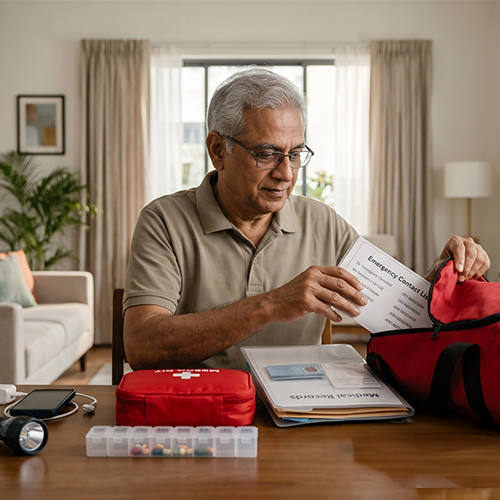
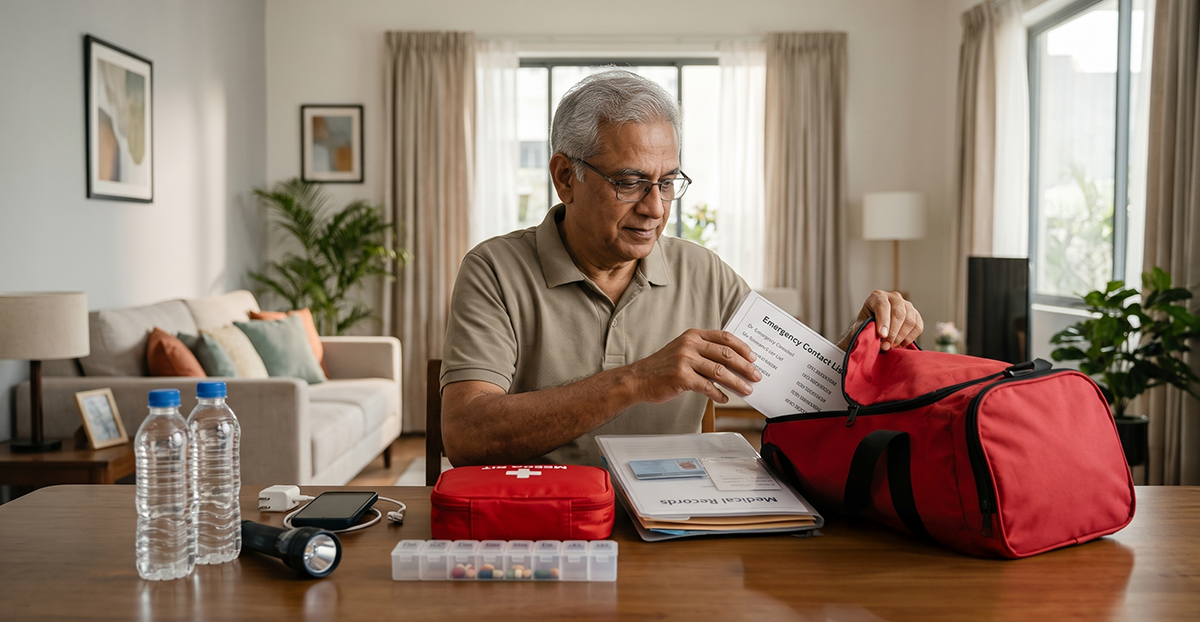
An emergency directory is the first essential item in your home emergency kit. List all emergency contacts on a piece of paper and keep it inside the kit in a way that makes it immediately accessible. That way, if you are away and your parents feel unwell, anyone available can contact emergency contacts for guidance.
It is very important that you don’t rely on your parents’ phone or any other electronic device for that matter. If the battery dies, or it is misplaced or locked, that information becomes useless.
Here’s what you can list:
- Family contacts (primarily yours), a trusted neighbour’s number, and most importantly, details of the regular doctor and the nearest hospital.
- Your parents’ health conditions, allergies, current medicines and any important treatment guidelines that their doctors prescribed.
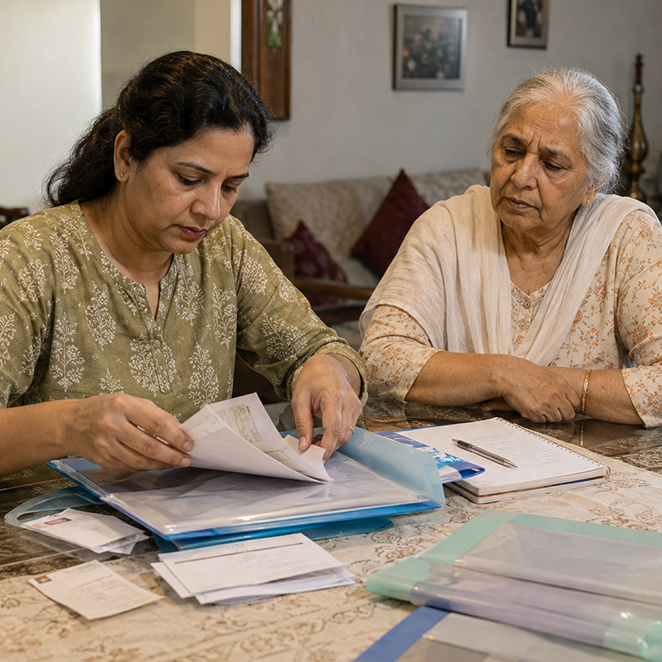
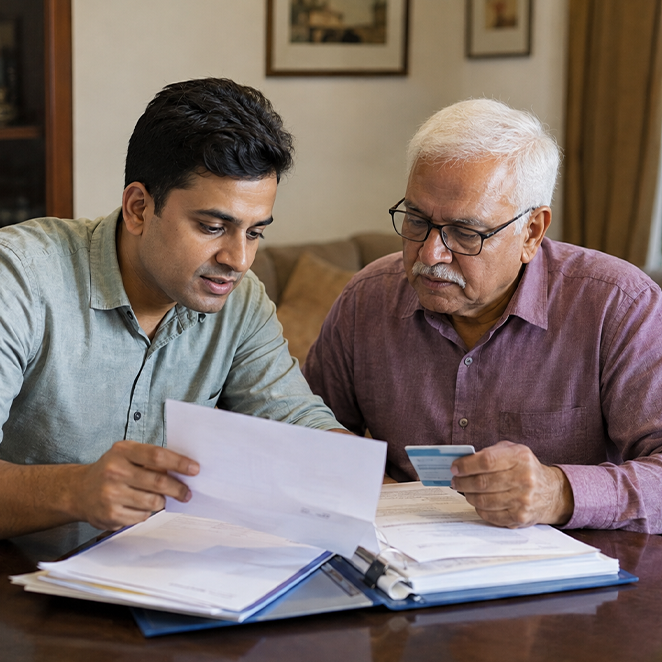
- A copy of important medical documents and health insurance details (keep these in a waterproof folder or a ziplock bag).
In India, 112 is the national emergency number for urgent police, fire and medical assistance. Put it on the contact sheet, too. Make sure your parents know who to call first and when to ask for emergency help.
A Basic First-Aid Kit
It is easy for your ageing parents to get injured, and it just gets worse with age. A small cut while chopping vegetables or a scraped knee from tripping over a doorstep is well within expectations at their age. And in case of such injuries, rummaging for bandages or antiseptics isn’t helpful.
Keep a first-aid box handy. Nothing too complicated or diverse, just a basic kit filled with:
- Adhesive bandages (band-aids), sterile gauze, medical tape, a simple thermometer, and disposable gloves.
- Wound cleansers, clean wipes, and a small pair of scissors.
- Basic painkillers and general non-prescription medicines like Paracetamol, Oral Rehydration Salts (ORS), Cetirizine, etc.
Make sure you keep it clearly labelled and separate from their regular medicine stack (if any), and easy to find. And remember that a first-aid box is useful for minor problems, but it cannot replace medical care. If your parent has a serious injury, heavy bleeding, chest pain or difficulty breathing, seek urgent help.
Their Regular Medicines and Prescription Copies
If your parents take regular medication for chronic conditions, make sure you explicitly prepare a separate box for them. Keep stocking up regularly to avoid untimely trips to the pharmacy. Because if your mother’s medicine strip suddenly runs out, and heavy rain makes a trip to the pharmacy difficult, she might miss a timed dose, which is obviously not what we want.
Keep an updated prescription and a list of medicines in the kit that shows the name, dose, and usual timing of each medication. Include any necessary personal supplies, such as glucose-testing strips, inhalers or spare hearing-aid batteries, if your parent uses them.
Store medicines as directed on their labels, and check expiry dates regularly. Don't pack extra tablets without professional advice or assume that one family member's medicines are suitable for another.
A Torch and an SOS Channel
A random power cut or blackout is mostly unpredictable, and more often than not, they are dangerous for seniors who wake up frequently in the night. Picture your parent waking in the middle of the night and finding the corridor completely dark. Even a familiar walk to the bathroom becomes harder when they can't see what's ahead.
A torch is the go-to tool anyone will think of when that happens. Keep a bright, easy-to-use torch with spare batteries inside the kit. Make sure it isn’t very heavy-duty, and is light enough to carry comfortably.
To make sure they can call for help, keep a mobile phone with an emergency calling feature handy, and show them how to use it properly.
You can also opt for a multifunctional device like AGEasy’s Pivot Lumina SOS Walking Stick, which supports your parents' mobility, with an in-built torch and an SOS button for instant help.
They can also use the phone’s flashlight as an alternative to the torch, but it is not a recommended replacement or a first choice. And also, don’t forget to add a charged power bank and a charging cable to the kit.
Water, Simple Food and Personal Essentials
When you think of emergencies, you might picture an ambulance or a sudden injury. But even a long power cut or a few hours stuck indoors during heavy rain can be difficult for an older parent. That is why the kit should also include things that keep them comfortable while help arrives or plans are being made.
What you can do:
- Keep sealed drinking water and some ready-to-eat food suitable for your parent's dietary needs, and keep rotating supplies before they expire.
- Add tissues, wet wipes, hand sanitiser and any personal hygiene supplies they regularly use.
- Put spare glasses, hearing-aid batteries or a small amount of cash somewhere easy to locate, if relevant.
Helping Your Parents Feel Prepared, Not Worried
The best emergency kit isn't the most expensive one. It's the one your parent can actually find and use. Choose a fixed, easy-to-reach place and walk through the contents together. If they live alone, tell a trusted neighbour or nearby relative where the kit is kept, with your parent's permission. Review it every few months as their needs change.
At AGEasy, we believe that looking after ageing parents should help them feel prepared, comfortable and independent, not helpless. We believe that thoughtful support often starts with small steps taken together, long before they're needed. We offer all-round senior support with products ranging from orthopedic pillows to mobility and breathing support.
Explore AGEasy to learn how we support seniors and the families caring for them.