
The Senior Home Emergency Kit, Plus the One-Page Sheet to Stick on the Fridge
Aug 17, 2026
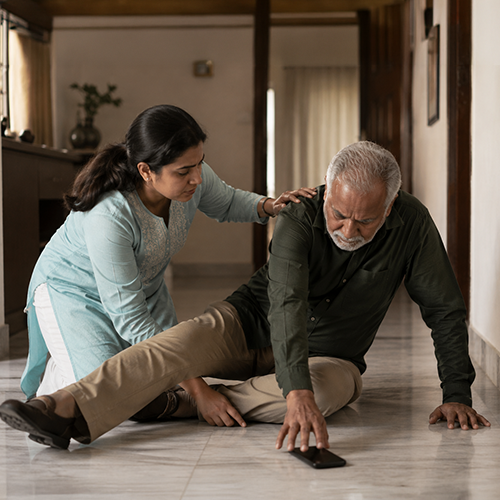
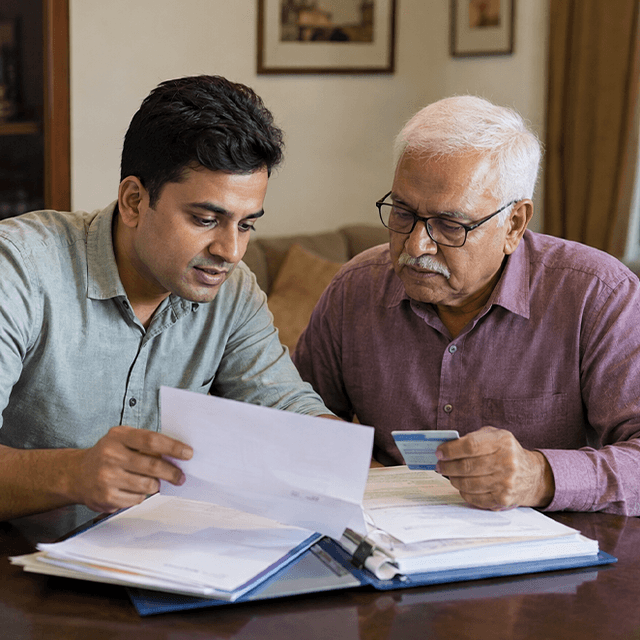
Time is always of the essence when you're in the midst of an emergency, and most families are by no means prepared. They stock their first aid boxes, keep spare flashlights and thermometers, but forget to keep the information.
When something goes wrong at home, you don't have time to search for information. You have seconds to find it.
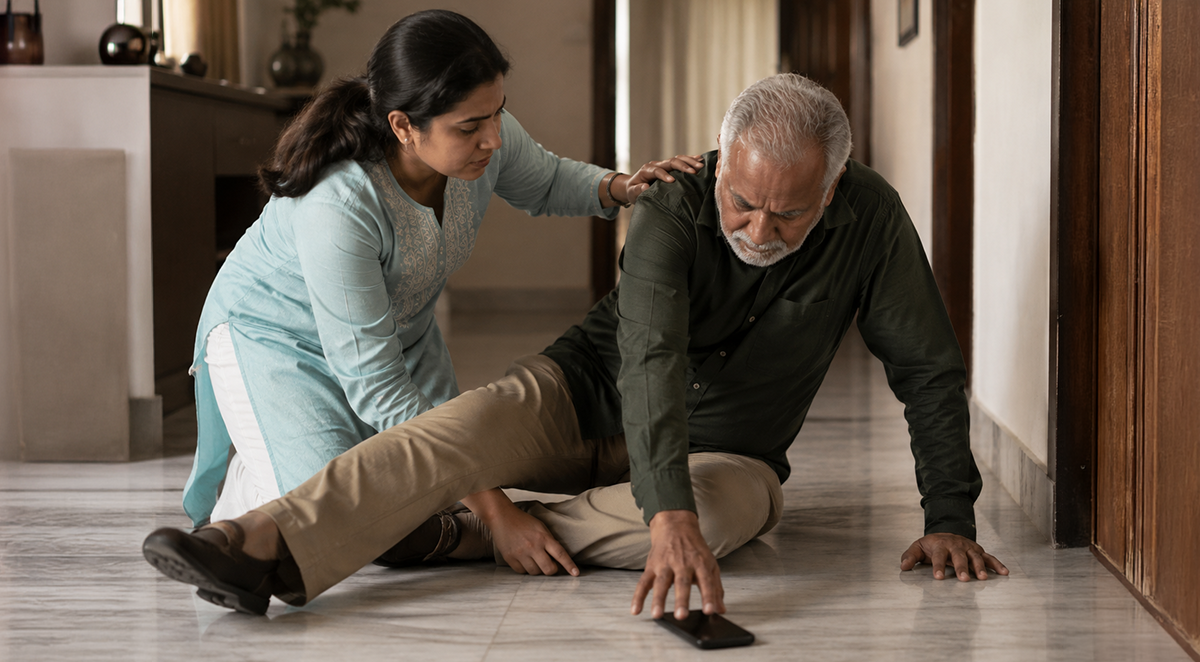
A parent falls. A medicine reaction starts. They feel unwell without warning. Then someone asks who to call, what medicines they take, what the doctor said last month.
Here is what one should avoid doing with that information:
- Bury it in a cupboard someone forgets to check
- Scatter it across WhatsApp messages
- Lock it in a drawer that's hard to access in an emergency
- Save it only on one person's phone
The most important information is the one you need to stick on your fridge:
- Emergency contact
- Current medications and dosage
- Doctor and hospital details
- Medical history including information on allergies, past/current illnesses
- A simple record of what to do when something goes wrong
An emergency is the worst time to start looking for any of this. When your parent lives alone, or caregivers are not always in the same room, clarity becomes part of safety.
Preparation allows families to respond faster, and avoids confusion during emergencies.
This guide covers the essential items to keep in a senior home emergency kit, the information every caregiver should have ready, and a one-page emergency sheet you print and stick on the fridge.
Where to Keep the Kit
Use one container everyone in the house recognises. A clear plastic box with a lid works well, because the contents stay visible without opening it. Keep it in a fixed spot at waist height, in a room people walk through every day.
Label the contents according to the order you would attend to in an emergency.
For Cuts, Burns, & Minor Injuries
- Sterile gauze, adhesive bandages, medical tape, antiseptic, cotton, blunt nose scissors, gloves, and a sprain bandage. A cold pack may also be included.
- Senior skin, especially if you have a blood thinner, may sustain a long, severe bleed and therefore requires dressings and padding.
- Also blood thinner medications like warfarin and aspirin/clopidogrel/apixaban may cause prolonged heavy bleeding even from minor cuts. It is recommended that families who have a parent(s) on these medications keep a stock of pressure dressings.
For Checking What Is Wrong
Being able to check oxygen saturation, blood pressure, and pulse on site helps determine how urgent the situation is or what actions are necessary, like calling the doctor or the ambulance. Providing them with numbers is so much better than an explanation on the phone.
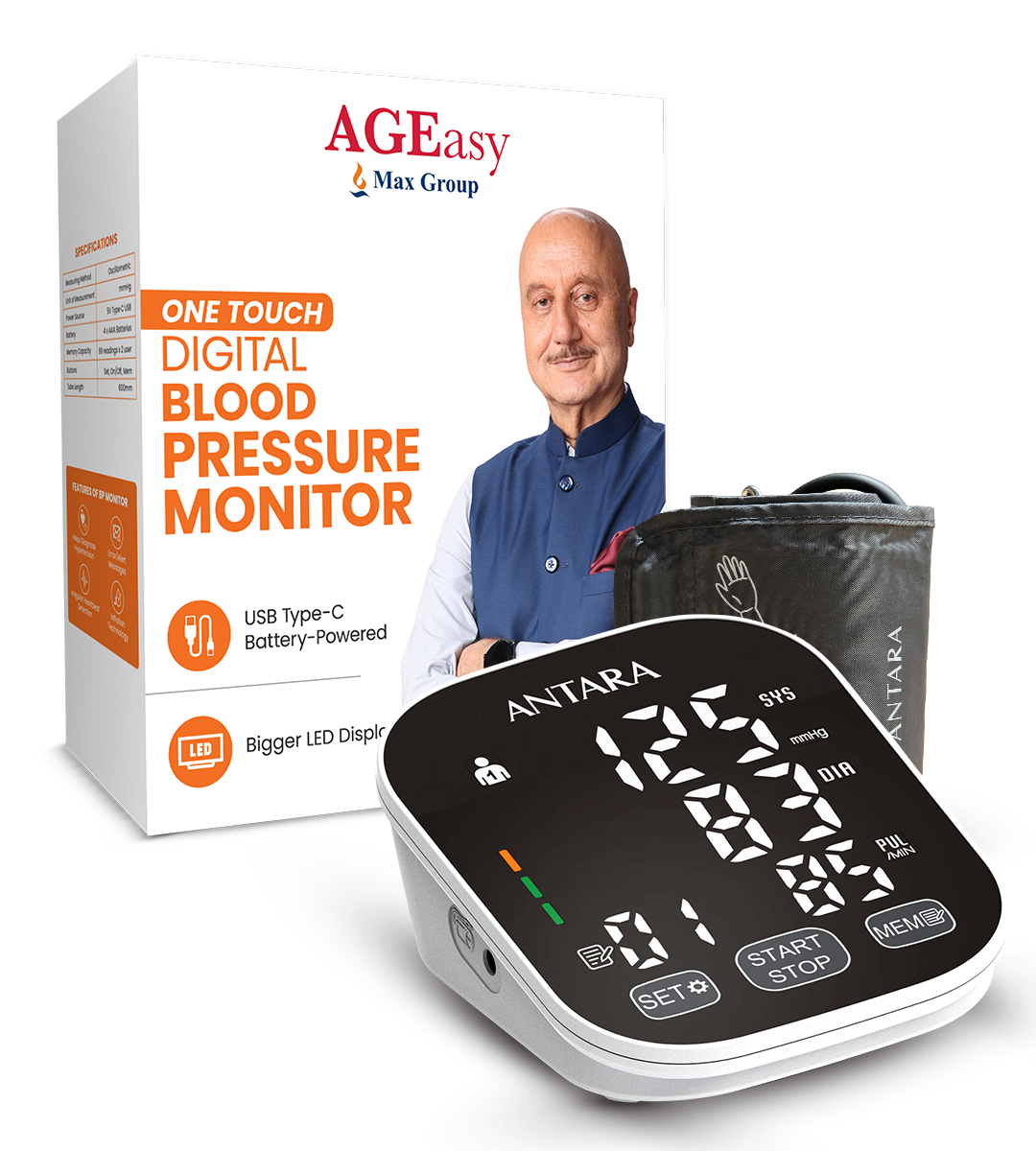
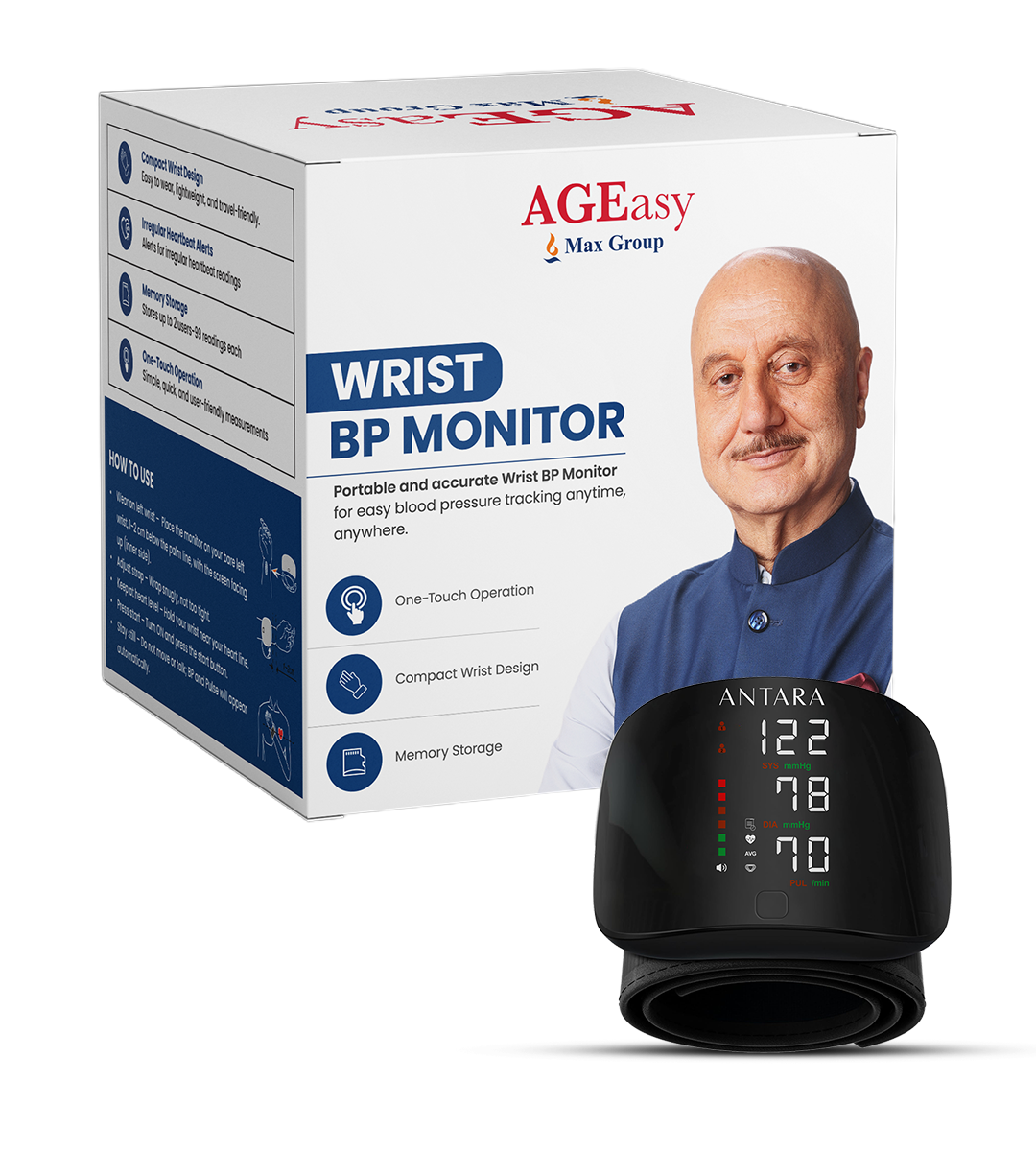
Keep these 3 devices as a minimum in your kit: an oxygen saturation pulse reader, a thermometer, and a home blood pressure monitor.
AGEasy offers both an advanced fingertip pulse oximeter and a variety of home blood pressure monitors that include a wrist monitor for blood pressure that is less invasive and a voice-activated monitor for those with poor vision.
If your parent has diabetes, adding a glucometer with date-tested strips or a continuous glucose monitor would be useful. The symptoms of low glucose are similar to those of a stroke, like sweating, confusion, and slurring of speech, and get easily mistaken as a stroke. A quick prick of the finger to check blood sugar would clear these doubts.
Write your parents' usual readings in the kit, because a reading of 150/90 is normal for some people and dangerous for others based on what their normal is.
For Medicines
- Maintain a week's stock of all regularly used medications, in their original prescribed packaging. Rotate the stock each month so medicines do not go beyond their shelf life.
- Clearly label and store rescue medications in a separate place. Some examples are sublingual nitroglycerin for angina, an inhaler for asthma or COPD, and glucose gel for hypoglycemia. In an emergency, no one should be reading through eight strips to find one tablet.
- Add ORS sachets and paracetamol in the dose your parent's doctor has approved. Skip the rest. A kit full of old antibiotics and half-used creams slows down the response.
For Movement and Support
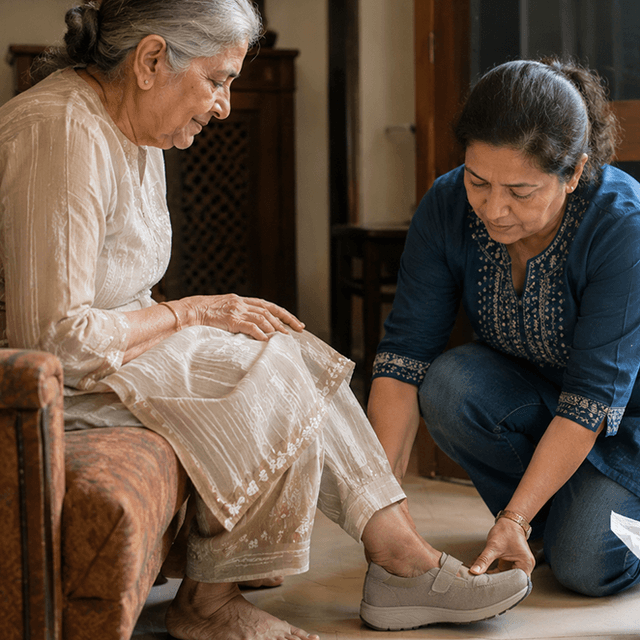
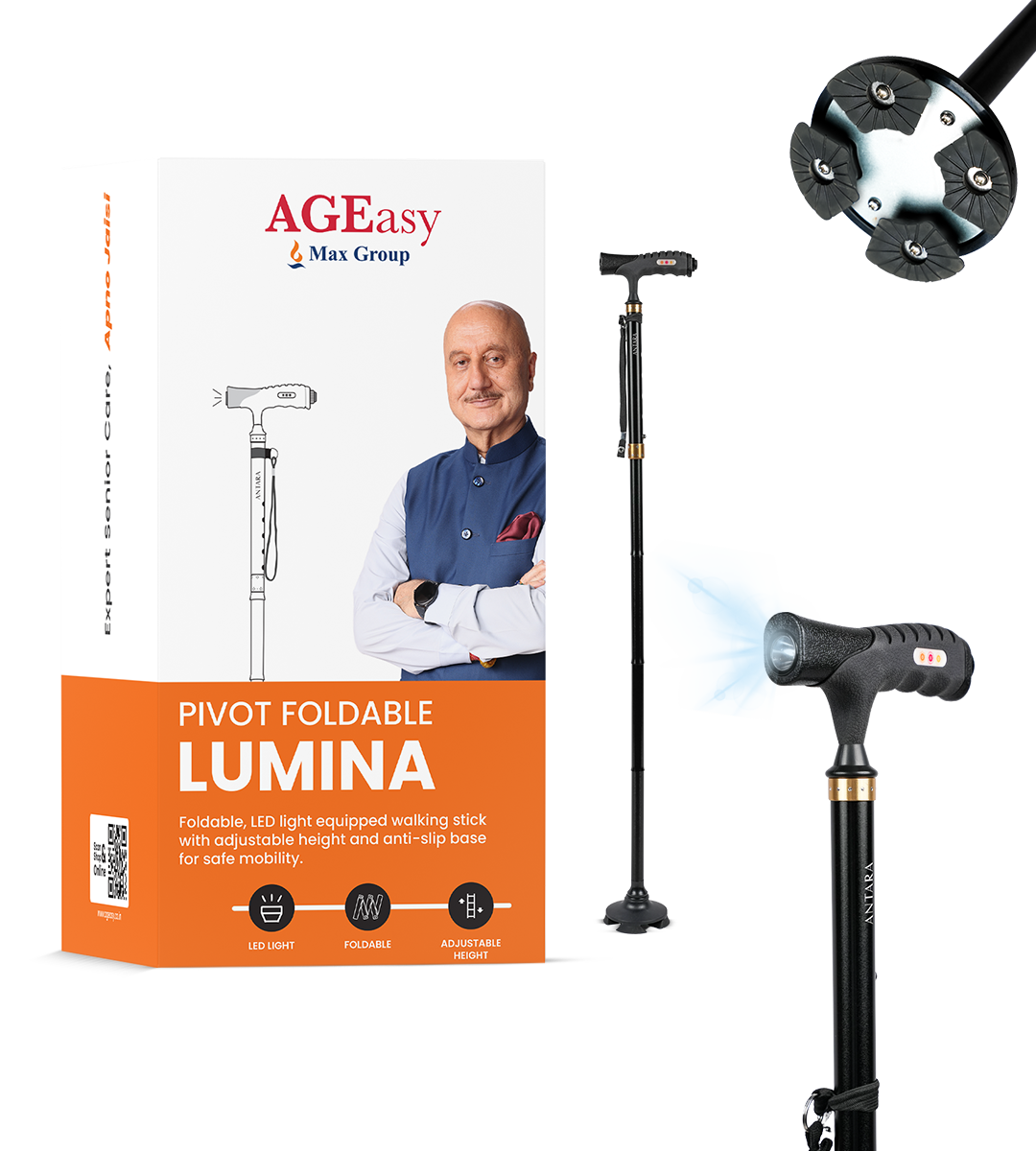
Most seniors need support to stand and walk after a fall, even over a short distance. A folding walking stick should be placed near the kit and not in it. AGEasy sells adjustable walking sticks for the elderly, and quad-base sticks provide more stability for people who are generally unsteady.
If the fall happened in the bathroom, adding a fold-up support grab bar and an anti-slip bath mat decreases the chances of another fall. Preventing falls should also be discussed when thinking of ways to respond to a fall.
For Power, Light, and Noise
A torch with spare batteries, a fully charged power bank, and an emergency light for the hallway. A whistle should be included as a fall alert in case your parent is not able to reach a phone.
Using glow-in-the-dark anti-skid tape on stair edges and bathroom thresholds and the path from bed to toilet helps during a power outage (especially at night) when most falls at home occur.
The One-Page Emergency Sheet
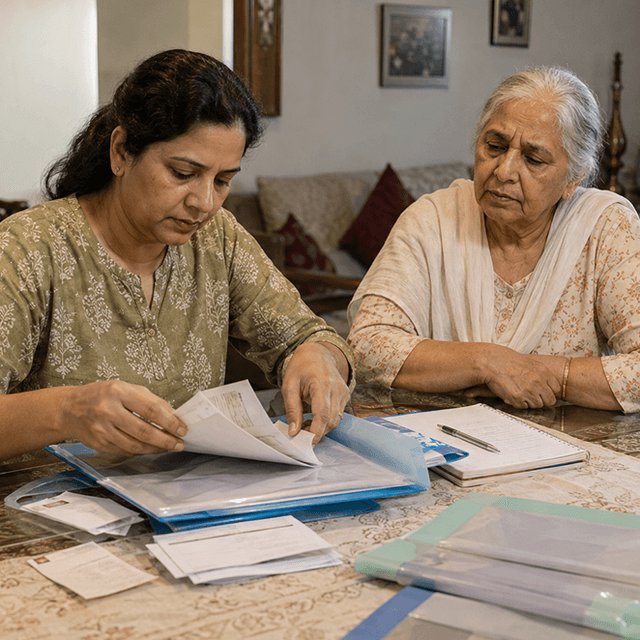
This is the part of the Emergency Kit that families skip, and the part responders ask for first. It is the most important part of the kit.
Keep to one page. Use wide spacing. Emphasize this by posting the page on the fridge at eye level and a second copy by the main door.
Here is the essential information you need to provide:
- Name, age, blood group, and weight. Emergency drug doses are based on weight.
- Address with flat number, landmark, and floor (for the person driving you).
- Preferred doctor's name, specialization, and phone number. This should be the doctor who does routine care, not just the yearly specialization doctor.
- Preferred hospital and the reason for that selection. Many families select the hospital that has the medical file over the hospital that is closer.
- Current medical conditions.
- Current medications with the dosage and timing.
- List allergies and drug reactions in CAPITAL LETTERS. This is the most crucial thing you can add to an emergency information page.
- List any implants and devices.
- Insurance policy number and TPA number.
- The last time you updated the page.
- Take a picture of the completed page and put it in the caregiver's phone. Send it to the family's group chat so it's saved in everyone's chats.
If Your Parent Lives Alone
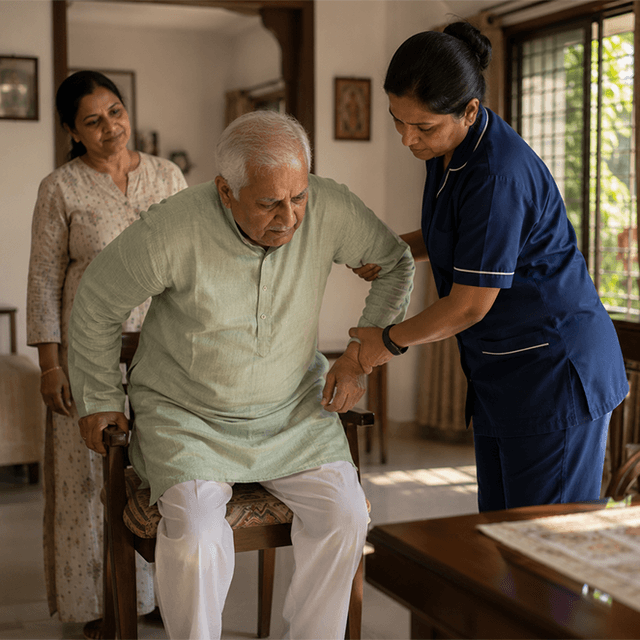
This information is based on the assumption that someone is in the house. The biggest risk occurs during the time between the fall and the actual calling for help.
Closing that gap is as simple as wearing an alert. The AGEasy Protec Smartwatch detects a fall and notifies all of the user's designated contacts without the user having to locate and use their phone.
2 simple habits can be of great help as well.
- Leave a spare key with a trusted neighbor and place a note with that neighbor's number next to the phone.
- Call your parent every day at a specific time to ensure their safety. A missed call, in this case, indicates a problem.
Practise Once, Review Every 3 Months
Take the time to rehearse one example with your family. Imagine your parent fell in the bathroom at 2 AM. Who has to call the ambulance? Who calls the doctor? Who gets the keys to open the gate? Who carries the medicine to the hospital? This is a rehearsal that removes ambiguity from the situation.
Create a reminder to review this every 3 months. Make sure all of the supplies are within their expiration date, and replace used supplies. Update the list of medicines after each doctor's appointment, and check that the batteries for the torch and the oximeter are still working.
A Note on Medical Guidance
This article provides preliminary information on the support Indian families need to care for their elderly parents, but this information should not take the place of recommendations from parents' physicians.
Please ask the parent's physician to review the medication list, identify the specific symptoms that are true emergencies for the parent's conditions, and provide recommendations for the first five minutes for each emergency.
Write the directions for each emergency on the same sheet.
The kit takes about an afternoon to prepare. The sheet will take about twenty minutes. Both are only helpful to the extent that the people supporting your parent know where to look.