
Creating a Medication System Your Parent Will Use: Pill Organizers, Timers, and Refill Reminders
Aug 17, 2026


Your parent may not be missing their medication doses intentionally.
They may forget if they have taken the morning pill with breakfast. An afternoon pill may be missed if they take a nap during the day. A medication refill may not be processed over the weekend, causing an entire weekend's worth of pills to go untaken. Missed doses can make chronic conditions harder to control and may worsen symptoms or test readings. This can reverse what the doctor is trying to achieve.
It is not just the memory that the parent is forgetting to take their medications that is the issue; it is the architecture of the routines that are in place. Those routines that have been established and are stuck to integrate a system that does not put the entire burden on the individual. Family members can assist by setting up a pill box for medications for the week, having an automatic pill box dispenser so that it reminds them of the medication refill, or by integrating the medication intake into an activity they already do (e.g., during the morning coffee or after they watch the news).
Using these 4 tools can help maximize medication adherence for parents who live by themselves or as part of a larger family system. Everyone can worry less knowing that there will be fewer medication omissions.
This system requires very little technology (no apps or smart dispensers), and can be implemented as a simple plan along with any other standard routines.
Begin With One Comprehensive Medicine List
Prior to getting any boxes or alarms in place, it is important to first understand what your parent is taking. Most families are surprised when prescriptions start piling up, and people see a cardiologist, a diabetologist, an orthopaedist, and a family doctor, yet no one has the right answer.
Put every strip, vial, inhaler, dropper, and supplement in one place. For each one, note the brand name, chemical or generic name, strength in mg, frequency of dosing per day, time of dosing, and whether it is taken pre- or post-prandial. Make sure you take note of the doctor who has prescribed the medicine and the reason, i.e., "for blood pressure" or "for thyroid".
Take the completed list to your parent's doctor and ask these questions:
- Are any of these no longer necessary?
- Do any two of these have interactions?
- Is the timing correct as written?
Elderly patients are more vulnerable to drug interactions because of decreased kidney and liver function, so it is worth an appointment just to review this list.
Keep one printed copy on the refrigerator, one in your parent's bag, and one on your phone. In case of an emergency, the list helps the hospital staff avoid whatever is unnecessary.
A Pill Box For One Week's Worth of Medication
A 7 day pill box with divided morning, afternoon, and evening sections converts a daily choice into a weekly one. Sunday evenings become your sorting time. The rest of the days follow as if on autopilot.
When your parent looks at Tuesday morning and sees an empty slot, the question of whether the dose went down gets answered without a phone call.
Make sure to choose compartments that are wide enough to accommodate arthritic fingers, and with lids that open easily without the need to pinch. Due to the difficulty of reading small light gray lettering, a box with day labels that are large and highly contrasting will be useful. Leaving the box out will be important; keep it next to the water jug or the breakfast table.
Dispersible tablets and inhalers should not be put into pill boxes. Anything that requires original packaging to remain moisture protected should also remain out of the box. Before adding any new medication into the box, make sure you check with the pharmacist.
If your parent takes more than ten tablets a day, the best option will be to have two boxes: one for morning and one for night.
Set Alarms that are Fixed to Clock Times
For parents with hearing loss, or those that leave their phones in another room, a table clock with a loud alarm works best. Each alarm can be labelled with the purpose so that when a phone rings it means something other than just noise.
For nighttime doses, one practical addition helps. If there is a motion sensor light by the bed or in the hallway, your parent can avoid walking in the dark to get water. AGEasy sells motion-sensor lights and other aids to prevent falls, so it is a good idea to get one to avoid falls on the way to the tablet.
If your parent is likely to find the alarms annoying and wants to turn them off, simply set two alarms a day for the doses that tend to get missed the most, usually the afternoon one.
Their morning tablet can be taken with the first cup of tea. The lunch tablet can be taken when the plate comes to the table. The night tablet can be taken when the toothbrush is next to it. This action becomes a reminder. It even works when the phone is in another room charging.
Place the pill box where the anchor habit happens. A box next to the kettle is preferred over a box in the bedroom for a morning dose. For a medicine that requires an empty stomach, the anchor will shift to something earlier, such as the walk shoes that are by the door.
Build a Refill System With a Buffer
Usually empty strips can force your parent to miss a dose. It could be festival holidays, an out-of-stock brand, and a doctor being unavailable, all create the same gap.
Work with a 7-day buffer. On the day your parent has just a week of tablets left, order the refill. Mark the reorder date on the kitchen wall calendar at the start of each month, one date per medicine. A wall calendar beats a phone reminder here because the whole family sees it.
Track the Home Reading, Not Only the Tablets
A routine is working if the underlying condition is in control. Home readings will tell you this long before the next hospital visit does.
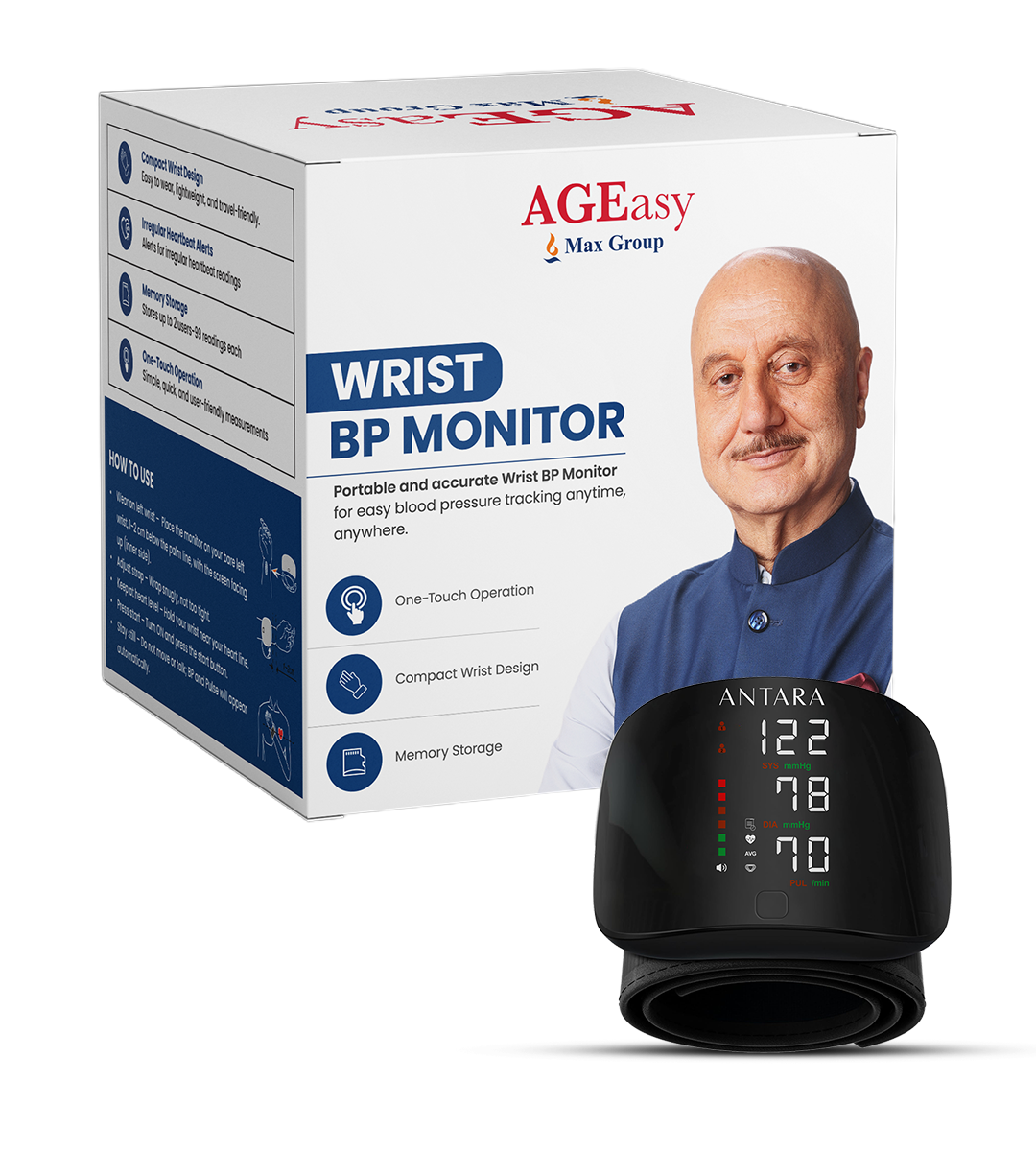
For blood pressure readings, home measurements taken 2-3 times a week at consistent times can help assess the effectiveness of treatment and routine. AGEasy Digital BP Monitors and Wrist BP Monitors have been specifically designed for seniors and feature large displays and one-button functionality to assist those taking the readings without external help.
For diabetes, a blood-glucose meter like the AGEasy BGM Kit can be used for spot checks. A Continuous Glucose Monitor can be used to assist parents who experience extreme glucose fluctuations or lows. As it monitors glucose levels overnight, it provides a complete picture of glucose changes throughout the night. For parents with COPD or heart issues, a pulse oximeter enables the user to get a quick assessment of their oxygen levels and pulse.
It is important to record each reading, including the date and time, in a small notebook or use the memory features of the device. Bring this log to each medical appointment. When it comes time for the physician to adjust a prescription dosage, having 4 weeks worth of readings from home is far more useful than a single reading taken at the clinic.
While home measurements can guide the conversation with the physician, they are not a substitute for the conversation or a reason for the physician to adjust prescriptions.
Keep the Whole Thing Small
The best routines are the most basic ones. A Sunday pill organizer. 2-3 set alarms. Each medication is associated with an existing habit. A reminder on the kitchen calendar for refills. And finally, ensuring that the home reading is recorded twice a week.
Do it with your parent one weekend instead of doing it alone. A system they helped create is one they will continue using when you return home.
This is general information and is not medical advice. Do not start, stop, or change any medicine without consulting your parent's doctor or pharmacist first.