


Hinged Knee Cap: Benefits, Uses & How to Choose One | AGEasy
Article by: Aryan
Jul 7, 2026. 8 min read


Table of Contents
Pain in the body can be frustrating and debilitating. Not being able to trust your knee can be just as disconcerting.
You consciously slow your movements going down the stairs. You make the decision to not pivot or laterally shuffle. You are apprehensive about jumping down from the elevated surface of the curb. You do not do these movements due to a fear of the movement itself, but rather due to a fear that your knee will give out.
Many people think that knee caps are all built to the same standard and all provide the same level of support and protection. That is not true. Some knee caps are designed to help with knee swelling. Other knee caps provide compression to the knee joint. Some knee caps are designed to provide warmth and comfort during daily activities.
A hinged knee cap is different from the traditional knee cap design.
What is a Hinged Knee Cap?
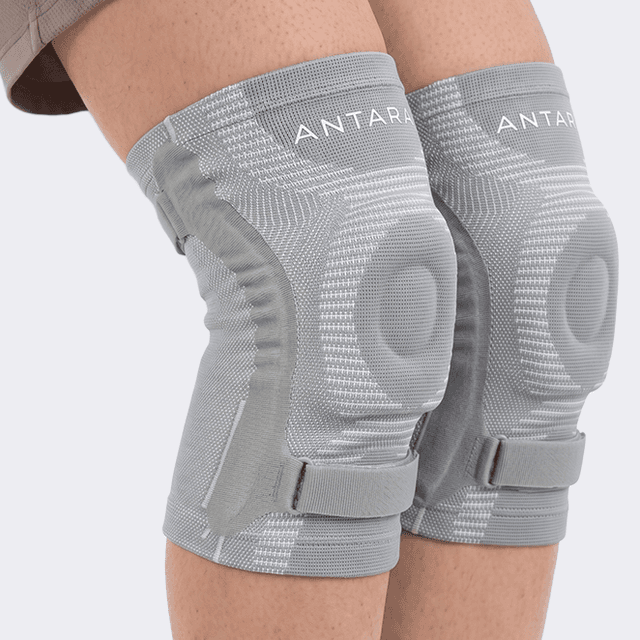
A hinged knee cap provides lateral support to the knee joint and provides confidence to the user to perform movements that the knee ligaments or other supportive structures cannot perform or provide the necessary support. That is why hinged knee caps are designed for knee joint instability, knee ligament injuries, and post-surgical knee rehabilitation and recovery, and not for non-specific knee complaints.
This guide is intended to help you determine whether or not a hinged knee cap is appropriate for you, how it helps you, as well as what to consider in order to provide the appropriate support to ensure you are able to take confident steps again.
Who Should Use Hinged Knee Caps?
If you have sustained damage to one of the ligaments that enable proper tracking of the knee, such as the ACL or MCL, then a knee cap with hinges is one of the first things a physiotherapist or orthopedic specialist is likely to recommend. The hinges serve as mechanical replacements for the ligaments that are not performing their functions. They do not substitute what a ligament tear does, but rather, they provide limitations on injuries that could cause further damage while healing by limiting the knee motion to front and back movement (i.e. no side, twisting, or rotational movements).
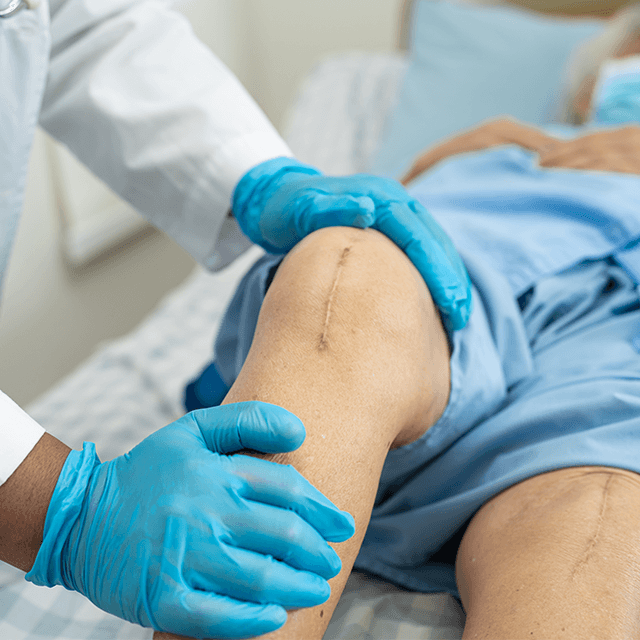
Also falling in this category are those recovering from knee surgery. Post knee surgery, even when the procedure went well, the knee can remain unstable for weeks and sometimes even months. While the muscles develop the strength and coordination, a hinged knee cap provides external support to the knee joint.
Additionally, some people may not see themselves as needing a lot of support, but this is common for people with osteoarthritis where the knee may feel like it is giving way while walking on uneven ground or when climbing stairs. While this may not be due to a ligament tear, the feeling of instability is real. Hinged knee caps offer just enough support for seamless movement.
Athletes coming back from an injury can also benefit from using hinged knee caps. While it may not serve as protective equipment to avoid injuries, hinged knee caps offer a psychological advantage when returning to play, especially when the mental state is not at the same level as the physical healing.
Benefits of Hinged Knee Caps
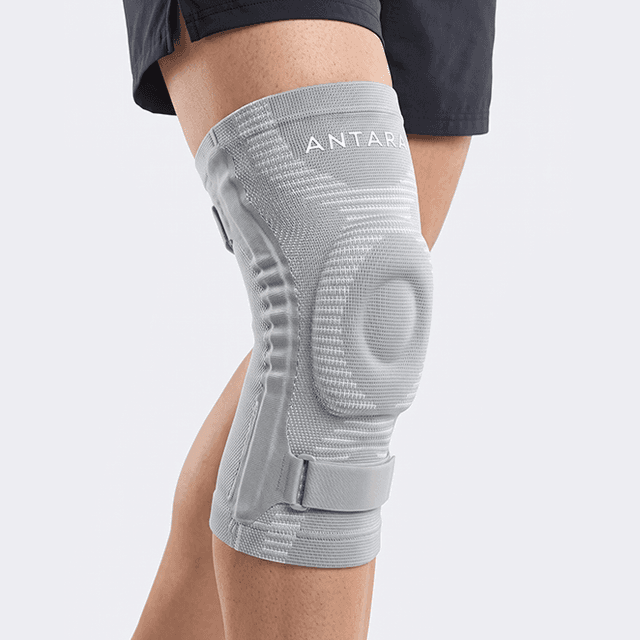
The purpose of the hinge design is to create rigid or semi-rigid lateral supports, with a hinge device to pivot at the knee joint. This allows a person to bend and extend their knee in a natural way, while preventing lateral movement. This is different from a basic compression sleeve which assists with swelling and provides a small amount of support, but does nothing to assist with lateral instability.
Good hinged knee caps come with a couple of standard features that make a difference:
- Adjustable Velcro straps so you can set your own amount of compression at the thigh and at the calf. If the cap is too loose it will not provide adequate support, and if it is too tight, it will restrict blood flow.
- The knee cap is made of breathable, moisture-wicking material. Skin irritation is one of the most frequent reasons people stop using a knee cap when they need it.
- Contoured and anatomical design so the hinge is located at the knee's pivot point. A poorly fitted knee cap will create movement during activity, which is counterproductive.
Some knee caps are designed for a period of post-surgical rehabilitation, and so provide firmer stabilization. Others are for general applied stabilization during work or light activity. AGEasy provides knee supports and has options from basic compression sleeves to assisted hinged supports to facilitate active stability. This makes it easier for clients to select what activity level or recovery stage they are shopping for.
What to Consider When Purchasing One
The common mistake many people make is buying knee caps over the internet without understanding their purpose. Here are some things to check before buying a hinged knee cap:
- Sizing Charts: Look for specific sizing charts rather than general S/M/L charts. Many hinged knee caps are sized based on thigh and calf circumferences. If your knee cap is sized incorrectly, not only will you have to return it, but you risk losing out on real support, as opposed to a knee cap that will slide down your leg whenever you walk.
- Hinges: For knee caps with single-axis hinges, lateral stability support is fine. For more complex hinges that facilitate better rotational movement and mimic the natural movement of the knee, which are often prescribed for post ACL and PCL injuries, you may want to consult with your physiotherapist on which ones you can use to support your recovery.
- Purpose-built vs multipurpose: Wrap-around knee caps that even have hinges, while marketed for sport arthritis support, aren't as functional as an arthritis knee cap designed to support the lateral stresses that come with sport recovery. So instead of choosing a highly rated knee cap, look for one that is designed for your specific needs — injury recovery, arthritis management, or general joint support.
- If you have an injury that causes swelling, this can make putting on your knee cap take longer than other types because the injured joint is more difficult to mobilize. For this reason, pull-on sleeve designs with removable Velcro wraps are also available, and in the first few days following an injury or surgery, wrap-around knee caps may be much easier to manage than sleeve knee caps.
The AGEasy Comfort Knee Cap with Hinged Side Support considers all of the factors above by supplying adjustable compression and a soft, breathable fabric that is designed to be worn for long periods of time, which, in practice, usually ends up being more important than people expect.
A Couple of Points to Consider
Hinged knee caps are not a substitute for treatment. They will not heal torn ligaments, and if rehab, physio, strengthening, and/or medical treatment are required, the knee cap will not address those needs. What knee caps do is help to prevent re-injury to a vulnerable knee.
They can also help improve confidence in doing the activities that the knee may need to do to help the patient on the road to recovery. In fact, confidence in the knee is a critical component of rehabilitation. A knee that feels secure is one that the patient will be more likely to use and rehabilitate, as opposed to avoiding using the knee out of fear.
If you experience significant swelling or pain, or your knee is prone to giving way, it is important to see a medical professional. A hinged knee cap should be used in conjunction with other treatment interventions, not as a substitute for them.
A properly selected hinged knee cap will support any daily instability due to mild arthritis, an unresolved old injury, or simply a knee that feels less dependable than it once did. While it may not eliminate every instance of discomfort, it will provide the knee with the support necessary to facilitate confident, unhesitant movement like walking down stairs, having to quickly change directions, and stepping off curbs.
Decision-making involves closely considering the requirements of your injury, activity needs, and knee cap use duration to ensure an ideal match of the knee cap to the situation. If this is your first knee cap, consult a physiotherapist to evaluate the level of support and type of hinge needed, as well as to ensure proper measurements are taken. A knee cap that is well fitted and designed appropriately can offer sufficient support and can be the determining factor of whether you are moving with confidence or avoiding movement altogether.
Recommended Blogs




You May Also Like
 No products found
Article by:

Aryan
Article Category:
Knee Support