
Perineal Care for the Bedridden Adult: A Gentle, Step-By-Step Approach
Oct 27, 2026
Perineal Care for the Bedridden Adult: A Gentle, Step-By-Step Approach
Good perineal care does more than just cleanliness. It protects sensitive skin.
Due to the characteristics of the skin, moisture lingers and the skin stays damp. Eventually that area becomes not only irritated, but also painful.
Many wrongly believe perineal care is limited to cleanliness. This is far from the case.
It is about cleaning gently so as not to damage the easily irritated skin. It is about very gentle drying. It is about timely changing of wet or soiled products. It is about regular inspection for signs of irritation and broken skin.
Perineal care protects the skin so much more than hygiene care does. It protects aging skin. It protects sensitive skin. It protects delicate skin. It provides dignity and protects comfort. It provides a safety net to the user so that skin and urinary changes of concern to the user are addressed in a timely manner.
One critical thing to remember is this. Clean does not mean scrubbed.
Thorough drying, use of proper cleansing agents, and regular inspections of the moisture level of that skin are the keys to protecting, healing, and comforting sensitive skin.
This guide provides the necessary step-by-step procedures for the perineal care of bedridden adults, the supplies needed, the cleaning and drying procedures, measures to prevent breakdown of skin, and the measures to take to protect the health of the user.
What is perineal care?
The term perineal care refers to the care of the area around the genitals, anus, buttocks, and upper thighs. It may be required several times a day for people who are bedridden, incontinent, post-surgical or otherwise require the assistance of a caregiver.
There is no need to completely remove normal flora. The goal is to remove the build up of urine and stool, as well as excess sweat and product residue.
Fragile skin of the older population and limited mobility people may be more susceptible to irritation. Skin with limited thickness and slower healing capacity is easily damaged by constant contact with urine, stool, sweat, and/or the moisture amount retained by a wet diaper or other wet absorptive product.
What to prepare before you begin
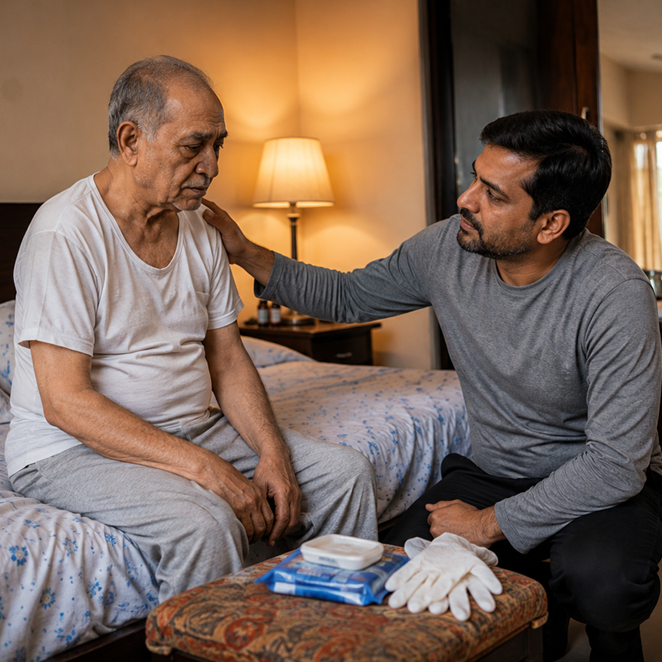
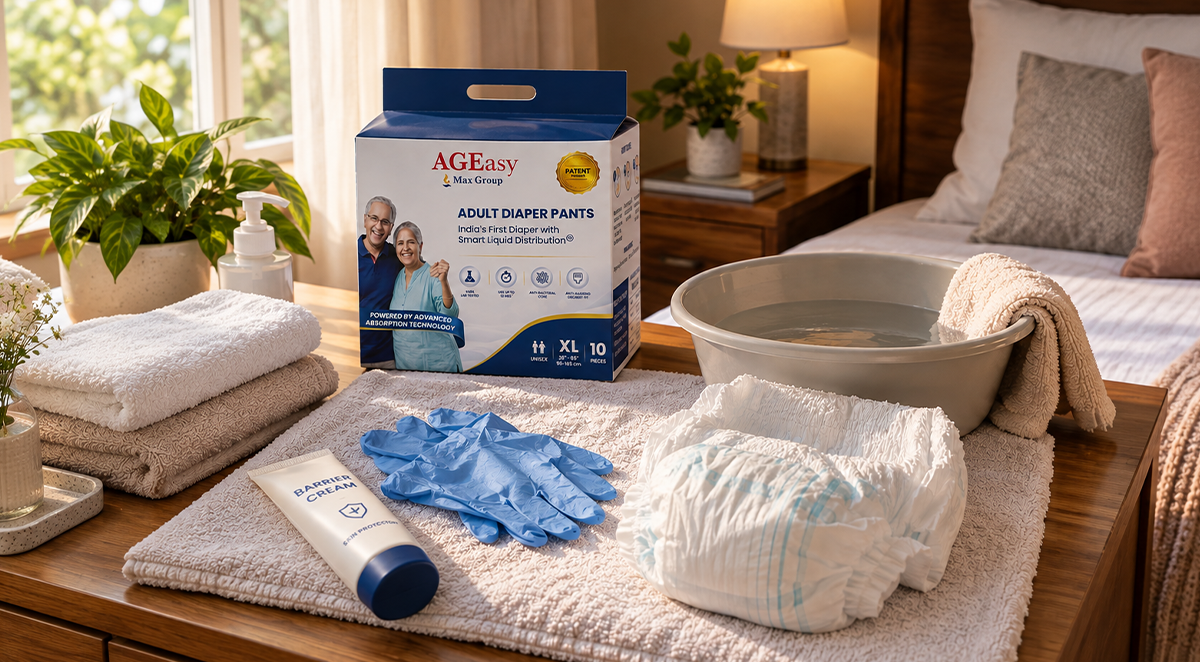
Make sure to gather everything needed to prevent the person from being left with exposure or discomfort. This includes:
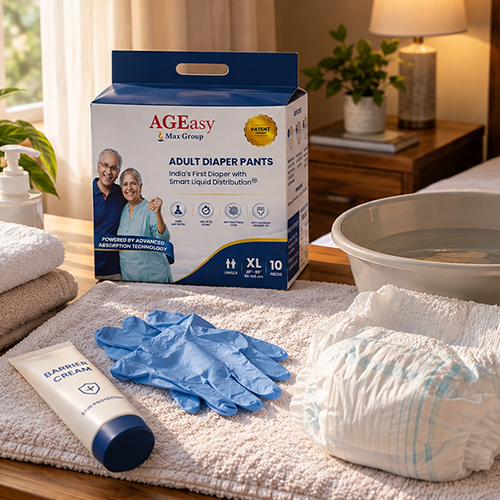
- Disposable gloves
- Warm water and gentle, no scent, fragrance-free cleanser (if needed)
- Disposable wipes or washcloths
- A clean towel
- A fresh adult diaper and other incontinence products (as appropriate)
- An absorbent pad to protect the bed
- A waste bag
- Barrier cream or ointment, if advised
- Clean clothes or bedding, if needed
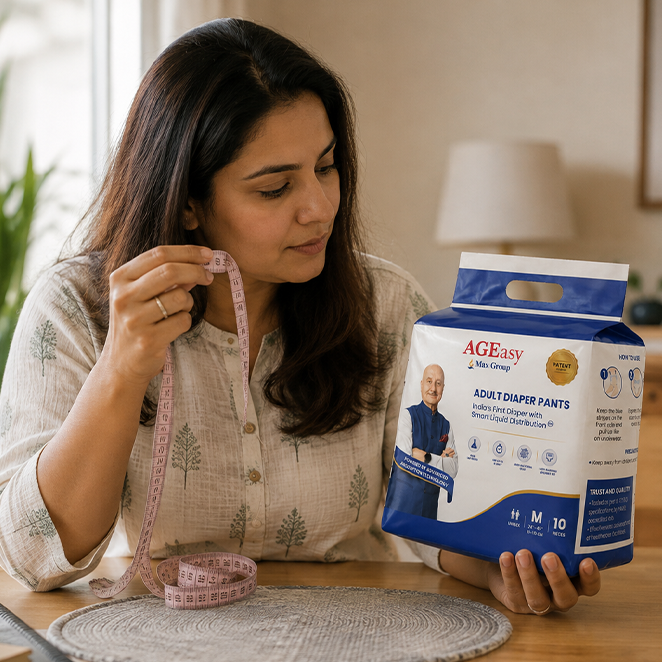
The products should be selected based on the person's mobility, degree of incontinence, body shape, and ability to assist with changing.
This diaper is designed to be applied by a caregiver at the side of the bed. For a person who is bedridden or incontinent, these types of diapers and pull-ups can be much more convenient. The AGEasy Adult Diapers Tape Style can be a particularly good choice.
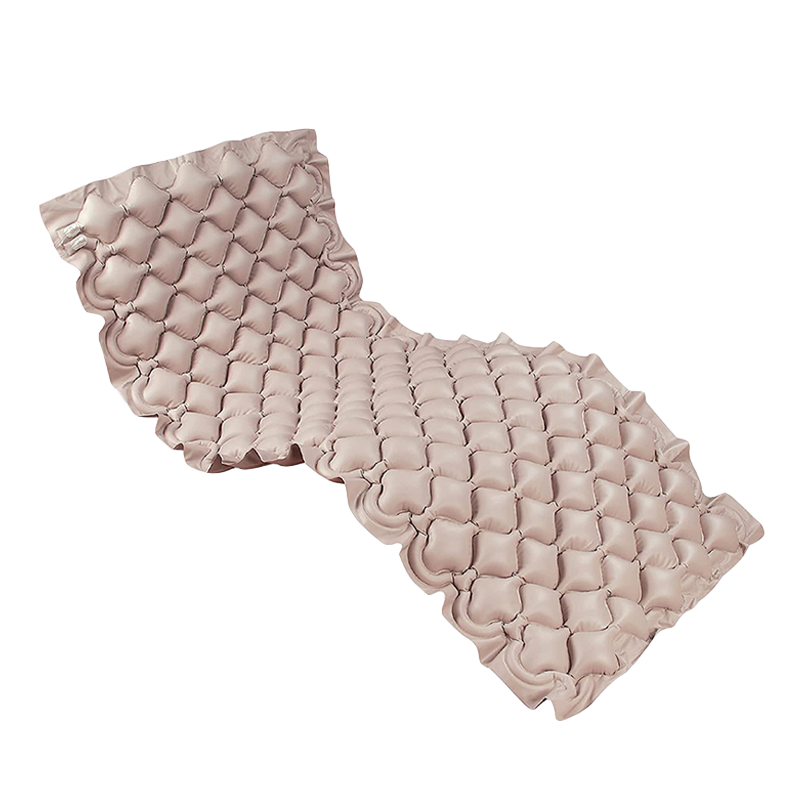
A disposable underpad placed over the mattress and removed for washing along with the diaper can also reduce work. The disposable AGEasy Undersheets can be an alternative for under the person, but an underpad should not replace a well-fitted diaper and should not be used in place of regular inspections of the skin.
There are several ways to conduct perineal care while ensuring safety.
1. Instruct the person about what you are about to do
Privacy can be protected by closing the door and setting up a room divider and cover sheet to protect the person from exposure. Splash covers should be used while washing, and the person should be asked for permission to touch and involve the person as much as the person is capable of.
2. Safely position the person
If the person is able, ask him/her to be in a supine position with the knees bent. Otherwise, use the method of positioning recommended by their nurse or therapist. While cleaning the buttocks, assist them to move into lateral position.
For the safety of the caregiver, make use of bed rails as part of the person’s anticipated plan of care.
3. Carefully remove the soiled product
Put on gloves. Use the cleanest part to scoop as much urine and stool as possible (remove stool as described below). Roll the product in its interior to seal all waste and then put it in the waste bag.
If stool is present, remove it gently from front to back, using a clean part of the cloth or wipe for each stroke. Always wipe away from the genitals (urethra and vagina) and towards the back to prevent bacterial infections.
4. Clean gently
Use only water for warm gentle cleansing. For fragrance-free cleansing of the genital area and surrounding skin and if it is very soiled, wet buttocks, use a mild soap. Cleansing should be always from front to back.
Do not scrub, rub, or use rough clothes. Avoid using fragrant soaps or harsh antiseptics that sting the skin, unless a specific medicated wash has been explicitly prescribed by your doctor.
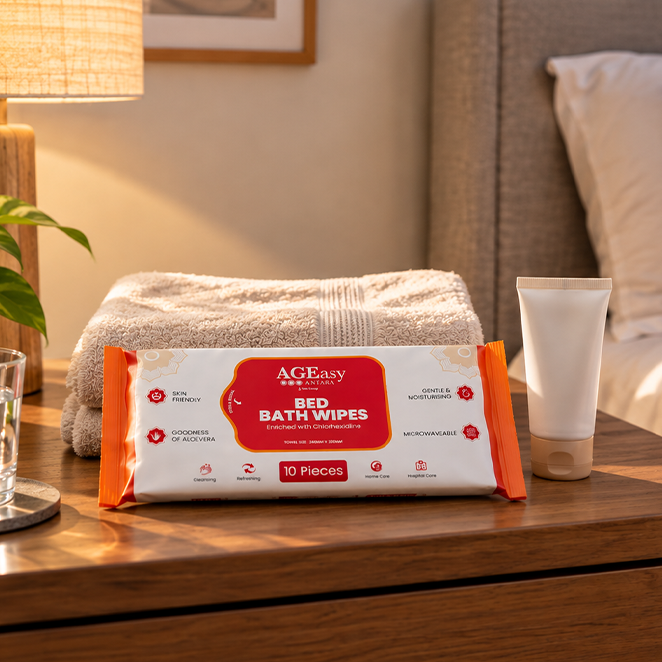
When a full wash is difficult, use bath wipes to facilitate routine cleaning. The AGEasy Bath Wipes is a great option for this. Wipe the area gently (avoid harsh rubbing or scrubbing), and pat the skin dry with a clean towel afterward.
5. Dry by patting
Use a clean, dry towel to gently pat the skin completely dry. Ensure that all moisture is removed, paying special attention to skin folds and creases to avoid irritation and skin breakdown. Never rub or scrub the skin.
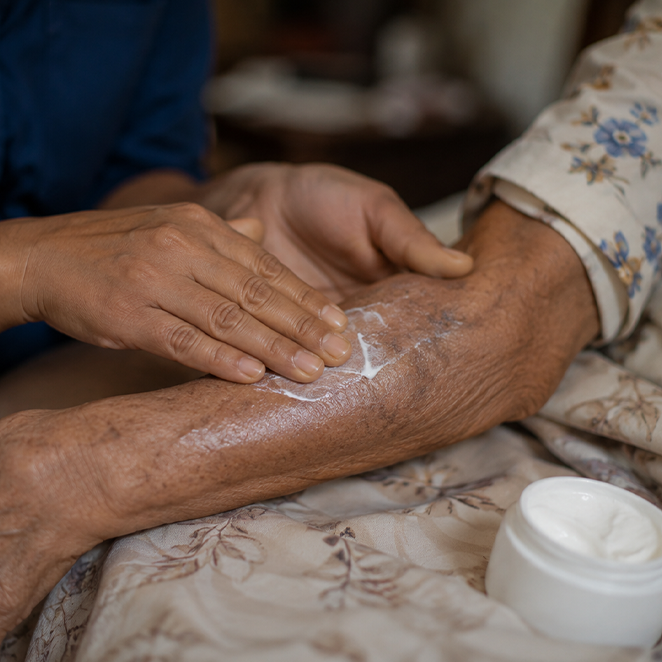
Be careful around the groin creases, buttocks, and folds. If the person uses a barrier cream, apply according to recommendations on the product or from a clinician, once the area is clean and dry. It’s important to avoid applying too much as this will make it hard to spot changes in the skin, and could even interfere with some treatment products.
6. Apply a fresh product
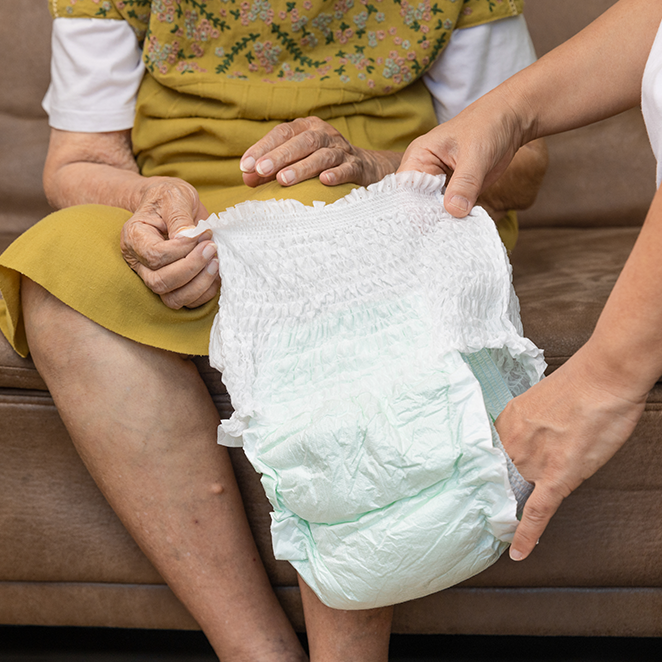
Check that the new diaper is the correct size and is fitted comfortably. It should be secure without digging into the waist or thighs.
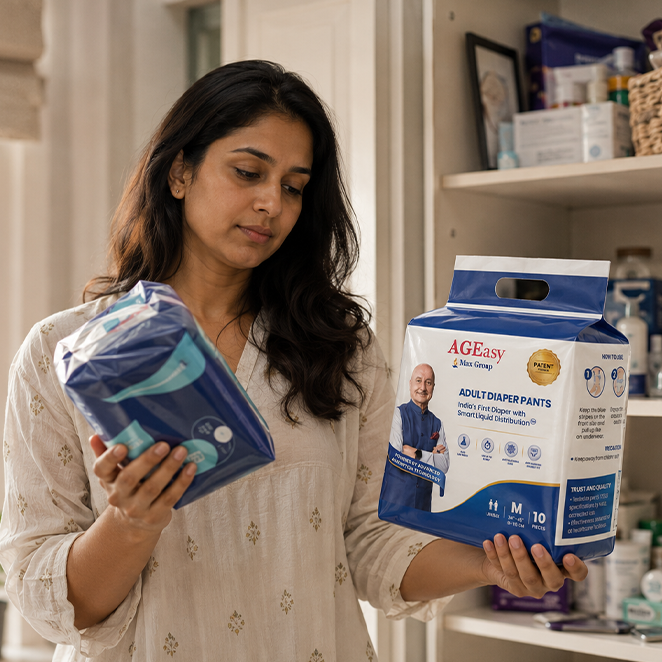
For a bedbound person, caregivers tend to find it easier to position the tape style diaper while the person is lying down. AGEasy also sells Adult Diaper Pants with Smart Liquid Distribution and Unisex Adult Diaper Pants. These may be more appropriate for mobile adults, as compared to bedbound persons.
Focus more on the fit, comfort, and frequency of changing as compared to the diaper’s absorbency.
How often should the product be changed?
Change the diaper as soon as you notice it has been soiled. Check for wetness on a continual basis. It’s important to avoid leaving the product soaked as it could increase the likelihood of irritation and leaking.
The daily routine will vary based on the person's urinary and bowel patterns, fluid intake, skin health, product type, and care plan. Some individuals may need several routine checks throughout the night. In these cases, a caregiver may use a wetness indicator to help them determine when a change may be necessary. However, the wetness indicator should not be the only factor in determining if a change is necessary because caregivers have to consider if the product is soiled and if the person may be uncomfortable.
Signs of skin damage to look out for
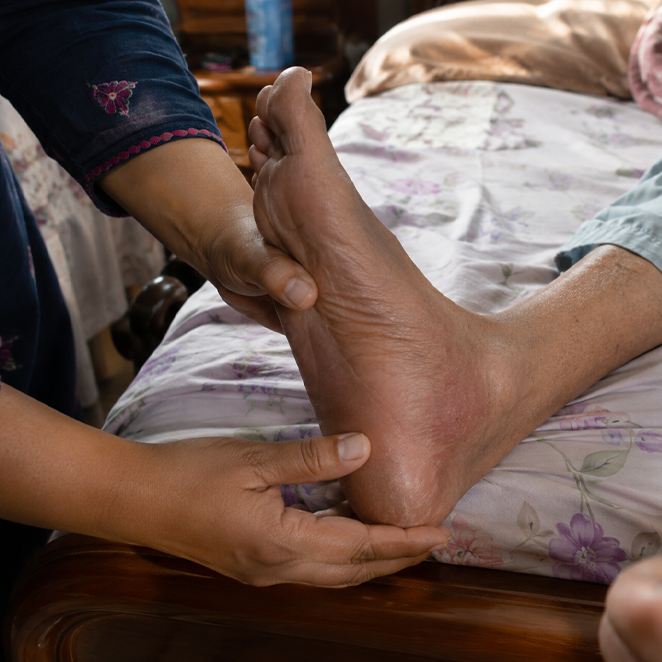
Check the skin at each change for signs of damage, including:
- Skin that is red and does not fade
- Skin that is shiny, soft, and/or peeling
- Skin that is swollen, warm, or tender
- Skin that is broken with cracks, sores, or bleeding
- Areas of the skin that are darkening and bruised
- Skin that is rashing and/or inflamed with sores or pus
- Skin that smells bad and/or is oozing pus
Do not try taking matters into your own hands and start treating a worsening rash. If you use home remedies and/or multiple creams, seek a doctor's advice first. Many things may look the same, and a doctor has to determine the actual cause before addressing the problem.
When to call the Doctor
Call the Doctor if any signs of damage do not heal, skin is broken with pus and/or bleeding, swelling, pain, fever or a spreading rash that starts to worsen.
A change in urination may also require a call to the Doctor. Call for a urinary evaluation if a person has burning urine, blood in the urine, new or worsening confusion, fever, chills, lower abdominal or back pain, or a change in the way urine smells.
Call a doctor if any of these signs are present:
- Person is very ill
- Person is unresponsive to stimulation
- Severe pain
One last reminder for the caregivers
Perineal care requires gentle cleaning and drying. It includes the right product and timely changes along with routine checks to ensure the skin is free of any discomfort. Care should be taken to ensure the person receiving care does not feel rushed or embarrassed.
Perfection is not the aim here. The aim is to ensure that there is no discomfort to the person, protect the fragile skin, and ensure early detection of any minor irritations to avoid them from worsening.
This article is for knowledge purposes only. Advice from a qualified health care professional is of the utmost importance. Product suitability to the people with severe incontinence, wounds, allergies, and/or complex medical conditions cannot be stressed enough.