

Night-Time Bathroom Trips: Lighting, Route and Bedside Alternatives That Prevent 2 AM Falls
Article by: Mona
Article Category: Bathroom Safety
Aug 3, 2026
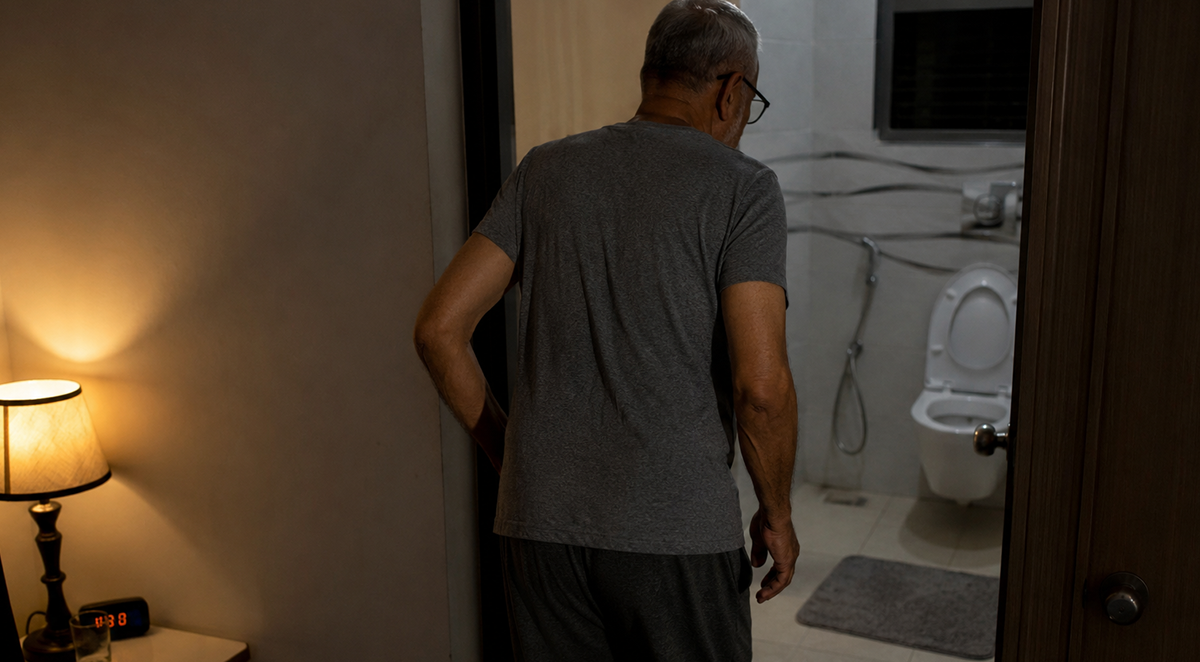
Most falls occur on the way to the bathroom, as opposed to in the bathroom itself.
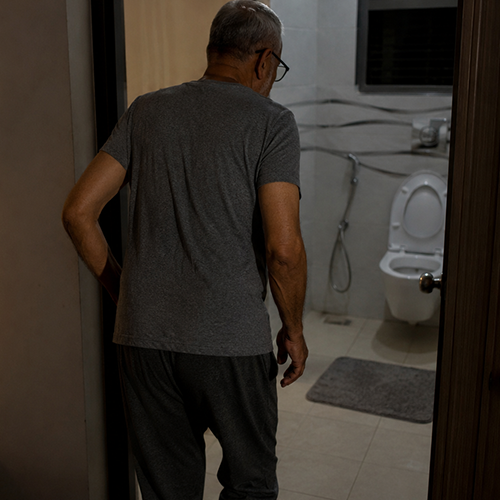
It is 2 AM and there is a bathroom emergency. Avoiding turning on the lights is a justified impulse as there are only a few steps to the hallway. This is the start of many incidents.
Many families focus only on the wet floor inside the bathroom. The reality is that there are multiple dangers that are present even before getting to the bathroom.
The dangers present during nighttime trips to the bathroom extend to the attempt to walk more slowly to avoid an injury, or blindly in the dark to avoid waking others. Safety isn't about rushing or navigating through shadows, it is about the changes made before a person gets out of bed that help minimize dangers.
A good thing about changing these risks is that it doesn't take too much work. The risk of falling at night can be decreased while preserving everyone's ability to be independent. These changes include: a bedside commode, an unobstructed pathway, a bedside support device, a motion-sensor light, etc.
This guide will help ease your concerns about your parent's care or the aging process by addressing the safety concerns related to 2 AM bathroom trips. The guide focuses on adjusting bedside lighting and pathways to improve confidence, comfort, and independence.
Why are nighttime falls more common than daytime falls?
Medical professionals, doctors, and physiotherapists, are particularly concerned about nighttime falls for good reasons. This is because different factors make an individual's daytime body more alert and ready to respond to the surrounding stimuli while at night, the body depends on many non-active factors.
Some older adults may experience a drop in blood pressure when getting up from a seated or supine position. This condition, known as orthostatic hypotension, is common due to age and the side effects of specific blood pressure and heart medications. Furthermore, when a person is abruptly awoken, they may be drowsy, and after being in a dark environment, their eyes will need time to adjust. If a sleep aid or a pain medication was taken prior to falling asleep, there may be a lingering effect that may result in increased grogginess. In many of these instances, the body is operating below its normal standards.
Instead of taking a passive approach as if it's a physiological issue, it is important to make alterations to the environment that allow someone who is slow and unsteady on their feet to have an unobstructed route to follow.
Light: The first and easiest fix
The one element of nighttime falls that is the easiest to fix is darkness.
Some people may want to refrain from using a big overhead light to avoid waking other people up, and it may be an annoyance if someone is going to be in the room for a short amount of time. However, that process seems pointless when it results in someone having to walk through a poorly lit area.
Some suggestions of products that could help make the lighting situation better could be:
- Motion sensor night lights that activate just prior to walking close to them to avoid having to turn the lights on.
- Plug-in lights that have low illumination so you can see what it is that you're doing without waking up other people and disrupting their sleep.
- Having a lamp that you can easily reach so you do not have to sit up to turn it on.
AGEasy's motion sensor lights are built for this purpose. They come equipped with motion activated smart technology that allows them to automatically turn on when people get out of bed.
What to Expect With an Obstacle-Free Path
Small household items can become obstacles very quickly and easily. These include rolled up rug edges, protruding tables, low hanging cables, and shoes left on the floor. During the day, people are able to visually perceive these items and reflexively avoid them. But at night, when people are not fully awake, these items can become dangerous very quickly.
An excellent activity for families is performing a home walkthrough. To do a walkthrough, literally walk the same way you would go from your bed to your bathroom. It is best to do this when the house is dark, and use a light source that you would normally use, such as a small flashlight. While you walk through, try to notice the following hazards:
- Mats or rugs that slide around
- Furniture that is too close to the walkway
- Wires or cables that are in the pathway
- Room-to-room transitions that have dips in the floor
- Doors that don't stay open
If a person needs a walking stick or a walker during the day, it would be best to have the aid within reach during the night as well, rather than leaving it somewhere else. Having a walker or a walking stick right beside the bed allows support for that first step in standing because the aid is there to do so, rather than having to use support from a wall or other furniture.
Bedside Support: How we can make the first few seconds safer
Most falls happen not while people are walking, but in the initial moments of getting up when they move from lying to sitting or standing. Blood pressure changes are most profound during this transition and so is the risk of losing balance.
In this regard, bed rails can be of help. They provide users with something solid to push or hold to make the transition from lying down to sitting or standing up, easier. AGEasy's safety bed rail for seniors offers support in these transitions while offering freedom of movements while sleeping.
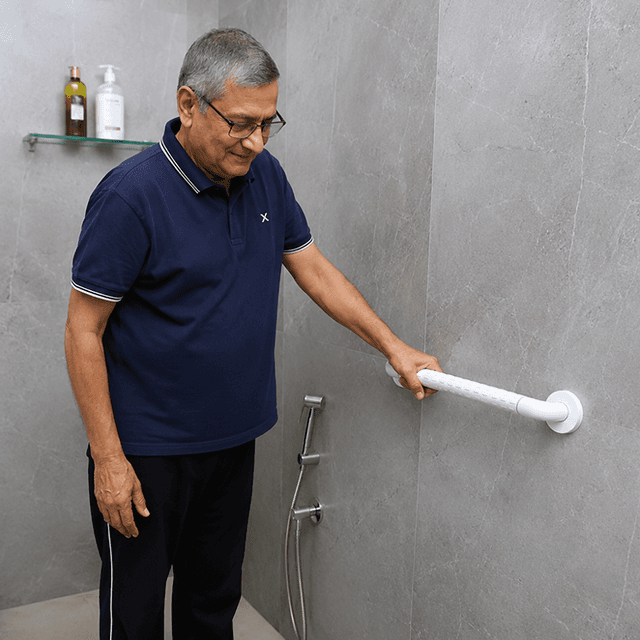
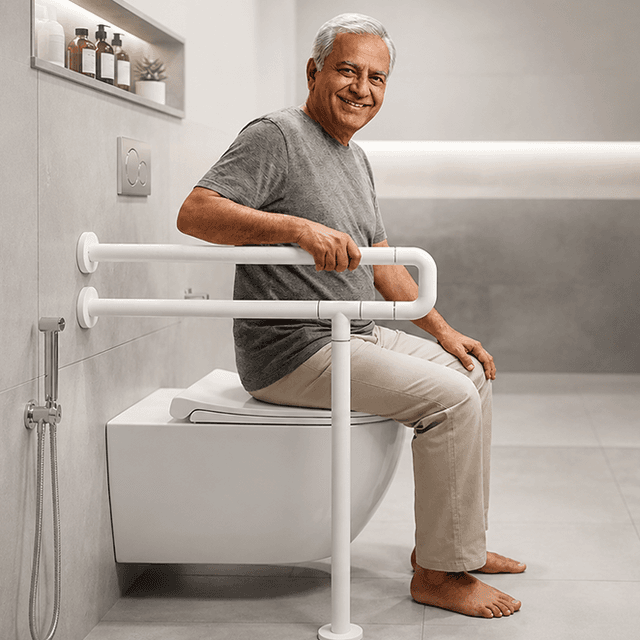
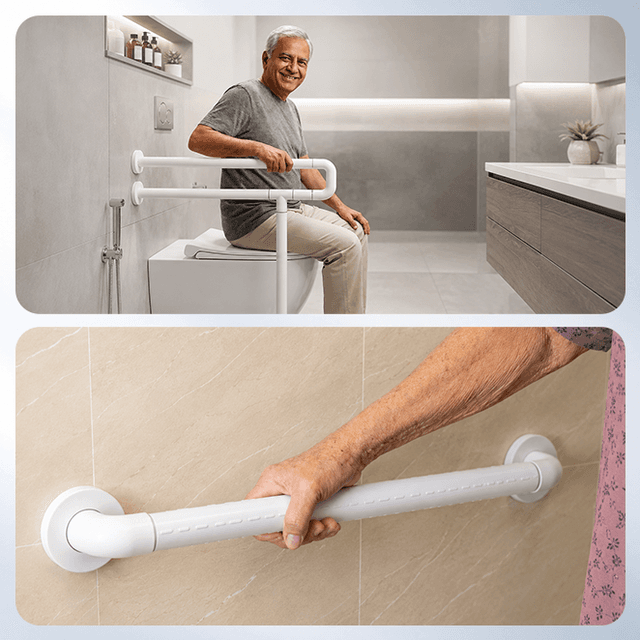
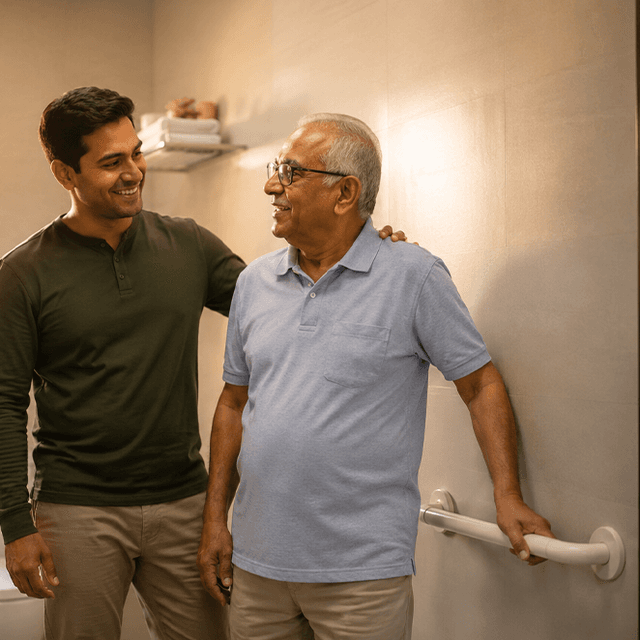
During ambulation, a grab bar situated at or adjacent to the bathroom door and toilet serves as a touch point for support at critical times and is especially useful to those who are less mobile or are recovering from a fall, surgery, or illness. AGEasy offers a fold-up grab bar for wall mounting and a toilet grab bar with floor support where the wall mounted brackets are not an option.
What if the Bathroom Is Too Far: Alternatives at the Bedside
For some families, the honest truth is that the bathroom is simply too far to be safely accessible at night, whether due to a long hallway, stairs, or a medical condition that limits mobility and makes multiple nighttime trips a necessity.
The use of a bedside commode should not be viewed as a loss of dignity. In fact, a bedside commode allows a person to remain independent, as calling a caregiver isn't necessary. A foldable bedside commode chair can be placed right by the bed, providing space during the day by folding away, and eliminating the need (and risk) of going to the commode.
Night-Time Safety Checklist
- Do you have an accessible, reachable or automatic light source?
- Are there no rugs, cords or furniture in the way to the bathroom?
- Is there something sturdy to hold when getting out of bed?
- Is there a grab bar or something to hold onto next to the toilet?
- If you have a long distance to the bathroom and if you think you might have limited mobility, have you considered getting a bedside commode?
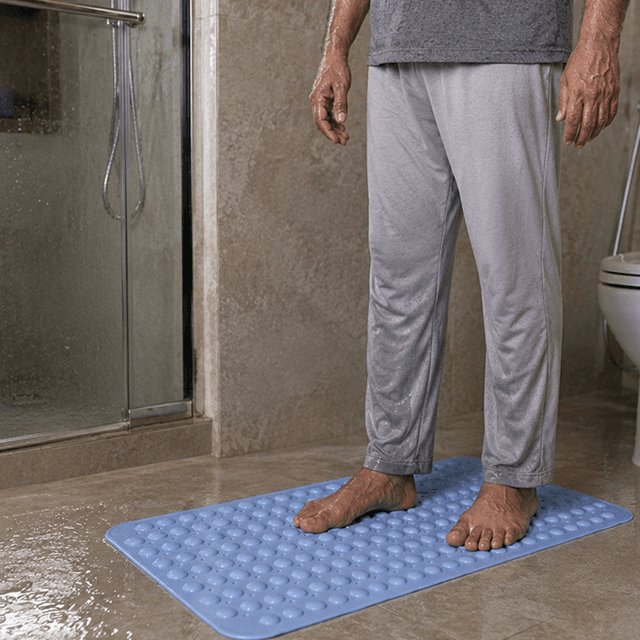
- Are the shoes or slippers that you wear non-slip?
- Have you discussed the risks of medication that may cause drowsiness or low blood pressure with the doctor if that person takes them?
Most of these steps can be addressed in a single afternoon and do not require extensive renovations or major costs. These steps also deal with the risks at any stage of the journey. Not just the bathroom floor.
It's about getting up, moving, walking and sitting.
Safety With Independence
To clarify, we are not trying to make an older parent feel supervised as if they are being watched. It is not meant to be a coaching or oversight system. With good lighting, unobstructed pathways, sturdy supports, and suitable equipment at the bedside, we want to give people the opportunity to continue doing this task on their own and to do so without having to call assistance.
This is general information and is not intended to be medical advice. If you have had previous falls or have a medical condition which affects your ability to balance or move, please speak to your doctor or physical therapist about a personalized fall risk assessment.