

Anti-Slip Solutions for Wet Indian Bathrooms: Mats, Tapes, Tiles and What Actually Works
Article by: Abhay
Article Category: Bathroom Safety
Jul 30, 2026
It's just a matter of water, until it leads to serious injuries.
A few droplets from the shower, a wet footprint at the sink, or a slippery patch on the floor that you don't even notice. You have stepped on that area many times and a slip could happen on any one of those occasions.
Most people just put a mat thinking it will stop the slips. But it's not enough.
An anti-slip solution requires a more layered approach.
A better question is not about the best products, but rather the most effective methods to safeguard the bathroom especially for elderly people that prevent any kind of slippage.
A bathroom renovation is not necessary; anti-slip mats and tapes, and other safety-grade surfaces can reduce exposure to slips when they are implemented strategically.
As you age, you are more likely to require more precautions to remain safe. Whether you are concerned for an elderly parent or for yourself, this guide is intended to provide information on viable options for Indian bathrooms.
Let's look at a problem more closely
Water over a rough surface is harmless. Water over smooth surfaces, such as polished vitrified tiles, becomes a lubricant.
This is why there are so many falls in bathrooms, especially in Indian homes. Glossy tiles are the default finish in homes, either because they look clean, they wipe easily, or they were selected before there was a person in the home who had a knee replacement or balance issue. On top of it, a soap residue or a watery slope toward the drain adds to the high risk environment. And the older one gets, the more likely a slip will lead to a hip or wrist fracture.
Map your bathroom before planning any purchases
Take 2 minutes to do this: Immediately when someone is done bathing, walk in and look at the floor.
Most of the time, you will see three distinct wet areas. The bathing area, the area in front of the wash basin, and a strip near the door or the threshold where the water is trapped. These are your high risk areas. The rest of the floor is dry, most of the time.
The problem most buyers have is thinking that one large mat will serve its intended purpose and cover the entire area. In reality, targeted protection at these three locations is far superior than vague protection at an incorrect spot.
Anti-Slip Mats: Good, If They Don't Move
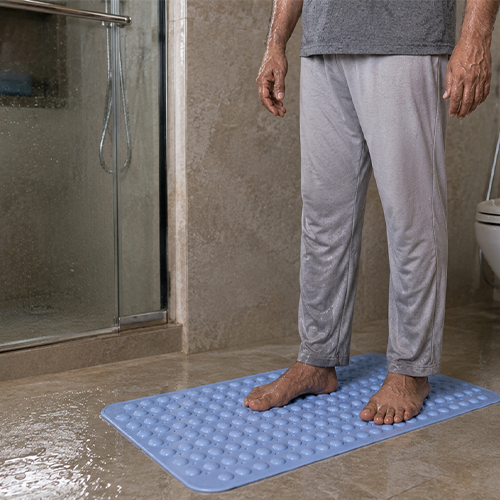
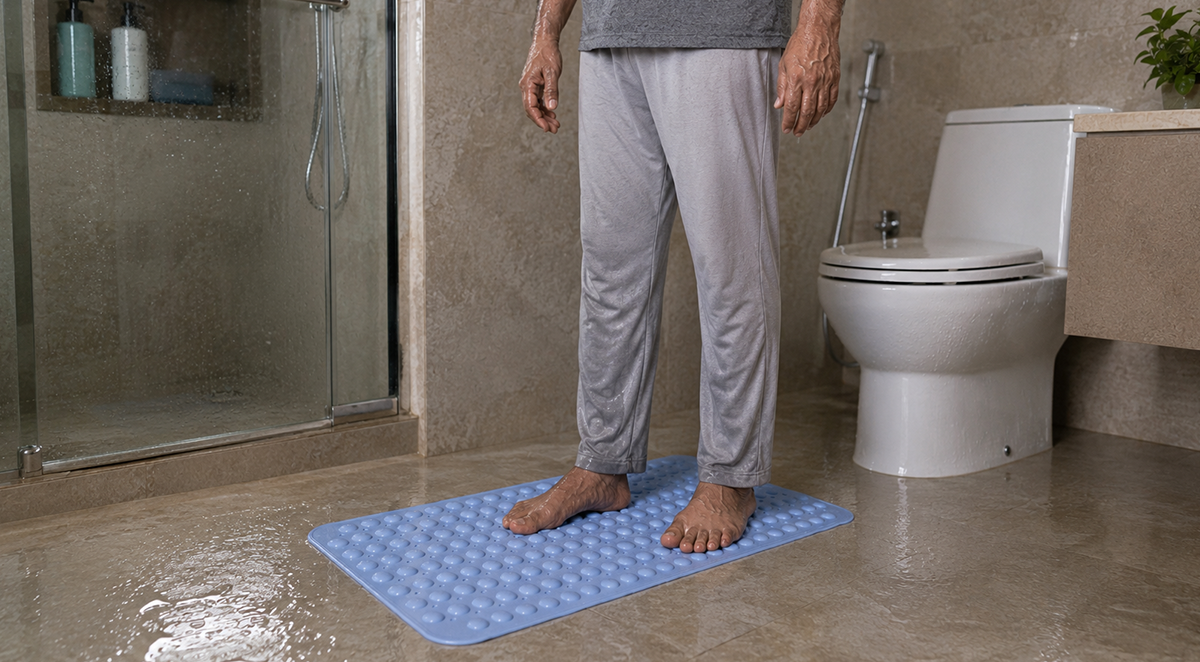
For the wettest part of the floor where people stand for several minutes, having a mat is important.
The downside is a sliding mat is worse than no mat at all because it changes a stable slippery surface into an unstable surface. That is the single most important thing to check before you buy.
What to look for:
- Proper suction base: Good suction cups only grip stable surfaces that are smooth and sealed, such as polished marble or sealed ceramics. The AGEasy Anti-Slip Bathroom Mat is designed to do that. The suction grip is designed to remain on wet tile, not to drift under foot.
- Draining, not absorbing: Mats that retain water remain slippery while mats with quick-drain channels or holes dry the surface quickly.
- Skin-friendly material: Silicone and TPE grip well, feel good, and are important for flexibility as they will be underfoot to be used every single day.
- Size: Bathroom mats that are 100×40 cm in size will cover most of the wet area.
- Mat with foot scrub: A genuinely innovative option is the AGEasy mat with a built-in foot scrubber, as it allows users to wash their feet without having to bend down, eliminating an additional fall risk.
- Placement Tip: If your tiles have deep grout lines, position the mat so that the suction cups are sitting on the tile instead of across the grooves. This will improve suction significantly.
Anti-Slip Tape: For Areas Where Mats Can't Be Used
Tape addresses a different issue. It can be used on thresholds, raised edges, the tip of step-in shower tubs, and the two stairs outside a vintage bathroom. These are the places where people slip as they are in mid-transition.
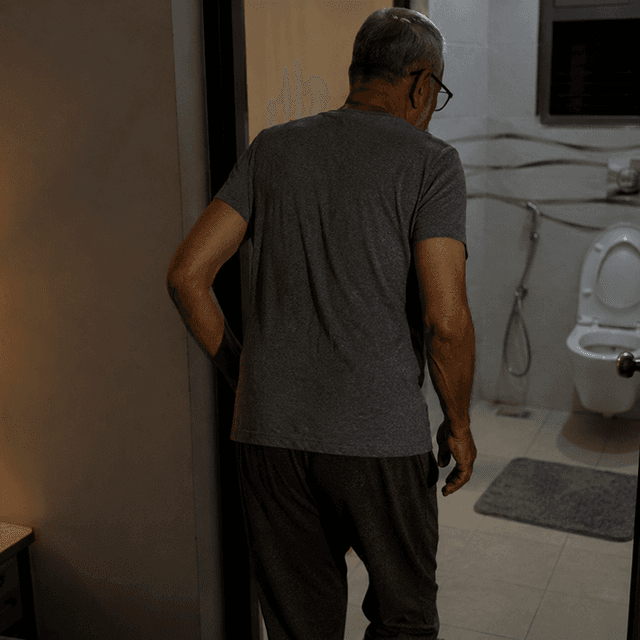
A waterproof anti-skid tape sticks flat to the surface, creating an additional friction on the surface. AGEasy offers anti-skid tape which glows in the dark. It also helps with reducing falls during trips to the bathroom at night when the light is off and your eyes don't adjust.
Tape is also removable, so it's a low commitment way to test an area before applying a more permanent solution.
Anti-Skid Tiles: Effective, But Rarely Needed Everywhere
Slip hazards can be permanently addressed with textured tiles. However, most households find full re-tiling to be excessively disruptive, and costly.
A more sensible option is to re-tile the bathing area only, and employ mats and tape for the basin and at the raised edges. This will provide the utmost safety with the least expense and disruption.
When Floor Products Stop Working
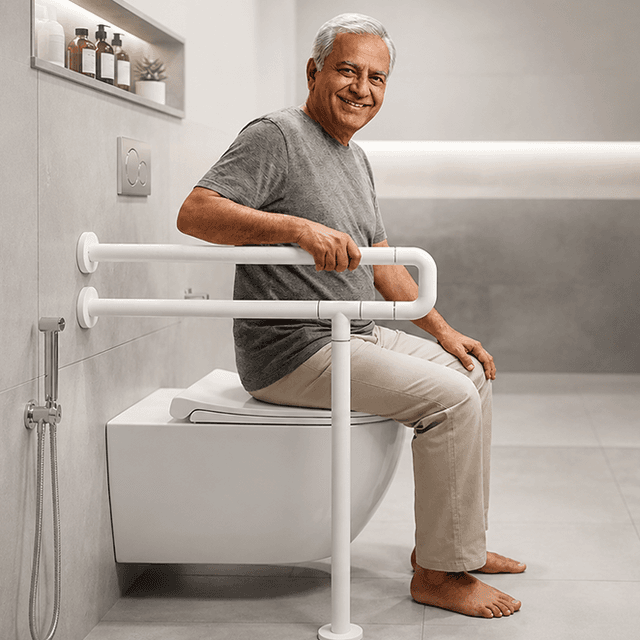
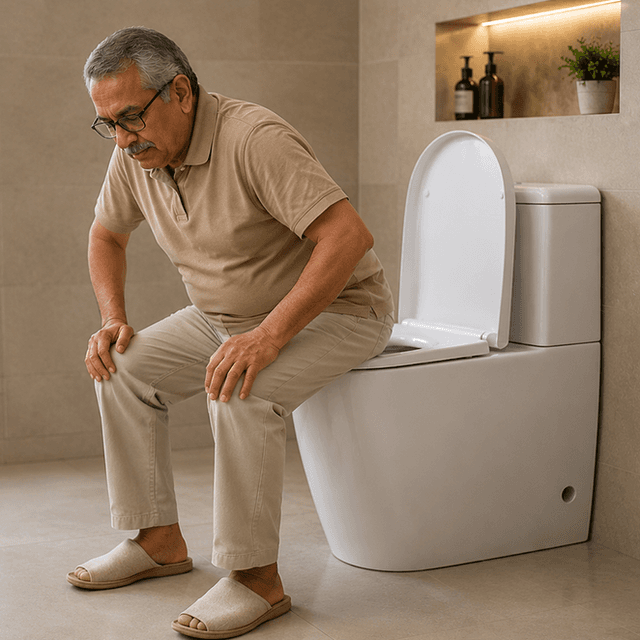
Let's be frank, no mat and tape will help anyone get up from a low toilet seat or step over a raised surface. People need something to hold when they do those maneuvers.
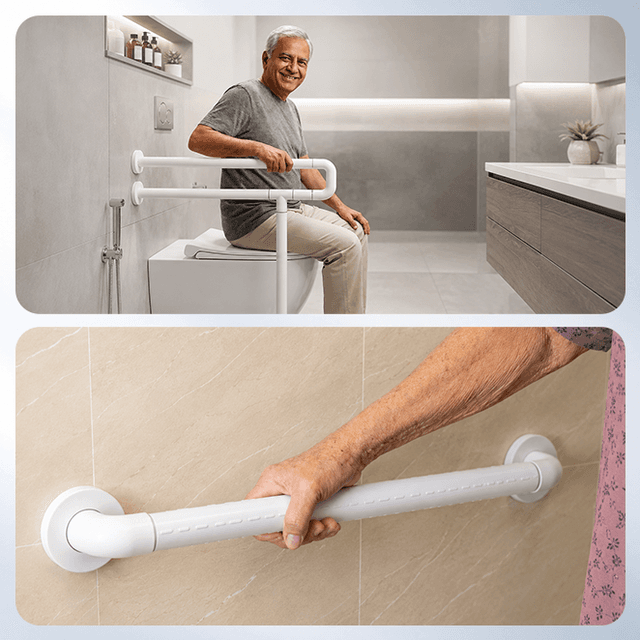
Thus, most plans require a grab bar. A toilet grab bar with under-seat floor support offers a stable handhold during sit-to-stand transitions; statistically one of the most dangerous actions in the bathroom. If you pair it with a shower/bath chair to reduce the need to stand for the whole bath, you have addressed balance, fatigue and grip, rather than just traction.
A motion sensor light near the bathroom door is a low-cost addition for night-time safety.
The Bottom Line
Here is a simple order of operations to make your bathroom anti-slip:
- Start by identifying your genuine wet zones
- Place a quick-draining mat with good grip where someone stands to bathe
- Tape the edges, thresholds or steps
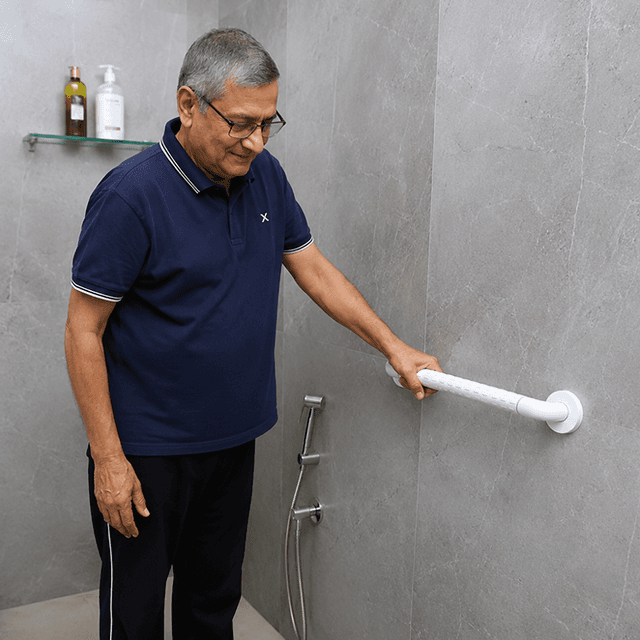
- Insert grab bars wherever sitting and standing is expected
- Only re-tile a specific zone if it continues to be risky despite trying above solutions.
The floor is still going to get wet. You can't always design that way. What you can change is whether that wet floor stays an ordinary part of the day, or becomes the start of a much longer story.
You can't always control how wet the floor gets, but you can control the stability needed even on a wet floor by deploying the right aids at the right spots.