
Choosing a Wheelchair for Home Use in India: Standard, Transit, Reclining and Commode Types
Jul 30, 2026
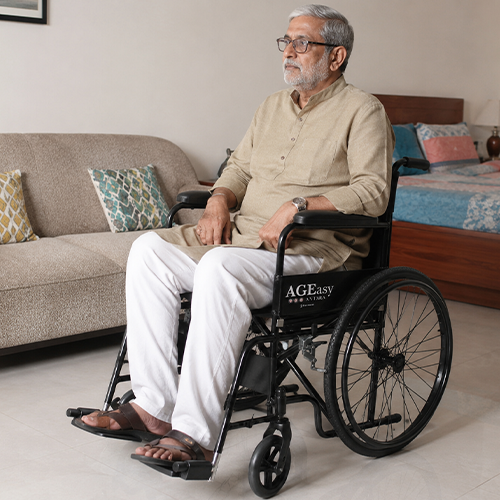
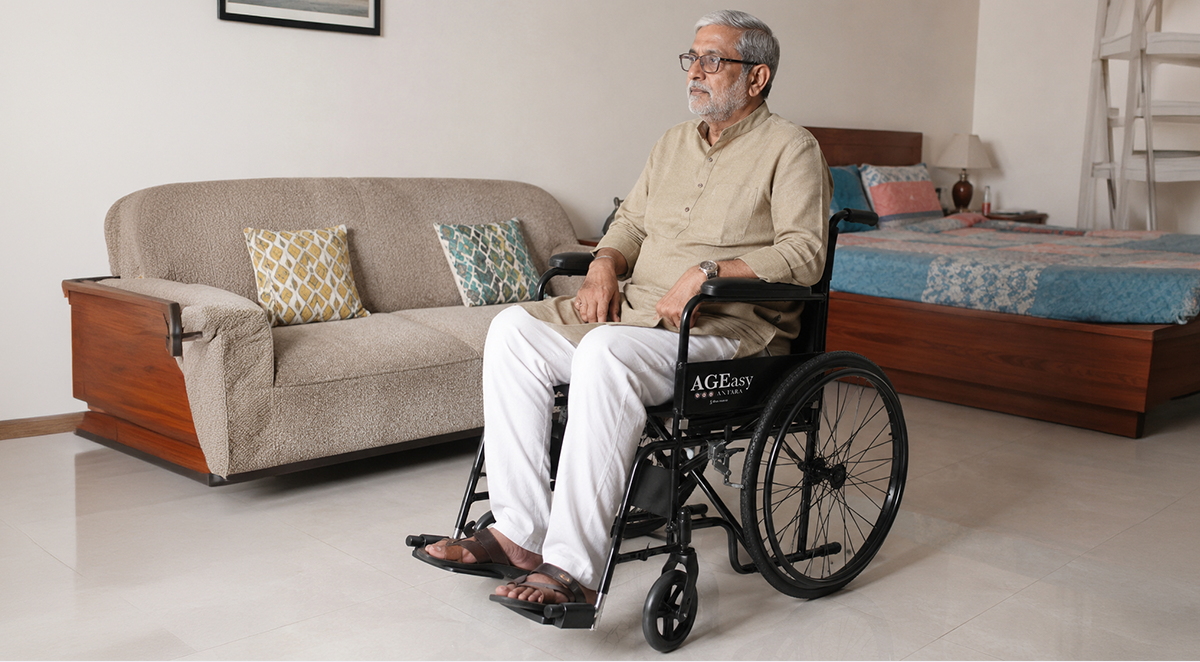
A wheelchair does not mean that your parent will lose their autonomy, but it is up to your family to find a solution that puts a protective barrier around that autonomy, starting with the wheelchair itself.
Most families buy the first wheelchair they find in the medical shop. It is solid, it is within the budget, and all models look as if they do the same job. The problems appear when the wheelchair does not fit in the bathroom. They will face additional challenges such as the fact that it can take 2 people to lift it into the car, and every transfer is a drain to everyone involved.
The assumption is the problem. A wheelchair is not just a chair with wheels. It is purpose-built equipment for daily care, and that means it needs to be designed to work with both the user and the home.
The cost of a wheelchair is not the only thing that is taken into consideration for the guidance of selection. The first suggestion from a shop, the model that your neighbour's family purchased, and the belief that all wheelchairs fit all homes are poor lines of reasoning.
More than all of those options is one question that does more work. How will your parent live with this wheelchair, every day, for the next year or more?
Please consider the intended purpose of the chair.
- Will your parent use it mainly at home, or for hospital visits and outings?
- Will they need assistance in moving the chair, or will they push the chair themselves?
- Will the need to support their back and legs occur when they sit in the chair for short stretches or long hours?
- Will the chair need to have additional attachments for reclining, toileting, or transfers, or will those functions need to remain separate?
The best wheelchair is the one that does not have the longest list of features. It is the one that best fits your parent's mobility, the layout of your home, and the caregiving routine.
Choose the wrong type and the effects will appear in weeks. Your parent will find it difficult to move around the house. They will lean on you more for things they used to do independently. They will sit for hours uncomfortably. Eventually, they will stop using the chair altogether. It will be more trouble than it's worth.
Choose the right type and the days will be easier. Your parent will be able to move around the house with more ease. Transfers will become safer. They will have less strain on their back and shoulders. Your parent will retain their confidence, dignity, and independence for longer.
This article explains the 4 main types you will see in India: standard, transit, reclining, and commode. It details how the types differ, when each one makes sense, and how to choose the type that supports your parent's daily life, not the one that matches a diagnosis on paper.
Measure Your Home Before You Look at Any Wheelchair
Before you start looking for wheelchairs, do measurements in your house. Three critical measurements will determine which wheelchairs to exclude from your consideration.
- First, measure the smallest doorway to the bathroom. Measure the gap in the doorframe remaining when the door is fully opened; don't include the actual door frame in your measurements. In many cases, Indian bathroom doors will provide only 21 to 24 inches. However, a wheelchair with an 18 inch seat expands to 24 to 26 inches across the wheels. So, if the door is too narrow, then too bad for you, you won't be able to use a full size wheelchair and we have not even compared anything yet.
- Next, look at the space next to the bed and in front of the toilet. To do a 360 degree turn, you will need a minimum of 5 feet of clear space. Be aware of any raised thresholds in the bathroom (like sills made of marble) because small front wheels will get stuck at every threshold.
- The width of the seat of the wheelchair is also important. Take a measurement of your parent's hips while seated and then add 2 inches to that. A wider seat is more comfortable because it allows for some sliding. A narrower seat causes a lot of pressure and can cause skin breakdown.
Standard Wheelchair: For Parents Who Still Move Themselves
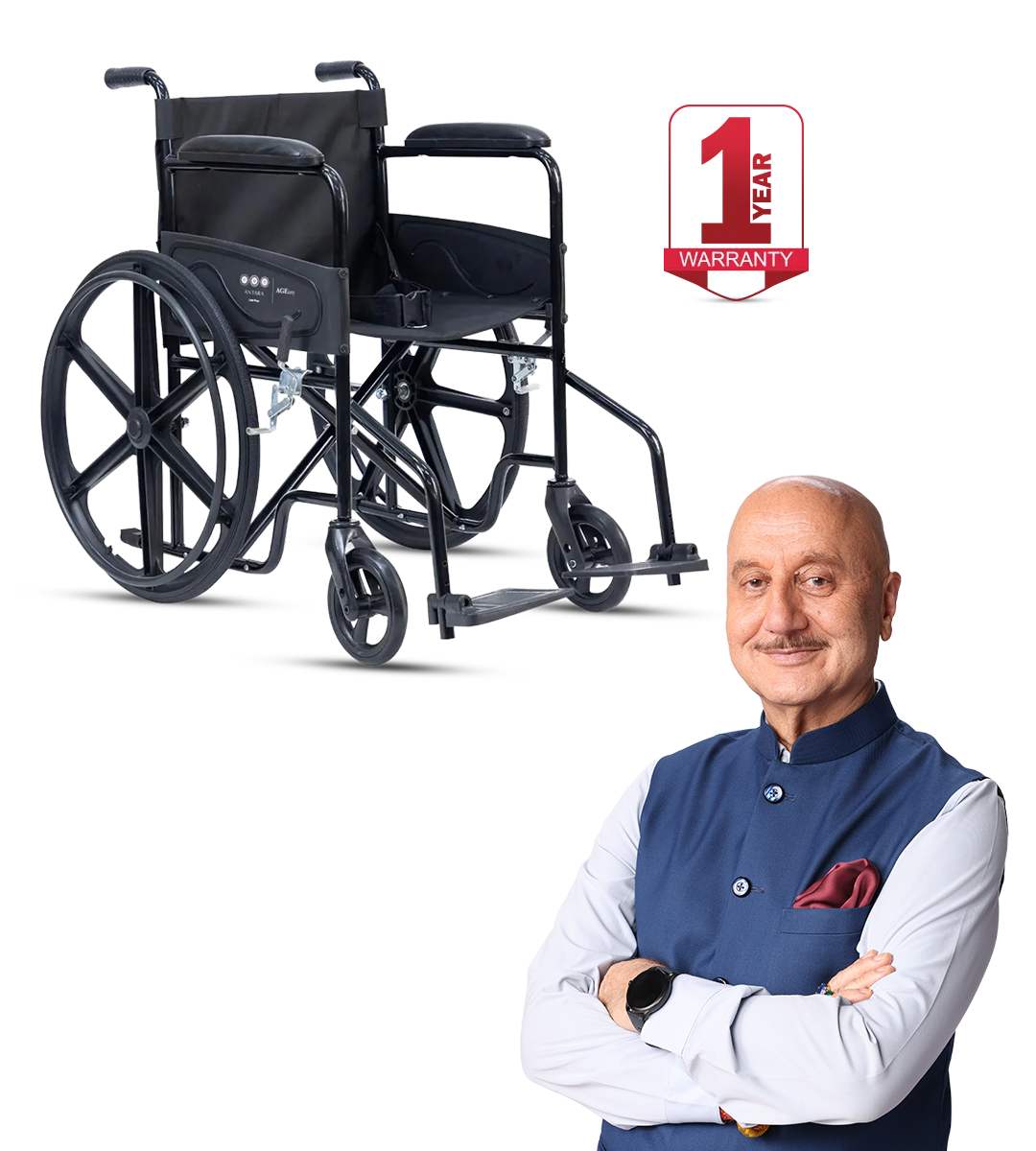
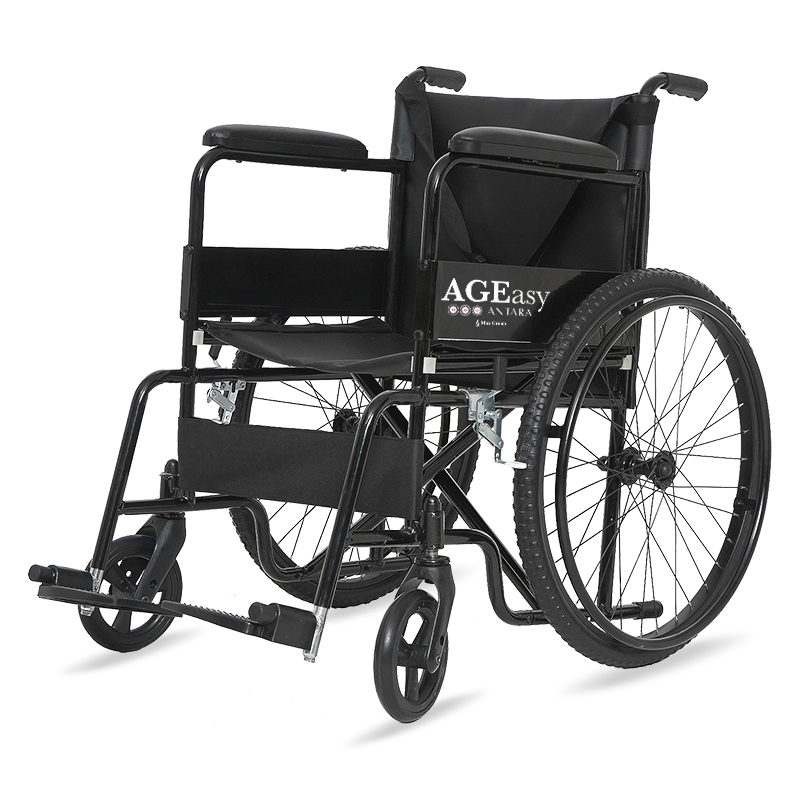
A standard/self propelled wheelchair allows your parent to self propel the wheelchair and move herself. This is great for parents who have detachable armrests and are also able to assist in pushing themselves around.
The AGEasy WheelAssist Lite has been designed with this in mind and includes the following features: dual hand rims, a dual braking system, padded arm support, a foldable frame, and a 100 kg weight limit, all for around ₹6,000.
As your parent's doctor for advice about this. Self-propelling can place a considerable load on the shoulder joint, and seniors with rotator cuff issues can find this pushing action exacerbates their condition.
Transit Wheelchair: For Clinic Visits and Caregiver Pushed Movement
A transit wheelchair has smaller rear wheels and no hand rims, meaning someone will have to push the chair all the time. This kind of chair is therefore lighter, folds smaller, and is easier to lift into the car boot. It suits families with limited space to lift and for hospital trip; especially those with small boot space and lifting strength. In this case, having attendant brakes is more important than any other feature, as the person doing the pushing needs to be able to control the brakes.
The AGEasy WheelEasy is designed in this way and has attendant controlled locks, an 18 inch padded seat, a storage pocket, a frame that folds for fitting into a car boot, and a 100 kg weight limit for around ₹7,000.
The tradeoff is real. If all we provide is a transit chair, your parent is going to wait for another person to assist her with anything. The level of dependence that inevitably develops is more than most families anticipate. It's common to have one of each: a self-propelled chair for around the house and a transit chair for going out.
Reclining Wheelchair: For Long Sitting Hours and Weak Trunk Control
A reclining wheelchair is designed with a backrest that can recline to a variety of angles, usually between 150 and 170 degrees, and includes elevating leg rests. It is worth the investment if your parent sits for 6 or more hours a day, slides down due to weak trunk muscles, has leg swelling, or has skin breakdown risk on the tailbone and heel. The recline feature diverts the pressure off the sitting bones and redistributes it onto the back.
Reclining does not replace repositioning. Clinical guidance for pressure injury risk still requires a repositioning every 1-2 hours for people with limited mobility, as well as daily skin checks for breakdown over the tailbone, hips, and heels.
Currently, AGEasy does not have a dedicated fully manual recliner. The MobiEasy Power Wheelchair fulfills part of that same requirement with a 165 degree adjustable backrest, detachable elevating footrest, joystick control, 12 km range per charge, 120 kg limit, and manual mode for a flat battery. At about ₹60,000 it is suitable for daily long term use.
For pressure care in conjunction with extended sitting, use a coccyx cushion for the hours spent sitting, along with an alternating pressure air mattress for the bed. At approximately ₹2,700, the AGEasy air mattress with its 160 cell design is small compared to the cost of treating one deep pressure sore.
Commode Wheelchair: When the Most Difficult Part of the Day Is Going to the Bathroom
A commode wheelchair features a cutout seat and has a removable bucket that sits beneath the cutout seat. This chair slides over a Western toilet and can be used anywhere in the room if the bathroom is out of reach. This chair is ideal for those instances when a bathroom door is too narrow for a standard wheelchair, when transfers to the toilet are unsafe, or when nighttime urgencies have created an accident risk. If the wheelchair will get wet, ensure that the model has been rated for shower use, and when checking seat height, make sure your parent's legs are not too long to cause standing to be unsafe.
For parents who still walk short distances with a walker, a full commode wheelchair may be more equipment than necessary. The AGEasy bedside foldable commode chair is about ₹2,400, has a removable bucket, height adjustable legs, and a 100 kg limit, and it provides nighttime use next to the bed. As a result, the same issue is solved by using a commode seat raiser along with a grab bar that is positioned next to the toilet.
An empty and washed bucket, along with daily seat cleaning is a must. If seniors have diabetes or may have incontinence, skin irritations and infections can develop quickly due to poor sanitation of a commode.
What to Check Prior to Purchase
Choose a chair that is at least 15 kg more than your parent's current weight. Ensure armrests can be removed and footrests can be adjusted, as these features can increase safety for side transfers, and many chairs at this price point do not have this. Measure the dimensions of the chair when folded to ensure it fits in your car trunk, ask about spare castors and brake levers, and buy from a company that allows returns as many of these issues become apparent in the first week.
When to Get a Professional Involvement
An evaluation from a physiotherapist or occupational therapist is much cheaper than getting an incorrect chair. They will take your parent's measurements for seat width and depth, evaluate shoulder function, observe a transfer, and identify doorway issues you may have overlooked.
Please discuss with your parent's doctor about any red marks that appear on the tailbone, hips, or heels that remain after a change in position that last more than 30 minutes, new pain that occurs during sitting, pain that occurs when the patient is seated upright, breathlessness when the patient is seated upright, repeated sliding forward in a chair, or a sudden decline in the patient's ability to do things independently. Each one points to a fit or health issue needing review, and not a new accessory.
The appropriate wheelchair demonstrates itself through the seemingly simple yet meaningful parts of each day such as the ease with which your parent can reach the bathroom, the safety with which they are able to get in and out of the car, and the amount of their daily routine that they can continue to maintain.