
Lumbar Support Belt: When It’s Helpful and When It’s Harmful to Your Back
Aug 24, 2026
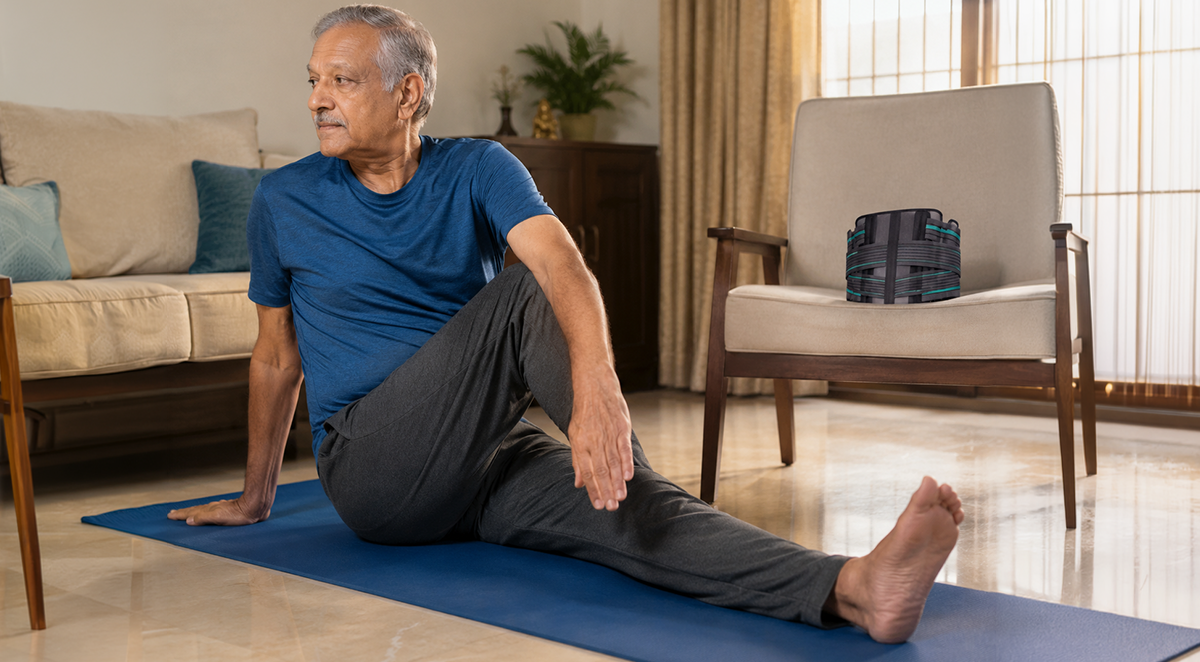
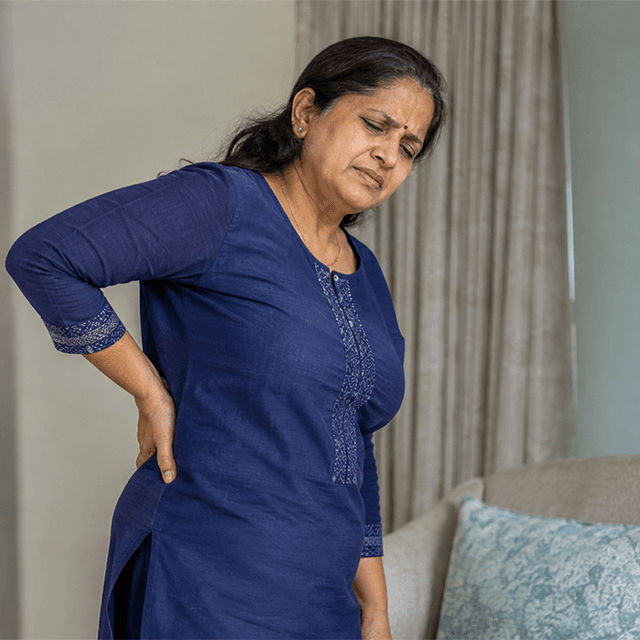
Many parents view lumbar support belts as a way to add safety during movement. However, safety is different from building strength.
Most of the time belts are purchased following repeated instances of difficulty with bending, standing or walking due to pain. The belt increases comfort and encourages more frequent use. Without assistance, your parent may become overly dependent on the belt for daily use.
You shouldn't buy a lumbar support belt just because someone said the belt “holds the spine in place,” there is back pain, or your parent feels more comfortable. You can't be certain a belt will aid your parent’s recovery just because it feels comfortable.
A belt may be helpful for pain relief while engaging in certain activities or following a medical professional’s recommended course of treatment.
For most types of non-specific lower back pain, there is little justification for excessive reliance on lumbar support belts. Generally, regular movements and appropriate exercises are more important in your parent’s recovery.
Prolonged reliance on a lumbar support belt may cause your parent to:
- Have anxiety about moving without the support of the belt.
- Increase inactivity and avoid exercises.
- Develop the belief that support is needed permanently.
Belts have their place as a way for your parent to remain active, mobile, and help reduce reliance while combining support with exercises.
This guide explains the situations when the use of a lumbar support belt is appropriate, situations where the belt is of little value, the length of time a belt should be used, and why reinforcing strength and a regular movement routine are the most important factors for your parent’s recovery instead of keeping the back supported.
Lumbar Support Belts
Lumbar Support Belts are low back support belts that provide compression to the lower back and abdomen, and also help prevent excessive motion and reinforce proper body mechanics.
The belt does not realign slipped discs, reverse arthritis, or heal chronic back pain. It should not replace a thorough examination by a qualified medical professional.
Users often report pain relief, especially when standing, walking, or traveling. This relief generally comes from reduced motion and increased awareness, and is not likely due to the belt.
The function of the belt is to aid and support safe movement. It is not to be used to avoid movement.
When a Lumbar Belt Is Useful
Lumbar support belts can be useful for short-term use for certain situations.
A lumbar support belt can be used to provide comfort for a shopping trip or a short automobile ride. A lumbar support belt is just one of many components to a recovery plan for the side of a healing injury or an invasive treatment.
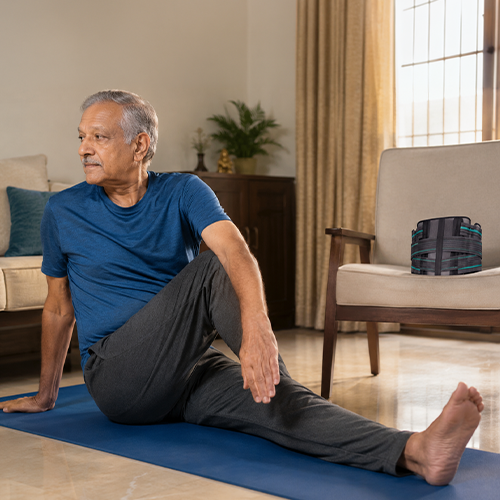
The AGEasy Lumbo Sacral Belt (Contoured) is a lower back support and abdominal belt designed to aid in recovery. The size range is from a waist circumference of 30 plus inches (M size). The appropriate size is more important than a tight fitting belt, and the belt should not provide too much compression. The belt should support and aid in the recovery process and not cause pain of any kind.
A clinician should advise on belt usage for your parent with a diagnosed spinal condition, surgery, injury, or leg symptoms.
When a Lumbar Belt Doesn’t Provide Much Value
A belt will have limited long term value if your parent wears it for the day to day activities through the entire day with no formal treatment plan.
It is possible that the belt may actually diminish the confidence in the back, and may even cause your parent not to bend, walk, exercise etc. without the belt. This diminishes the desire to perform movements in order to regain strength and endurance.
Even with pain relief, a worn belt will not guarantee recovery. A belt can mask the symptoms. Belt usage should not be the only coping mechanism for recurrent back pain and should not be used to mask symptoms. Any recurrent back pain should be evaluated by a health care professional, especially if it disrupts daily activities such as sleep, walking, work, and self care.
There is no definitive answer to how long a belt should be worn, and all individuals should be evaluated on a case by case basis.
For short term activity support, your parent may wear the belt for a given task, and then remove it; encourage pockets of time without the belt if it feels safe to do so. These breaks will aid your parent in regaining daily activity and movement confidence.
Don’t tighten the belt as the pain increases. There is no benefit to using excessive compression. Check the skin regularly, especially if your parent has diabetes, reduced skin sensitivity, or poor circulation.
If your parent feels they cannot stand, walk, or perform routine tasks without the belt, then an occupational therapy assessment is warranted.
Movement Remains Central to Recovery
Recovery from many nonspecific low back pain conditions is better with gentle movement compared to complete rest. Initial treatments could include short regular walks, frequent position changes, and simple exercises prescribed by a physiotherapist.
Habits that reduce the strain on the spine and encourage mobility should be developed. Encourage your parent to:
- Change sitting position regularly.
- Bend at hips and knees when standing.
- Keep objects to be lifted as close to the body as possible.
- Take breaks during prolonged sitting.
- Use a chair with good support.
- Lift objects close to the support frame.
A lumbar belt works best as a reminder for safer movement. It should not relieve your parent from lifting more than they should.
Consider a Lumbar Pillow for Back Discomfort Caused by Poor Sitting Posture
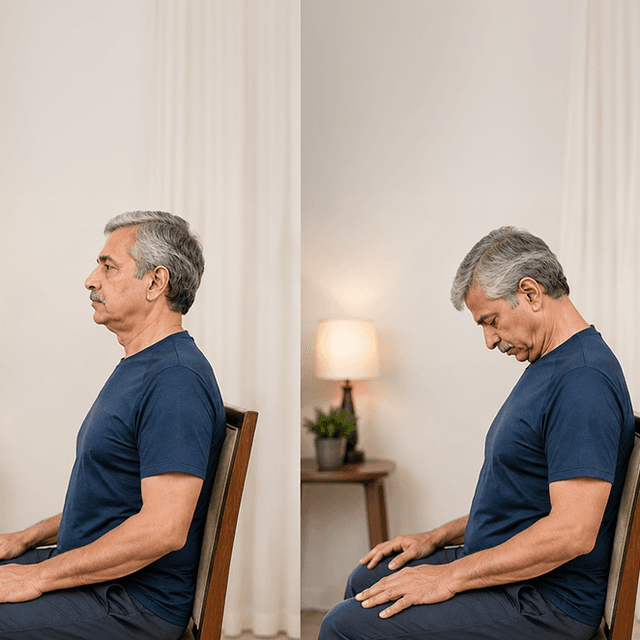
There are back discomforts brought on by poor sitting posture. But these are unlikely to be alleviated by the use of external spinal support. An important factor in the design of seating is the provision of a space between the user's lower back and the seat in which a cushion may be situated to fill the gap.
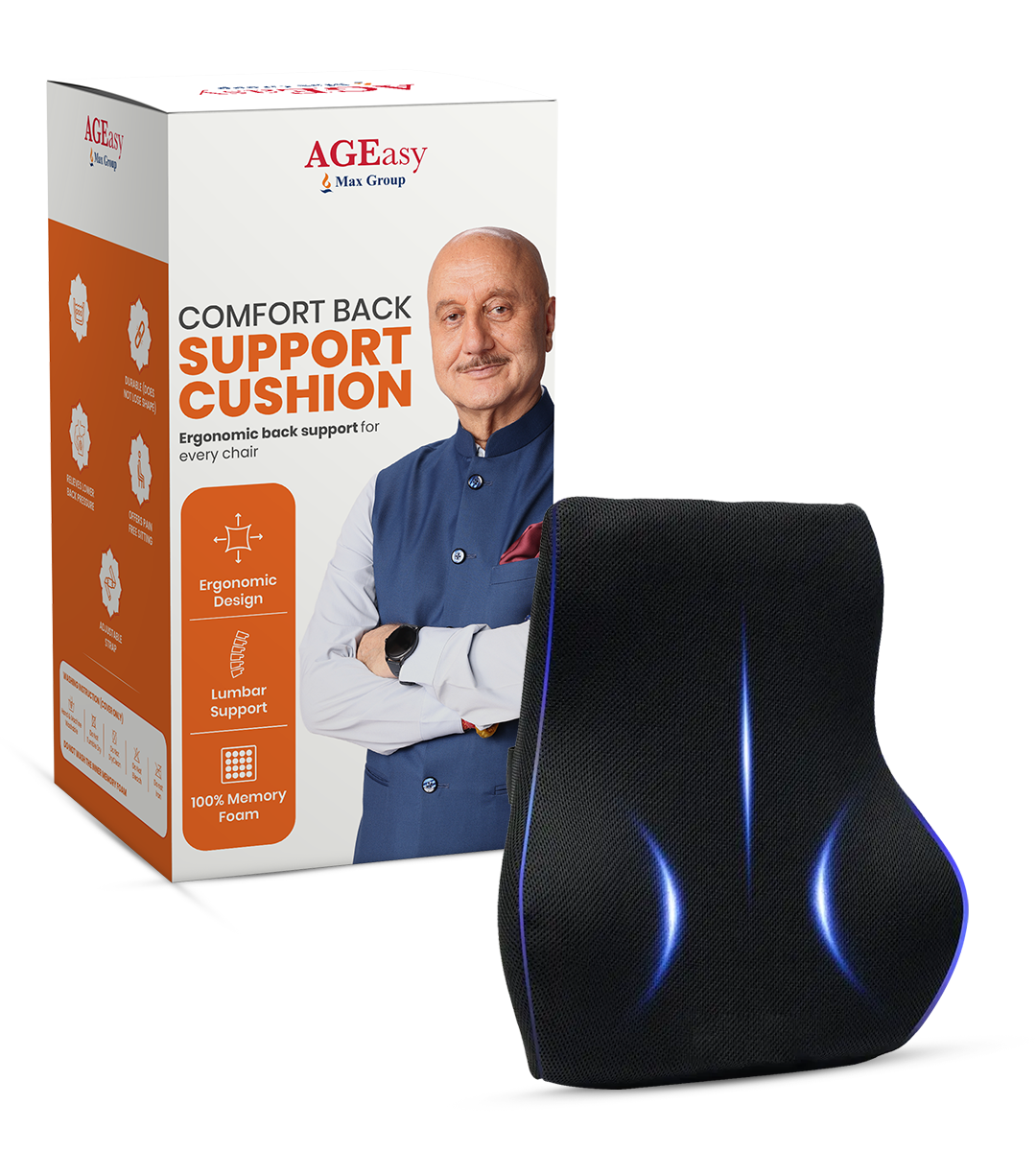
AGEasy Lumbar Back Support has several design features such as a memory foam core and an adjustable strap. It also comes with a washable, removable and breathable 3D mesh cover. The memory foam feature should provide comfort and cushion, while the adjustable strap should facilitate ease of use (i.e., ease of adjusting to be fixed to the chair). Ultimately, the use of this cushion is meant to provide support and comfort to the lower back in a seated position.
A cushion’s function is different from that of a belt. A cushion should provide support to your back while seating, while a belt should provide support to your whole body when moving.
Thus, you can use it while seating at the office or even during car rides. When sitting, the cushion should help you maintain the natural curve of your lower back, instead of being rigid and pushing your back into an unnatural position.
When using the cushion, your parent should start using it in short sessions. If you notice that your parent’s pain, numbness or discomfort worsens, then you should remove the cushion and seek help.
How to Ensure Proper Use of a Support / Cushion Belt
Before considering use, determine the reason for the support. A short-term activity support cushion has a different purpose than a support cushion that’s prescribed post surgery.
Measure your parent’s waist as per the manufacturer’s instructions. You should also keep in mind comfort during breathing. It should be worn over some cushioning to avoid skin irritation.
Regularly remove and clean the belt. Look for signs of wear and tear, like broken or missing buckles or edges that have frayed. If the belt is no longer able to retain its shape or snug fit, it is time for a new one.
Contact a health-care professional for your parent if they have osteoporosis, recent trauma, weakness in the legs, changes in bladder/bowel control, or have undergone spinal surgery in the past.
Seek Immediate Care for Back Pain
Urgent care is needed for back pain if your parent fell or had an accident and back pain is severe, if your parent experiences leg weakness, loss of bladder control, loss of bowel control, numbness in the groin region, if they have a fever or weight loss for an unknown reason, or severe back pain is experienced at night.
If any of these symptoms occur, a belt should not be considered a substitute for care.
Limit the Belt's Role
Lumbar back support belts are very useful for temporary purposes. A lumbar back support belt can be used to add extra support in a physical therapy routine. However, it cannot substitute a healthy exercise routine, good movement throughout the day, proper sitting habit, and scheduled appointments with a health care professional.
An AGEasy Lumbar Back Support cushion offers good posture for extended periods of time for people who spend a lot of time seated. For shorter duration support of the lower back, use the AGEasy Lumbo-Sacral Belt, Contoured .
Choose the support type that fits the needs of your parent and remember that a support belt should only be used for a limited time while the focus of the routine should be on building strength and movement.
Disclaimer: This article provides general information and should not replace individualized advice from a qualified healthcare professional.