

The 4-Part Spine Setup: Matching Belt, Cushion, Pillow and Corrector to One Body
Sep 7, 2026


Your parent does not necessarily need four unrelated back-support products. They need support that matches the activities they perform throughout the day.
Many families buy products separately: a lumbar belt for back discomfort, a cushion for an uncomfortable chair, a pillow based on a recommendation, and a posture corrector for a rounded upper back.
Each of these products has a different purpose. Poorly matched support can make your parent uncomfortable and may encourage greater dependence on equipment instead of movement.
The first step is to identify where your parent experiences the most strain during the day. It may be while sitting at a desk or dining table, while standing or walking, during activities that cause pain or fatigue, or while sleeping.
Sitting can affect how a person stands. Sleep can affect how comfortable they feel in the morning. The support used during the day can also influence how confidently they move.
Each support should therefore be matched to a specific need. The goal is to help your parent sit, sleep, and move with greater comfort and confidence without unnecessarily relying on multiple medical devices.
Why a Coordinated Spine-Support Setup Can Be Better
Your parent's back can have different needs throughout the day. A dining chair requires appropriate support while sitting. A bed requires comfortable positioning during sleep. Standing and walking require balance, muscle support, and confidence.
One product cannot address every situation. A lumbar belt and a back-support cushion serve different purposes, just as a sleeping pillow and a daytime posture corrector do.
A coordinated routine can also make daily support easier to understand. Your parent knows which product is intended for which activity and when it should be removed.
Ease of use should be considered before appearance. A parent who appears slouched does not automatically need a posture corrector, and a parent with back discomfort does not automatically need a belt.
The choice should take symptoms, movement patterns, medical history, and the advice of the appropriate healthcare professional into account.
1. Use a Lumbar Belt for Specific Activities
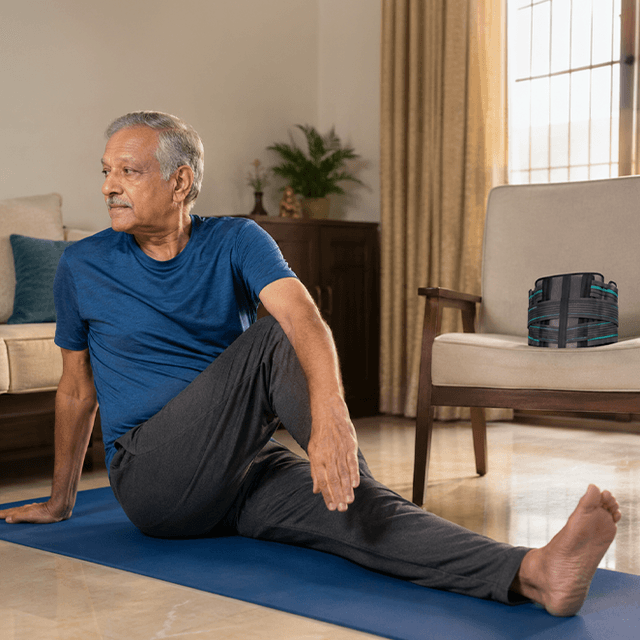
A lumbar belt provides wearable support around the lower back and abdomen. Some people may use one during activities involving prolonged standing, travel, or household tasks that require physical effort.
Your parent may benefit from a lumbar belt when gentle support makes a specific activity more comfortable. It should not restrict breathing or cause skin irritation or excessive abdominal pressure.
The belt should be used for the activity for which it provides support rather than worn continuously without professional guidance. Excessive reliance on a belt may reduce normal trunk movement and encourage dependence on external support.
Check the fit before every use. The belt should not dig into the skin or roll over.
Discontinue use if your parent develops numbness or tingling, increased pain, skin changes, or difficulty breathing.
If your parent has recently undergone back surgery, has a back injury, osteoporosis, nerve-related symptoms, or chronic back pain, consult a doctor or physiotherapist before choosing or using a lumbar belt.
The AGEasy Lumbo Sacral (LS) Belt – Contoured is a current AGEasy lumbar-support option with a contoured design and adjustable straps.
2. Use a Back-Support Cushion for Sitting
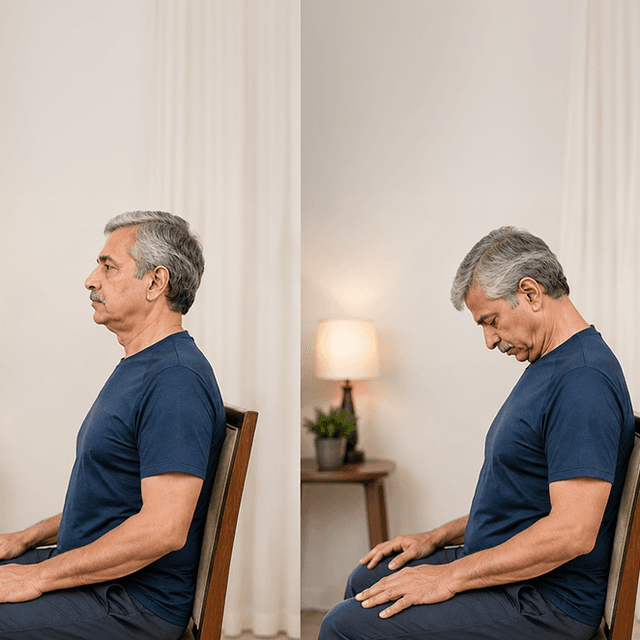
Some older adults spend long periods sitting in one position. This can contribute to rounded shoulders or leaning to one side, particularly when the chair does not provide adequate back support.
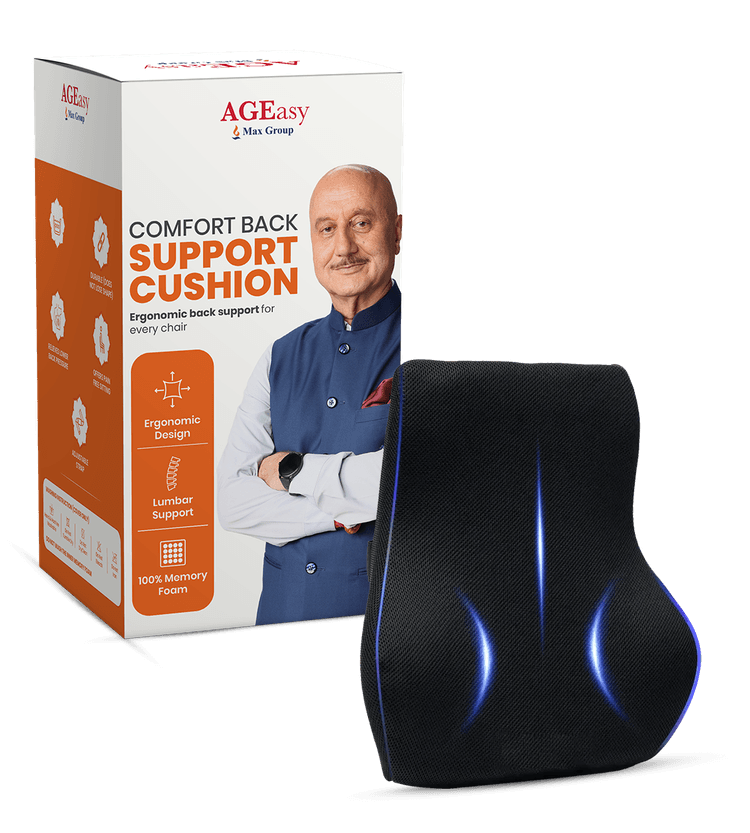
A lumbar support cushion can fill the gap between the lower back and the backrest and support a more neutral sitting position.
Position the cushion along the natural curve of the lower back. Your parent's feet should remain flat on the floor, with the knees around hip height.
A cushion is doing its job when it allows your parent to sit comfortably in a neutral position without having to constantly adjust themselves.
Start with shorter periods of use, such as 10 to 15 minutes, and assess comfort. A cushion that is too thick can push your parent forward and affect their sitting position.
The AGEasy Lumbar Back Support is a current lumbar-support cushion designed for sitting. The product page describes memory foam construction, an adjustable strap, and a breathable mesh cover.
The cushion should be considered as part of the overall seating setup. It cannot correct a chair that is poorly suited to your parent.
Make sure there is enough room for both feet, the seating surface is stable and comfortable, and the backrest is at an appropriate height.
3. Choose a Sleeping Pillow Based on Position
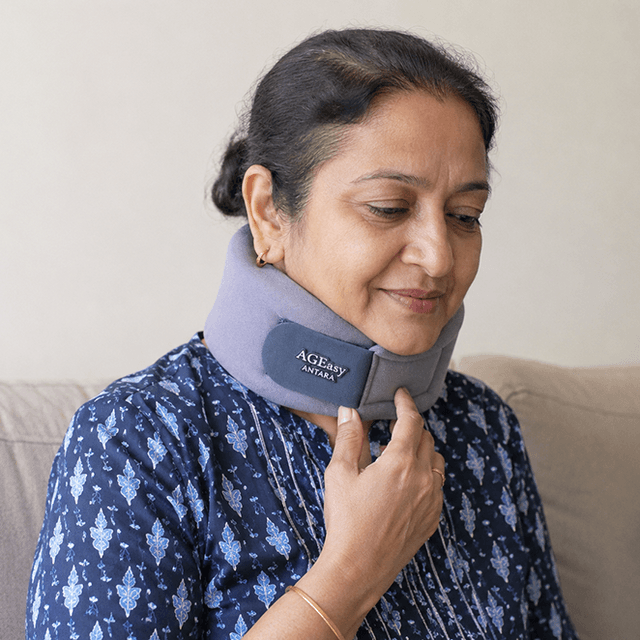
The way your parent sleeps can influence how comfortable they feel when they wake up. A pillow with the wrong height can tilt the head or neck forward, upward, or sideways during the night.
Side sleepers generally need enough pillow height to fill the space between the head and mattress. Back sleepers may prefer a shorter pillow with appropriate neck support.
Stomach sleeping involves substantial neck rotation, so your parent should consider whether this position is comfortable and allows unrestricted breathing.
For side sleeping, a pillow between the knees may help distribute the weight more comfortably. A pillow between the knees can also be used in some back-sleeping positions.
Your parent should choose the position that is most comfortable and allows unrestricted breathing.
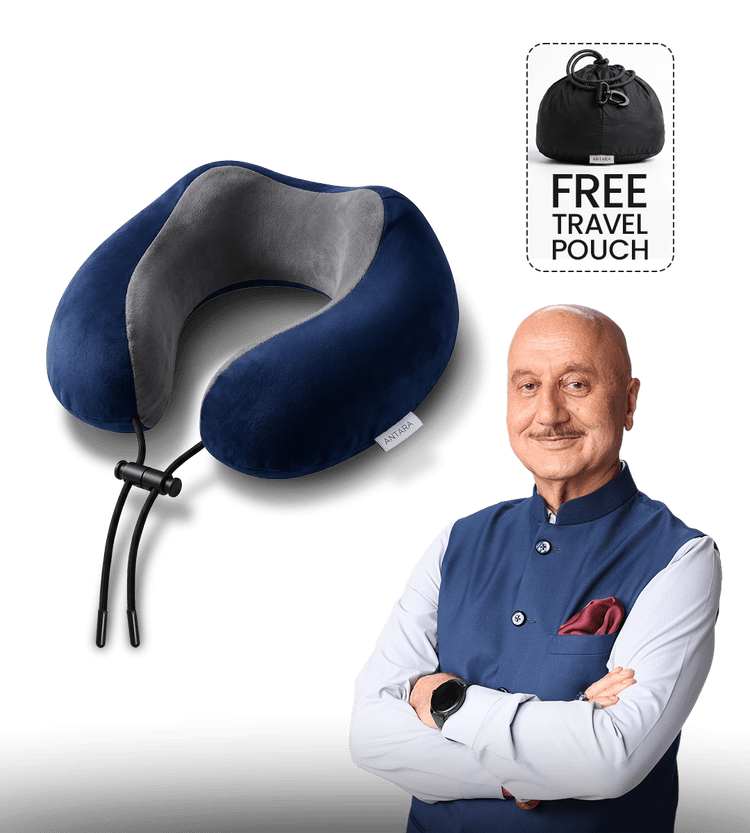
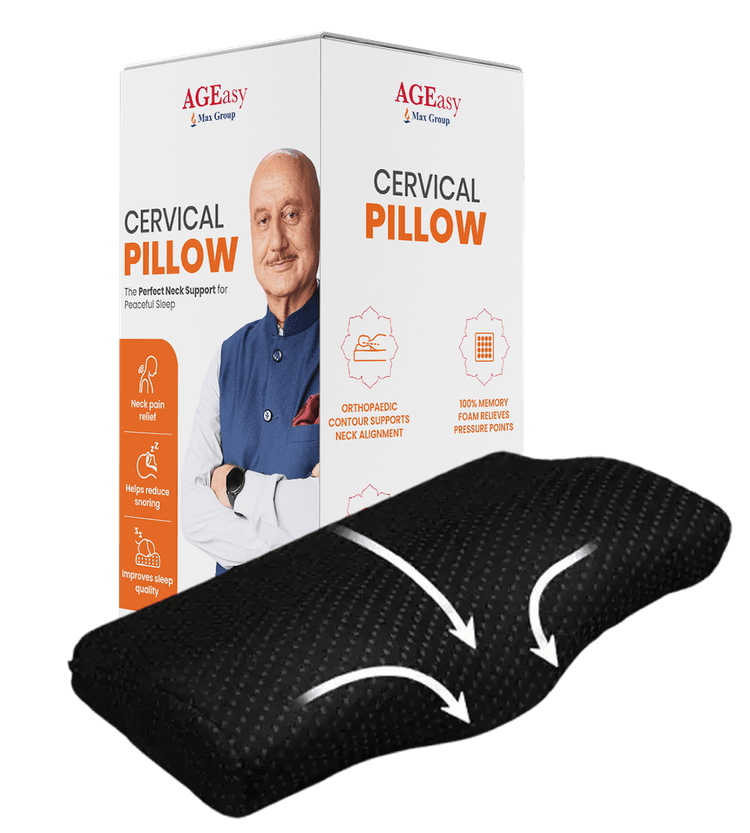
The AGEasy Cervical Pillow is a current AGEasy pillow option designed for neck and sleeping support. The product page describes high-density memory foam, breathable material, and a washable cover.
The pillow should provide comfort without creating new symptoms such as headaches, numbness, or tingling in the arms.
Replace the pillow if it develops a lumpy or uneven surface. Wash the pillowcase regularly, particularly if your parent experiences night sweats or has sensitive skin.
4. Use a Posture Corrector as a Reminder
Posture correctors provide light support around the shoulders and upper back. Their purpose should be to act as a reminder rather than to force the shoulders into a particular position.
A corrector can be used alongside movement breaks to address habits such as prolonged sitting, reading, or using a phone.
If movement breaks are taken every 30 minutes to an hour, the corrector should not cause pressure across the chest, restrict breathing, or irritate the skin.
It should not force the shoulders backwards. An overly tight corrector can interfere with natural movement.
A rounded upper back can have several causes, including muscle weakness, joint stiffness, vision problems, poor seating, or a spinal issue. A posture corrector does not address these underlying causes.
A physiotherapist can assess your parent's movement and determine whether strengthening or mobility exercises are appropriate.
The AGEasy ErgoLift Posture Corrector is a current AGEasy posture-support option designed to gently support the upper back and shoulders and encourage posture awareness.
How to Combine the Four Supports Throughout the Day
A simple routine can help your parent understand which support is intended for each activity.
- Morning: Check how your parent feels after sleeping. Use the sleeping pillow for rest and begin the day with gentle movement before other activities.
- Daytime sitting: Place the lumbar support cushion behind the lower back and ensure both feet are properly supported.
- Activity: Use the lumbar belt only during an activity where it provides beneficial support, unless a healthcare professional has advised otherwise.
- Posture practice: Use the posture corrector during short seated activities. Remove it during exercise, rest, or any task where it becomes uncomfortable.
- Evening: Think about which activities caused discomfort or fatigue. Consider the fit, duration of activity, and chair height before increasing the use of any support.
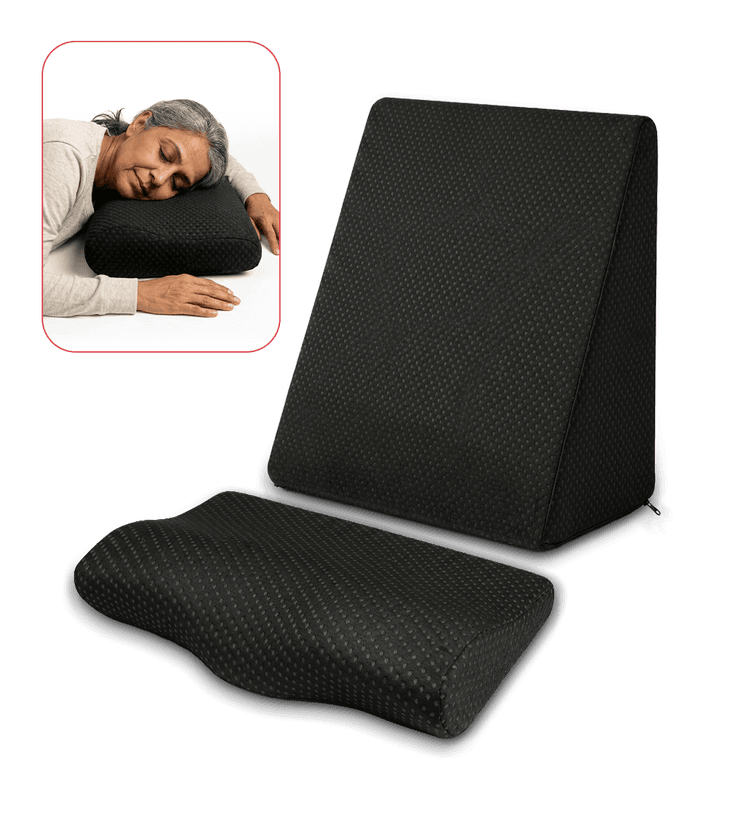
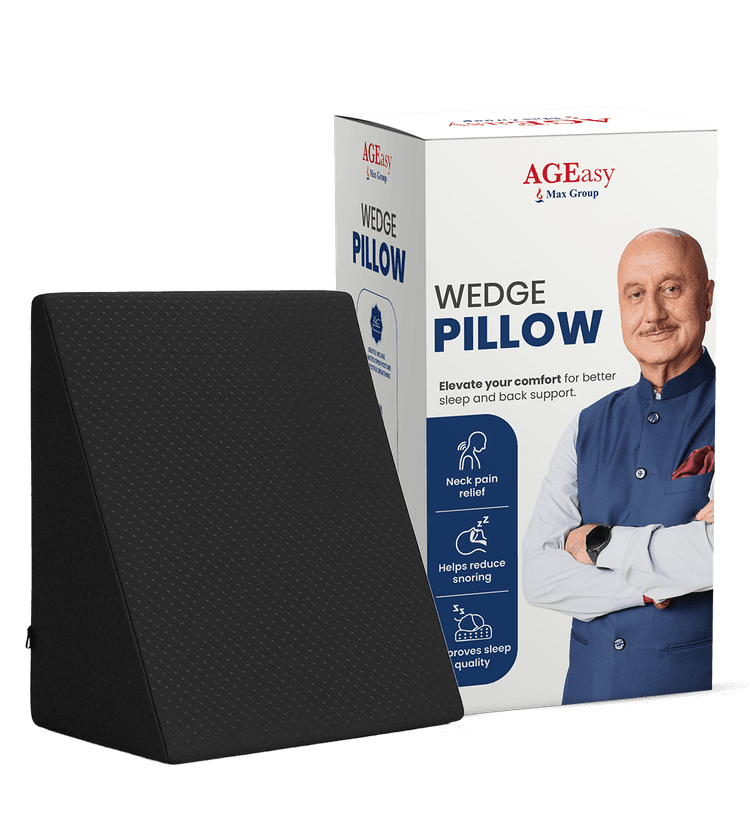
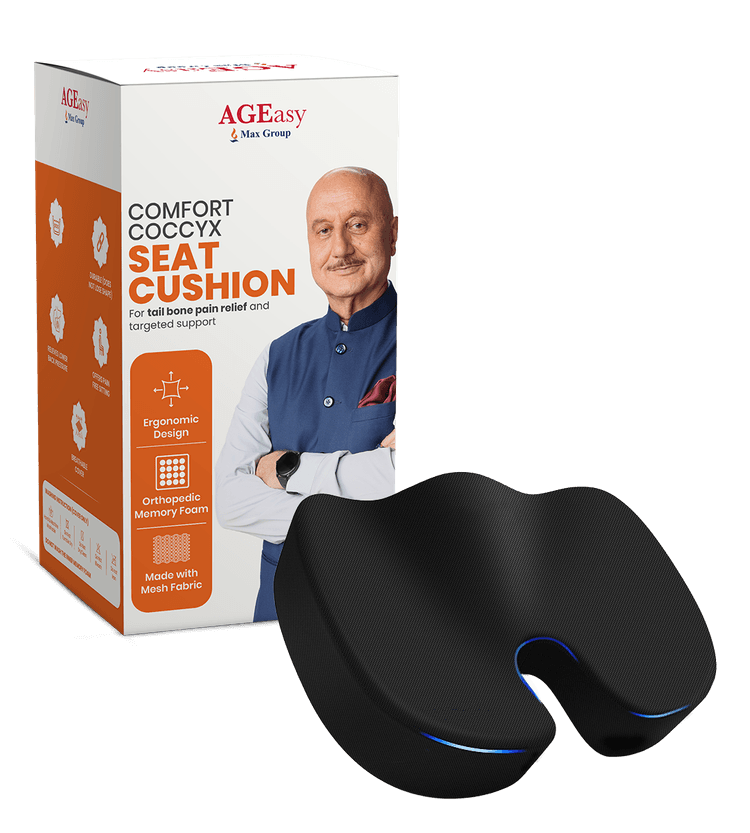
The AGEasy 4-in-1 Spine & Comfort Kit combines four comfort-support elements for different activities: a cervical pillow, wedge pillow, lumbar support, and coccyx cushion.
The kit can be incorporated into a broader home routine for sitting, sleeping, and resting. It should complement appropriate movement and positioning rather than become a substitute for them.
When Support Products Are Not Enough
Support products work best when they are part of an appropriate care plan and a safe home environment. They are intended to support comfort and wellbeing rather than replace routine care or medical assessment.
Seek medical care if your parent develops back pain after a fall, weakness in any part of the body, loss of bladder or bowel control, tingling around the groin, unexplained weight loss, severe night pain, or pain travelling away from the centre of the body.
Seek urgent help if these symptoms occur suddenly and are accompanied by problems with walking or balance.
If existing pain continues for more than a few weeks, repeatedly returns, or does not improve, your parent's doctor or physiotherapist may recommend reassessment.
Build the Setup Around Your Parent
The best support setup is based on your parent's actual daily activities.
A lumbar belt may be appropriate for one specific activity, a cushion may be useful during longer periods of sitting, and a posture corrector may be appropriate for a short period of posture practice.
Comfort should be checked after every use. Remove any product that causes pain, numbness, breathing difficulty, or skin irritation.
The AGEasy 4-in-1 Spine & Comfort Kit can be considered when your parent needs different types of comfort support while sitting, sleeping, and resting.
Ultimately, the goal is not to surround your parent with support products. The goal is to match the right support to the right activity while keeping comfort, movement, and safety at the centre of the routine.
Disclaimer: This article is intended for general informational purposes and does not replace medical advice, diagnosis, or treatment. If your parent has persistent or severe pain, recent surgery or injury, nerve-related symptoms, osteoporosis, or another underlying medical condition, consult a qualified healthcare professional before selecting or using a support product.