
How to Use a Glucometer Correctly: The 7 Mistakes That Give False Readings
Jul 16, 2026
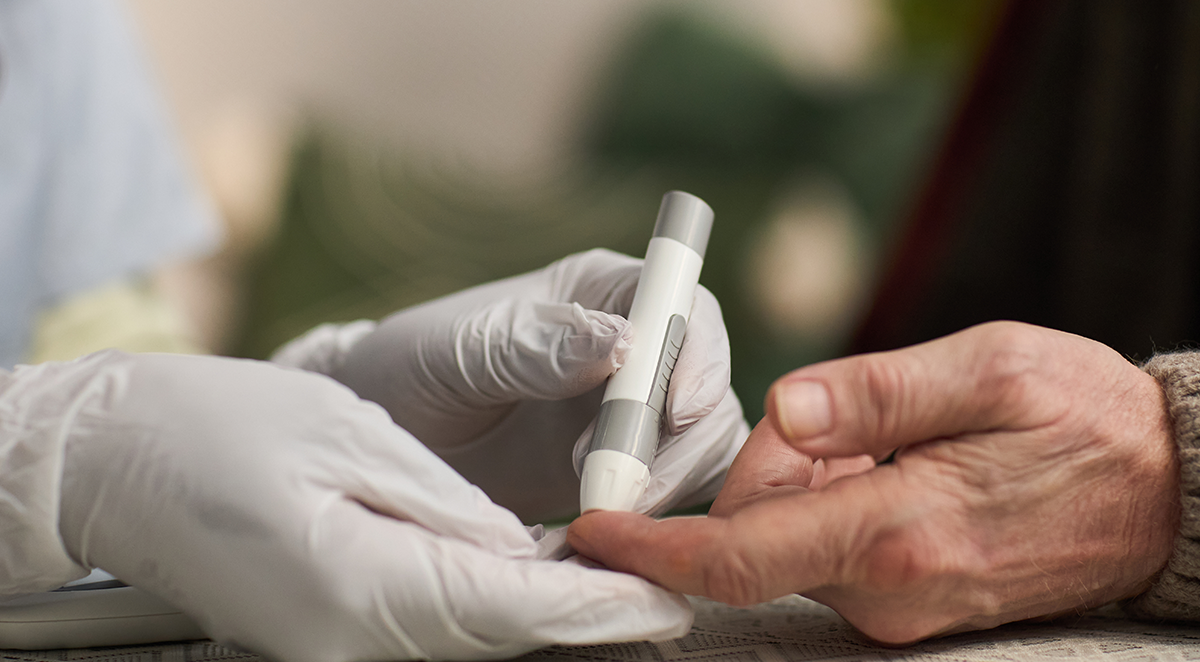
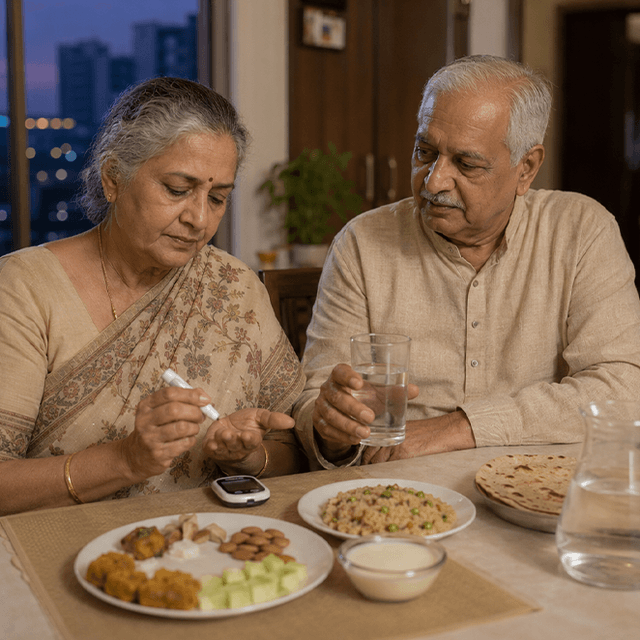
If you are responsible for looking after a parent with diabetes, you will most likely be using a glucometer frequently. This instrument can determine what food can be eaten, whether insulin has to be administered, or whether there is a need to go to the hospital.
Sadly, the truth is that a glucometer can produce inaccurate results.
We've seen caregivers panic when a reading shows 300, and the actual reason is some fruit juice on the fingers. Elevated or insufficient readings can be the result of failing to wash hands prior to testing, expired strips, or untrimmed nails. One inaccurate reading can lead to decisions that are permanent.
The positive aspect is that most of these issues can be solved in a matter of seconds. Once you have mastered the 7 most frequent errors in determining glucose levels, you will be able to make informed decisions about the care of your parent.
Mistake 1: Not Washing Hands Before Testing
This is the most common error and the one with the greatest consequences. Even the smallest remnants of food on a person's fingertip can lead to grossly imprecise readings on glucose meters. For instance, if your father touched an orange that he peeled an hour ago, the sugar residue on his skin could cause the reading to be 100 points above the true level.
Wash your hands with soap and warm water then dry them completely before every test. Warm water will also promote blood flow, making the finger prick easier. If soap and water is unavailable, use an alcohol swab and let your finger air dry completely.
Mistake 2: Testing with Expired or Improperly Stored Test Strips
In each test strip container there are a number of enzymes that react with each other and their normal functioning is impaired by exposure to excessive temperature, moisture and oxygen, especially when they are in a strip container that is left open by the window or in the bathroom.
The solution: Always check the expiry date. Upon opening a new vial, record the date opened on the label. There's usually guidance on the strip container that indicates it should be used within 3 to 6 months of opening. Store the vial in a cool dry place and keep it tightly closed. Also, avoid transferring the strips to other containers. If a reading seems unreasonably high or low, the first thing you should check is whether the strip is expired.
Mistake 3: Unnecessary Finger Pressure
We often squeeze the tip of the finger when a drop of blood is not visible. However, excessive squeezing can also cause the collection of tissue fluid. This fluid, when mixed with blood, can give an artificially low reading. This is dangerous if it hides an elevated blood sugar level. It can even lead to an unnecessary dietary adjustment or insulin dose change.
The best approach is to encourage blood circulation before pricking the finger. This can be achieved by your parent washing their hands with warm water, allowing their hand to hang below heart level for a few moments, and then massaging their hand toward the fingertip. Once that is done, you can prick the side of your fingertip (not the pad) since it has fewer nerve endings and therefore will be less painful, and should bleed more profusely. You may apply a little pressure on the finger but do not apply repeated squeezes.
Mistake 4: Testing Outside the Appropriate Time Interval
After eating, it is a typical physiological phenomenon for blood sugar levels to rise, therefore when a reading is taken 30 minutes after lunch it will show an alarming reading when compared to a fasting target, even if the patient has diabetes and it is well controlled. Many parents tend to worry excessively about high readings, when in fact it is a reading one should expect at a given time of day.
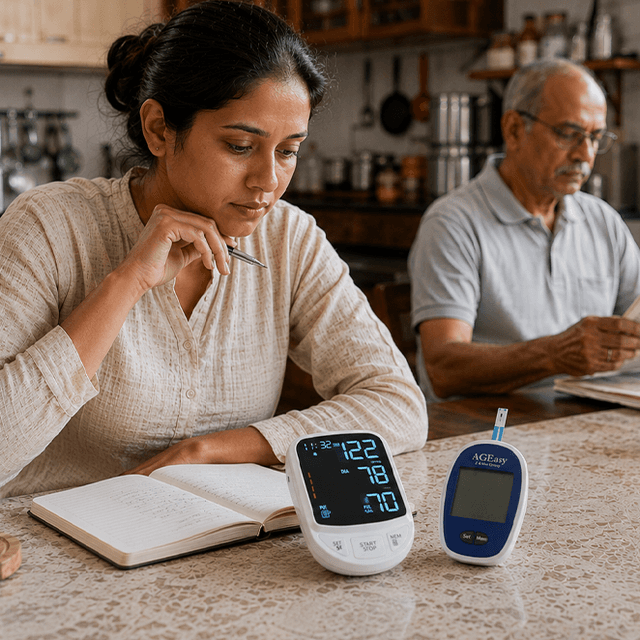
The solution is to follow what the doctor has recommended, including the recommended testing schedule, and keep track of the timing of each reading in relation to their meals, medications, and activities. It's important to note that fasting readings are done before any food or drink has been consumed, while post meals readings are taken two hours after eating. You'll want to make sure to keep a log that documents the timing and circumstances of each reading because the doctor will appreciate that log more than just a number list.
Mistake 5: Not Coding or Calibrating the Meter Correctly
Some older glucometers need users to add a code or use a chip with each new box of strips. If you were to skip that coding step, all readings from that box would be off. This can also occur with no-code meters.
If your meter has a code, the solution is to always calibrate it to the code on the strip vial whenever you open the box. If you drop the meter, or your readings aren't consistent with how your parent is feeling, consider using the control solution as a test before opening a new box of strips. Many manufacturers recommend that you test the accuracy of your blood glucose meter against a blood test at least once a year, so plan to take your meter to the next blood test and compare the readings.
Mistake 6: Reusing the Lancing Device or Using the Incorrect Depth Setting
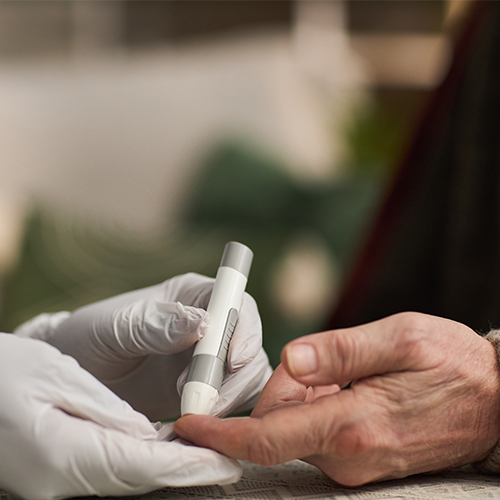
The skin will form a protective layer each time it is punctured, and pain will be associated with the testing, so monitoring and testing will be difficult. If the setting is too shallow, it will puncture the skin multiple times, potentially causing significant scarring and damage. In our older years, skin becomes fragile, and the healing process will be slower.
Correction: Each test should use a new lancet. While depth settings can be adjusted, thinner and older skin will likely require a shallower depth setting than anticipated to obtain an adequate blood drop. Rotate between different fingers for testing to avoid the build up of calloused layers that will make it more difficult to perform a finger prick.
Mistake 7: Not Understanding the Limits of the Meter and When Additional Data Is Warranted
A meter records only one instance in time. This is true even when the test is executed perfectly. The test will not capture blood sugar levels during sleep, and it will not provide information regarding food consumption that caused a subsequent spike in sugar after the tea. If all the symptoms do not add up, and fingersticks feel like a daily war, it may not be a matter of technique. More testing is required throughout the day.
The Strategy: Focus on removing the six errors above. If the readings are still inconsistent, escalate the issue to the doctor. A continuous glucose monitor (CGM) may be helpful for some older adults, especially those on insulin, or those with high and low blood sugar fluctuations for unknown reasons. The Antara CGM from AGEasy is one example of a CGM positioned on the arm that tracks glucose for fourteen days, and removes the need for finger prick tests each day. For elderly parents reluctant to do finger prick tests, and for caregivers worried about the periods in between glucose tests, real-time continuous glucose monitoring from options like the AGEasy CGM sensor reduces a lot of uncertainty about daily glucose monitoring. Please discuss this with your parent's physician prior to switching if a CGM is suitable for them.
Pre-Test Checklist
Attach the following instructions to the test kit:
- Wash with soap and warm water, and dry your hands thoroughly.
- Ensure your test strips are not expired.
- Ensure that a fresh lancet is loaded, and one fingertip has been selected.
- Do not squeeze the finger.
- Check the time. Is it a fasting test, pre-meal test, or is it a post-meal test two hours?
- Results and the time must be read, recorded, and explained.
- After six lines and a duration of thirty seconds, the majority of incorrect readings will be removed.
When to Notify the Physician Instead of Retesting
Knowing when to take action on the number is as important as technique. If your parent has a reading under 70 mg/dL, or the reading does not improve with fast-acting sugar, or if there is repeated episodes of 300 mg/dL readings, or if there is a reading and the patient is confused, drowsy, vomiting, or has changing levels of breathing, contact the physician immediately. If symptoms support uncertainty, treat the symptoms rather than the number.
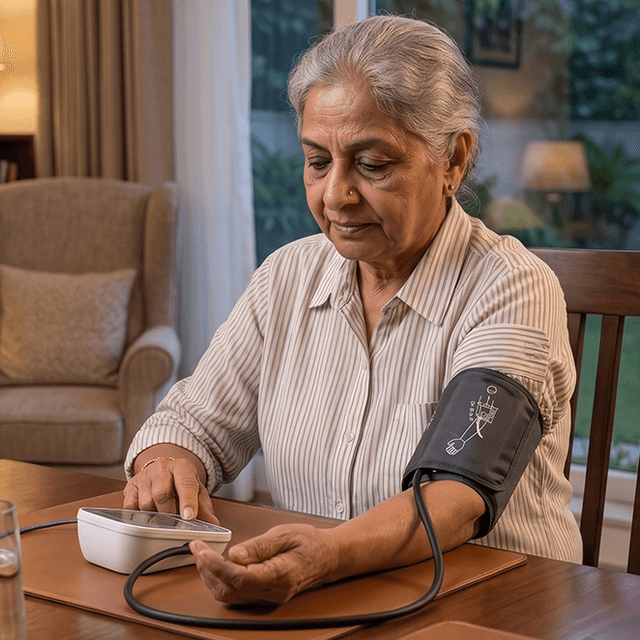
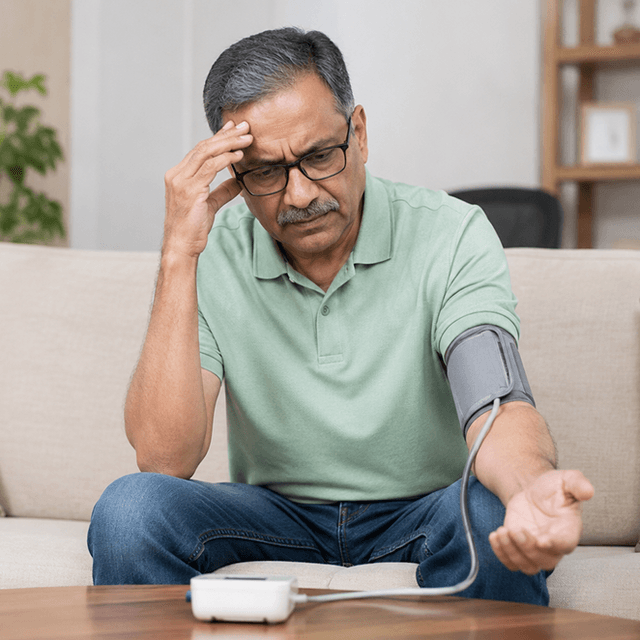
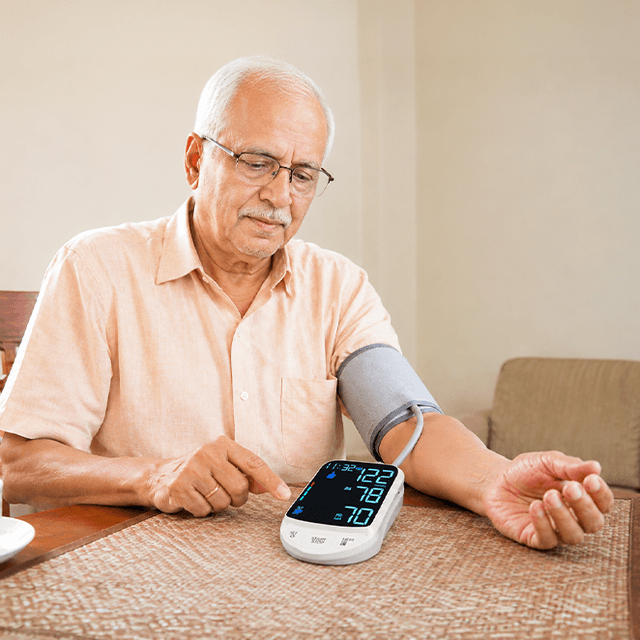
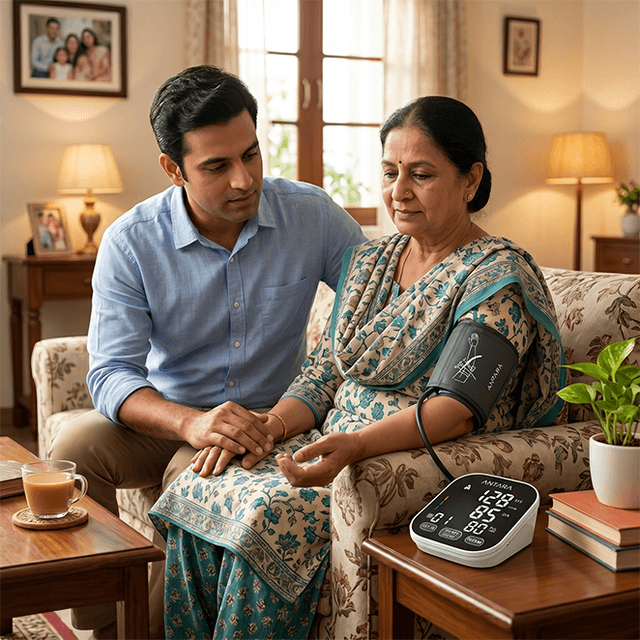
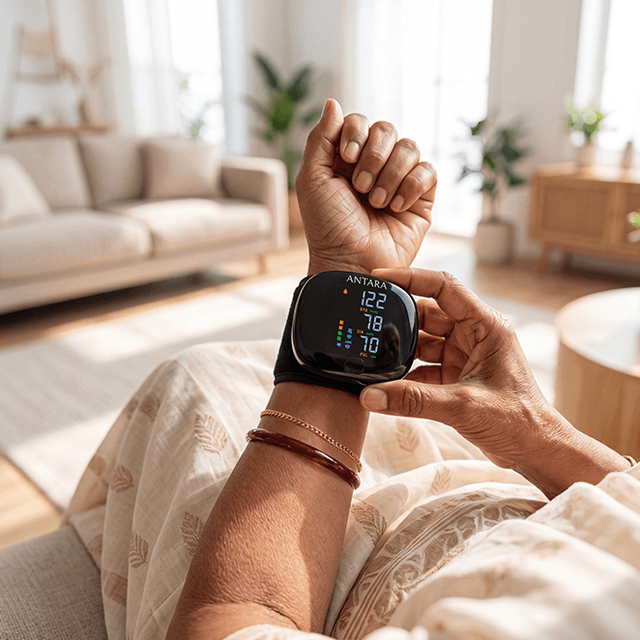
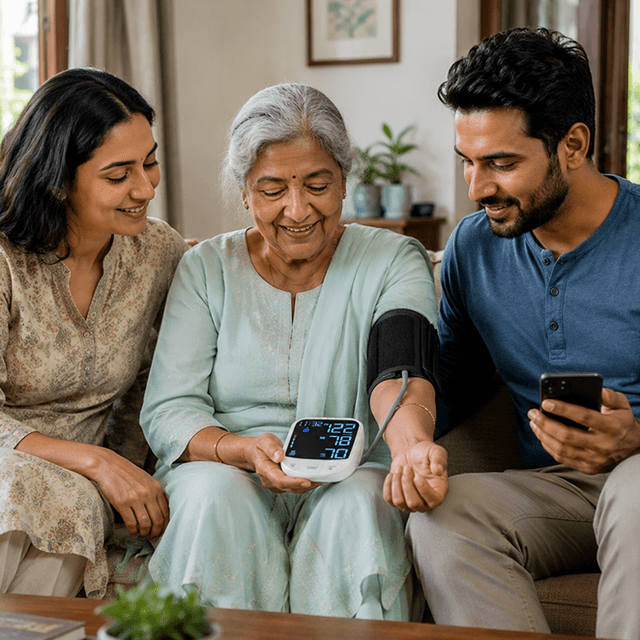
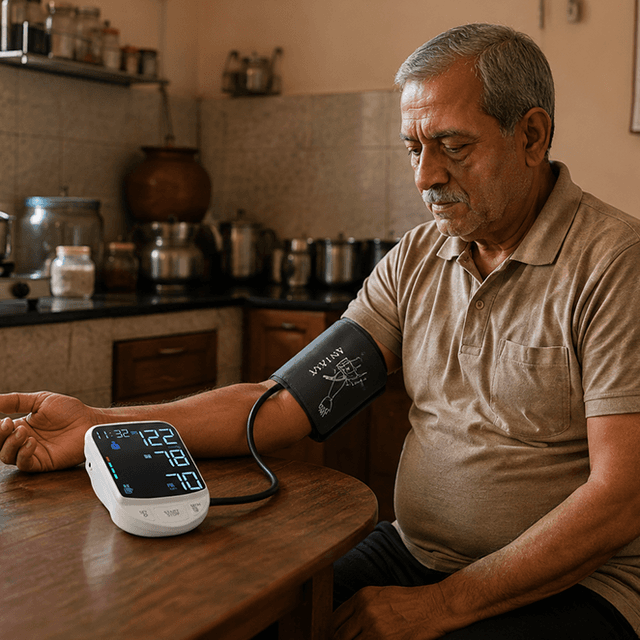
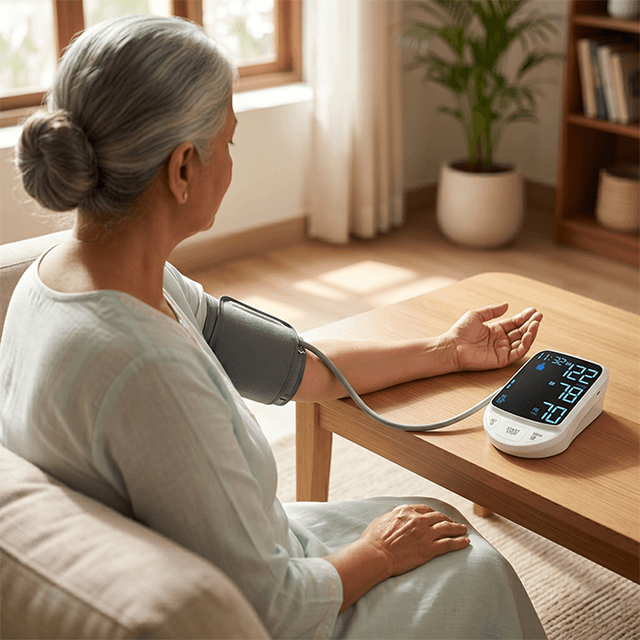
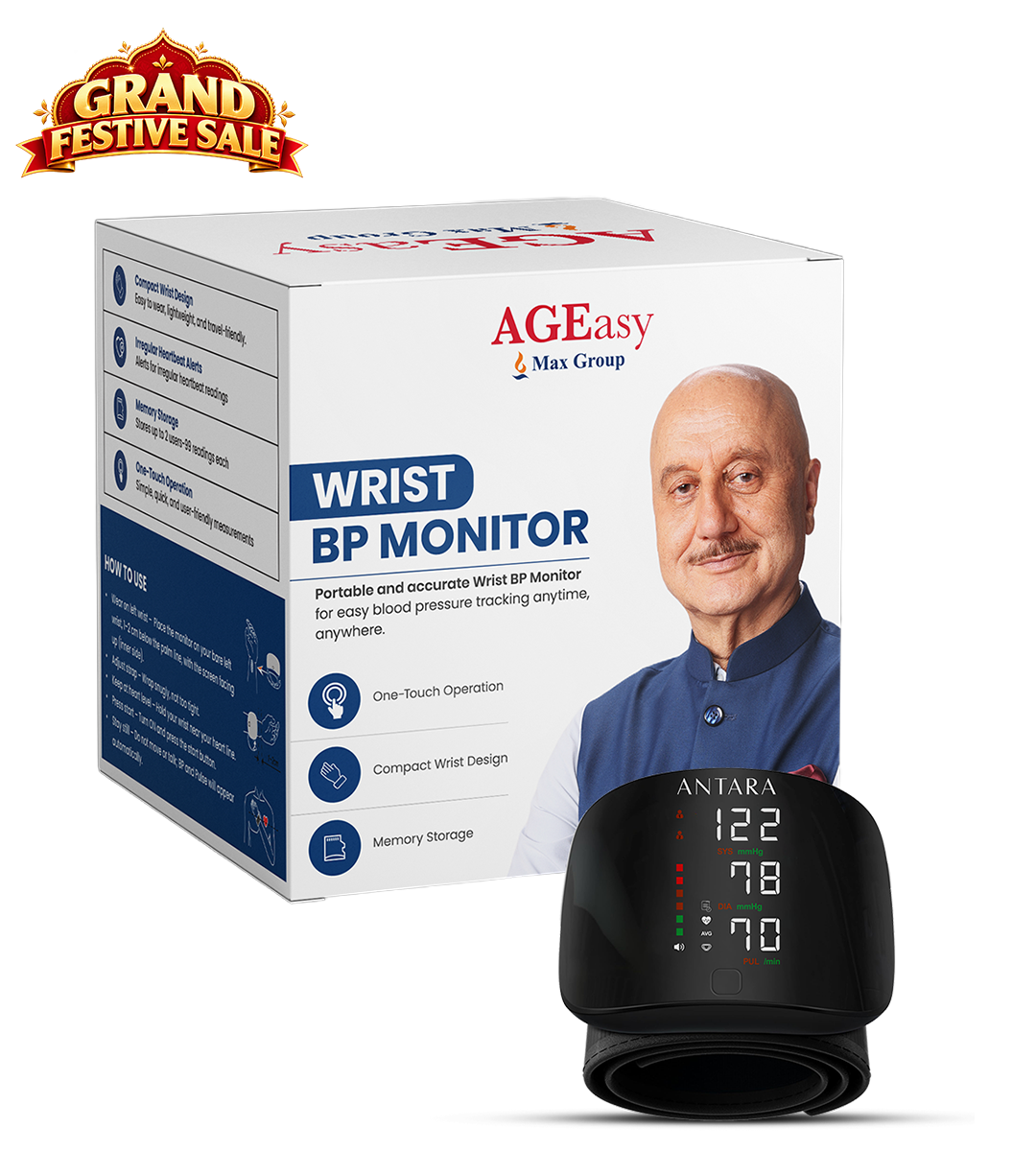
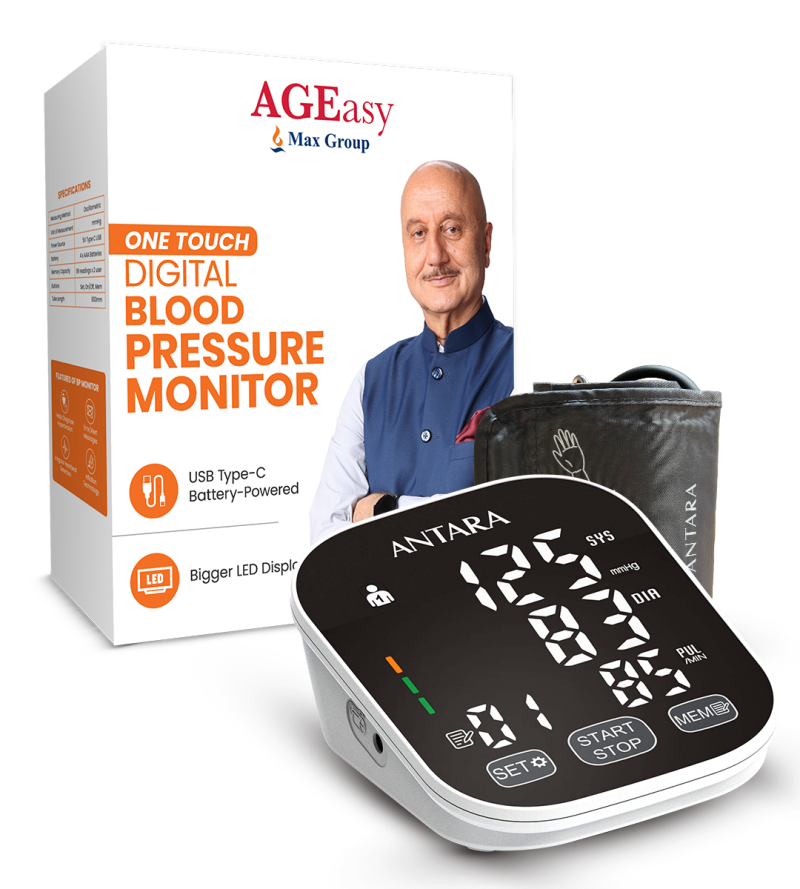
Given that diabetes in older adults frequently coexists with other health conditions, tracking blood pressure at home can provide useful information for your parent's doctor. A digital BP monitor (validated for accuracy) in addition to a glucometer will give the doctor a clearer picture at each visit.
The Bottom Line
A glucometer is only as good as the routine behind it. Clean hands, new strips, the right testing technique, and testing at the right times will resolve most of the "strange" numbers. When you implement these seven changes, you'll spend less time second-guessing the meter, and more time doing what really matters, which is helping your parent to live well with diabetes.
Disclaimer: Always follow the instructions given by your parent's treating doctor for measuring, targets, and treatment decisions. This article does not provide medical advice and is meant for general purposes only. Always follow the instructions provided by your parent's treating doctor regarding the measurement, target, and treatment decisions.