

Grab Bars for Indian Bathrooms: Where to Place Them, at What Height, and Which Wall Will Actually Hold
Article by: Arpit
Article Category: Bathroom Safety
Jul 30, 2026
Bathroom injuries are extremely common and some of the injuries may require serious hospital visits. Floor tiles can be wet and slippery, and things like shower steps and low toilet seats can make senior adults lose their balance.
A common misconception is that a grab bar placed on an empty wall will make the bathroom safer. This is actually not true, and in fact grab bars can be extremely dangerous.
Grab bars should not be installed 'just because there is an empty wall' or 'just because a wall looks convenient'. This is a horrible practice of installing grab bars. Bathroom walls are often made of thin, weak and hollow partitions which will collapse at the worst possible moment.
Before installing a grab bar, answer the following questions first:
- Where does your parent need the most support?
- Is there a wall there that is strong enough to support their weight?
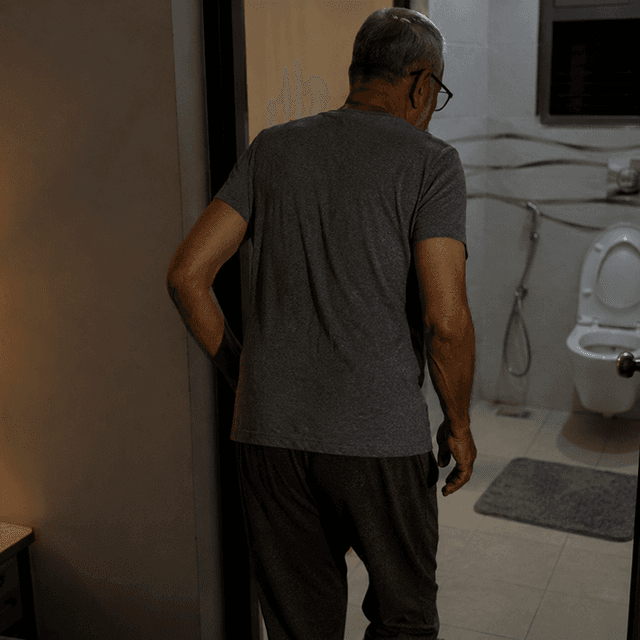
Observe them using the room.
- Do they find it difficult to lower themselves onto the toilet?
- Do they lose their balance as they lift their foot to step over the shower?
- Do they rely on their hands to push themselves back up?
If so, look for a wall that is solid behind the tile to help provide support and make sure it is strong enough. Before drilling, ask your parents to be in the spot so you can adjust the height and angles to be suited for them, not you.
A grab bar is not a design element for a bathroom. It must be properly anchored to withstand your parent's full weight should they lose their balance.
Placed incorrectly, your parent will try to grab support from a place that is not designed for it, twisting to an awkward position, putting weight onto a bar that was not meant to support an adult body, and facing the same risk of falling, but now with a false sense of security.
Correctly installed grab bars means that your parents can control the space around them in the bathroom. They can be more confident moving around the bathroom, sitting, standing, and showering with less risk of slipping. Grab bars help parents keep their independence in the bathroom, which is often the most difficult room in the house to navigate.
This article shares the correct placement of grab bars in Indian bathrooms, the correct heights, which walls can take the load of the bars, and common mistakes to avoid when installing them.
Start by observing how your parent moves, and not where the walls are
Pay attention during the these three transitions where balance is most at risk:
- sitting down and standing up from the toilet,
- entering and exiting the wet area,
- and turning within the wet area.
Take note of which hand they use, since a parent with a weak right knee will tend to load onto their left side. The support bar should be placed on the right side.
Keep the limits in mind as you plan. Installation of grab bars minimizes the chances of falling. It does not address the reason for someone being unsteady. This could originate from the knees, inner ear, vision, or due to a blood pressure medication taken at night.
Placement of Grab Bars in Indian Bathrooms
1. Next to the toilet
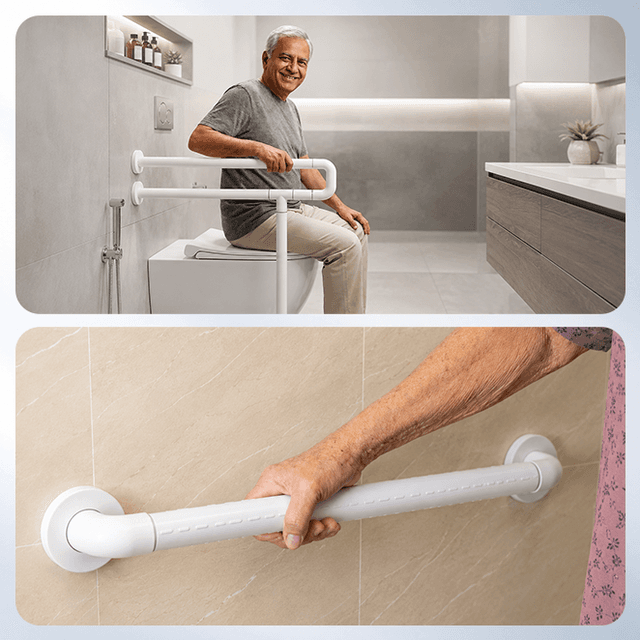
Install a grab bar horizontally on the side wall closest to the toilet, so your parents have to push down and forward as they rise. The wall behind the toilet is usually a false wall that contains plumbing, so the side wall is the safer surface. A 16 to 18 inch bar is appropriate for most people. The AGEasy Secure Hold Grab Bar, with an anti slip grip and rust resistant finish, is good here, and is rated to 100 kg.
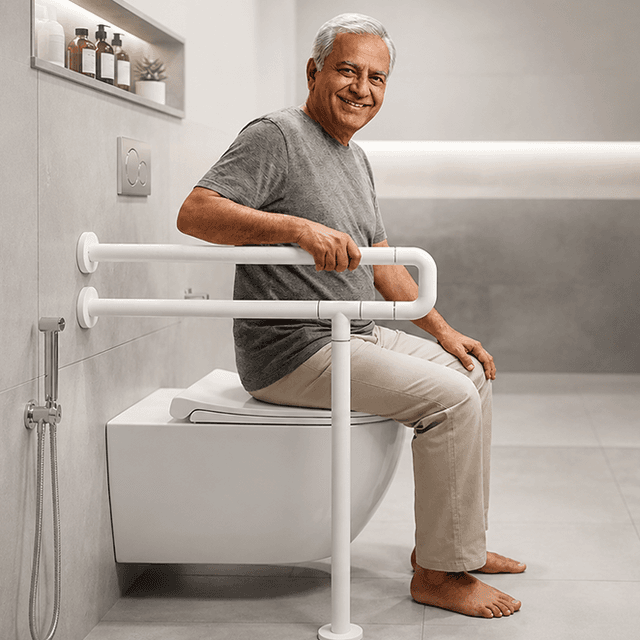
Where there is no side wall within reach, as is common in many compact flats, use a bar that has its own floor support. The AGEasy Toilet Grab Bar with Floor Support transfers load to both the wall and the floor, supports up to 120 kg, and is suitable for bathrooms where the masonry is doubted.
2. At the entrance to the shower or bath
The most dangerous single action in a wet room is stepping over a raised threshold. A vertical grab bar on the outer wall, within reach of the threshold, gives your parent something to hold as one foot comes off the floor. In this case, vertical is better than horizontal because the grip can be positioned at any height.
3. Within the shower area
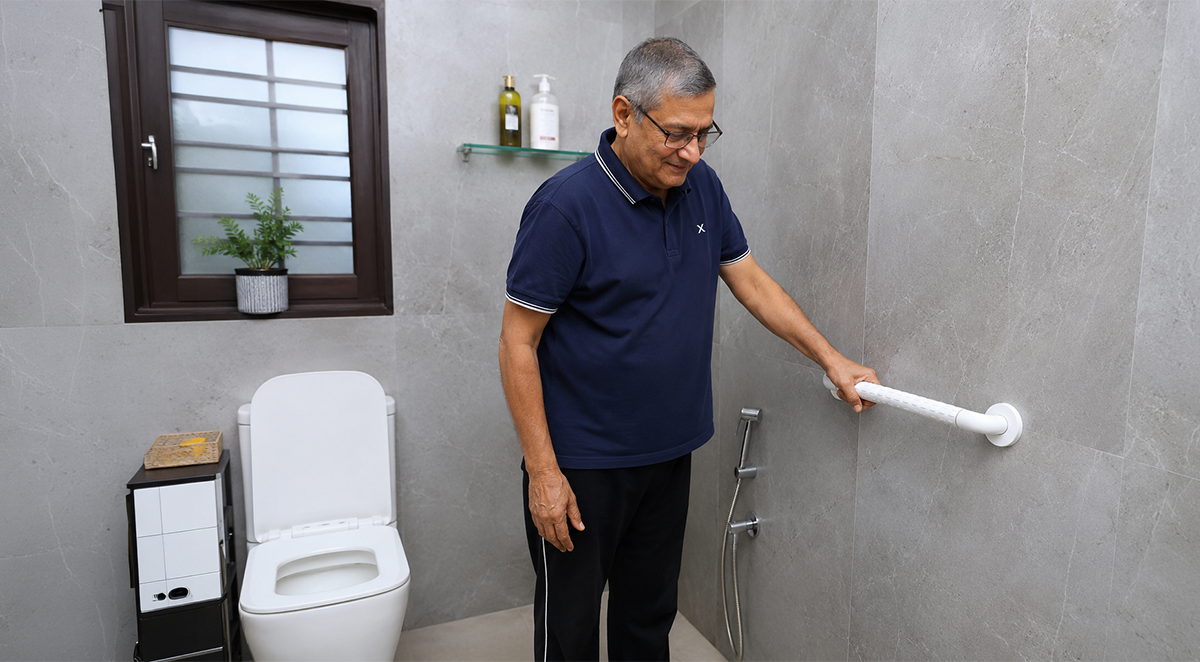
Please attach a second grab bar on the wall that your parents face when they wash. It is important that this bar is positioned so that your parent does not have to stretch up to reach it. If your parent will shower while seated (e.g., on a shower chair or a plastic stool), the bar should also be reachable from this seated position. One bar well-placed within reach while seated is safer than two bars located out of reach while standing.
Be careful with the washbasin as well. In Indian homes, wash basins, towel rails, and soap dish ledges are often used as emergency handholds. All three can be pulled away from the wall when someone puts weight on them.
Installation Heights To Work From
The harmonized guidelines for India, along with the ADA specifications, give horizontal grab rails an installation height of 750-900 mm.
In grab bars installed next to toilets, it is common for the horizontal bar to be positioned 200 to 250 mm above the seat, which puts most of these installations at 750-850 mm.
For horizontal entry bars, the lower end should not go below 900 mm.
These numbers can be used as a baseline, and then fine-tuned to the specific user. Have your parents stand at the spot, bend the elbow slightly and place the hand where the bar would feel natural. This will give you a far more accurate point than simply measuring it out.
35 to 40 mm of clearance is optimal behind the bar. Less than this will trap the fingers, while more will allow the forearm to slip through, which defeats the purpose of the bar.
Which Walls Support, and Which Do Not?
A grab bar transfers a sudden load shock, often 2 to 3 times an individual's body weight, to a small section of the wall. With appropriate anchoring, bolts into solid burnt clay brick, as well as 200-mm AAC (Autoclaved Aerated Concrete) block walls, and reinforced concrete walls, are excellent. Half-brick walls (partitions) can hold grab bars with chemical anchors, positioned away from the edges of the walls.
Three surfaces commonly fail in Indian bathrooms.
- First is the false wall constructed to hide the plumbing behind the commode, which consists of a thin sheet over a hollow cavity.
- The second is a gypsum board partition, which is common in more modern apartments and in bathrooms that have been carved out of larger rooms during a renovation.
- The third is tiles that are laid over poorly bedded mortar, where the tiles, along with their backing, become detached from a solid wall.
Before you drill into a wall, conduct a test. Tap on the wall to listen for a hollow sound. Drill a small test hole, and examine the dust. If it is gray, the wall is likely made of cement; red dust suggests brick; and white dust and an easy drill indicate gypsum. If the wall does not seem to support anything, you can choose a design that is supported by the floor instead of relying on an anchor to hold it.
Installations and Waterproofing
- When drilling through the tile, turn off the hammer function of your drill until you are through the glaze, then switch to hammer mode for the mortar and masonry. If you start with the hammer mode, it will also crack the tile. Any cracks will allow water to enter the wall. Be sure to silicone seal each hole before inserting the screw.
- Use stainless steel fasteners. Zinc plated screws corrode within a couple of monsoons, and the failure is invisible until the day the bar pulls out. Match the anchor to the wall: sleeve or wedge anchors in solid concrete; chemical anchors in hollow block and half brick walls.
- Suction cup bars are not grab bars. They release without warning and could easily cause a real fall, so don't put one in as your parent's main support bar. In a rented flat where drilling is restricted, the AGEasy Fold Up Support Grab Bar which mounts to a single solid wall, can hold 120 kg and folds flat for use when other family members need to use the same bathroom.
Common Mistakes To Avoid
- Fitting the bar at an angle so the hand has to slide under load with no fixed grip point.
- Fitting it too high so that the shoulder has to go above the heart, thereby cutting push power at the moment your parent needs it most.
- Only fitting one bar when the shower and the toilet are two separate problems.
- Fitting to tile only so that the bar holds during the demonstration and then fails months later during a real slip.
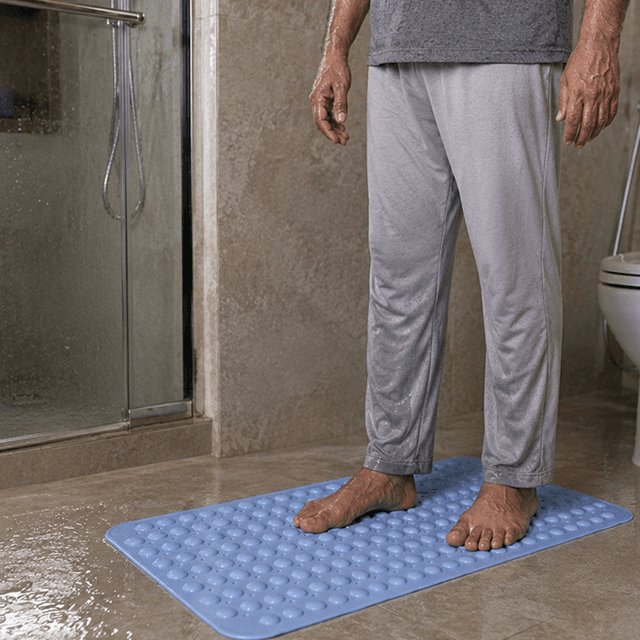
- Fitting it and then stopping there. A grab bar handles the transitions. It does nothing about the wet floor between them, which is where an anti-slip mat, a shower chair, and a commode seat raiser for a low toilet do the rest of the work.
AGEasy's bathroom safety range covers all three, and its Safe Showering Essentials combo bundles the pieces most homes need.
Test It Before Anyone Depends On It
Load the bar yourself in the direction of an actual fall by pulling down and to the side instead of straight out, and examine the fixings for signs of shifting or hairline cracks in the tile.
Then ask your parents to use the bathroom like normal while you observe. If they reach over the bar, grip it strangely, or do not touch it, the positioning is wrong, and no amount of hardware will correct a bad position.
While mistakes like that cost you nothing new other than a patched hole, correct it. Re-check the fixings every six months, and after any plumbing work in the wall, because a bar that is loosening gives little warning before it lets go.
If your parent has fallen before, has a diagnosed imbalance or neurological condition, or uses a walking aid indoors, involve a physiotherapist or occupational therapist in the design of the layout.
A home safety assessment costs far less than a hip fracture, and their guidance is bespoke to how your parent moves, rather than how bathrooms are built.