


Folding Wheelchair: Boot Sizes, Weight, and Whether It Fits Your Car and Lift
Aug 24, 2026
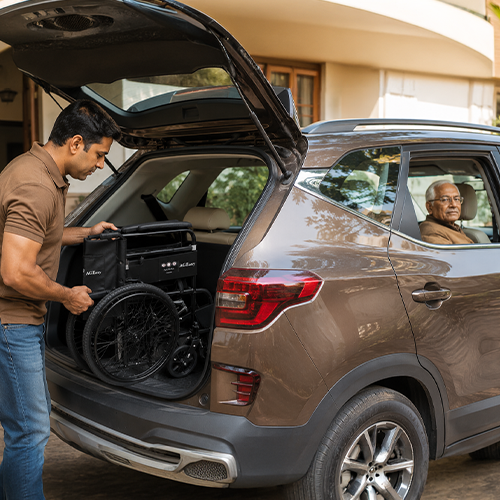
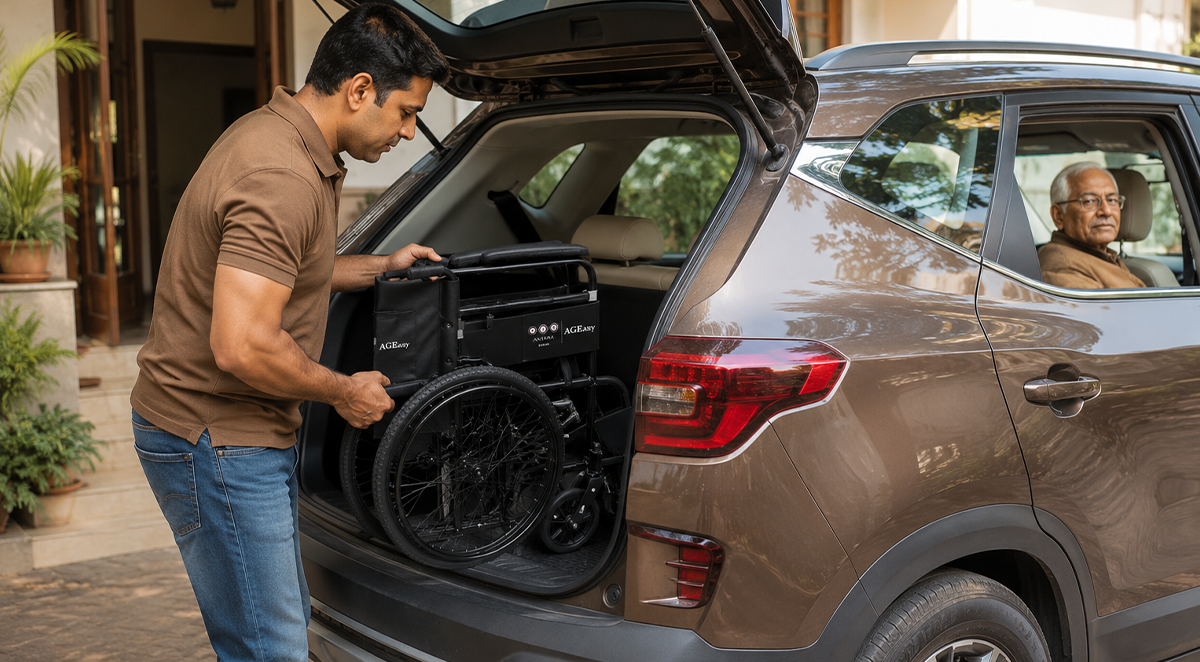
A wheelchair that doesn’t fit into your vehicle can cause more than just a stressful outing. It means carrying the wheelchair to the side of the vehicle, dealing with an open boot, each and every time you have to lift, fold, and guess.
A folding chair is a mobility aid, luggage, and part of a safety decision and transport plan. A small hatchback might be able to handle a lightweight chair, but features may come at a cost of stability.
The folded size is important, but so is the chair’s weight and your car’s boot and lift.
What Makes a Wheelchair “Folding”?
Folding wheelchairs have frames that can properly collapse inward, usually being supported by a cross brace just underneath the seat. Frame collapsibility can also be through side folding, removable footrests, detachable wheels, and foldable backrests.
Space needed for collapsibility will vary in different models. A wheelchair with fixed footrests will require more boot space compared to a model that has swing away or fully removable footrests. Large rear wheeled chairs will need more space compared to transport chairs with smaller rear wheels.
When purchasing a folding wheelchair, collect these measurements:
- Open Width
- Open Depth
- Open Height
- Folded Width
- Folded Depth
- Folded Height
- Total Chair Weight
- Weight of Removable Parts
- Seat Width
- Max User Weight
Remember, ‘compact’ or ‘car-friendly’ doesn’t accurately measure a folding wheelchair’s capacity to fit a vehicle. Compare the actual folded dimensions with your vehicle.
How Much Does a Folding Wheelchair Weigh?
While the price of a folding wheelchair can start as low as Rs.1000, an average device weighs about 17 to 18 pounds. Often, lighter models are made of aluminum. Wheelchair models with reclining backs, lift-up leg rests, or even larger wheels, cushion thickness, and frame strength can weigh 30 pounds or more.
Keep in mind that the listed weight may exclude the removable parts. A wheelchair listed at 12 kg can weigh even less without the footrests and rear wheels. Be sure to ask the following:
- Are the listed weights for the footrests?
- Are the listed weights for the armrests?
- Is the listed weight for the seat cushion?
- Are the listed weights for the rear wheels?
- Are the listed weights for the anti-tip wheels?
- Are the listed weights for the brakes and accessories?
Since you’ll most likely have to lift the wheelchair, and along with that, the weight of the individual, the weight is incredibly important. A lighter wheelchair helps with concentrating weight on one shoulder and helps avoid back and lifting strain. Heavier wheelchairs, ironically, become more of a comfort support system. Heavy wheelchairs also offer a larger frame and more support, so be sure to find the right balance when buying your wheelchair.
Remember, if it feels too heavy, ask for assistance, or look into a mobility hoist designed for lifting wheelchairs.
Carrying instructions include guidance on how to keep the wheelchair folded and close to the body, as well as on how to not twist while moving.
Measure Your Car Boot Before Buying
Make sure to note the dimensions of the storage opening and storage area. A wheelchair may fit inside the storage area but cannot clear the storage opening.
Note the:
- Storage opening height
- Storage opening width
- The distance from the storage opening to the rear seating
- The minimum distance between the wheel arches
- Height from the storage floor to the roof
- The space remaining after other travel items have been placed
All measurements should be done with the rear seating in their normal position. If you plan to remove rear seating, note how much seating space your family will lose.
For a wheelchair with folded dimensions, use a cardboard box as a proxy and place it through the storage opening. This is a good test to do, especially on compact sedans and hatchbacks.
For a sedan, check if the boot opening is sufficient. The boot opening is large, but the opening may still obstruct the chair from entering. For an SUV, check the height of the boot. A taller loading edge will create a greater strain. For a hatchback, check if the folded position of the chair will obstruct your rear view and if it will block safe closure of the hatch.
Will It Fit in a Car Lift?
A car lift, otherwise known as a vehicle lift, facilitates the transport of equipment used for personal mobility in and out of a vehicle. Types of car lifts include:
- Boot Hoists
- Rear Platform Lifts
- Tow-bar Lifts
- Roof Lifts
- Interior Docking Systems
Each car lift has a weight capacity. Ensure the lift’s working load limit (WLL) is higher than the combined weight of the wheelchair and all accessories. It is always safer to err on the side of caution and not work at the limit.
A boot hoist requires sufficient height and side clearance of the interior boot space. A rear lift platform requires clearance behind the vehicle and a proper mounting system. A tow-bar lift increases the weight at the rear of the vehicle so the combination and tow-bar specifications need to be checked.
The answers to the following questions can be provided by the lift installer:
- Maximum supported weight
- Dimensions of the most appropriate wheelchair
- Compatibility of the vehicle
- Clearance near the ground
- Clearance for license plates
- Interference with parking sensors and/or rear obstruction
- Clearance for opening the rear
- Tie-downs
- Maintenance and service contracts
Do not drive with an unsecured wheelchair in a lift. Straps, clamps, locking mechanisms, and the lift mechanism itself all must be examined prior to every trip.
A Wheelchair Is Not Always a Vehicle Seat
A wheelchair designed for mobility should never be assumed to be a seating solution for a moving vehicle unless it has been properly tested for such a use. The user should vacate the wheelchair and take a seat with a standard vehicle seating system and be sure to use the shoulder seat belt.
Store the wheelchair in the trunk. Loose equipment may move and become dangerous. Keep the equipment away from your legs and the controls.
Transferring into a car can be hard. If you aren’t sure how to best do this, ask a physical therapist, an occupational therapist or any other mobility specialist. They may be able to provide you with some equipment, such as a transfer board or a swivel cushion, to assist you, or a handle for support. The best option depends on your strength, pain, and balance as well as your medical conditions.
The Right Seat Width
A seat that is too narrow may be limiting and uncomfortable for a user. A seat that is too wide adds unnecessary length when folded and takes up a lot of space.
Measure the user’s hip width and add a safety factor for their clothing. Also check the seat depth. The user’s knees should be comfortable and should be supported by the foot rest.
You must consider:
- Wide vs Narrow Seats
- Seat Length
- Height of the back and arm rest
- Adjustability of the foot rest
- Support padding
- Height of push handle
- Types of wheels
- Brake access
For longer sitting periods, additional seat cushions provide comfort and improved posture. AGEasy provides products such as the AGEasy Coccyx Cushion . Though it provides relief for tailbone pain, it should NOT be used as a substitute for a clinical assessment and pressure care advice. If you have any reduced sensation or skin changes, or you have had pressure sores in the past, you require assessment before you can use such cushions.
Planning Around the Wheelchair at Home
Access to a car is just part of the puzzle to designing a wheelchair-accessible home. Check the route from your front door to your car. Consider the presence of any steps, changes in level, narrow railway gates, loose mats, or steep ramps.
Bathroom transfers also need consideration. The wheelchair needs to be on a stable, level surface for transfers. An anti-slip floor mat in the wet area of a bathroom may reduce the risk of falls, but should not substitute for either supervision or the presence of grab rails. However, the mat should not replace the stable surface, and the wheelchair should not be placed on a wet or unstable surface.
Each product should be evaluated for the current contents and dimensions. A walking aid, seat accessory, or travel item may not replace a wheelchair assessment.
A Simple Checklist for Purchase
Ensure the following are confirmed prior to purchase:
- User’s seat width and weight
- Total weight of the chair
- Folded dimensions
- Depth and wheel arch clearance
- Lift type and weight rating
- Clearly identify tie-down and locking position
- Footrest Removal
- Cushion compatibility
- Warranty and Service Support
- Check transfer arrangements
Please ask the sales representative to show you the chair folded. Go to the sales location in your car. Put the wheelchair in the boot, and do the lifting test. This often reveals issues with the clearance of the hinges, loading height, or the chair folding.
Final Decision: Fit, Lift, and Safety Together
Three elements must work in harmony to use a folding wheelchair in a car. First, the wheelchair must fit the user. Second, a caregiver must be able to load the chair into a vehicle without extreme bending or other dangerous measures. Third, the folded frame must fit the vehicle.
When selecting a folding wheelchair, choose the most lightweight model. Verify all measurements in writing. Make sure you test drive the wheelchair with the lifting device prior to purchase. Consult with a professional if balance issues or pain with limited movement makes wheelchair transfers difficult.
A proper fit decreases the risk of injury and hassle for your family and ensures safe daily use.