
When a Parent Refuses a Walking Aid: The Conversation That Actually Works
Jul 30, 2026
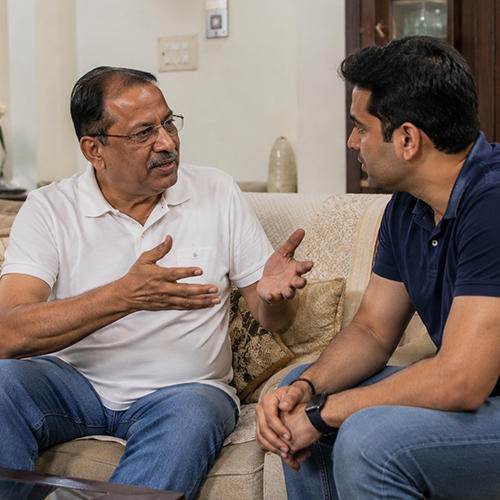
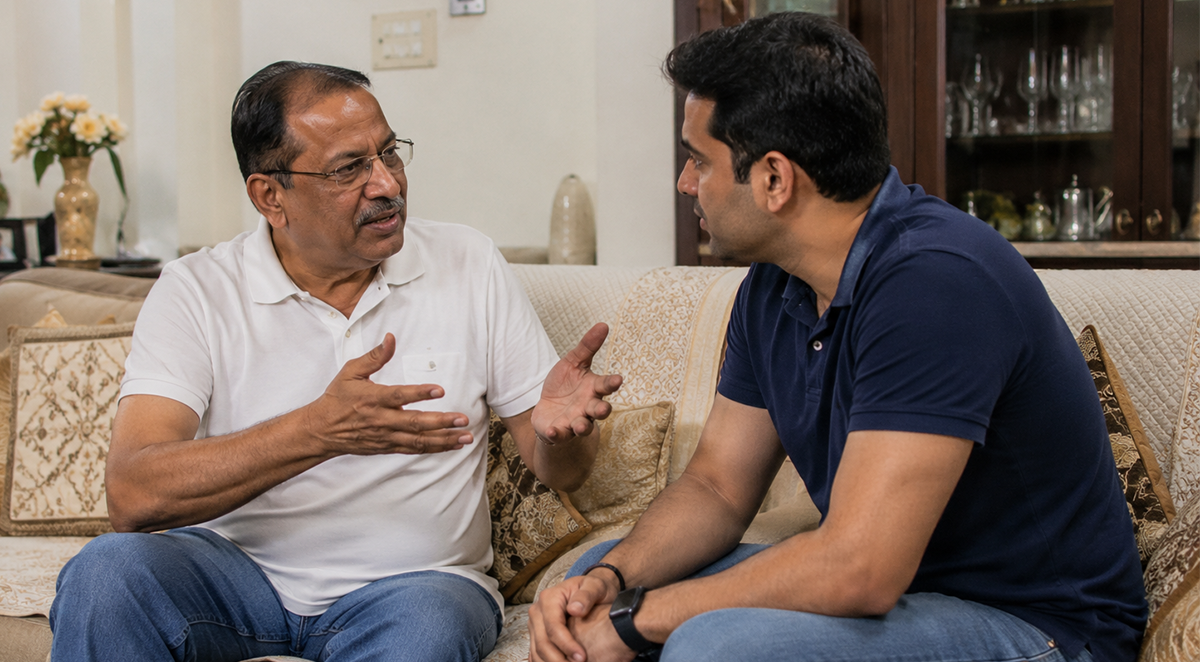
The most difficult aspect of this situation is not purchasing the walking aid, it is that after multiple steps have been taken and the multitude of stumbles and falls have occurred, the parent still claims that they don't need the aid. The level of anxiety that accompanies each step taken across the room instills a sense of disbelief.
In most cases, the driving force behind the refusal of walking aids is rarely centered around concerns for safety, which most people would argue with.
It is important to understand that your parent is not necessarily refusing a walking aid. They are saying no to the perception that it brings with it. It is their refusal to accept a negative self image.
What you shouldn't do?
- Shame them into using it.
- Compile a list of all near falls for the sake of proof.
- Hope they are motivated to take the walking aid if it is placed by the door.
- Make them feel as if the aid is something they have to use.
For many older people, a walking aid is not perceived as something that will aid them in mobility. On the contrary, it is perceived as merely giving up.
The goal is for the parent to agree that the walking aid is something that will allow them to maintain their autonomy and to increase their self-confidence.
In this article, we have covered what makes seniors resist a walking aid, what words and framing could cause a parent to resist a walking aid, and how to talk to seniors without hurting their dignity.
Refusal rarely feels stubborn
There are 4 explanations that repeatedly appear in families and in the research surrounding the use of assistive devices among older adults.
The walking stick is a public label. It changes how neighbours, shop owners, and grandkids perceive them. It creates a role reversal. After spending 40 years caring for the family, they are now being cared for. It is hard to digest for someone who has always cared for others in the family.
Some senior adults also think that using a walking aid is accepting their own weakness and while others believe that using a walking stick will cause their legs to give up faster. In fact, the opposite is true. Older adults who stop walking because they fear falling will lose strength and balance in their legs within weeks, which increases their risk of falling.
In many instances, the assistive device is poorly designed. If a walking stick is too high, it will cause one shoulder to be raised and spinal twisting. The rubber tip will slide on bathroom tiles. If the first experience with an assistive device felt clumsy and unsafe, a second attempt will be viewed as reasonable, not as a rejection of help.
The Fear Underneath the Refusal
Identify the fear before the next conversation because each fear will require a different answer. A parent who is worried about independence needs to hear how the aid protects their independence. Similarly, a parent worried about becoming a burden may not realize that a fall may cost a family more than a walking stick.
Everything changes after one serious fall. An injury as common as a broken hip could lead to several months in the hospital, major surgery, and a long rehabilitation just to regain the lost mobility and confidence, if it is ever regained. Your concerns about your parent are understandable. Out of respect, we won't say most of these things to parents, but it is a burden no one wants to carry.
Approaches Which Backfire
- Using the safety argument - When it is repeated more than twice, a parent stops hearing concern and starts hearing doubt about their physical incompetence.
- Turning it into an ultimatum. You shouldn't force them to use the walking aid, because you bought it. It is eventually their decision. You need to show them why it helps them navigate their life freely.
- Buying a walking aid and then telling them later. A parent will see products purchased without their consent as a choice made about them.
- Talking about how old they are. It is an unspoken rule that a conversation will go from practical to patronizing in an instant.
- Speaking to your parent's doctor without their presence could damage their trust in you irreparably.
How to Open the Conversation
- The best time to approach this is when you are alone with them, not in front of others. You should approach them right after an embarrassing moment such as a fall.
- Instead of focusing on what they should do, start with what you noticed. An example is "I saw you using the wall on the way to the bathroom last night. What does walking feel like now?" Then, stop talking. Most people are more likely to say something about feeling dizzy, having a bad knee, or dealing with wet floors in the bathroom when there is no one else arguing with them.
- Ask them about what they like doing. Is it the morning walks, temple visits, shopping independently, or transporting a grandchild up and down the room? Once an activity has been named, the walking aid shifts in perception. Then the conversation isn't about the loss of independence. It is about helping them maintain an active lifestyle.
- Consider this a trial run, not a final decision. It is much more reasonable to say 'let's use the walking aid for the evening walks for a couple of weeks and see if it helps' than to frame it as a permanent decision.
Framing that Lands Better
When speaking to your parent about walking aid, it is better to be empathetic about how you phrase the conversation. Here are some framings that land better.
- Try saying "let's see if this makes the walk easier" instead of "you need this".
- You could say something like "I want you to do what you enjoy without worrying about the floor" instead of "you'll fall again".
- Always give them the choice. Say "We can ask the doctor and decide after" is better than "the doctor said so".
Letting Your Parent Select the Product
The choice being given back to them is returning some control, which is what your parent feels is slipping away from them. Present them with 2 or 3 options and let them decide.
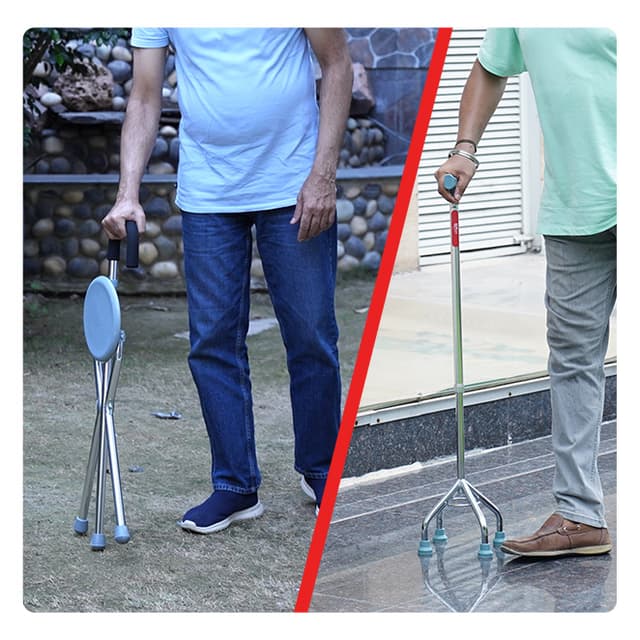
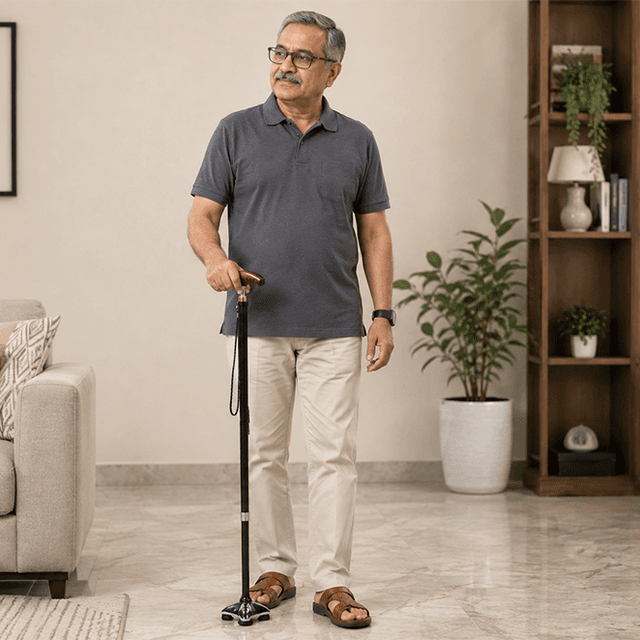
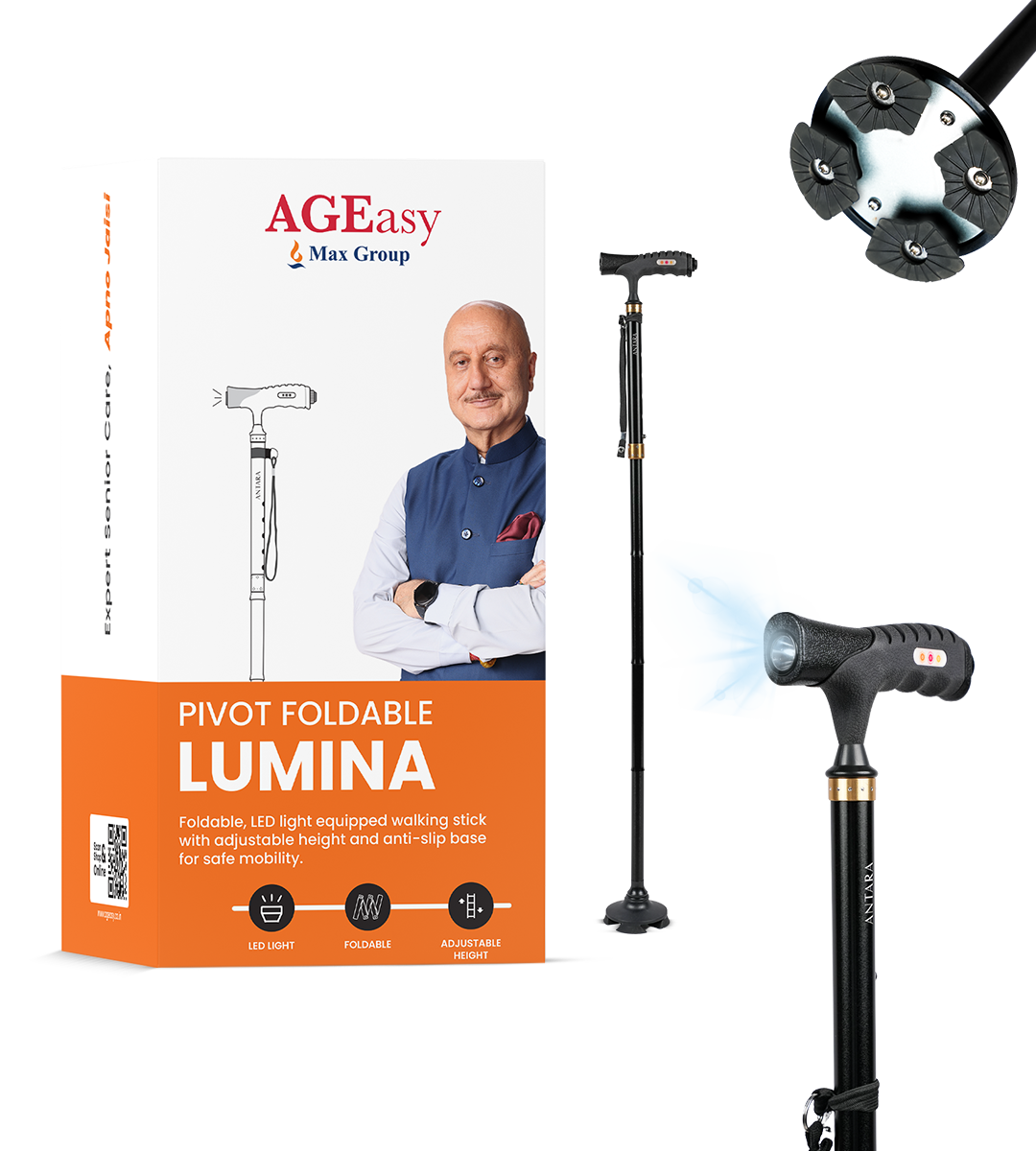
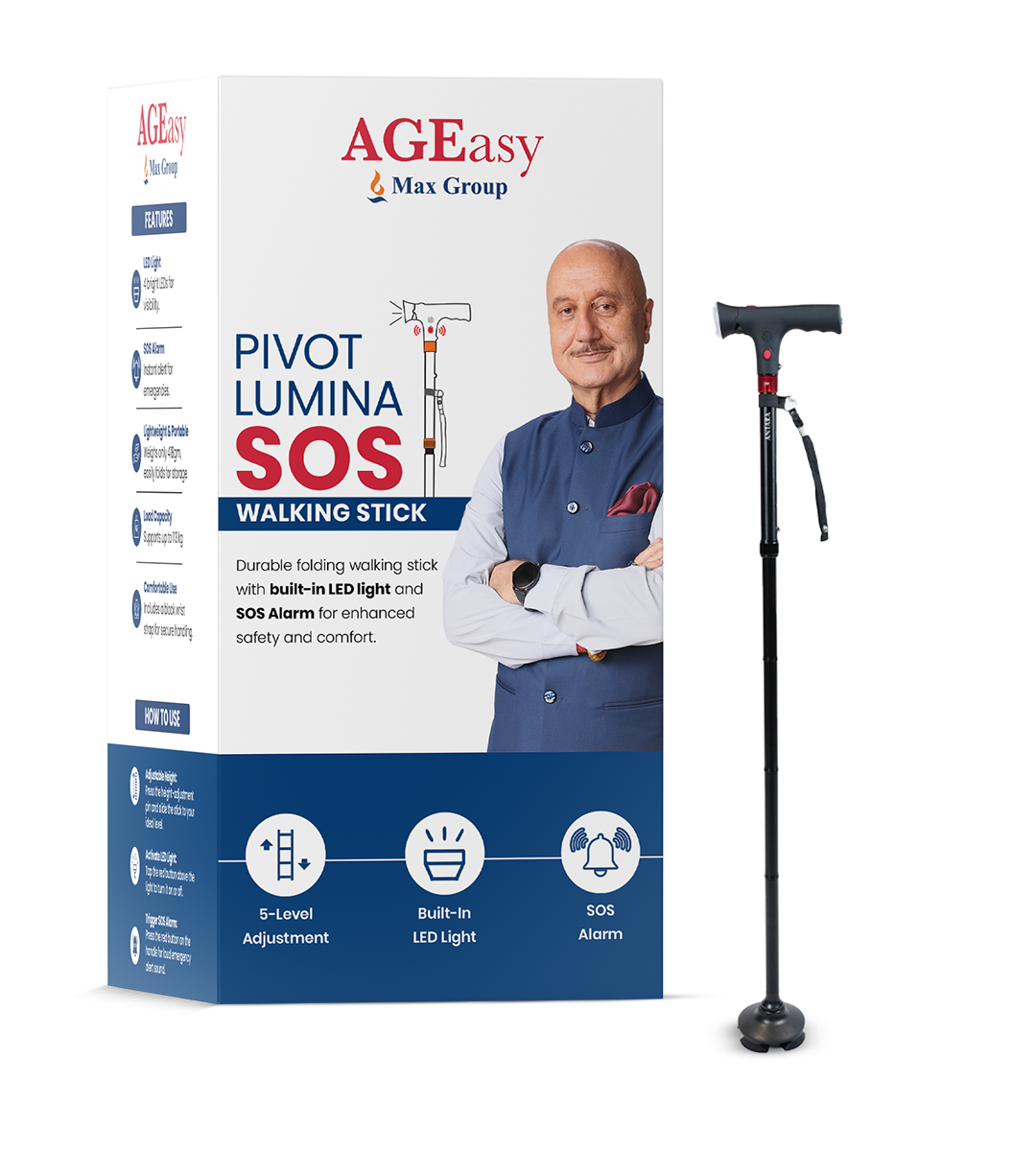
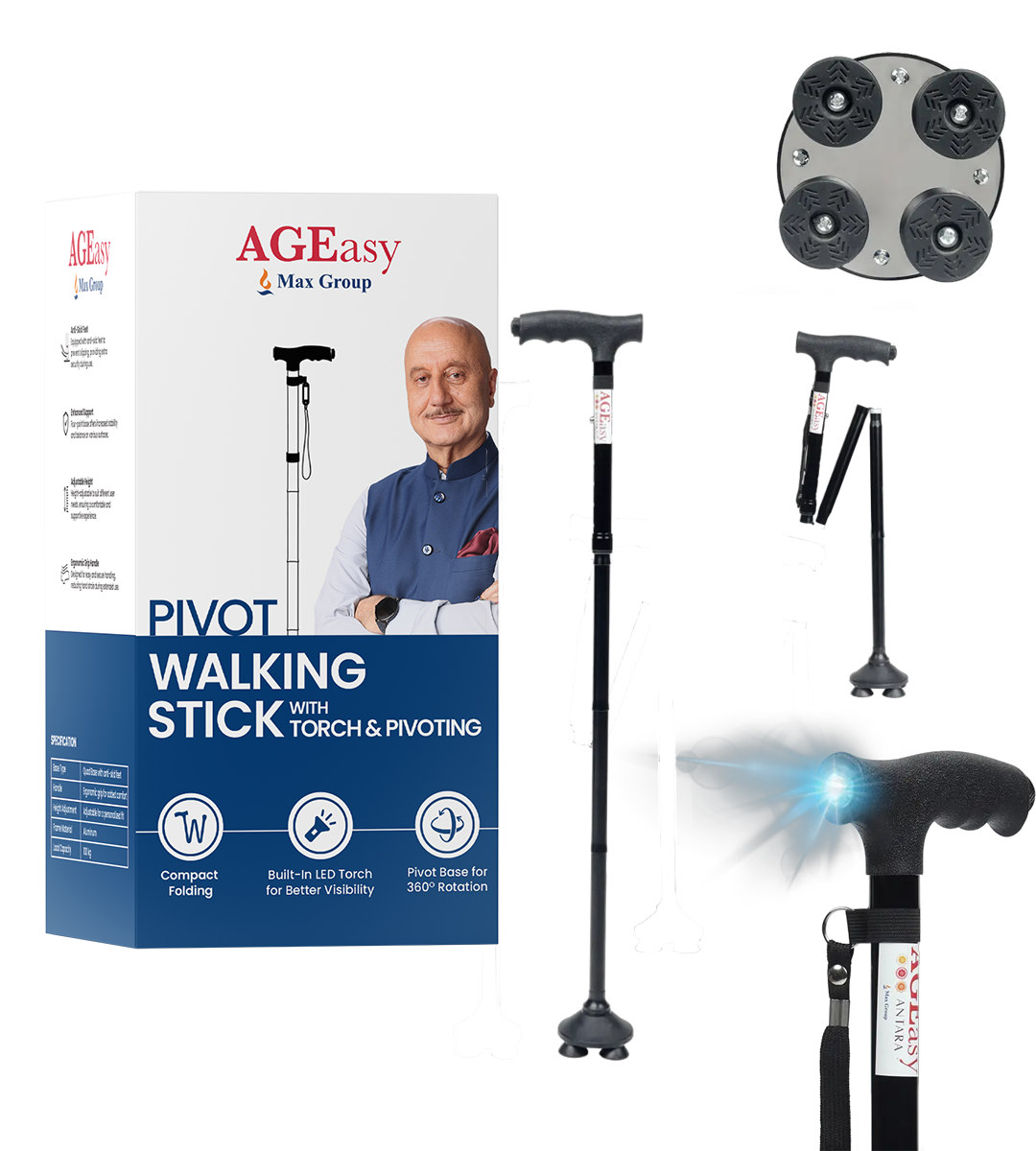
Design matters. Eg. A slim folding stick, which resembles a travel accessory rather than a medical device. Similarly, the AGEasy Foldable Walking Stick opens and folds into a bag, which is perfect for parents who are willing to accept support when outdoors, but are hesitant to do so in front of other people.
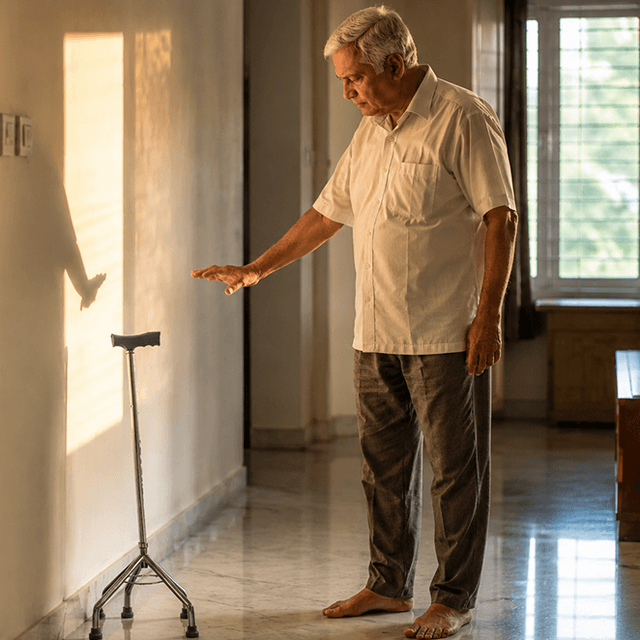
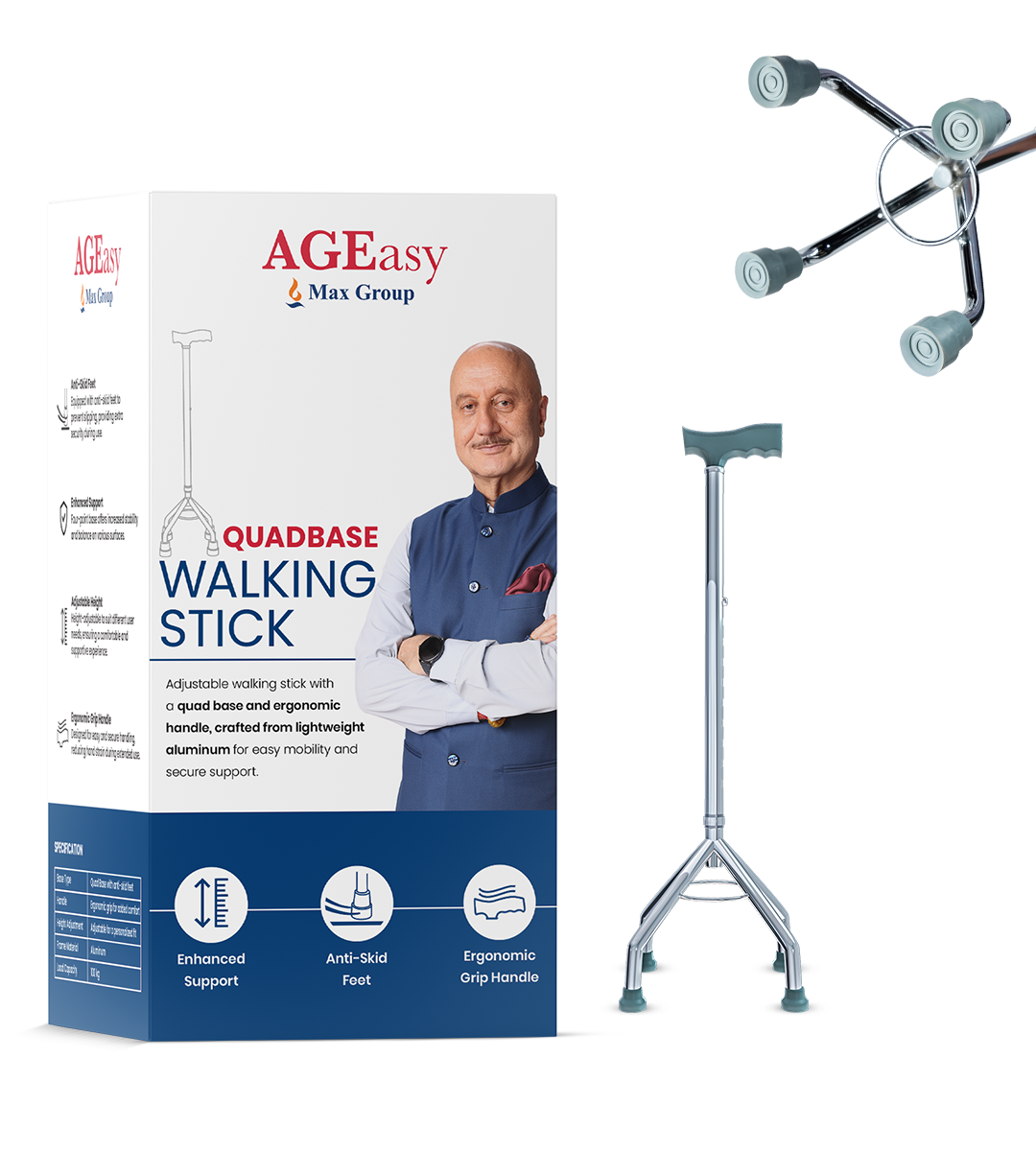
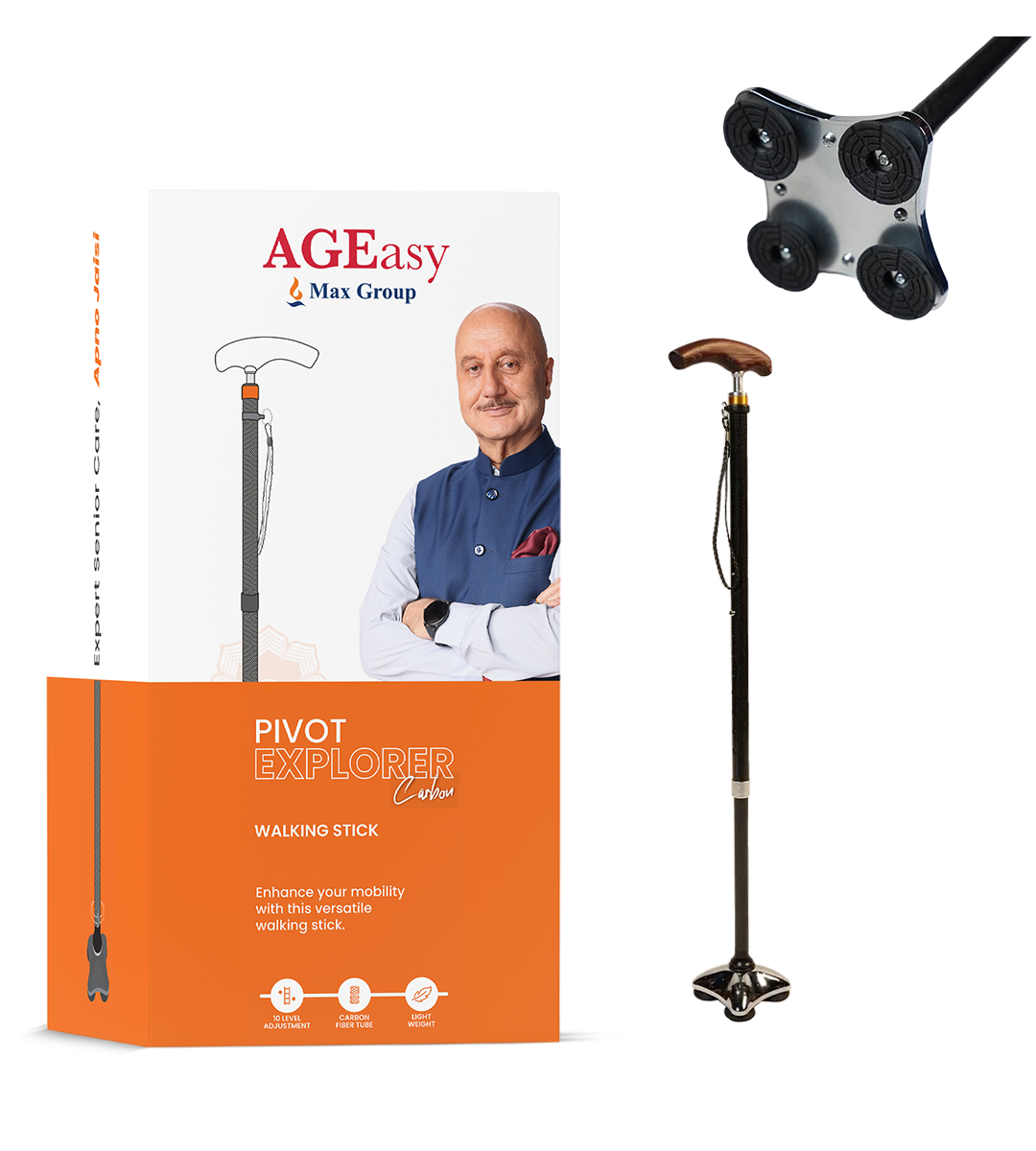
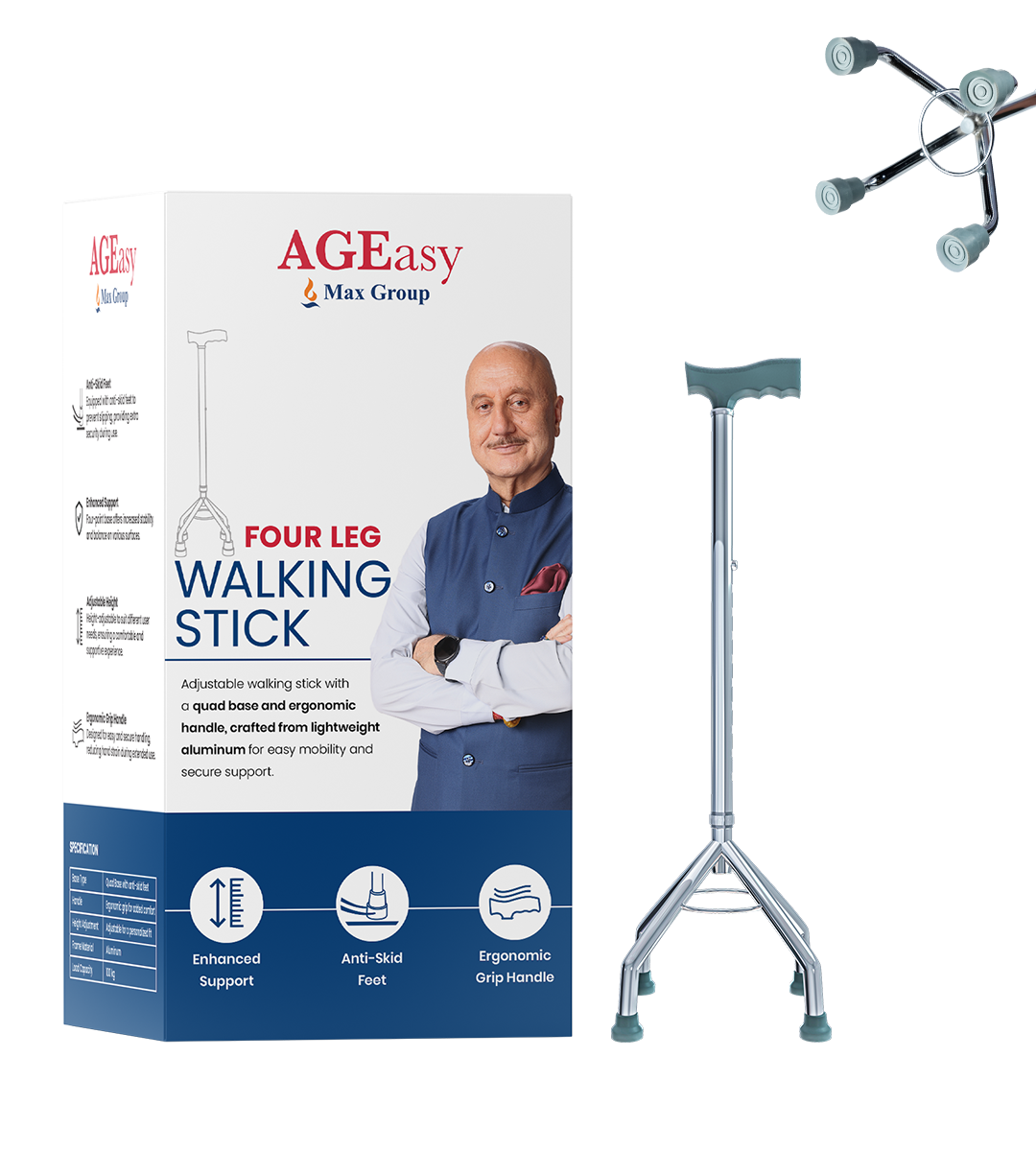
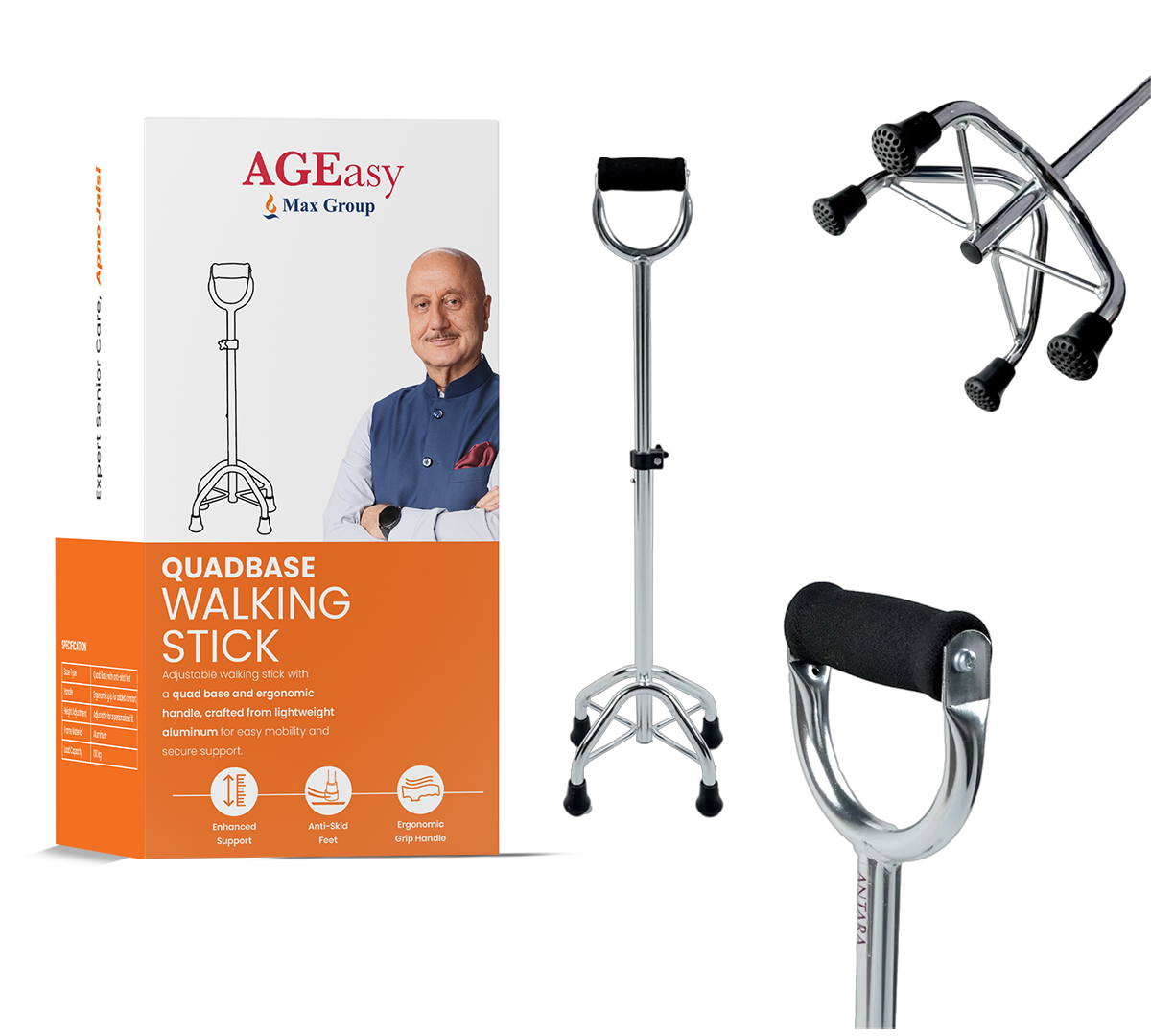
For true balance loss, wider bases are far better than singular tips. Quad and four leg bases like the AGEasy Four Leg Walking Stick and the Quadbase Flex have an advantage. They will stand on their own and assist in taking weight while rising from a bed or chair.
When the real issue is tiredness and not unsteadiness, a stick with an integrated seat, for example the AGEasy Unibase Seated Walking Stick, helps your parent to continue participating in longer outings.
When bathroom trips at night are a concern, a walking cane with a built in torch addresses the real issue during those minutes along with a motion sensing light in the hallway.
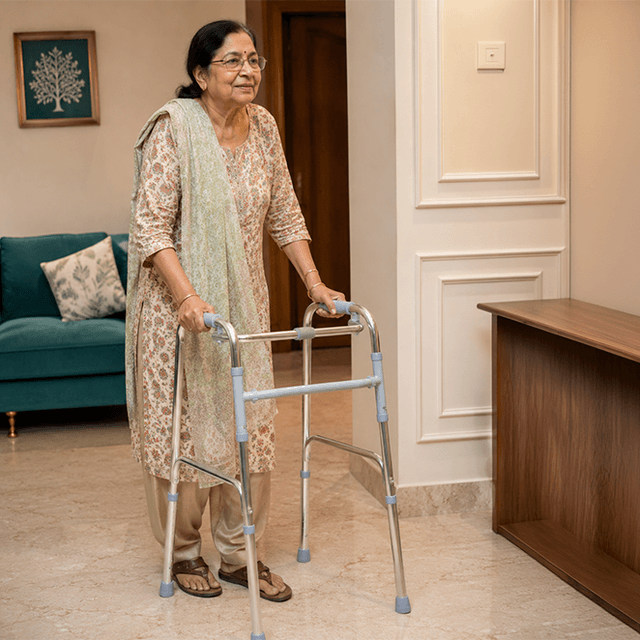
Where distance walking has decreased significantly, or following knee surgery, a stick will be inadequate. A rollator with a seat and hand brakes, like the AGEasy Rollator with Seat, will allow your parent to walk further and sit whenever it is needed. This is often the defining factor in determining whether they leave the house or stay.
Get the Fit Right Before Judging the Aid
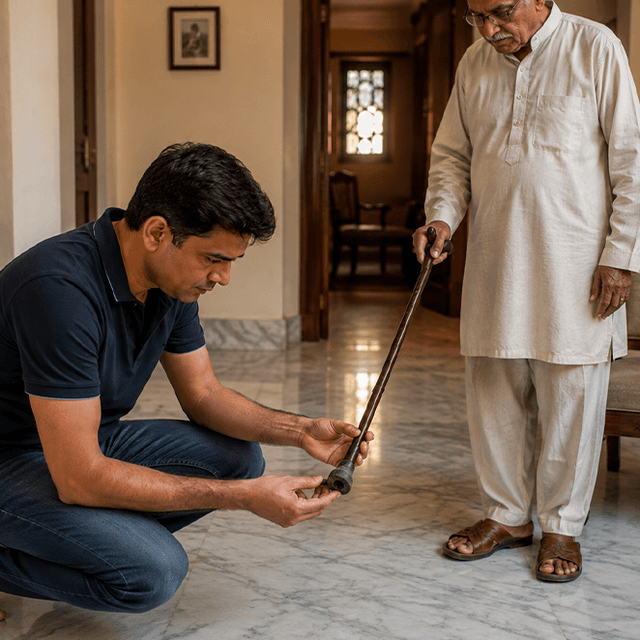
An aid that is not fitted properly can feel worse than using none at all. Ask a physiotherapist or your parent's doctor to check 3 things.
- Height - With arms relaxed at the side, the top of the handle should sit level with the wrist crease. A stick set too tall lifts the shoulder, and strains the neck.
- Side - The stick goes in the hand that is opposite to the weaker or painful leg, and moves forward together with the weaker leg.
- Tip - Replace the rubber ferrule as soon as the tread wears smooth. A worn tip on wet tiles is a fall waiting to happen.
10 minutes of practice on stairs, door thresholds and turning most of the time removes the clumsiness that makes people abandon a new stick within a week.
Fix the Home, Not Only the Walk
A walking aid only addresses a portion of the overall challenge. The remaining obstacles include bathrooms, stairs, and dark hallways.
The risks (without requiring your parents to change their self-perception) can be mitigated through anti-slip mats, grab bars, shower chairs, anti-slip socks, and shower chairs as well as motion detector lights. Families have found introducing these changes, as opposed to a walking stick, to be easier, and accepting one of them often leads to a greater willingness to accept others.
When to Contact a Specialist
If your parent has fallen several times over the last year, feels dizzy when standing, experiences knee or hip pain or swelling, has recently begun a new medication, or has reported weakness on one side of the body, don't make excuses. Get a medical assessment.
There are several conditions that cause falls, which are very treatable. These can include an inner ear problem, changes in vision, a deficiency in vitamin D, or even side effects of certain blood pressure medications or sedatives.
A physician or physiotherapist can assess fall risk from factors like gait, strength, and balance and in addition to prescribing an exercise program to improve stability, can suggest the best mobility aid and even develop a home exercise program to help improve stability.
What Progress Looks Like
Acceptance occurs step by step. Most families will follow this pattern: the aid is used first outside, then walking aid steps, and then inside the house. Some parents will use one for a few months, and when they consider the child to 'outgrow' it they think they have succeeded. This is actually a failure.
The aim is not to 'score a goal', but to keep your parent active, confident, and moving about in the world once more. Each small step is progress and the dialogue should constantly remain open.