
The Walking Stick Has Changed. It's Time Our Thinking Did Too.
Aug 10, 2026
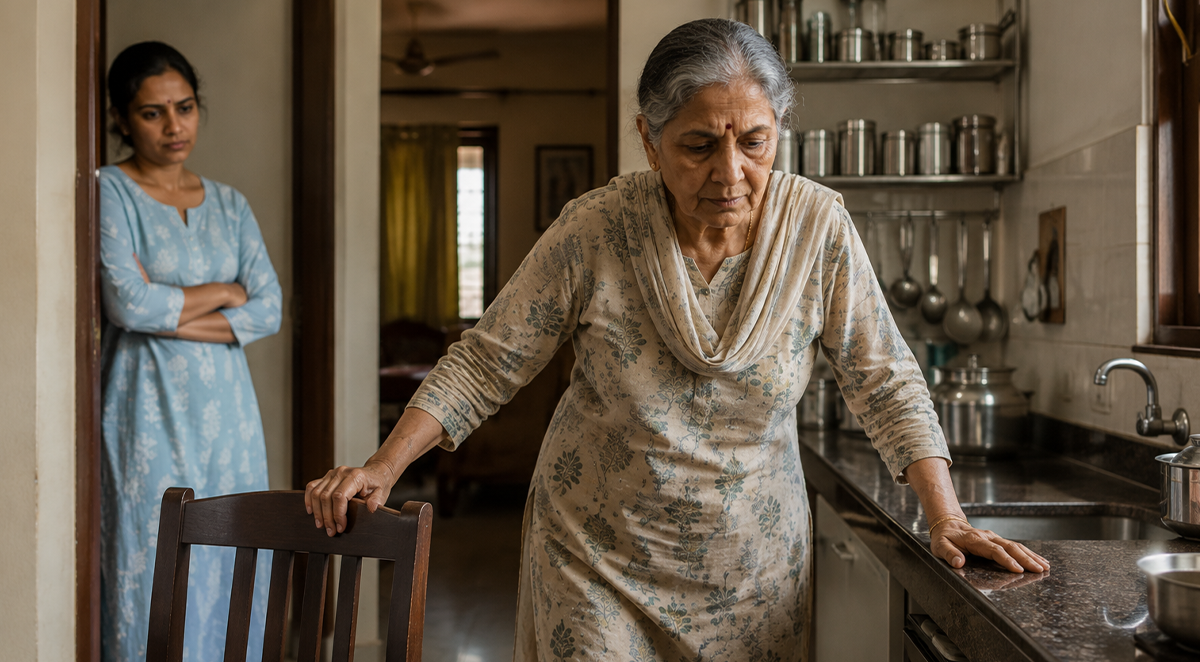
Most adult children, even if they have never discussed this moment, know how to recognise the moment.
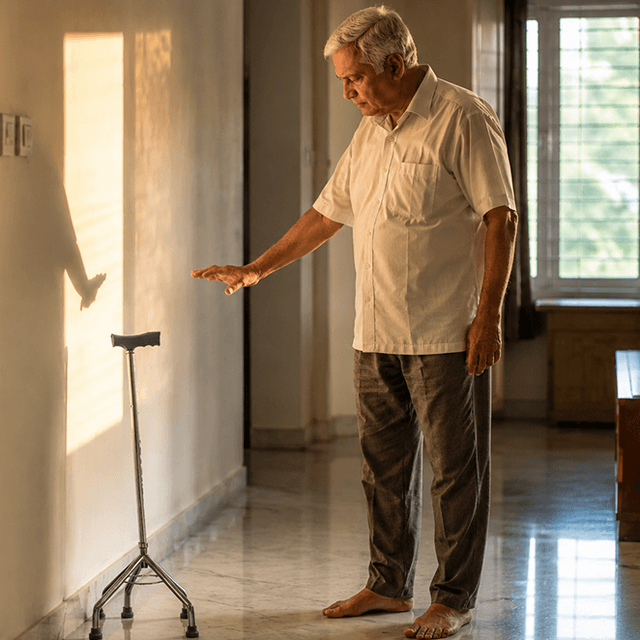
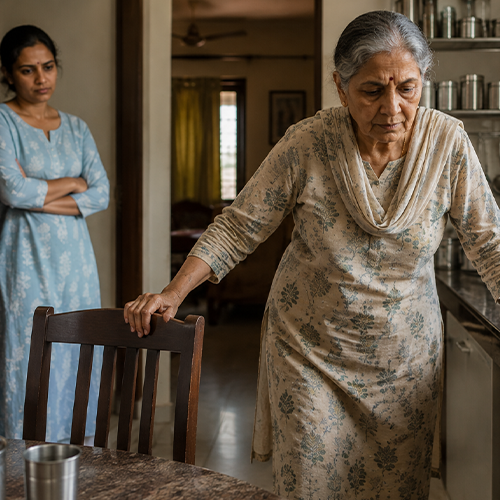
You're at your parents house. Your mother is moving across the kitchen, and to grab something from the counter, she reaches out towards the edge of the table, and then the rear of a chair. She then moves to a countertop. Every one of her hands slides across the surface like a person across a river on stepping stones. This is smooth, practiced and quiet.
She never asks for assistance. She also never verbalises the reason for her hands moving across the surfaces, and you remain silent and do not mention it.
But you both acknowledged this unspoken conversation.
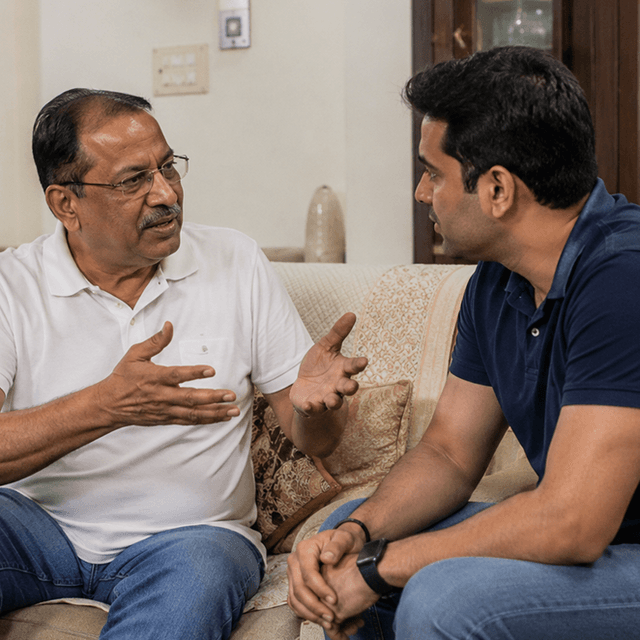
One of the most complicated conversations families face is about discussing a walking stick. This is not because discussing a walking stick is medically complex, but because of the numerous non-balance related problems the conversation carries.
For many senior citizens, accepting a walking stick is equivalent to accepting a sentence, but for many it seems like a clinical verdict. Walking sticks are seen by senior citizens as devices that announce something that they are simply not ready to announce. This results in needing to manage and delaying the need to stop moving surface to surface.
The walking stick that many seniors imagine, is still in use by many, but many people do not know this is the case. Understanding this transformation is one of the most important things your family can do, but it is not something many families do.
Why the Old Image Won't Let Go And Why It Should
Close your eyes and picture a walking stick. Maybe you see a greyish, brownish stick. Rubber on the bottom. A handle made from plastic which is beige or grey. The whole stick looks very hospital-like or like it belongs to a patient.
That image you are thinking of is obsolete.
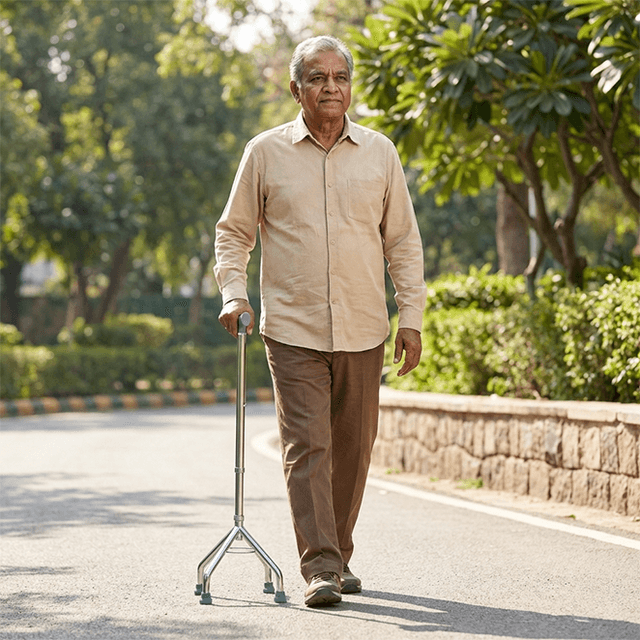
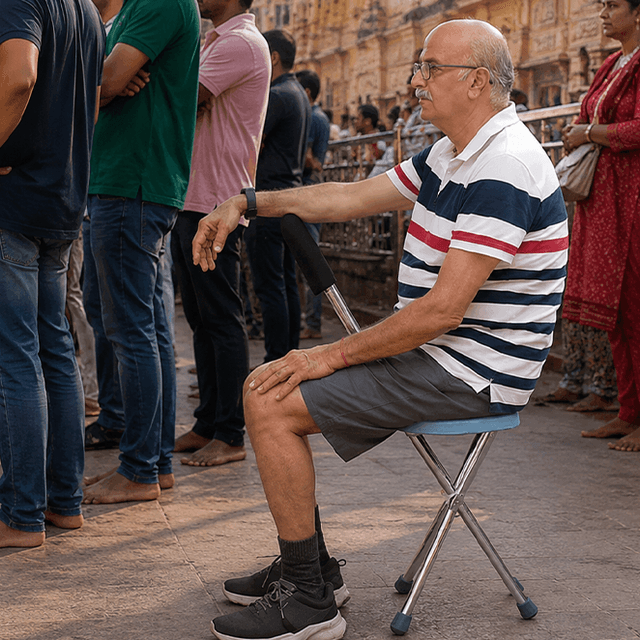
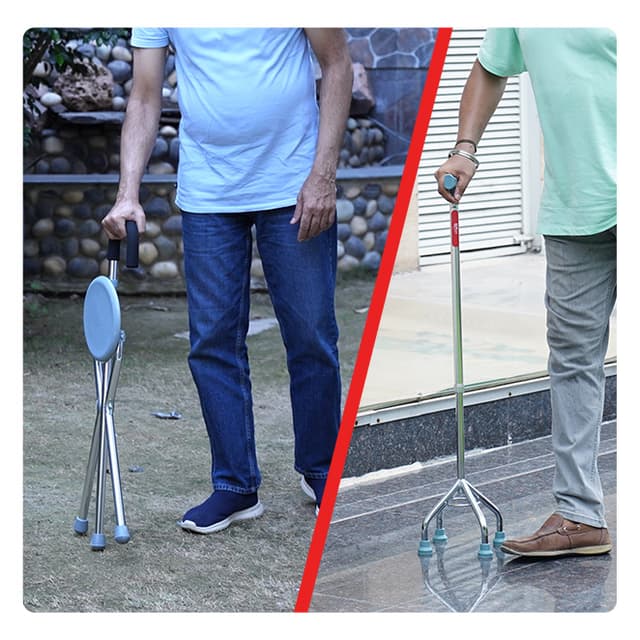
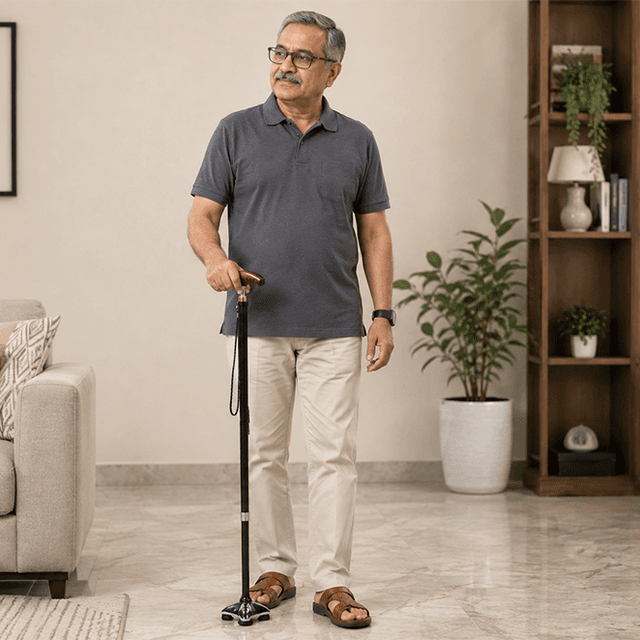
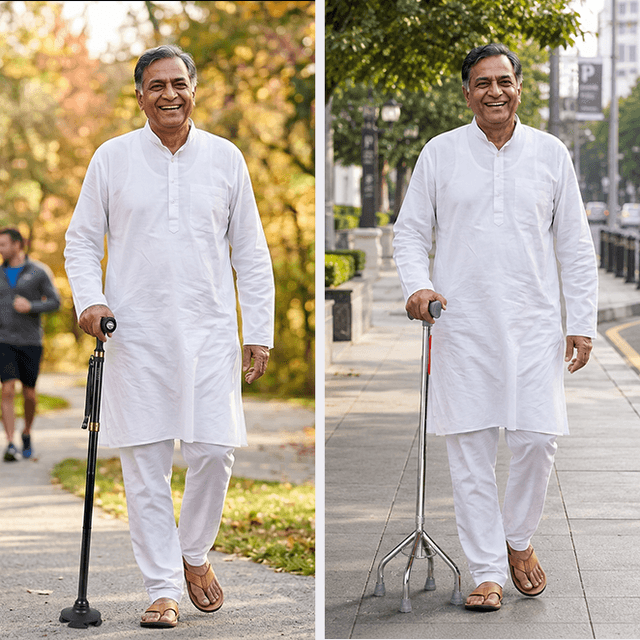
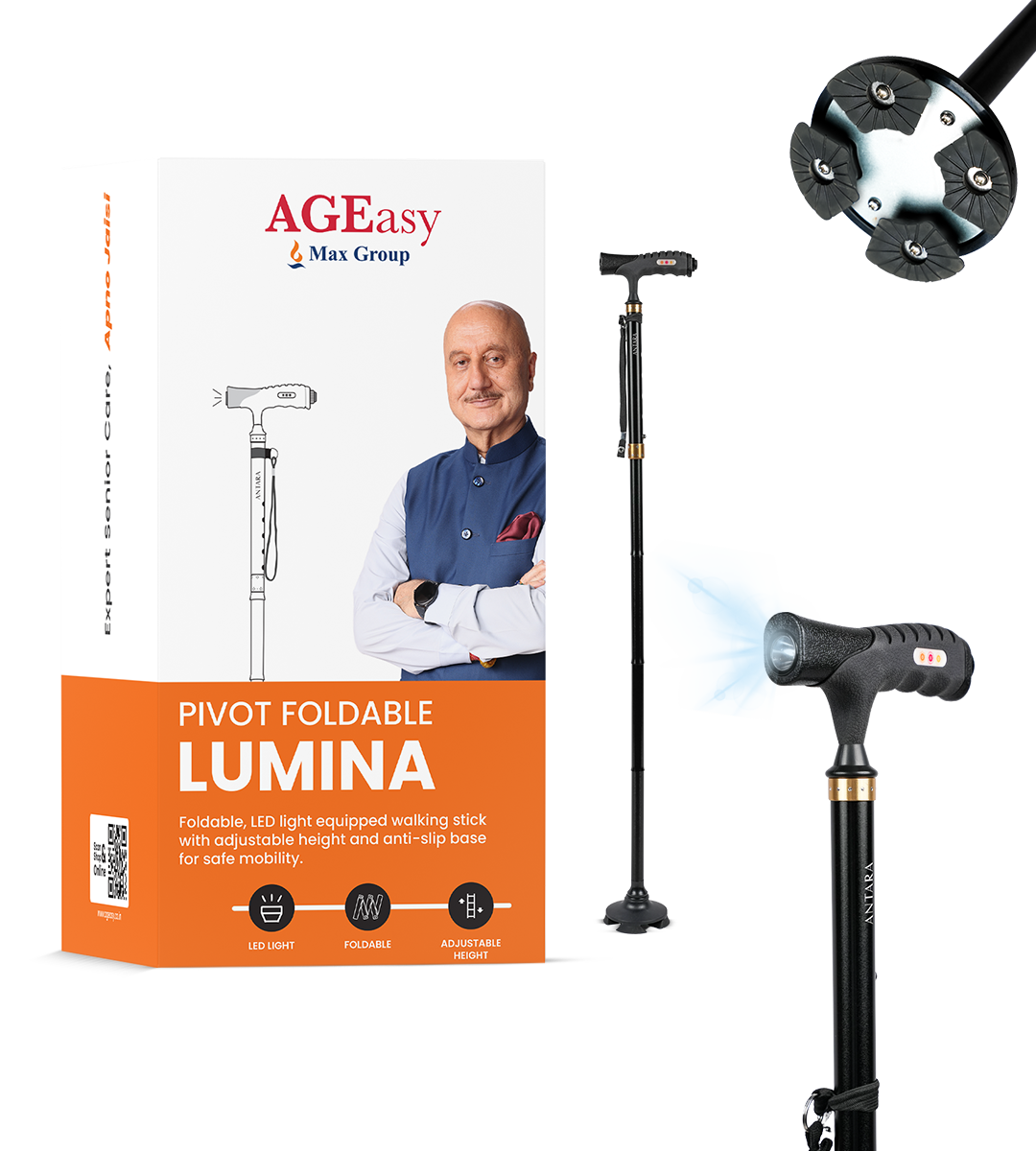
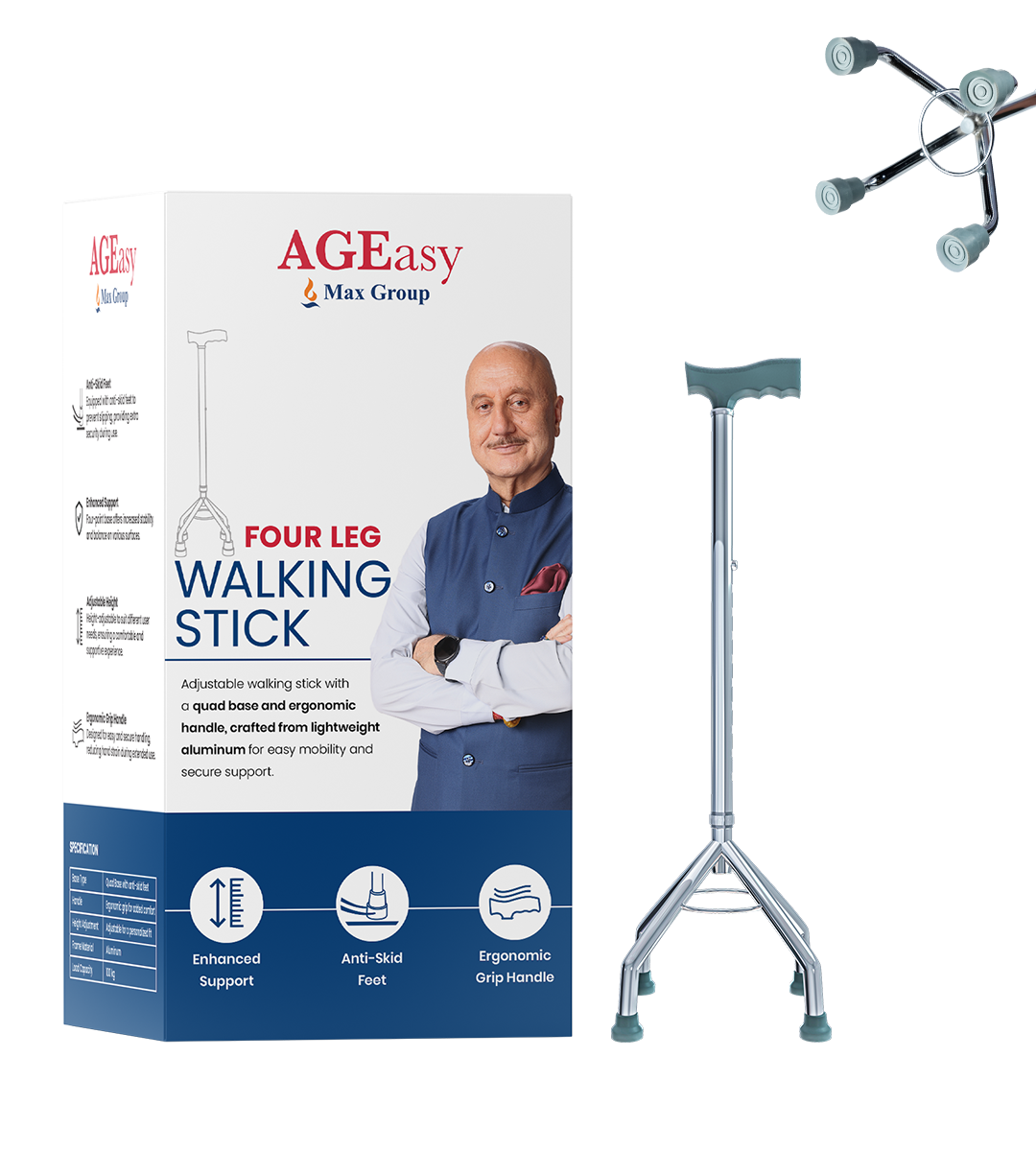
Modern sticks have moved on completely. The Indian market has sticks with powder-coating finishes in colours like deep charcoal, warm copper, brushed gold, and matte black. These have handles shaped for the ergonomics of human hands. They fold up to fit in a bag. There are sticks made with carbon fiber which are lighter than a paperback.
The old image has been left behind.
And that is why changing how walking sticks look is so important.
A stick that people want to use is one that will actually be used. The plain old sticks are the ones that people want to hide in the back of cupboards. These are the ones old sick people use in hospitals.
Google searches confirm this. Old images of walking sticks are coupled with searches for 'walking sticks for women' and 'fancy walking sticks'. People want to buy functional and fashionable sticks, and this is what we sell.
The Conversation Nobody Wants to Start But Someone Should
Let's put things in context.
Among the elderly population in India, injuries caused by falls are one of the most avoidable causes of hospitalisation. Everyday, orthopedic wards in India deal with the aftermath: broken wrists, hips, head injuries. These injuries have long recovery times and severely affect one's ability to live independently.
This is not a matter of weakness. It is unfortunate, but very real. As people age, their joints, balance, and proprioception (the ability to sense the position of one's limbs) deteriorate. These aren't failures.
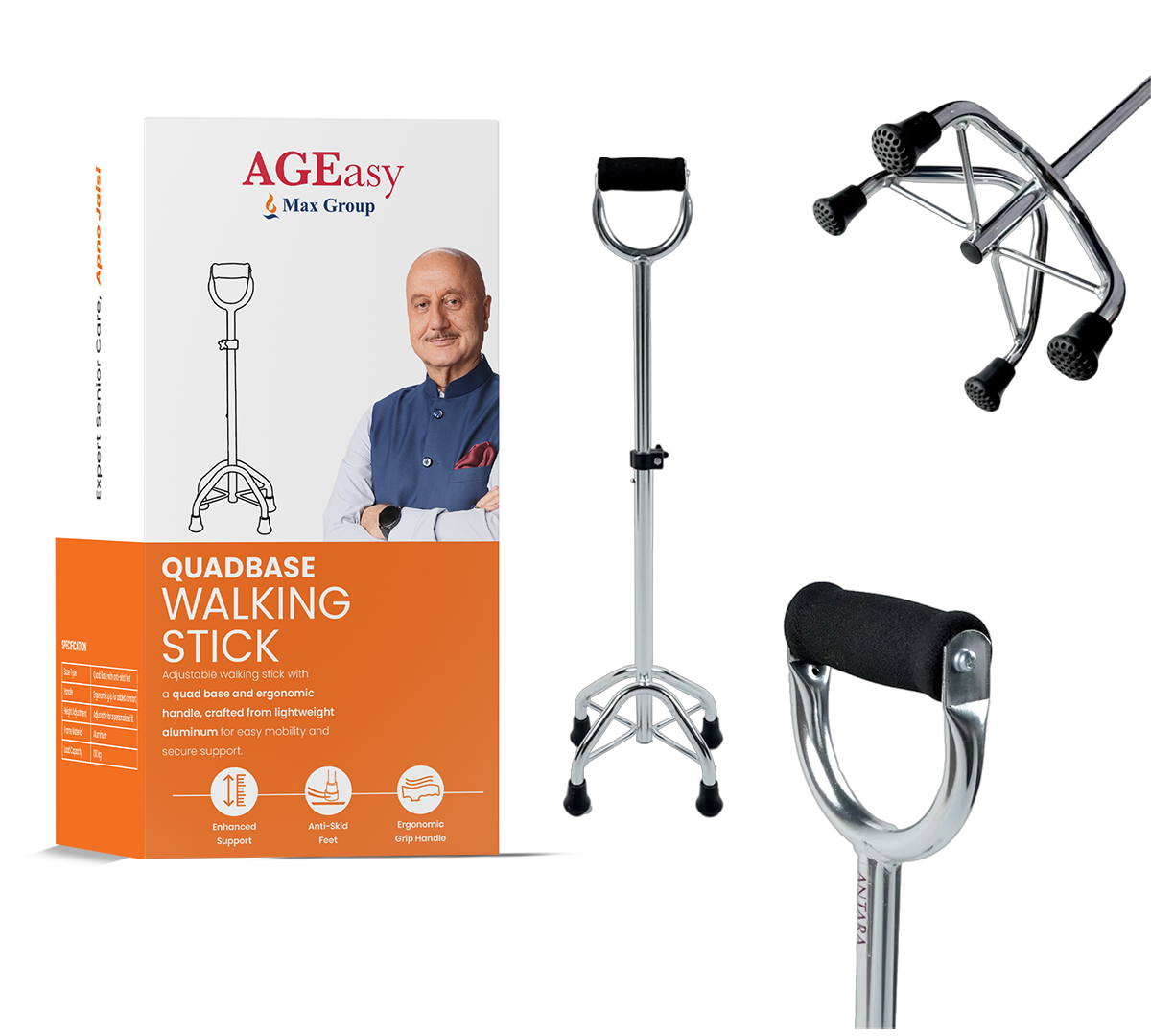
Using a walking stick increases the number of contact points with the ground to three. This widens one's base of support, which in turn increases stability of the body. A three-legged stool is much more stable than a two-legged one, and the same principle applies here.
What is the most complicating factor in all of this is the psychology.
Dr. Arvind Bhatia, a geriatric physiotherapist who has considerable experience working with older people in urban India, has pointed out that the main obstacle to the adoption of walking sticks, in her experience, is rarely a physical one. Rather, it has to do with the social significance the item has acquired. Senior citizens view the stick as a signal of a final chapter instead of an active, ordinary management of a changing body. That is the association that needs to change. And more and more, design is doing a lot of that changing for us.
What Modern Materials Actually Mean for You
If it has been a couple of years since you last thought about walking sticks, materials have changed. Here's the current status.
Aluminium: The Everyday Standard
Aluminium is the most popular material in contemporary walking sticks, and to be honest, for valid justification.
Picture it as a premium bicycle frame. It is lightweight, resistant to corrosion, durable enough for frequent usage, yet light enough not to cause fatigue. An aluminium walking stick weighs between 200 and 400 grams. You will notice a significant difference when you walk for several hours.
Aluminium walking sticks are specially designed to be resistant to corrosion caused by humidity. An aluminium walking stick that is finished well (powder-coated or anodised) is able to withstand Indian monsoon weather, temple floors, autorickshaw trips and daily bag-throwing-around.
Most Indian foldable walking sticks feature aluminium shafts, which are very easy to fold and unfold. A four-section design can collapse to about 30 centimeters. This is small enough to fit into most handbags and car glove boxes. But it's not just a matter of convenience. Because they are so portable, the stick travels along with the user rather than sitting at home. And, as we have determined, home is the last place it is needed.
Steel: Stability That You Can Feel
Steel walking sticks are heavier, usually 400 to 600 grams but their weight also provides a reassuring stability that lighter materials cannot replicate.
For people who push the stick from a seated position or lean on the stick more than they need to, having a heavier stick is more supportive. Hence, in such conditions, a stick having higher weight is not a disadvantage.
Additionally, steel is superior to aluminium in terms of lateral bending under long-term load, which is crucial for heavy users or those applying substantial pressure on the stick.
There is a clear trade-off: steel sticks are significantly less portable. Because of this, they are more suitable for people with a predictable daily routine as opposed to people who are always on the go. And the finish is very important because bare steel in the humid climate of India is an impending maintenance issue. For durability, powder coating and stainless steel finishes are best.
Carbon Fibre: The Newcomer Worth Knowing About
Carbon fibre walking sticks are a completely different category of products in terms of price and quality.
The material's strength-to-weight ratio truly is extraordinary. A carbon fibre shaft is lighter than aluminium, while also absorbing vibration more efficiently. This is also why it can be found in high-performance bicycles and sports gear since it is more forgiving of impacts than metal.
For people who have wrist sensitivity or experience pain in the joints, this kind of difference can be very significant. Most Indian homes have hard surfaces like marble, concrete, or polished tile. Every step taken on a metal stick will send a small shock back through the wrist. In contrast, carbon fibre is less likely to create such an effect. You'll certainly notice a difference after a walk that lasts an hour.
The design is also different. The finish of black carbon fibre is modern, even sporty. When combined with a polished wooden handle, it becomes more of a design object than a medical one.
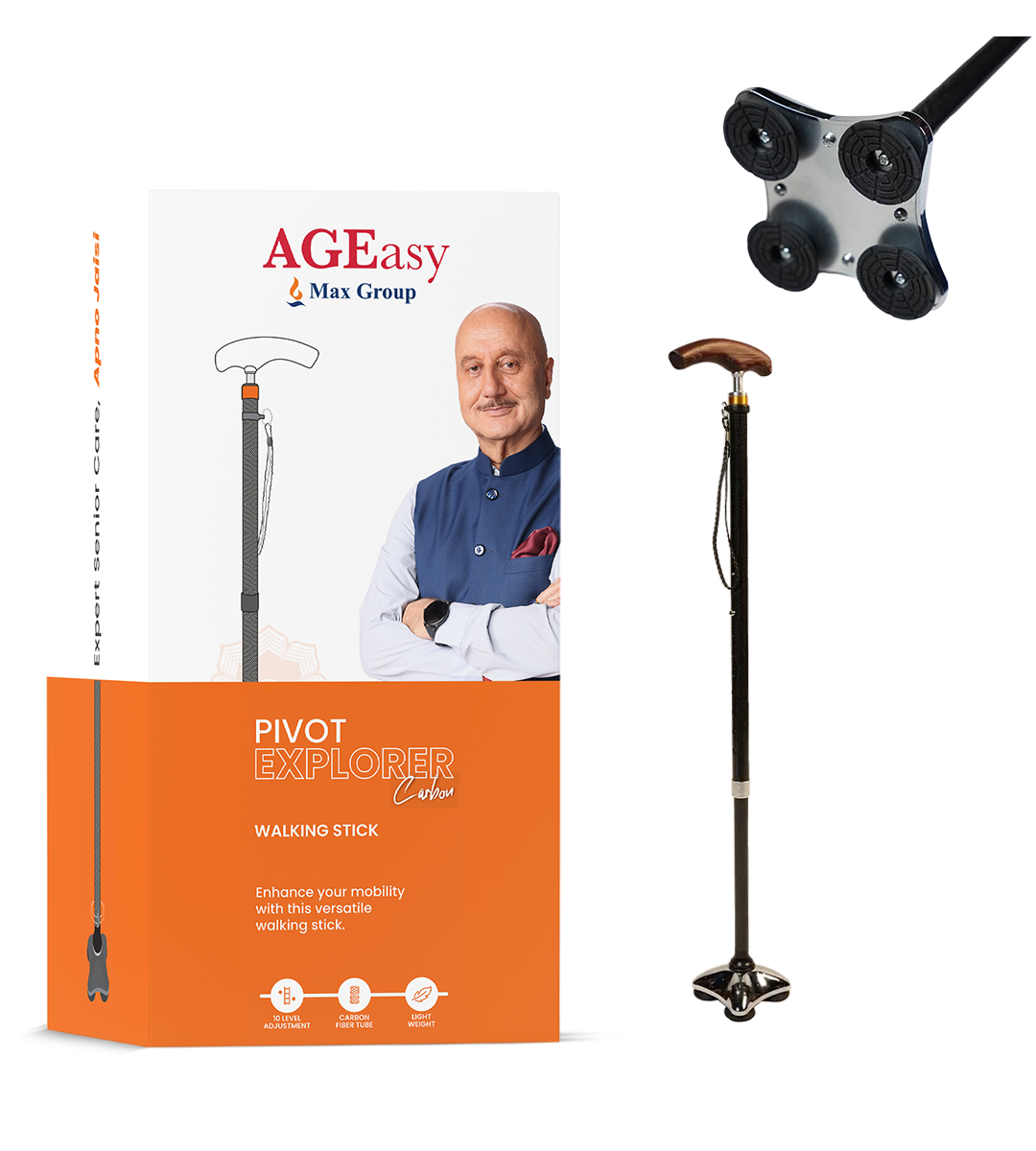
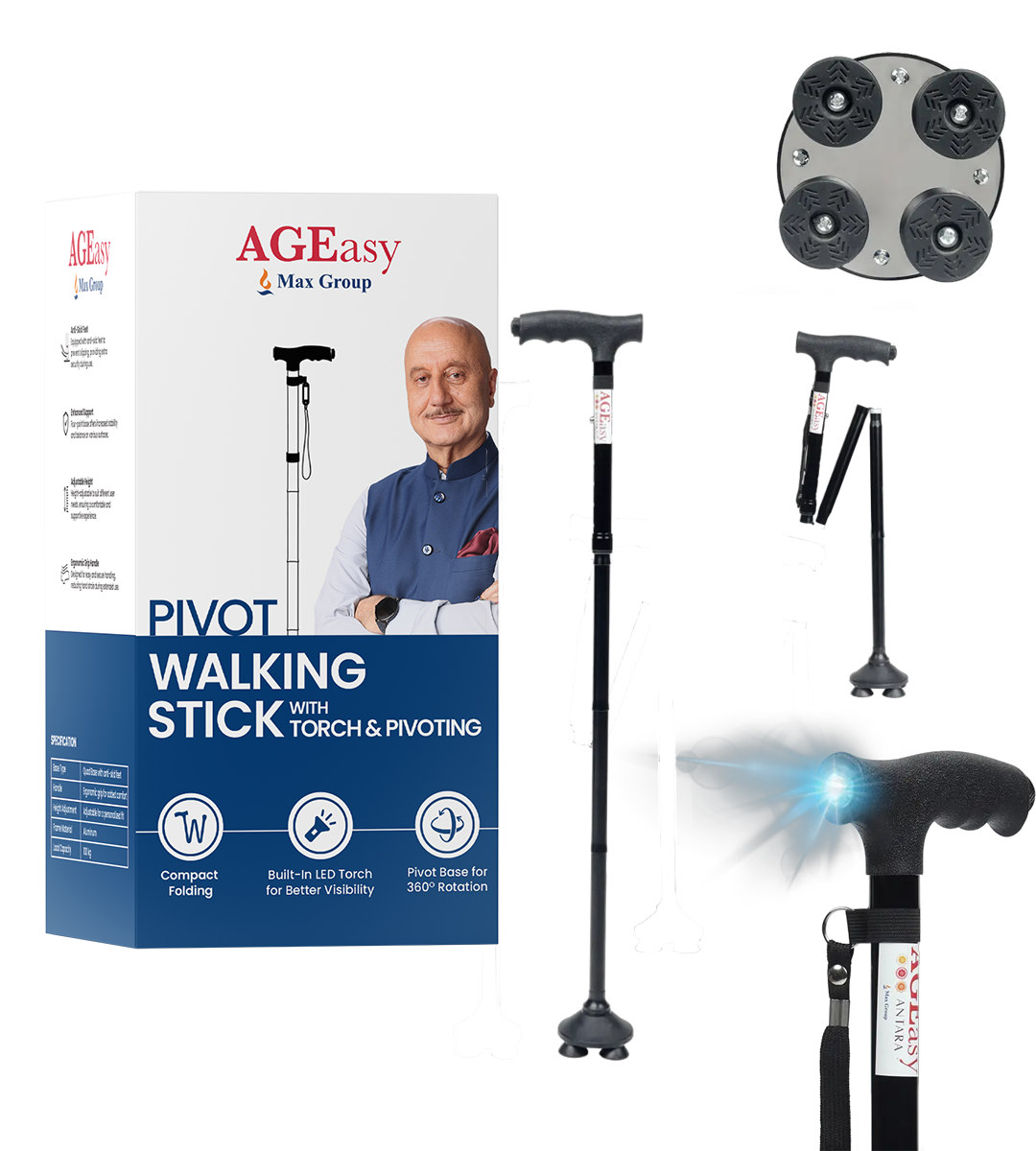
The AGEasy Pivot Explorer Carbon Walking Stick provides a good example of a product in this category at a reasonable price. At 280 grams it has an adjustable height, polished wood handle, and a 360° pivot base. It is the thing you can carry with confidence. For many seniors, that is actually the most important part.
Design Is Not Decoration
It is fairly common to consider aesthetics as an added bonus, and that it does not really play a role in functionality. This is not a valid instinct when it comes to mobility aids.
A poorly shaped handle results in the user being forced to constantly readjust their grip, leading to fatigue and strain over extended periods of time. An off-putting colour may lead to an owner being embarrassed to carry it around in public, resulting in it being left at home. A rubber tip, or "ferrule," that is too hard on polished flooring surfaces becomes a hazard instead of a safety measure.
Design is a functional choice. This is how to interpret them.
Grip and Handle Shape
The traditional J-Handle makes it easy to hang on the arm of a chair. However, it causes forces to be distributed at an uncomfortable angle for the wrist. The grip itself is designed for a downward push, as opposed to a natural, load bearing vertical position, which causes strain over time.
Anatomical or T-bar handles allow for more efficient weight distribution through the palm of the hand. They remain firm if loaded with weight. For a frequent user of the stick, this detail is certainly not insignificant.
The grip surface is a crucial component as well. Foam and rubber grips tend to stay firm in the presence of humidity and sweat, a legitimate concern while considering the Indian summers as well as the persistent heat in South India. Warm hands become a major impediment when gripping smooth plastic. This issue is easily handled with the introduction of appropriately textured grips or foam.
Ferrule: The Part Nobody Notices Until It Fails
A ferrule is the rubber piece at the bottom of the stick. It is the single point of contact between the stick and the floor, and most people do not notice it until it fails. In every Indian household, a worn, hard, or thin ferrule on polished marble or tile can be dangerous, and it is like having worn shoe soles and slipping on a wet floor. A stick tips too easily. Ferrules should be wide enough to prevent tipping, and should be made of rubber to catch traction to not slide. It should be replaced when it has visible wear.
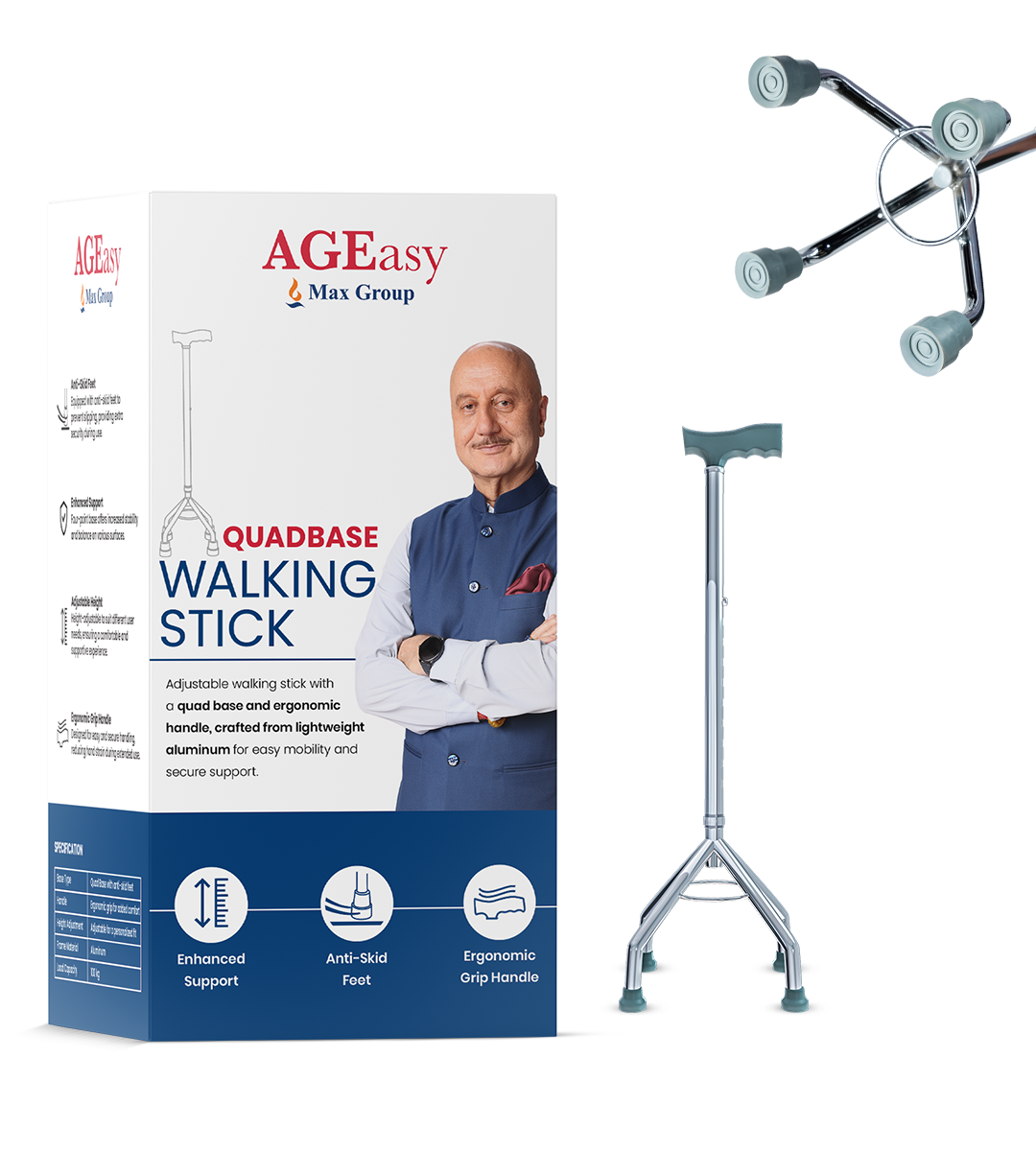
Currently many high quality sticks have tips made of ABS or high density rubber. Some have a pivot base, a spring mounted tip that remains in contact with the ground to allow for more stable contact with the ground to allow for a more stable contact and support while the stick is tilted and contact with the ground is limited, especially on Indian terrain with cobbled and old threshold bumps.
Height Adjustment: Getting This One Right
This is the most commonly overlooked safety feature, and it is more important than most people think.
A stick that is positioned at the wrong height not only feels uncomfortable, it also negates the biomechanical purpose of using one. If it is too short, the user must bend, putting strain on their lower back and shoulder. If it is too tall, the user's arm does not reach the full extension and the stability that the stick is meant to provide is compromised.
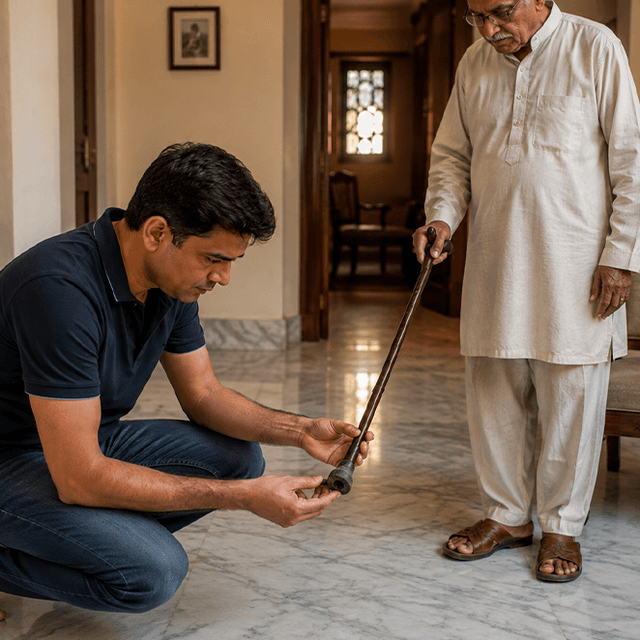
General advice is to hold the stick with the elbow bent at about 15–20 degrees. The stick handle should sit at about wrist height. If there is an issue with the joints, getting that evaluated by a physiotherapist is recommended.
Most modern walking sticks have an adjustable height feature that allow it to be set between 75 and 95 centimeters with an adjustment range of 2.5 centimeters at each increment. This adjustment range should work for most adult heights in India, but if the user is below 5 feet or above 6 feet, you should check this before purchasing.
The Gift Dimension: When Someone Else Is Buying
Let's be frank. There's a pattern we've observed and it's time to talk about it.
In many Indian families, the person who will eventually need the walking stick does not buy it for themselves. Instead, it's purchased by a grown up child who has (usually in silence and in the name of love) witnessed their parents struggling and who has reached a point of trying to balance not wanting to be too controlling or critical with their legitimate concern.
It's a complicated situation. If you slap a walking stick package with a medical label, the answer is usually a firm "no". However, walking sticks are much better received if you accompany the stick with a note written with love and the stick you purchased is stylish and reflects the personality of the recipient.
A daughter choosing a copper foldable walking stick because her mother likes warm colours will appreciate the thought that went into this choice. Similarly, a son selecting a sleek, active, and fit carbon fibre walking stick because it suits the image of his dad will surely make his father feel very special. The perception of the gift completely changes. It is a message that says, "I see you, and I appreciate you, not as someone who needs help; but as someone deserving of a valued choice."
As an ideal example, the AGEasy Foldable Walking Stick in Copper illustrates the logic of walking aids without using any institutional design. The warm metal finish is a perfect example of this function. It is easy to carry anywhere, can be adjusted to different heights, and has an ergonomic handle and a non-slip base. Some people may even mistake it as a trendy accessory before they realize it is a walking aid.
This accomplishment is far from superficial. In many ways, that is the whole point.
A Buying Checklist for Indian Conditions
Not all walking sticks manufactured in India are suited for Indian conditions. Consider the following guidelines before making your purchase.
- Weight. For everyday usage, lighter should almost always be better. For aluminium or carbon options, aim for under 400 grams. The user will be holding this for potentially hours each day and the weight accumulates.
- Finish & rust resistance. For humid environments, coastal areas, monsoon seasons — anodized or powder coated aluminium, and stainless steel, are more long-term options than bare metal. If the description is vague, ask specifically.
- Height range. Check the maximum and minimum adjustable height. Standard ranges fit most adults, but confirm for users under 5 feet or over 6 feet.
- Ferrule type. Look for rubber caps that actually provide a base, not just a point. Pivot bases are a small added cost for users on different surfaces.
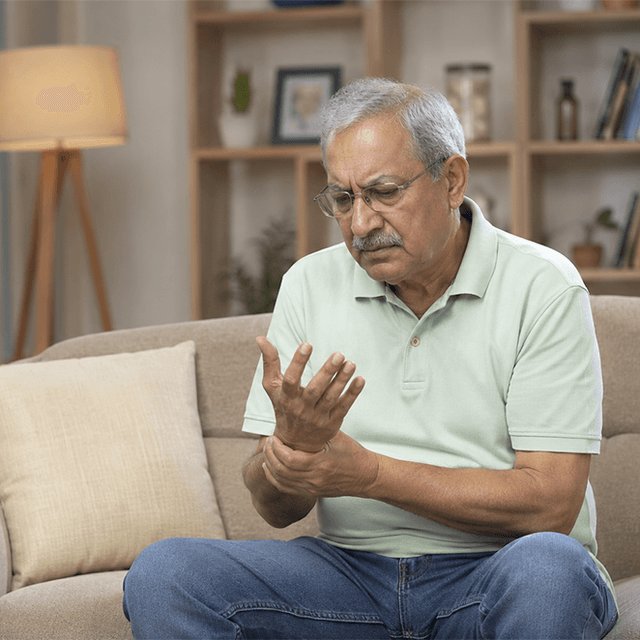
- Handle shape. For people with arthritis, wrist weakness, or grip restriction, T-bar or ergonomic handles are more practical than hook handles. Ask if the handle was designed for diminished grip strength.
- Foldability. If the stick is going to be moved — hospitals, family visits, flights — a four-fold design is much more convenient than a model that doesn't fold. Check the dimensions when it is folded.
- Weight limit. Most regular sticks support 100–130 kilograms. Confirm this for users that are heavier.
- Return policy. The return policies of Indian e-commerce stores for mobility aids are all over the place. AGEasy's is a 7-day no-questions-asked return policy, giving a family space to test fit and comfort before fully committing.
When a Walking Stick is Not Suitable
While talking about walking sticks, it is important we also cover the situations when walking sticks are not suitable.
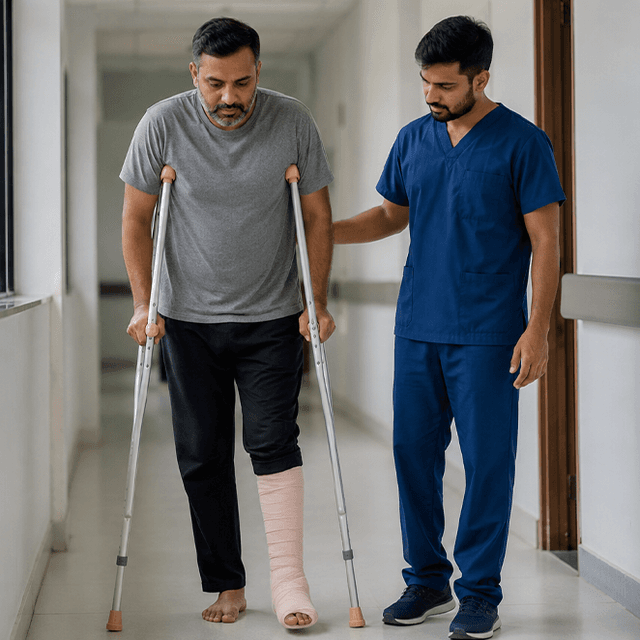
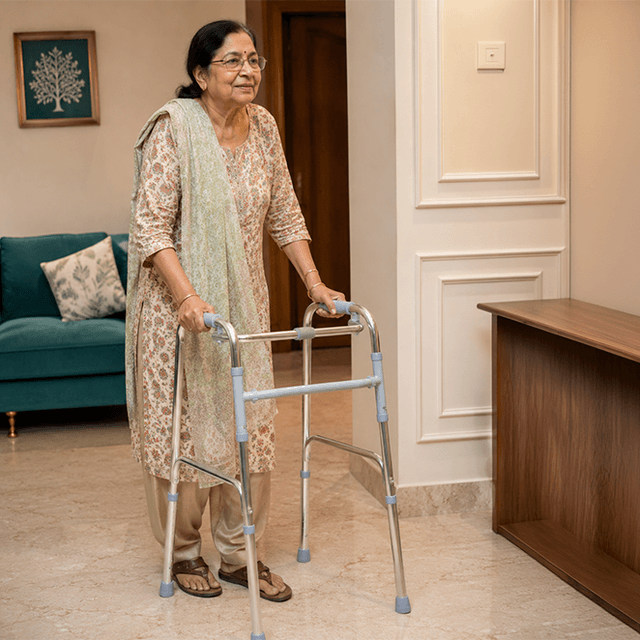
A walking stick is designed to give the user one additional point of contact with the ground. It aids with balancing and helps to reduce the load on one side of the body. It is acknowledged that many people need a lot more support than just a walking stick for a lot of different reasons, such as very high levels of fatigue and very high levels of instability. For people with such conditions who require support on both sides, a rollator or a wheeled walker may be a better option.
It is not a walking stick's failure to provide the needed support. It's due to a more complex level of support that is actually required. The right person to determine what level of support is clinically appropriate is a physiotherapist or geriatrician. If a walking stick is recommended as the starting point, then all of the things we are sharing in this blog are applicable.
The Autonomy That Good Design Protects
There is a version of this story that ends with the product. But the more important story is about what the right walking stick really protects.
Independence. The ability to go, without needing to hold onto someone's arm, to a grandchild's school event. The privilege of a morning stroll to the neighbourhood park, on a mundane Tuesday morning. The unembarrassed comfort of being able to traverse a room without a hand trailing faux support along the edge of the furniture.
These seemingly trivial things matter a lot. They constitute various moments in a person's daily life. If the right stick is used sooner, having a design the person is truly comfortable to carry, it extends such moments of life. It gives years back to the time frame in which someone can self-determine how to navigate the world.
So perhaps the conversation most families need to have is not "Do you need a walking stick?"
But rather "Did you know what walking sticks look like these days?"
That's a softer question. It tends to unlock the conversations the former question keeps shut.
The intention is not even really to persuade anyone to use a walking stick. What it is aiming for is that when the time does come and it does come silently for most of us, make sure that the choice is made for all the right reasons and based on contemporary, real information rather than an outdated perspective from two decades ago.