

Stick, Walker or Wheelchair? The Mobility Ladder and When It's Time to Move Up
Article by: Aditya
Article Category: Wheelchair & Walkers
Jul 31, 2026

Sometimes the bravest step is accepting a little more support.
You slow down. You hold onto the furniture. You avoid going out unless someone is with you. You tell yourself, "I'm managing."
Deep down, you know every step seems less certain than it used to.
A walking stick, a walker, a wheelchair, or leg braces - all these things allow the user to have more strength, stability, or mobility.
The right stick supports you with confidence. The right walker supports you with stability. The right wheelchair enables you to continue living, exploring, and participating.
With the right mobility aid, you do not do less, you do more.
Mobility is about the simple things. It is about choosing what your body needs today, preventing falls before they happen, conserving energy for the things that matter, and staying independent for as long as you can.
Using the right mobility aid at the right time can alleviate pain, boost confidence, keep you active instead of withdrawing from daily activities, and reduce falls. Instead of stepping backward, it is often the most secure way to keep moving forward.
This guide explains all of the steps and signs of the mobility ladder, whether it be your parent or you and how to select a support aid that will help your loved one maintain their safety, confidence and dignity.
Why We Resist Moving Up the Ladder
Regardless of the form, welcoming a mobility aid into one's life is rarely done with excitement and often involves a sense of loss.
Reaching for a stick or a walker feels like losing the ability or freedom to do something. However, the loss of independence that results from a fall and subsequent hip fracture will be much greater than the loss of freedom from using a walking stick.
Most families will only start thinking of mobility support after a scare - whether it is a stumble on the stairs, a near miss in the bathroom, or a hospital visit that could have been avoided. A much better approach is to look at the mobility ladder as a form of preventive care rather than the last option available.
Step One: A Walking Stick or Cane
For most people, the first signs of a shift to a more cautious lifestyle are subtle. These include increased caution on the stairs, a slight favoring of one leg, or a hand reaching for the wall in the dark. A walking stick or cane is often the first mobility aid to be used.
A proper cane should meet three goals: expanding your base of support, relieving pressure on knees, hips, or ankles, and giving the brain a point of reference for balance. The difficulty lies in knowing how to choose the proper one. For example, single-point canes are suitable for people with minimal balance concerns.
People needing more reassurance, such as those recovering from surgery or individuals with arthritis, can use a four-legged (quad) cane, as it has a wider, more stable base. For a great balance of lightweight stability and a non-slip grip, the AGEasy Four Leg Walking Stick is an excellent choice for daily indoor and outdoor support. Height-adjustable, cushioned ergonomic grips, and non-slip rubber tips are all features that can really help. A cane that is the wrong height can pose posture problems and create more strain than it relieves.
For those who sit and stand frequently throughout the day, such as in a market, park, or queue, a walking stick with a folding seat can be a great relief as it removes the stress of standing and waiting to sit.
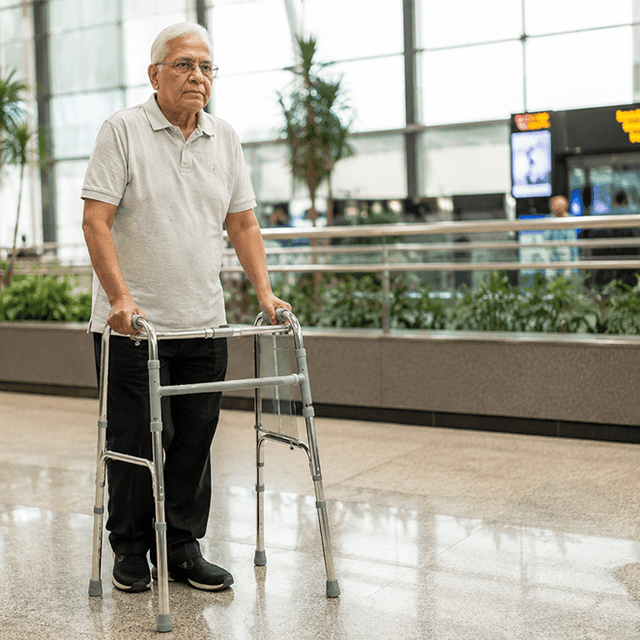
Step Two: The Walker or Rollator
You may need to look at a walker if a cane no longer seems adequate, or if you are starting to stumble more often, feel fatigued on long walks, or feel unsteady inside your home.
Due to having four points, a walker has greater weight distribution capabilities and support on both arms. Therefore, they are more appropriate for people post surgery, people with advanced- stage arthritis or people who have low muscular strength.
Additionally, non-wheeled walkers give the greatest amount of control and stability for indoors because each step taken requires a controlled lifting and setting motion with the walker.
For more mobile individuals who may just be experiencing fatigue, rollators (wheeled walkers with seats) are more appropriate because they support a natural walking rhythm and give the option to sit and rest, as well. The AGEasy Walker for Elders (With Wheels) strikes a perfect balance here, its front wheels allow for a smooth, continuous reciprocal motion without the strain of lifting it with every step.
There are several observable signs that indicate that a cane is no longer an adequate mobility aid and include, but are not limited to:
- Losing your balance frequently, even if just momentarily
- The fear of walking without assistance compels some individuals to avoid walking entirely
- Fatigue-induced cessation of outward social activities
- Falling (or near falling) incidents that have occurred in the last half year
- An additional mobility aid has been recommended by a medical professional (e.g., GP, physiotherapist) because surgery or illness has restricted mobility
It is important to clarify that these behaviours are not failures; rather, the body is communicating the necessity for additional support to be implemented. These signals, if detected, assist in avoiding more serious injuries from occurring.
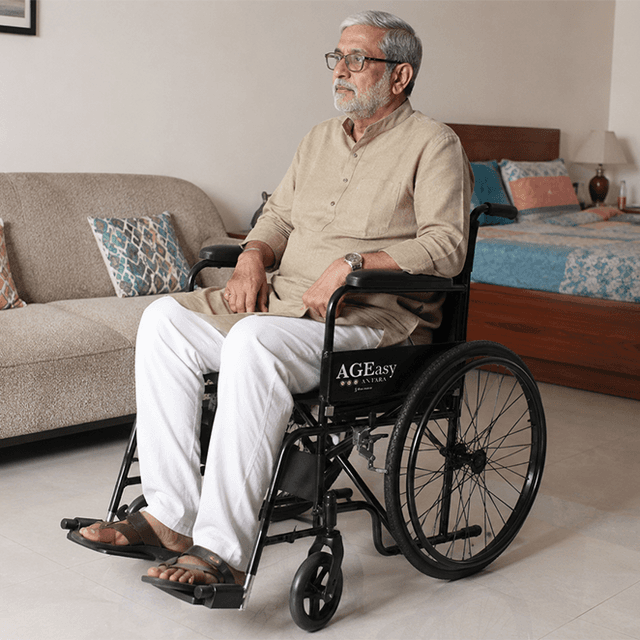
Step Three: The Wheelchair
The wheelchair tends to elicit strong emotional responses due to its negative connotation as being the end of the line for mobility options. In fact, wheelchairs are critical to allowing people to remain as active as possible.
Being able to leave the house, even for a short while, is enjoyable. It could mean going to a family event, doing family activities, going to the temple, sitting outside in the garden, or being stuck in a room all week.
There are many positives to considering a wheelchair. Walking with the use of a walker can lead to pain, make someone tired, and puts someone at a higher risk of falling. For those who have limited mobility, a lightweight wheelchair may grant them the ability to access the outdoors instead of "toughing it out" with a walker. Lightweight wheelchairs are easy to fold, transport, and store in a vehicle. A great option for this transition is the AGEasy WheelEasy for Seniors, which features an 18-inch wide comfortable seat and easily folds down to fit right into your car boot.
Using mobility aids is not a linear progression
It is not uncommon to see someone use a cane, then a walker, then progress to using a wheelchair. Many seniors will keep a wheelchair available for travel, hospital visits, or days when their energy is low. It is about providing the right support for the specific activity and the specific day and not being restricted to one type of mobility aid for the rest of your life.
The Bigger Picture: The Intersection of Health, Mobility and Everything Else
Selecting the right mobility aid is only one component of aging well, and it is at its most effective when paired with monitoring health at home. Many serious medical issues can be the underlying cause of falls, dizziness or fatigue. Blood pressure problems are at the top of that list. As a result, many families find it necessary to pair a new mobility aid with a daily vital sign monitoring system. The AGEasy Wrist BP Monitor fits perfectly because of its compact design and one touch operation that makes monitoring blood pressure easy for someone who is already managing a cane or walker. Lightweight wrist monitors will help seniors with new mobility aids to keep tracking their vitals on a daily basis.
Also, the need to progress to a more supportive mobility aid can be prompted by feelings of unsteadiness and dizziness. But in the case of falls, regular blood pressure monitoring is warranted to determine if the reason for the falls is related to blood pressure changes. If that's the case, the conversations of mobility and health monitoring can be addressed as one.
Selecting a Mobility Aid: Things to Consider
When selecting a mobility aid (canes, walkers, wheelchairs, etc.), there are some general principles to consider.
- Optimal height is important. When arms hang at their sides, the wrists should be level with the top of the handles on canes and walkers.
- Stability is another factor to consider. Four-point walkers and canes offer more stability than their single-point counterparts on uneven surfaces.
- If the mobility aid is for travel, visits to family, or will be stored away when not in use, look for something lightweight and foldable.
A physiotherapist and/or physician should be involved after a fall, a surgery, or a diagnosis. They are best able to assess gait and balance objectively instead of "manageable" day-to-day assessments.
In this case, keep track of the assessments and the results. Mobility requirements are always changing and what may have once been useful, may become obsolete.
The Bottom Line
Ascending the mobility ladder is not a loss of independence. On the contrary, most effective walking sticks, walkers and wheelchairs reduce fall risk, save energy, reduce pain, and allow people to participate in family events, walks, community activities, and errands.
The factors involved when making a decision for yourself or helping a parent out, are the same. The focus should be on choosing mobility aids that allow you to live a full life, not a restricted one.
This is a general guide only. It is not intended to be used as medical guidance. You will need to contact a doctor or physiotherapist for mobility aids and any changes you would like to make to a health monitoring plan.