


Flying With a Parent Who Uses a Stick, Walker or Wheelchair: Airline Rules, Security Screening and Cabin Storage
Article by: Priya
Article Category: Wheelchair & Walkers
Jul 31, 2026
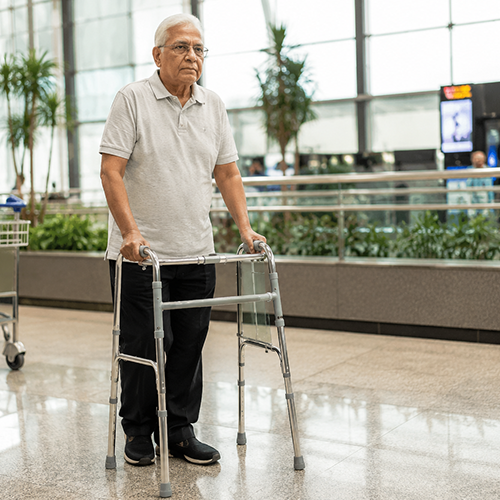
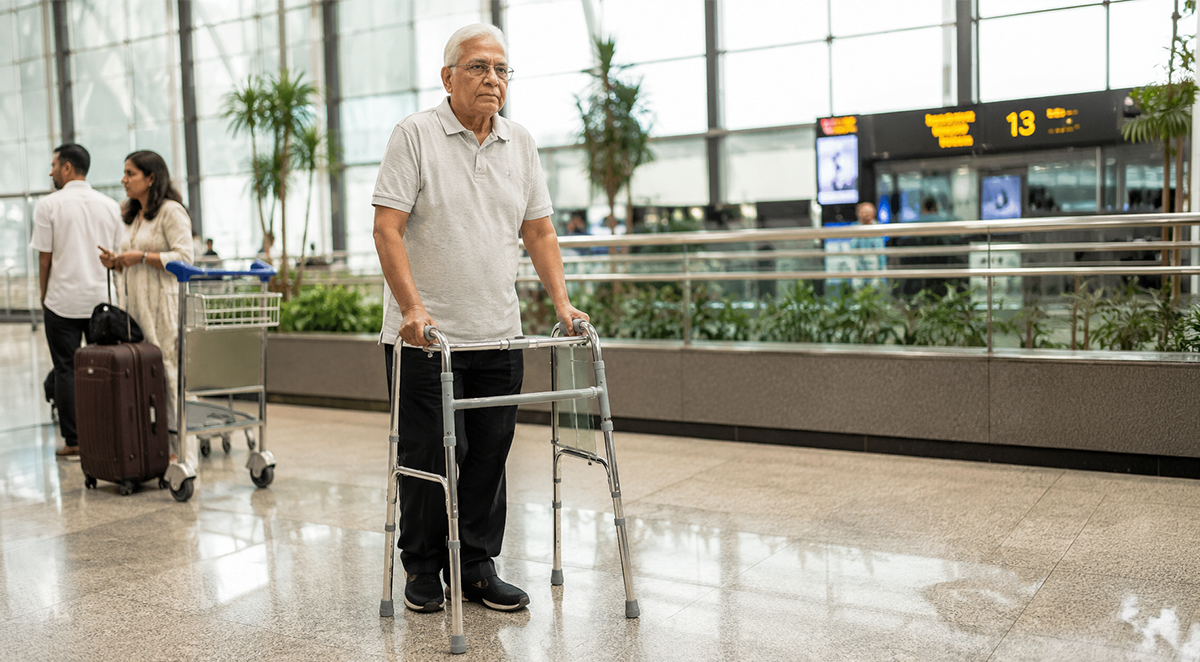
For your parent, a walking stick, a walker, or a wheelchair are not just pieces of equipment to get around with. They are also a means of their independence. When an airport tells you they have to go through security, get screened, checked, or have to be given up at the boarding gate, that feels concerning. You want to make sure it goes with them on the plane. You wonder how the staff will treat it and worry if the staff will know how to assist them because they can't walk farther than their body allows.
The most common mistake before leaving home is assuming every airport and airline operates the same way and you don't have to worry about it until you reach the airport.
It is important to check the policies before you do any packing. Most mobility aids are screened during checking, hence, don't assume that they'll always remain with the passenger. Expecting the airport staff to understand your parent's requirements without explaining them is not safe to assume as well.
Before making a booking, ask what provisions keep your parent safe and comfortable from the airport to the plane seat. This includes knowing whether your parent can keep their walking stick with them at security. It includes knowing at what point staff take the wheelchair. Knowing where the walker is going to be during the flight and what assistance to arrange before arriving at the airport - all need to be part of your question list.
Your parent's journey begins at the airport terminal, not when the plane takes off.
Traveling without a plan can lead to a parent standing longer than may be reasonable for their body; feeling anxious about being separated from a mobility aid; experiencing delays or confusion at security and boarding; and ultimately may lead to avoiding air travel altogether.
Traveling with preparation helps a parent travel through the airport with confidence; a mobility aid can be used at any time; boarding becomes less stressful; and each step doesn't warrant worry because self enjoyment of the trip can happen.
This article covers how airlines handle walking sticks, walkers and wheelchairs, what to expect during security screening and boarding, how cabin and checked storage work, and the steps that make flying with your parent safer and easier.
How Indian airlines treat your parent's mobility aid
Airlines in India see mobility aids as an extension of the passenger and not regular cargo. Passengers using wheelchairs on Air India are allowed to take their wheelchair to the airplane door. Staff will put a tag on the wheelchair, place it in cargo, and then retrieve it as close to the airplane door as possible when they arrive. If the wheelchair does not get to the airplane door, ground staff will place a buggy, airport wheelchair, or accessible bus to get your parent to baggage claim.
IndiGo has a similar policy. Fully collapsible wheelchairs, crutches, braces, and other prosthetic devices are considered hand luggage and will be placed in the cabin if the passenger needs them to move. Staff will help you to dismantle and reassemble the wheelchair, and the airline will flag that it hold limited liability for damage during handling, so a soft protective cover for foldable frames will add a layer of peace of mind.
Powered wheelchairs require advance notice on most Indian airlines because of the rules regarding batteries. There are restrictions on wet-cell and certain types of lithium batteries, so you must inform the airline of the type of battery when you book your flight, not at the counter.
You should book wheelchair assistance and inform the airline of your parent's mobility aid at least 48 hours before departure. This will help cut down on the confusion that often occurs at the gate.
What happens during security screening
According to standard procedure set by CISF, passengers must complete screening for walking sticks, walkers and wheelchairs at Indian airports. Mobility aids must go through screening just like all other luggage, and as per Air India policy, staff will assist if waiting in line becomes an issue.
This means that your parent will have to walk through the body scanner without the aid, while the stick, walker, or foldable wheelchair frame passes through the x-ray belt, or is manually screened. If your parent has a pacemaker, please inform the screening staff prior to them walking through the scanner, as Indian airport guidance reports this step specifically.
CISF airports offer free wheelchair assistance, so please request it through the airline or the airport information desk, rather than attempting to deal with the line. If your parent has a prosthetic device, staff will have special procedures for this and it does not need to be removed as a standard step.
When and where a wheelchair gets checked in
Typically, a wheelchair stays with your parent through the entire terminal and up to the door of the airplane. Wheelchair tags are done at the door of the aircraft, not at the check-in counter, so your parent has to use their own assistance device for the entire walk through the airport, including immigration and the boarding gate.
Once tagged, airport personnel place the wheelchair in the cargo section of the airplane. If your parent has connecting flights with Air India, the ground staff at each of the layover destinations receive instructions regarding the assistance your parent requires when arriving and transiting. This is particularly important on long flights with layovers because it eliminates uncertainty at every stop.
Where a walker or walking stick stays during the flight
As per the airline's hand baggage policy, a collapsible walking stick or foldable walker will travel in the cabin, and will be stowed in the overhead compartment or stored at the front of the cabin, as directed by the staff upon boarding. Larger non-foldable walkers are treated the same as wheelchairs and will be tagged and placed in the cargo hold of the plane, and returned.
Airlines allow the boarding of disabled passengers first and disembarking last, therefore, your parent will have additional time to settle in and have the mobility aid outside of an obstructing boarding line. Each airline has different rules regarding storage options for mobility aids, so be sure to contact the airline for proper instructions with respect to your parent's specific walker or stick model prior to boarding.
Steps to arrange before you reach the airport
- When purchasing plane tickets, request wheelchair assistance at the same time.
- Provide details about the mobility aid, including the aid's battery type.
- Provide details about whether the aid stays with your parent to the aircraft door or whether it is checked at the counter.
- Check that the airport has an accessible route from the entrance to security, and all the way to the gate.
- Be sure to pack a small bag with medication, a water bottle, and a phone charger.
This way, your parent has everything easily accessible, even if the main bag takes a while to arrive. A well-made walking aid can help decrease the emotional strain caused by long walks.
Consider a compact, foldable walking stick that fits in a handbag. This falling aid provides your parent with some backup support during the security screening or while waiting in line, even if the wheelchair is at the door and has not yet arrived.
Small tools that support the trip
Your parent will appreciate the convenience of several items beyond the airline documentation. Compact foldable walking sticks (available on AGEasy) are small enough to fit into a handbag. They will allow your parent to walk independent of wheelchair assistance to washrooms and the like during layover breaks.
Air travel can also be tough on the body due to long lines, the pressurized airplane cabin, and disrupted routines, so monitoring your parent's blood pressure on longer excursions is a good idea. The wrist blood pressure monitors from AGEasy weigh about 200 grams and are small enough to fit in a travel bag. They have a rechargeable battery via Type-C cable, and will read aloud the blood pressure results, so monitoring can be done at the gate or in the hotel room without assistance to read the results.
These tools, however, will not diminish the airline provided assistance. Their purpose is to fill the gaps between your parent being wheeled to the gate and the boarding process so that assistance is available without them feeling any inconvenience.
When you fly with your parent, viewing the mobility aid as part of the travel plan will streamline the process. Booking assistance well in advance, confirming handling procedures with the airline, and using small aids will let you focus on your parent without worrying about the effort involved in getting them to their seat.
Sources: