


The Real Reason Tailbone Pain Gets Worse When You Sit
Article by: Priya
Jul 10, 2026. 9 min read
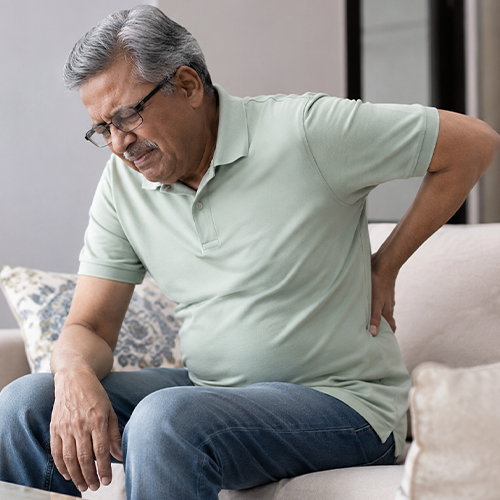
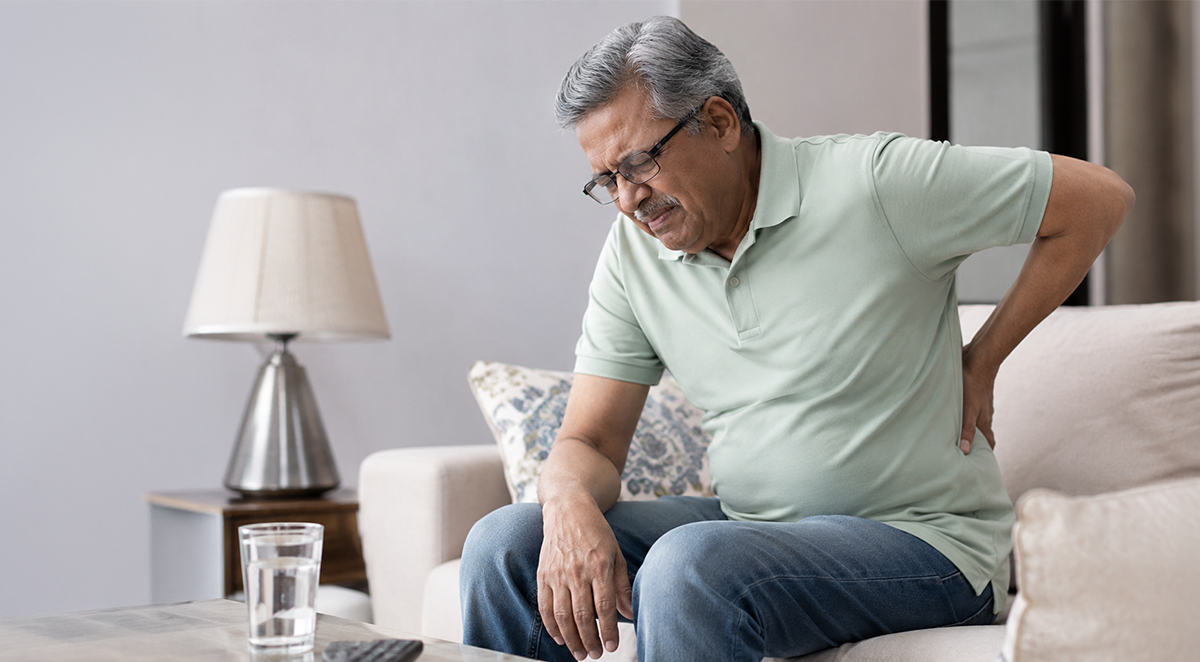
Table of Contents
- Less muscle and tissue padding.
- Sitting for longer periods of time.
- Compensating for other pain.
- Healing from falls.
- 1. Provide additional support to the chair.
- 2. Change flat cushions to a pressure-relief cushion with contouring.
- 3. Incorporate gentle movement breaks.
- 4. Watch for uneven sitting.
- 5. Ensure that their feet are flat on the floor.
- 6. Use heat before they sit for long periods.
- 7. Take support for appointments and outings.
Sitting should not hurt, but when the issue is with the tailbone, every chair feels like the enemy.
Whether it's you or an aging parent, you sit down in a particular way. You adjust your position by leaning forward. You keep adjusting to try to find a position where it doesn't hurt.
But it never lasts.
Most people think that the act of sitting is the issue, but that is not the case. The true culprit is how you are sitting. Where is pressure located? What is your tailbone absorbing every time you sit down in a chair?
That is why, paradoxically, sitting is supposed to be the restful part of your day, but your discomfort gets worse the longer you stay seated.
The good news is that you probably do not have to give up sitting completely. You simply have to change the way you sit.
Using a cushion designed for tailbone pain, improving your posture, and making some adjustments to the way you position yourself can relieve a lot of pressure off your tailbone. This can allow you to enjoy ordinary activities, such as dining, visiting with family, or working, that you had to stop doing because of the pain.
This guide explains how, whatever the cause of your pain is a fall, age-related changes, too many hours of sitting, or even something that you can't identify, sitting down makes it worse and what actually helps you to be able to sit comfortably again.
Comprehending Why Your Parent's Tailbone Suffers
If your mother or your father has begun to avoid certain sorts of seats, has started moving around a lot when sitting or seems to wince when they sit, the reason is very likely to be pain in the tailbone, regardless of whether they have professed it. Many older members of the population tend to be quiet about pain of this sort unless someone specifically asks them about it. This is likely due to the mistaken belief that such pain is part of the process of aging, or that it would be unreasonable to complain.
The tailbone, also known as coccyx, is a small triangular shaped bone that is situated at the terminal part of the spinal column. It is not designed to support the total weight of an individual. However, this is exactly what occurs when postures change with aging, when the musculature around the pelvis and hip areas reduces, or when a person remains seated in the same position for a long period of time.
As we progress through the lifespan, the body's natural cushioning around the coccyx, which is composed of muscle, fat, and tissue, diminishes. The result of this is that the same chair that used to be comfortable will now directly contact the bone instead of the cushioning made of soft tissues. This is the reason that older people experience coccyx pain without any particular cause.
To the caregivers, the important point is that the solution is not a case of trying to explain to a parent to "sit differently", or just expect them to "put up" with the pain. What is critical to understand is the actual physical process and carry out some fundamental changes in their surroundings to minimize the development of these pressure points without the need for repeated reminders.
What is really going on when an aging parent sits?
Here are some of the strongest contributors to tailbone pain for older adults:
Less muscle and tissue padding.
With aging, naturally there is less cushioning between the tailbone and the chair so the softer tissues that once absorbed this pressure have less and less of it and more of the pressure is transferred directly to the bone.
Sitting for longer periods of time.
Many older parents are spending more time sitting and watching television, reading, or resting as their mobility decreases. Pressure increases continuously in one spot without changes in position.
Compensating for other pain.
An older adult may have tailbone pain arthritis or balance issues that cause them to lean or shift their weight in ways that may add more pressure on the tailbone.
Healing from falls.
Falls are more frequent with older age and even minor falls can injure and bruise the tailbone. The healing process takes significantly longer than it would for a younger individual.
None of this behavior is "wrong" on the part of your parent. It is a natural physical phenomenon. This is also the reason that caregiving often requires more modifications of their environment and less expecting them to change their behaviors.
Why just telling them to rest more doesn't help
Pain is a common instinct. However, older adults often need to sit for meals, for visits, television or just because standing for long periods is exhausting or unsafe.
This is particularly relevant if the pain came after:
- A recent fall, even one that seemed insignificant at the time
- A long hospital stay or a long period of time when you were not mobile
- Worsening arthritis or joint pain that alters their sitting posture
- No obvious reason, which is often seen in older people
Because sitting is not an activity that most parents can avoid, the more feasible alternative as a caregiver is to pain their chairs, cushions, and the daily arrangement they already use to be less punishing on the tailbone.
Positive Adjustments Caregivers Can Implement
1. Provide additional support to the chair.
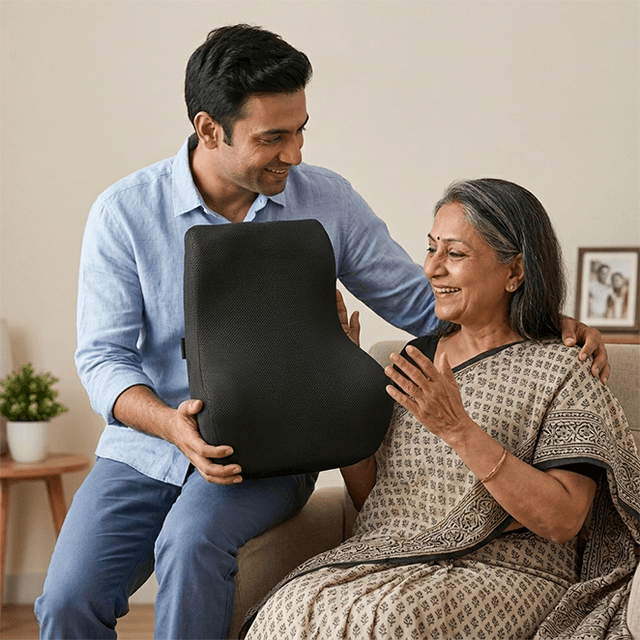
A small lumbar support cushion may assist in positioning the pelvis more upright and less reclined to help alleviate the burden on the tailbone. AGEasy lumbar support cushions can be easily added to your parent's armchair, dining chair, or even car seat without requiring any changes to their existing routine—just placing it there does most of the work.
2. Change flat cushions to a pressure-relief cushion with contouring.
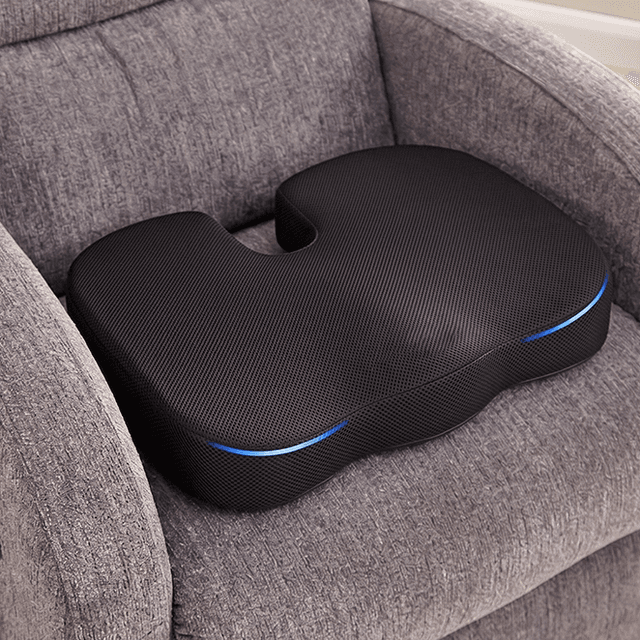
This often creates the most positive impact of any one change. Cushions with a cutout or contouring at the back allow the coccyx to sit above the seat and transfer the load to the thighs and sit bones instead. AGEasy orthopedic seat cushions have been designed specifically for this type of relief, and are firm enough so that older adults with balance concerns do not feel like they are sinking or losing stability when they sit down or stand up.
3. Incorporate gentle movement breaks.
Pressure buildup can be reduced by standing up or walking around, even briefly, every 30 to 45 minutes. For parents who have mobility difficulties, this might mean simply shifting their weight in the chair or standing with some support for a minute instead of going for a complete walk.
4. Watch for uneven sitting.
If a parent shifts their weight to one hip or consistently leans to one side, and often does this to relieve discomfort in that area, the seated position can make tailbone pressure worse on the opposite side. It can be helpful to check the height of the chair and encourage the parent to distribute their weight evenly.
5. Ensure that their feet are flat on the floor.
When a chair is too high or too low, your parent's pelvis will tilt, which increases pressure on the tailbone due to compensatory movement of the pelvis. This can be easily alleviated with a footrest, or an adjustable chair.
6. Use heat before they sit for long periods.
Gentle heat applied to the lower back and tailbone area before long car rides, doctors appointments, or other occasions when your parent will be sitting for extended periods of time can relax the muscles in that area and decrease sensitivity to pain. Most older adults can use heating pads independently, which helps caregivers who are not able to be present when a parent needs pain relief.
7. Take support for appointments and outings.
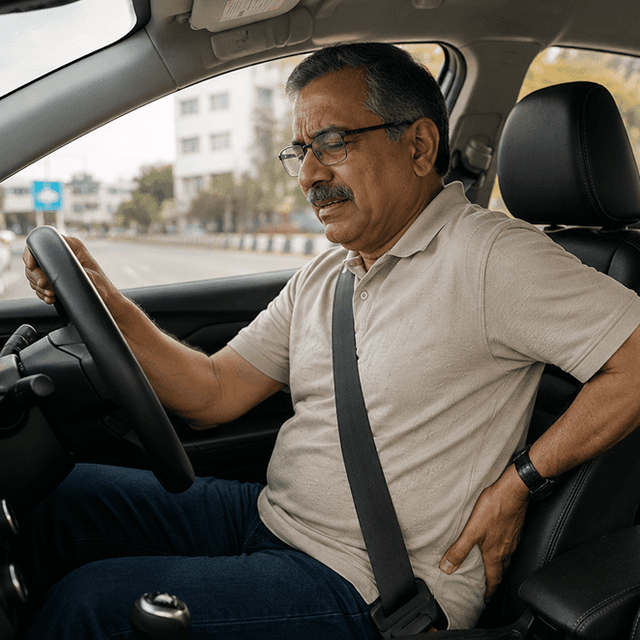
Doctor appointments, family gatherings, and car rides usually involve sitting in chairs that have little to no support. Having a lightweight, portable cushion such as one of AGEasy's travel-friendly seating support products in the car or in a bag means your parent can have proper support wherever they are sitting, even if it is not at home.
When to Contact a Medical Professional
A caregiver may want to contact a medical professional when there are changes that require more than adjustments to posture or the addition of a cushion. Signs include the following:
- Pain that persists despite changes made.
- Experiencing numbness, weakness or palpitation in the legs.
- Pain that started after falling, no matter how small the fall.
- Visible swelling, bruising or deformation of the tailbone.
- Experience of pain while having a bowel movement.
- Pain severe enough to limit sleep or the activities of daily living.
After a fall, a doctor may want to rule out a fracture, and may consider physical therapy as an option to improve functional mobility. If your parent is reluctant to ask about pain, then it is bold to ask them directly as many elderly people tend to minimize the severity of their symptoms of pain, assuming it to be part of the aging process.
Conclusion
Most of the time, pain from an aging parent's tailbone usually does not mean they need to sit less. It is simply making the chairs and surfaces they use less demanding as they have less cushioning bones that they are using.
As a caregiver, the changes that are most effective are often the ones that require no memory or behavioral change from your parent. These changes include the addition of a supportive cushion, a heating pad easily accessible, and the addition of a portable cushion for the next exam. Without complicating the routine for you or your parent, these minor adjustments can reduce daily discomfort.
It may be beneficial to directly confront a parent who has a tendency to fidget, tries to avoid sitting in specific chairs, or remains silent about a source of discomfort that they have not fully articulated, and to implement some practical adjustments, as this may prevent the issue from escalating further.
Recommended Blogs











You May Also Like
 No products found
Article by:

Priya
Article Category:
Cushions & Pillows