
How to Check BP at Home: How Often Should Seniors Really Do It?
Jul 24, 2026
Blood pressure monitors can sometimes give a false sense of confidence. Even blood pressure readings with hypertension can still be normal. However, many family members panic if they see a high number and pressure someone to repeat the reading a few minutes later, then check again, and then use the monitor 5 times by the end of the day.
The assumption behind adding more readings is usually incorrect. Each additional reading is supposed to add clarity, but it won't.
We shouldn't judge our parents' blood pressure based on one isolated high reading, and we certainly shouldn't do so by taking readings at random times, without a proper schedule, or comparing neighbor data.
The most important thing here is consistency. Consistency means taking readings at the same time every day, using the same technique every time, writing the readings down, and then looking at the data over days and weeks instead of moments.
Blood pressure naturally fluctuates throughout the day. Blood pressure can increase in response to a large meal, climbing stairs, or during an intense conversation. The most important part of any of these scenarios is not the answer, but the body of data that the answer represents.
The people who chase the individual answers are creating anxiety, while at the same time missing the important trends and making decisions based on false data.
Correct measurement prepares your doctor to act on the information you provide. You start to see if the treatment is effective. You notice significant changes sooner. Your parent is able to manage their blood pressure with more confidence and less anxiety.
This article is for senior adults who are looking to monitor blood pressure at home, how frequently they should do it, and the best practices to avoid common mistakes that lead to receiving valid readings confounded.
Why Monitoring Blood Pressure at Home Is Important for Seniors
With aging, blood vessels become more stiff, causing the systolic pressure of older people to rise. Many older people suffer from white coat hypertension, where their blood pressure readings rise for no reason in clinics because of the psychological stress related to that environment. Others can be the opposite, where their readings in a clinic are normal, but at home, they are elevated.
Home readings help to eliminate these situations. Your doctor receives a report based on your parent's normal days, not one anxious morning at the clinic. Home monitoring also helps connect blood pressure readings with other factors such as diet, stress, exercise, and the timing of medication so you can understand the readings.
There is another reason to talk about. Blood pressure medications in older adults can be dangerously low, especially after they stand up. Home monitoring can help avoid those falls.
How to Accurately Measure Blood Pressure at Home
When it comes to devices, even the best monitors can give you bad information if you don't use them correctly, and basic monitors that are used correctly can give you better information than the best monitors.
Before the Reading
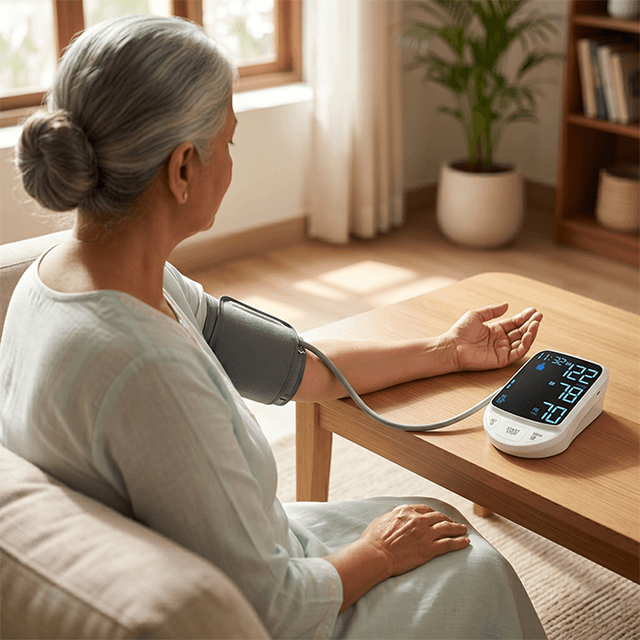
Tell your parent to empty their bladder first. A full bladder increases readings by several points. They should also try to avoid tea, coffee, and smoking about thirty minutes prior. After this, have your parent sit quietly for 5 minutes without a phone or conversation.
Position During the Reading
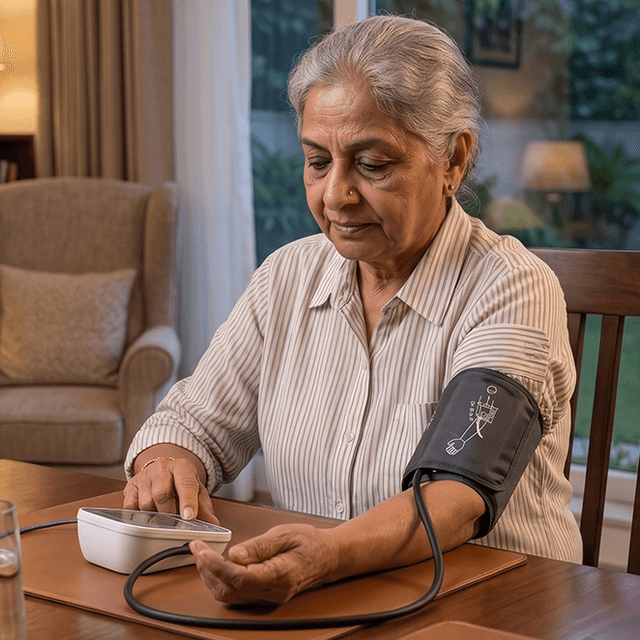
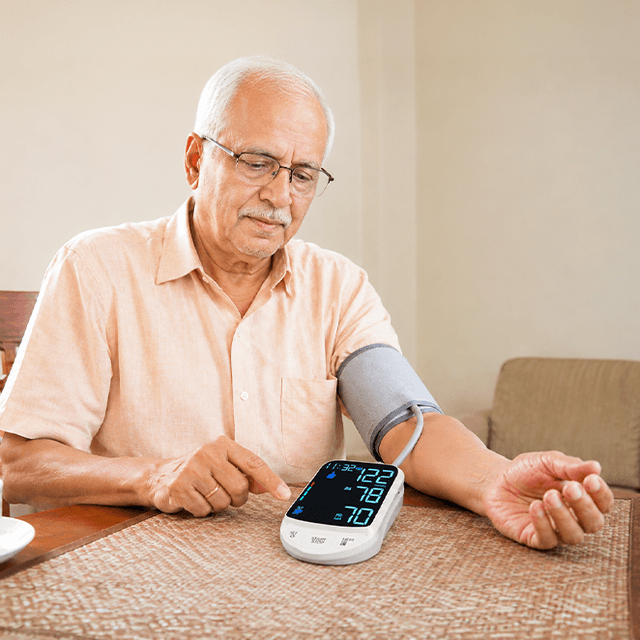
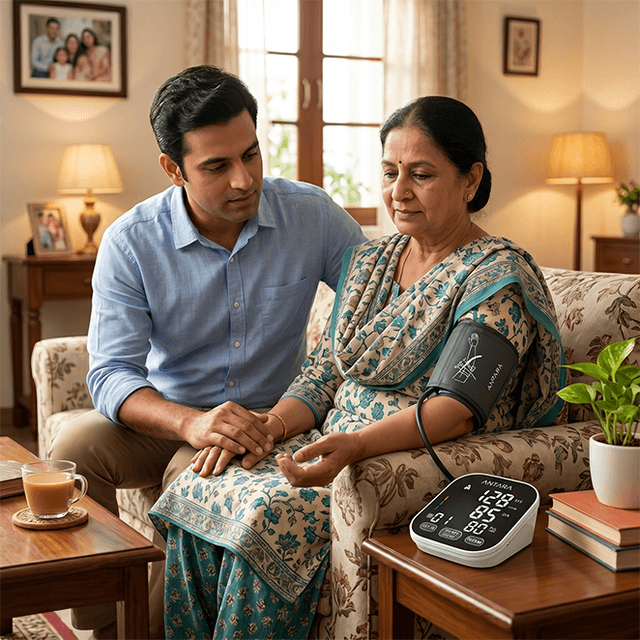
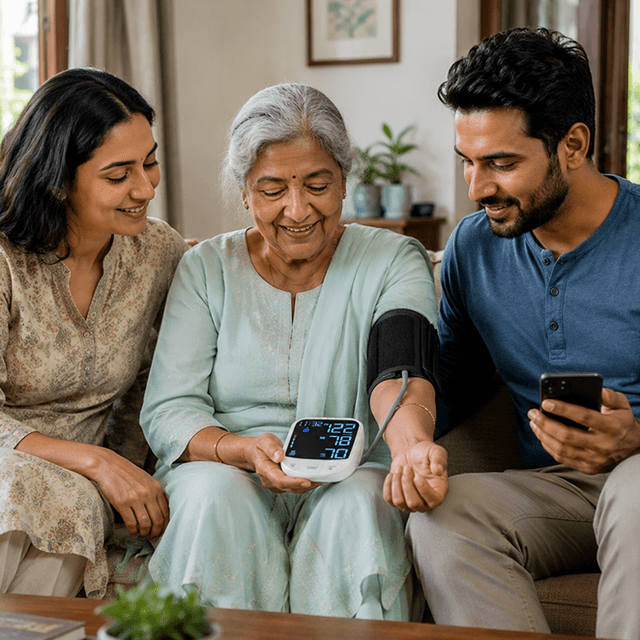
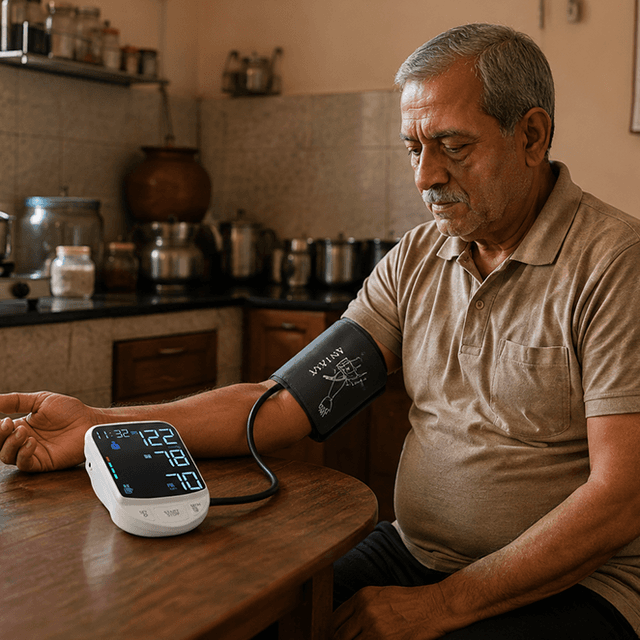
Your parent should keep their feet flat on the floor, and their back should be against the chair with it supported. Their legs should also be uncrossed. Their arm should be on the table so that the cuff is level with their heart. Results will be distorted if they are slouching in a chair or if they are holding their arm up.
Reading results can change up to ten points if the person speaks. This is an extremely important part of the process and not just an optional request.
Taking the Reading
Take two readings one minute apart and write them down. If they are more than five points apart, take a third. Most families give in to the temptation of picking the lowest number and averaging it, but try to resist.
Selecting the Best Monitor for Your Parent
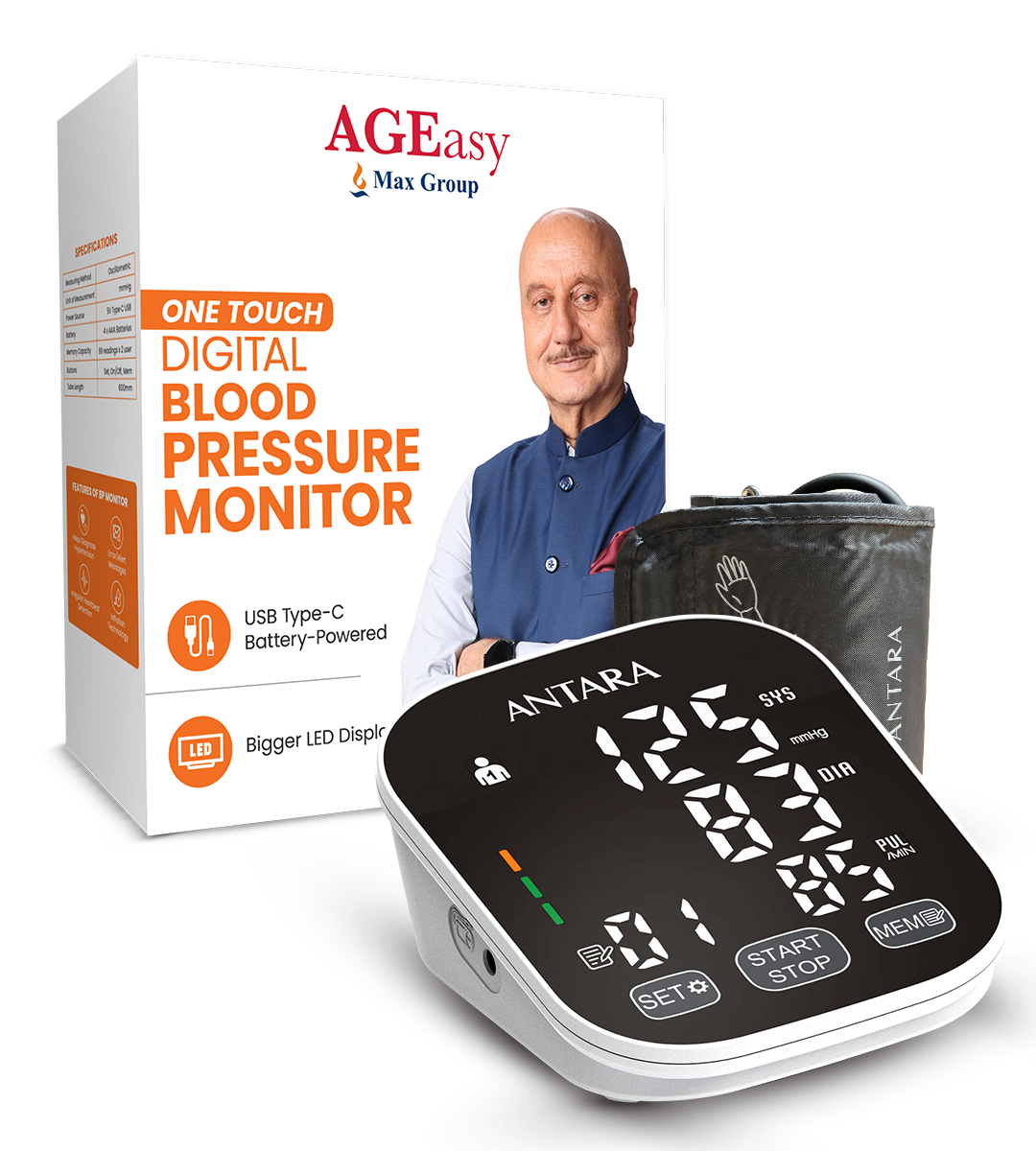
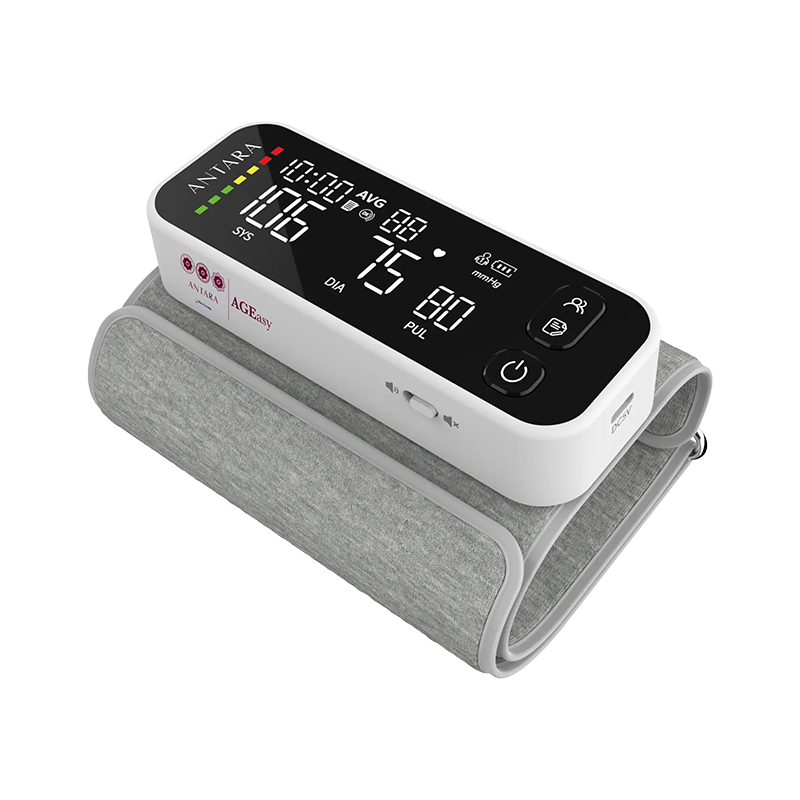
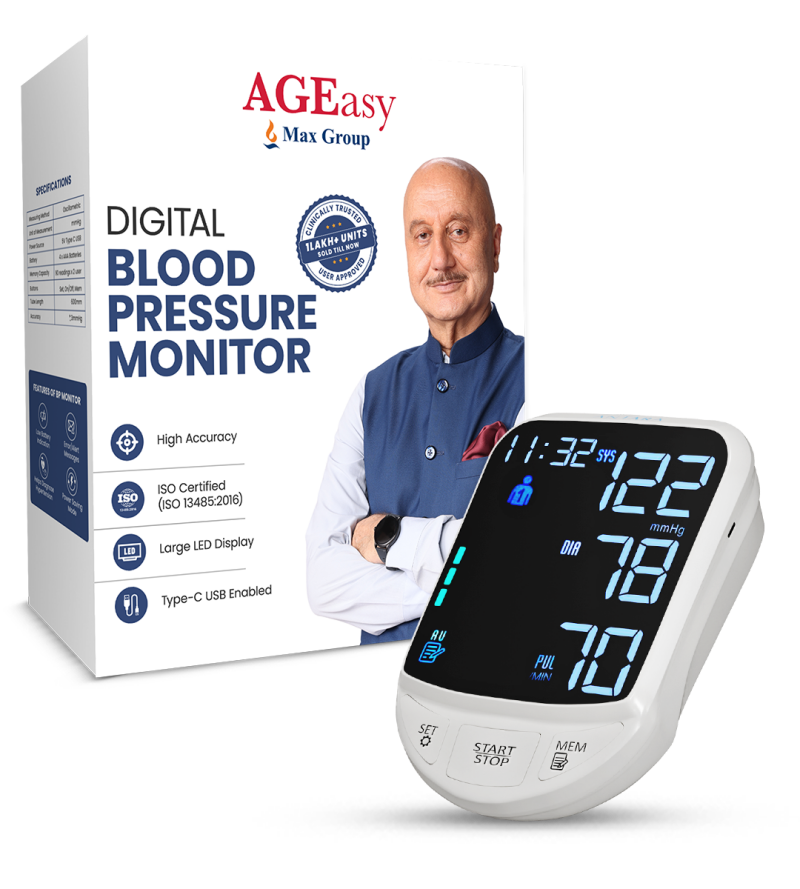
Upper arm monitors remain the reference standard for accuracy. The AGEasy Arm BP Monitor and the AGEasy Advance Digital BP Monitor are both one-touch operation devices that come with a large display. This design eliminates the fiddling, which tends to put older adults off from doing daily checks. The cuffs on these models fit arm circumferences between 22 and 42 cm, and they can operate either on batteries or via Type-C connection, which can come in handy if a power point is not available near the chair your parent prefers.
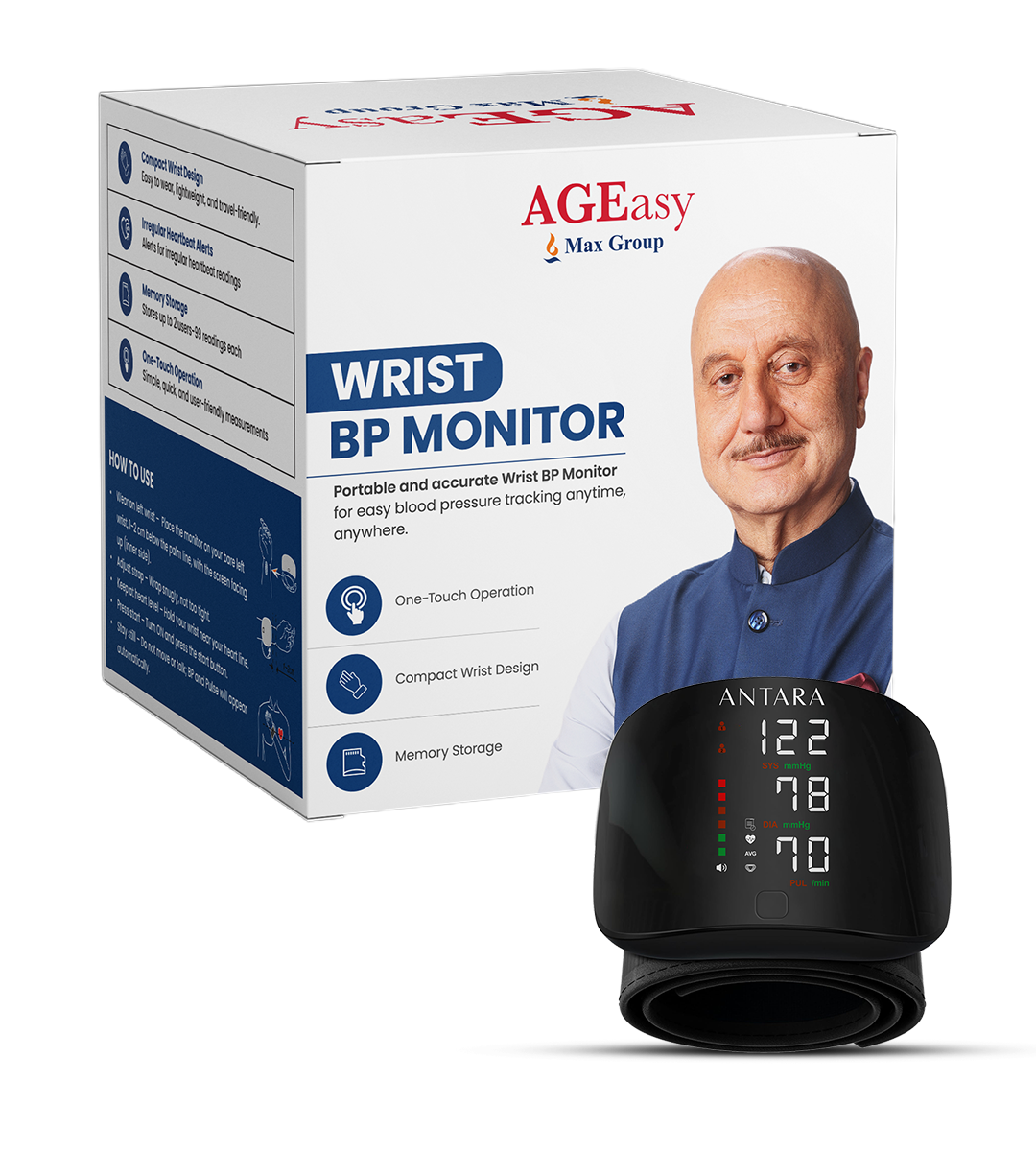
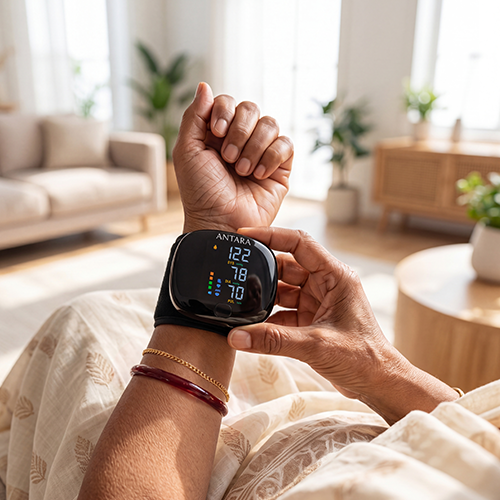
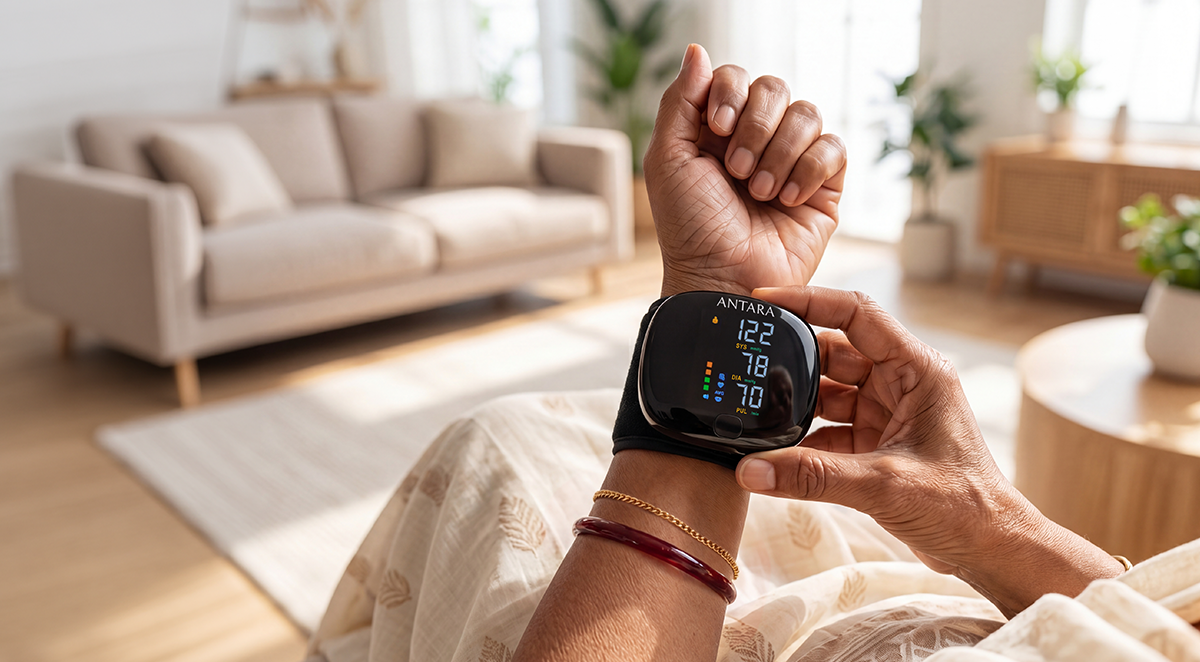
Wrist monitors work for a different set of circumstances. Some seniors may find an arm cuff to be painful, especially if they have arthritic shoulders or if their skin is thin and fragile. Others may have arms that are too large or too small for a standard cuff. If grip strength has declined, wrapping and unwrapping an arm cuff may be difficult and even impossible.
The AGEasy Wrist BP Monitor uses one-touch operation and inflation of the cuff is automatic. It records systolic and diastolic pressure and pulse rate, storing up to 90 readings for two users. It also includes a hypertension indicator, heart rate zone guidance, and a talk-back effect, which lets the user hear their reading rather than having to look at the screen. This can be helpful for parents whose eyesight may be weak.
Wrist monitors have one condition - the wrist must be at heart level and stay still during the reading. When your parent learns the position, the readings should become consistent.
If your parent already uses a device, take it to their next appointment. The doctor will compare it to the clinic monitor and see if it looks trustworthy.
How Often Should Seniors Actually Measure?
The right frequency depends on the situation, not on anxiety levels.
- Newly diagnosed or newly medicated — twice daily for 7 days, once in the morning and once in the evening, before breakfast and medication, and before dinner. This provides fourteen data points for your doctor, which is much more useful than scattered readings across a month.
- Stable and well controlled — 2 or 3 days a week, with two readings each time. Some doctors prefer one full week of twice-daily readings before each appointment instead. Both approaches work.
- Changes to your medications require time before a change in interactions or a change in dose will reflect positive clinical changes. Adjustments to medications must be evaluated after an additional 1 to 2-week interval for clinical changes to take effect.
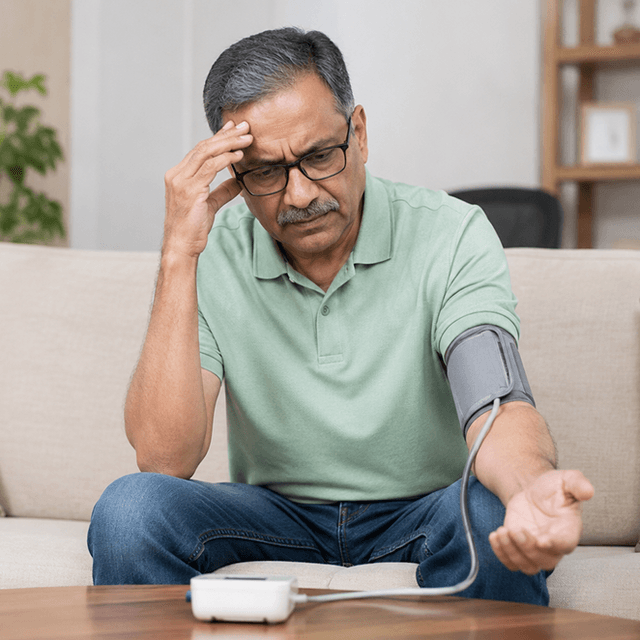
- Checking vitals in moments of anxiety, dizziness, or sickness usually is not helpful. The mindset that vitals in these moments provide critical information is flawed. It contributes to a cycle of increased worry because of elevated readings caused by pre-existing worry.
Common Mistakes That Ruin Good Readings
- Measuring over clothing. Wearing a shirt or blouse means the skin on which the cuff is placed will reflect an artificially inflated response because the cuff will compress the shirt sleeve. Only bared skin should be the site of skin contact.
- Using the wrong cuff size. Most families tend to leave cuff size unconsidered and consequently it is overlooked. If the cuff is too small the reading will be artificially elevated.
- Checking straight after activity. If walking or other activity occurs 5 minutes prior to taking the reading, the reading must be taken again after 5 minutes of sitting so the artificially elevated reading does not impact the actual reading.
- Repeating until the number looks acceptable. Readings drift downward with repeated inflation on the same arm. The fifth reading is not the true one.
- Relying on memory. Write every reading down with date and time, or use the monitor's memory function. The memory function is evidence-based medicine in practice. The doctor needs a record that they can trust.
Keeping a Record Your Doctor Can Use
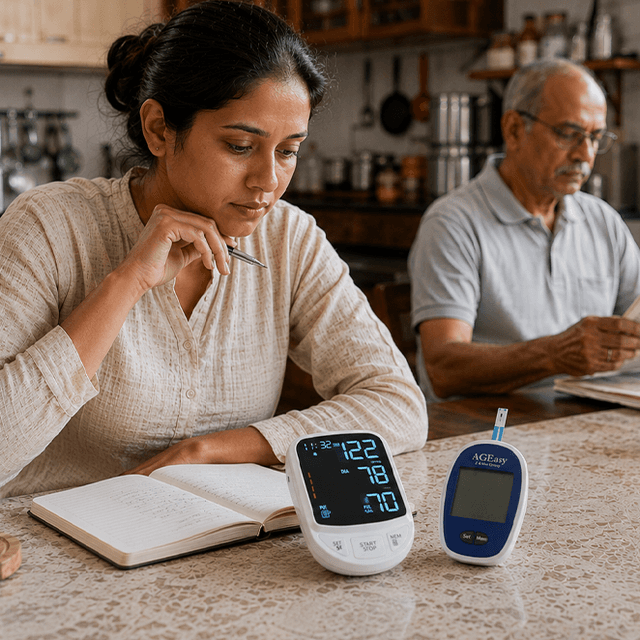
A simple notebook should be used to document time, date, all readings, pulse without alteration and any psychosocial event that is atypical within 1 or 2 days in the cycle of the medication. This is particularly valuable around dose changes.
Bring this record for every appointment. A change in the read values against the background of medication changes is one of the valuable markers. A lack of documentation does not provide your doctor with invaluable circulatory changes. Your record is the basis of evidence-based decision-making, so the value of your record must be emphasized.
When to See a Doctor
If blood pressure stays above 140/90 for multiple days, or if it drops below 90/60 and the person feels dizzy or unsteady, contact your parent's physician.
You should go to the ER for any readings over 180/120 blood pressure. If it is accompanied by chest pain, difficulty breathing, severe headaches, confusion, weakness on one side of the body, trouble speaking, or changes in vision, do not wait to get an additional blood pressure reading. These signs mean you are having a hypertension emergency and need immediate care.
If your parent feels faint when standing, make sure to mention that to the physician. It often means that the person's medications need to be adjusted rather than stopped.
Disclaimer: This article is not intended to be medical advice, diagnosis, or treatment. It is always best to consult a qualified medical professional regarding your parent's blood pressure, medications, and monitoring routine.