
BP Monitor Machine: Automatic vs Digital vs Manual — Which Type Should You Buy in India?
Aug 12, 2026
Buying a BP monitor should take 5 minutes. Unfortunately, that is rarely the case.
It starts with countless options. In the store, or online, there is an overwhelming number of automatic, digital, or manual options, and each one comes with a different price tag and advertisements filled with false claims stating that the product is doctor recommended.
This isn't true.
When buying a BP monitor, the price tag isn't the biggest factor, it's what the differences are. People believe that there are fundamentally different factors when it comes to automatic, digital, and manual BP monitors. Different marketing strategies lead people to believe that there is more variability within monitors than there actually is.
What actually changes the decision is one thing: who is using it.
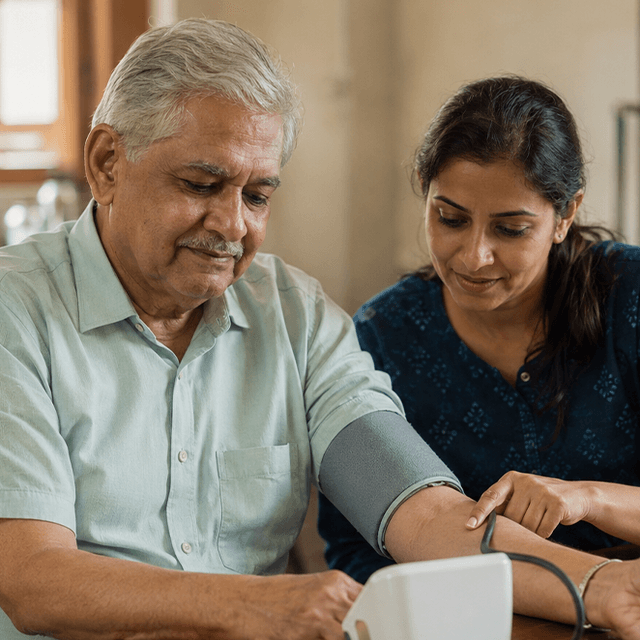
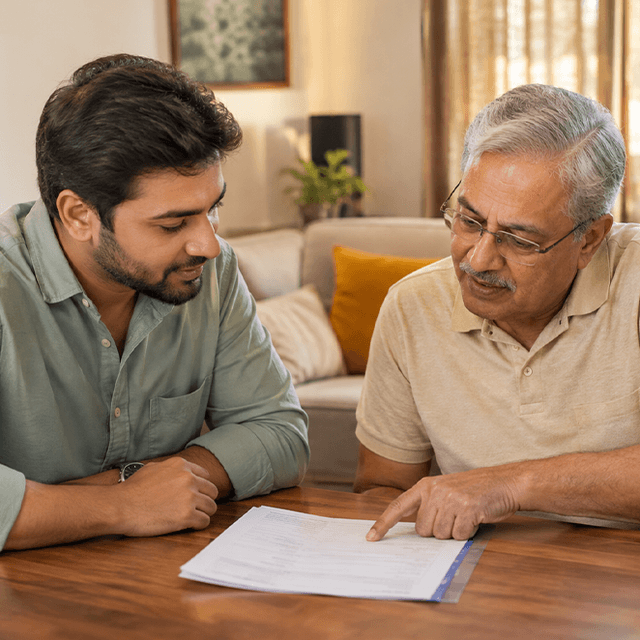
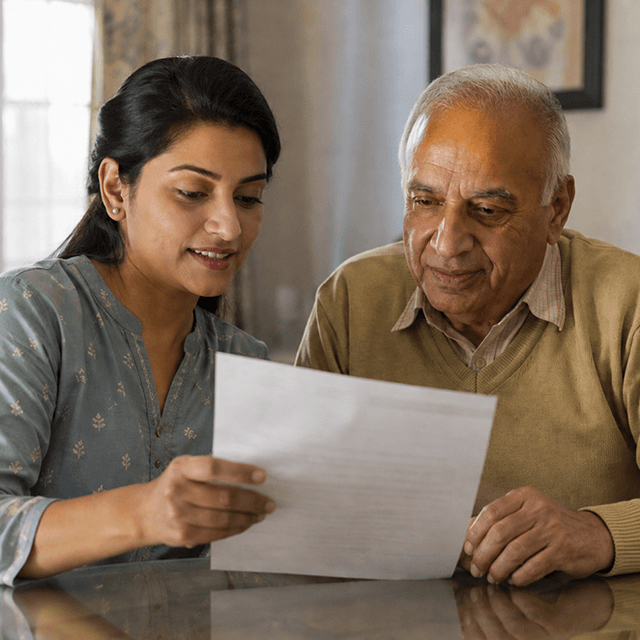
An elderly parent doesn't want something that is going to confuse them, and make them make mistakes while they are half asleep. Caregivers want monitors that are quick and efficient so they can check blood pressure multiple times a day and it should be something they can trust. A healthcare professional needs clinical precision and nothing less.
People think that the BP monitor with the most features is the best. In actuality, the best BP monitor is the most simple one. If it's complicated, people will stop using it.
Different monitors are built for different people, and this guide will help you figure out the best monitor for you.
3 Types and Who They Are For
Blood pressure monitors come in 3 different categories, with each looking distinct on a store shelf. However, they all perform the same function, which is measuring the pressure of the blood against the artery walls during a heartbeat. What differentiates them further is the particular target audience and more importantly the way they measure blood pressure.
Manual Sphygmomanometers (The Classic Clinic Device)
This is the device your doctor uses. An inflatable cuff goes around the upper arm, a rubber bulb is used to pump the cuff, and the person taking the reading listens through a stethoscope while observing a dial gauge. The 2 figures they note down are in relation to the sounds of blood flow as pressure is released.
If this is done correctly and with precision, the readings are reflective of the true pressure of blood against the artery walls (that is, they are accurate). However, should this be done incorrectly, the readings are completely random and hold no value.
The challenge, of course, is the skill deficit. Reading a manual sphygmomanometer takes training. You need to know what you're listening for, how fast to release pressure, and where to place the stethoscope. A small error in any of these steps produces a wrong number. For a person managing hypertension at home, a wrong number is worse than no number.
- Who it's for: Clinical staff like physicians, nurses, trained emergency responders, and students in medicine. It's not meant for use at home unless a family member has received clinical training in its use.
- Who should avoid it: Anyone lacking that training, and that covers most families.
Fully Automatic Upper Arm Digital Monitors for BP
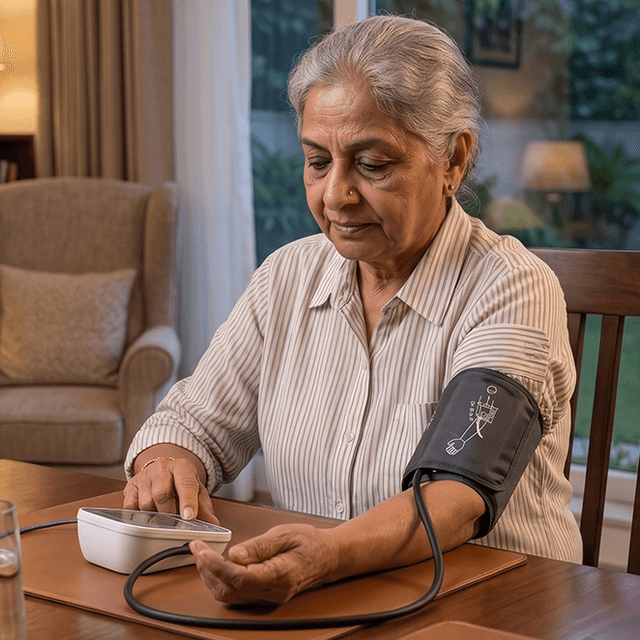
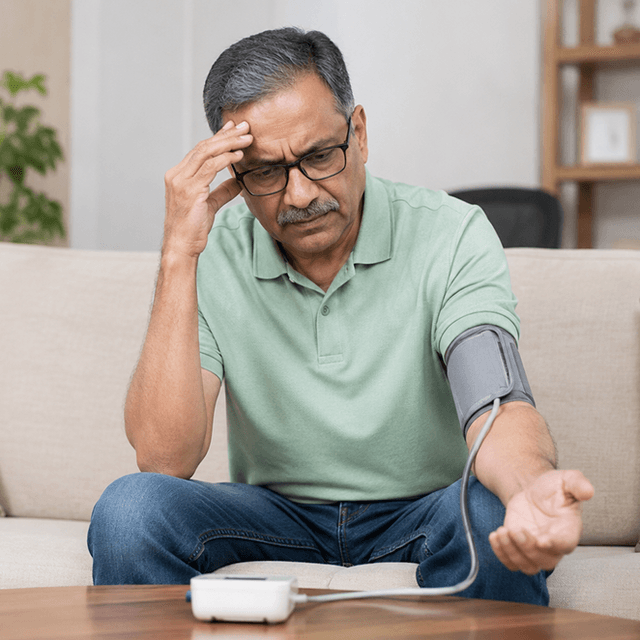
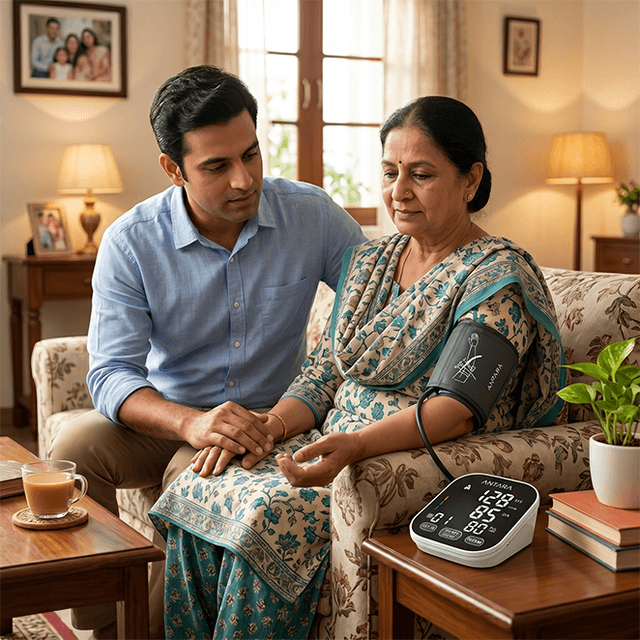
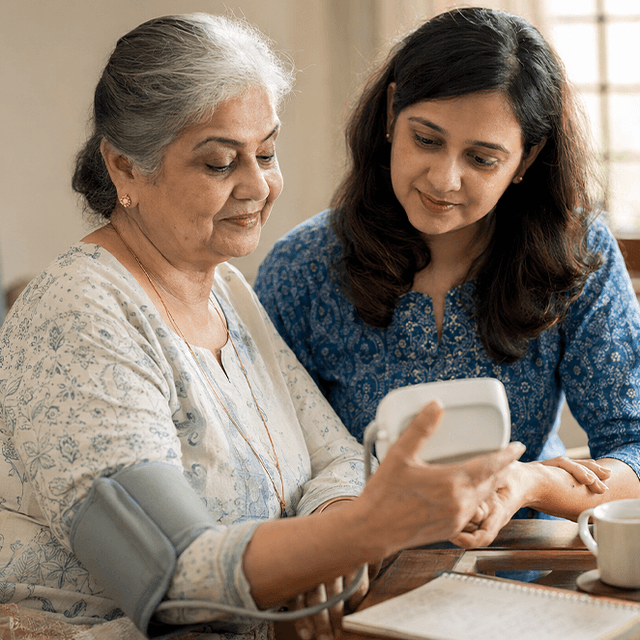
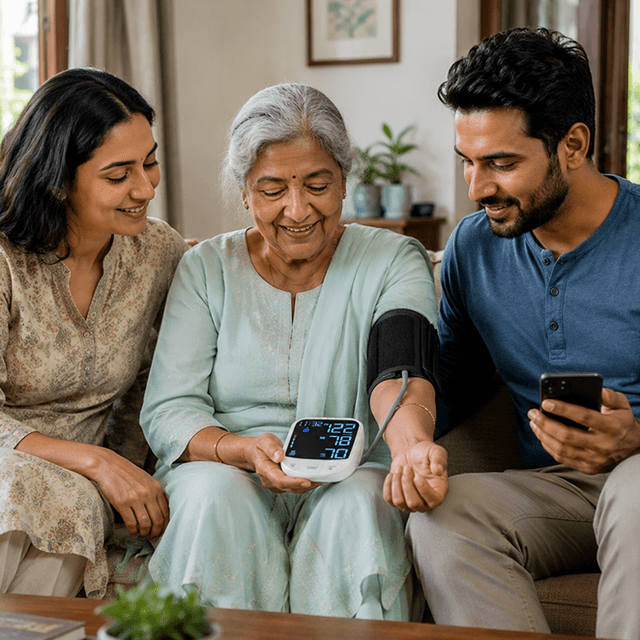
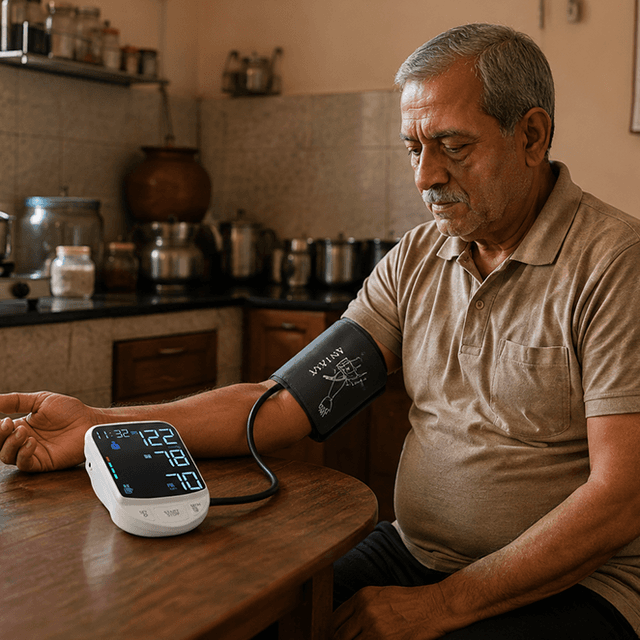
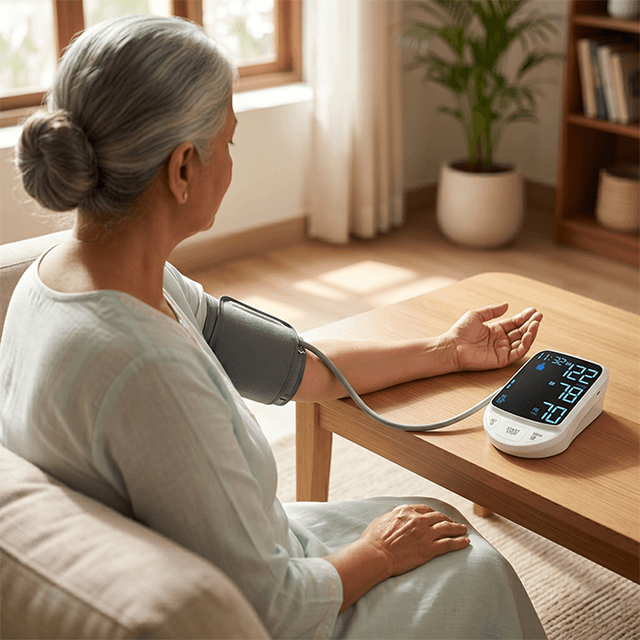
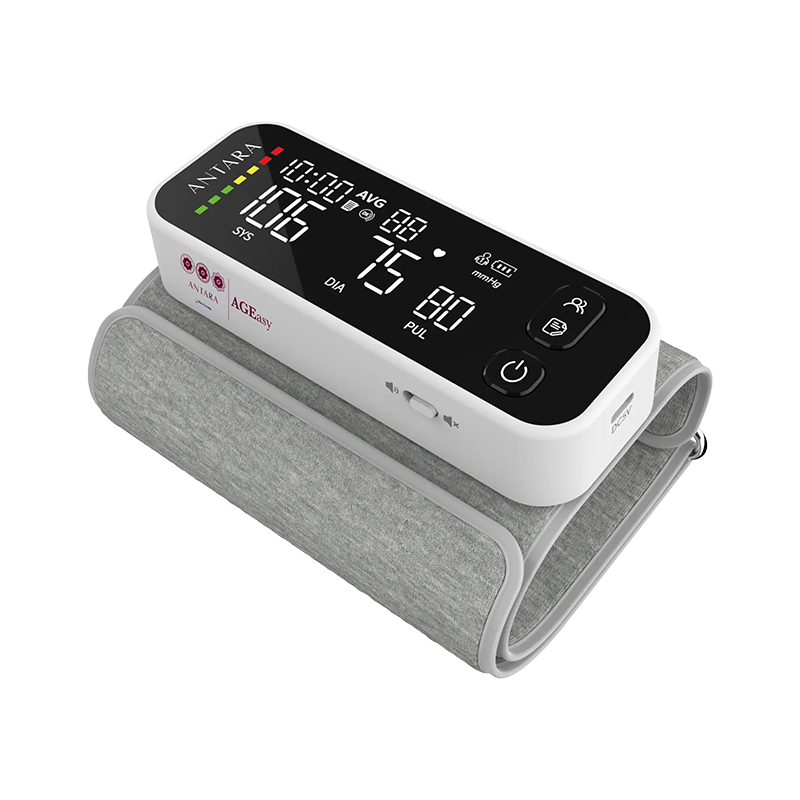
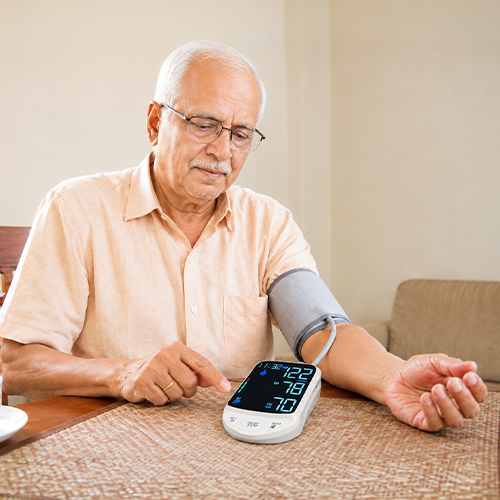
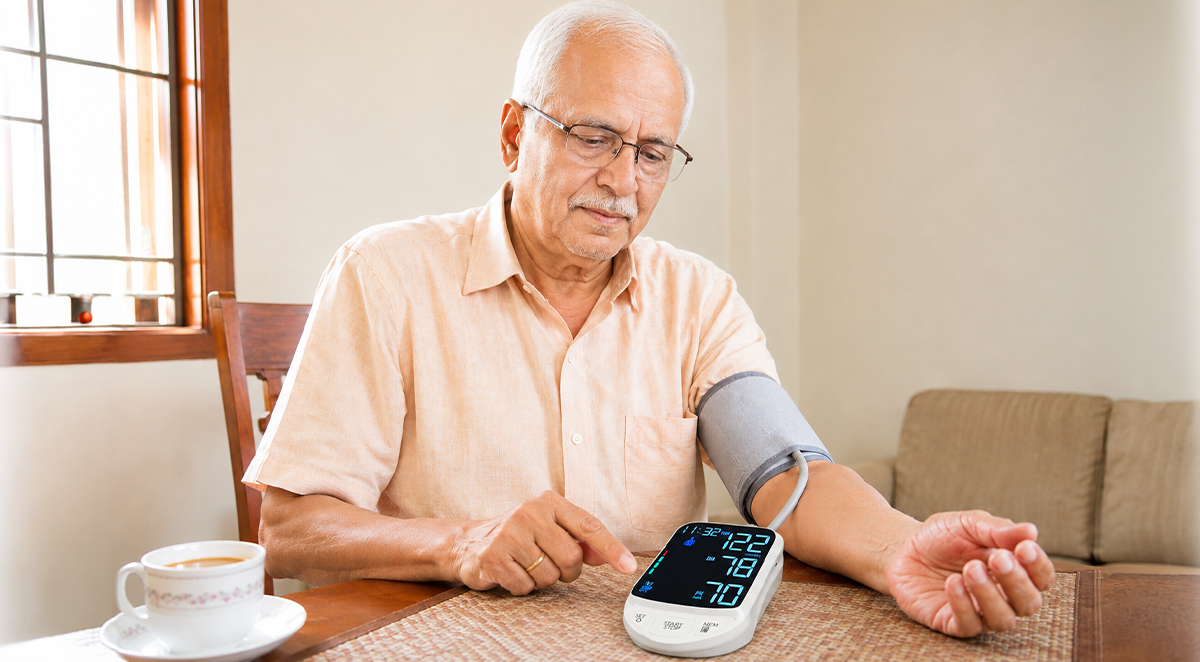
Probably the most common type of BP monitor in Indian households. You just slide the cuff on your upper arm, touch one button, and the monitor does everything for you. It automatically inflates, measures, and automatically deflates to give you the systolic and diastolic pressures along with the pulse. No need for stethoscopes. No need to make guesses.
All these monitors use a technology called oscillometry. The monitor measures very small changes (oscillations) in the pressure of the cuff and the flow of blood which are converted to readings. Provided the device is validated for clinical use and the cuff is properly fitted, this technique is as good as any that you would find in a doctor's office.
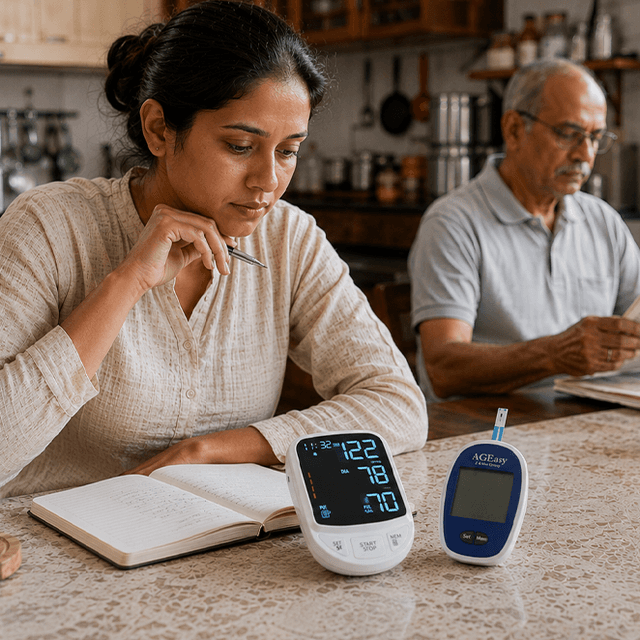
These monitors also keep track of previous readings. Most models are equipped to store between 30 to 90 readings per user. This means instead of your doctor seeing one blood pressure reading (which can be taken in a moment of stress), they receive a much more comprehensive and useful log of your blood pressure measurements over time.
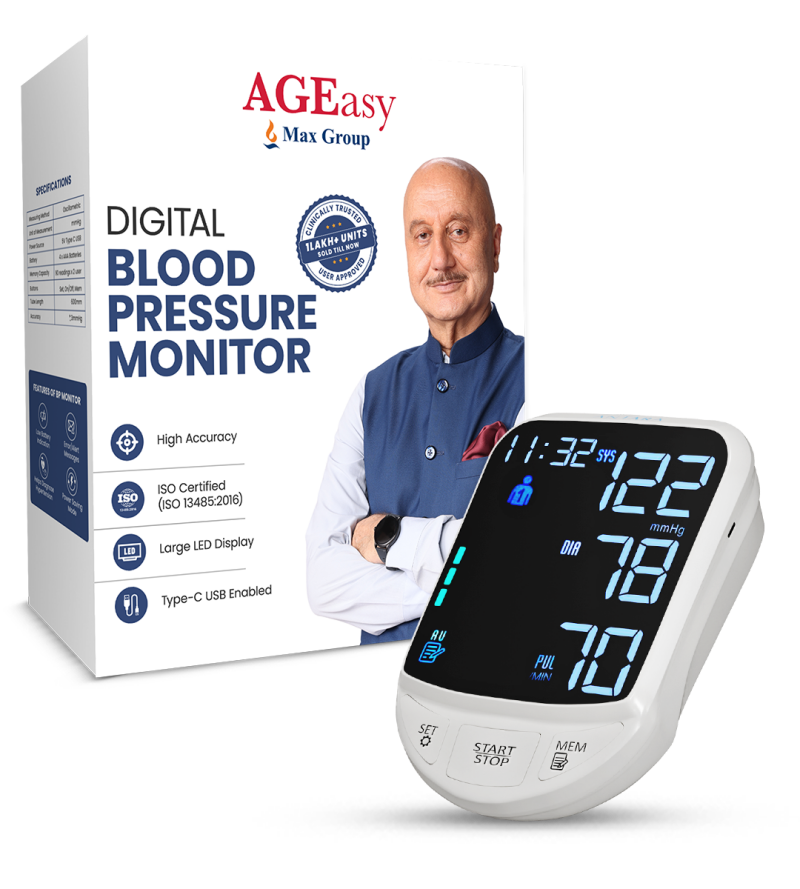
The AGEasy Advanced Digital BP Monitor was designed with exactly this purpose in mind. It is able to store 90 readings for 2 users, it can be powered by battery or USB Type-C, and has a large LED display suitable for daily home use. If you have a family member who takes their BP daily, this is the kind of device that you would want to have on your bedside table.
- Who it's for: Older people who need to manage hypertension, adults with chronic illnesses, families who want to monitor blood pressure from home, caregivers who need to take regular BP measurements of the patients, and anyone who has been advised by the doctor to maintain a record of BP readings.
- Who should avoid it: No one, this is the most basic option for home use.
Wrist Monitors and Finger Monitors
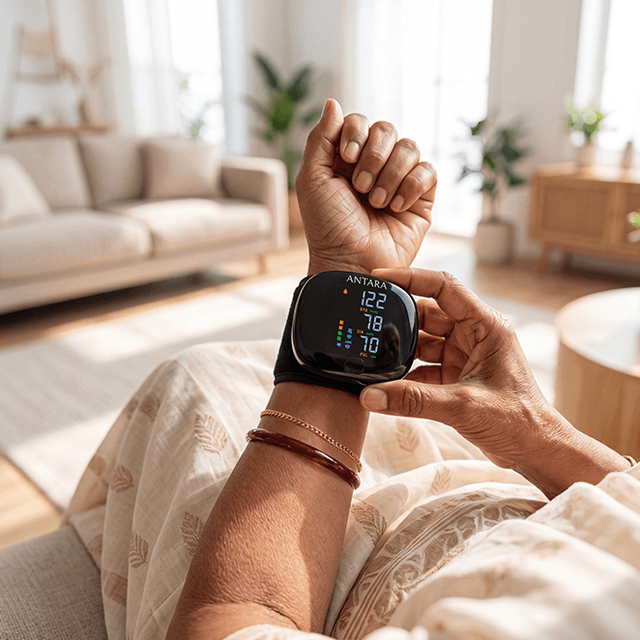
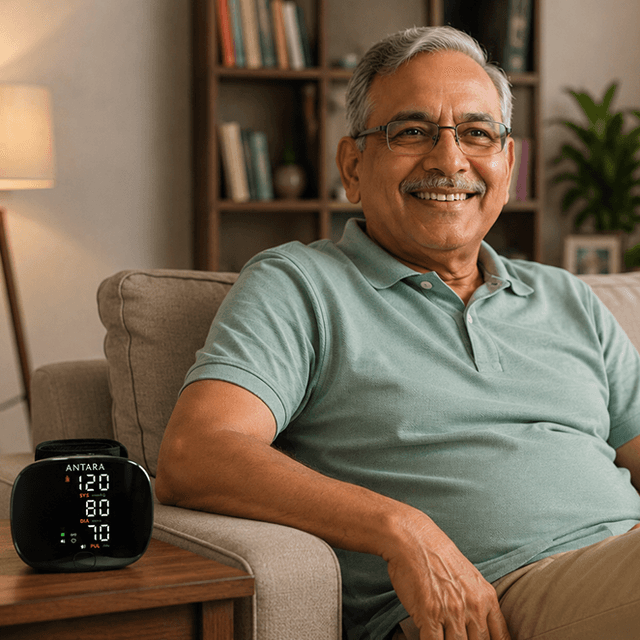
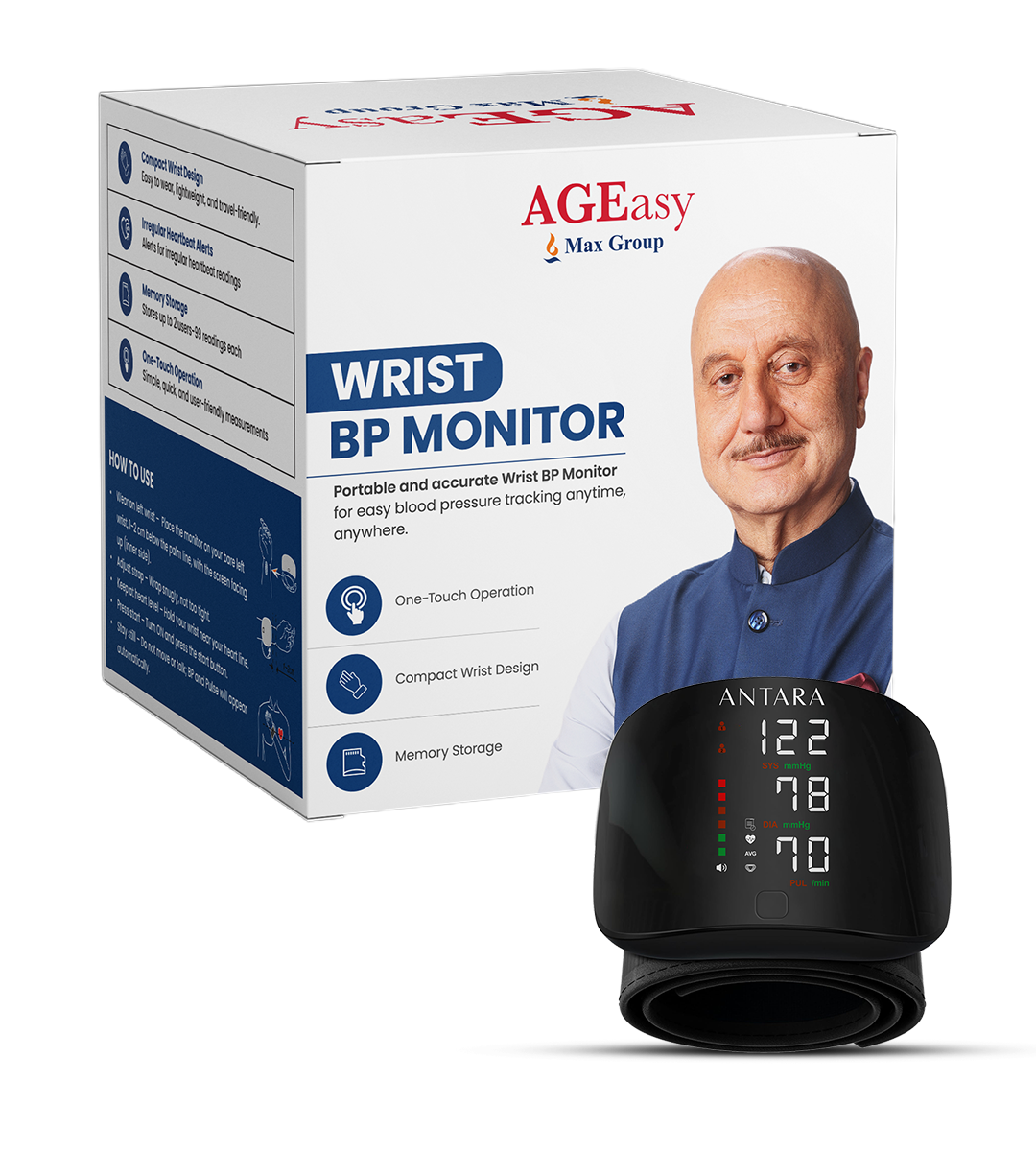
Like upper-arm monitors, wrist monitors use the same oscillometry technology. The only difference is that the cuff is positioned at the wrist as opposed to the upper arm. As for finger monitors, these clip onto a fingertip.
Both types are small and portable. However, this portability comes at the cost of accuracy. Blood pressure measurements taken at the wrists and fingers are more susceptible to a person's position, temperature, and movement than those taken at the upper arm.
If your wrist is even a small distance above or below your heart when the measurement is taken, the values will change. Most people aren't able to remain motionless in the exact position so wrist and finger monitors are more likely to give inaccurate measurements than upper-arm monitors.
For this reason, clinical guidelines from cardiology authorities in India and other countries recommend use of upper arm monitors for home monitoring.
Wrist monitors can be useful, however, for people who travel a lot and find it hard to fit a standard cuff due to the size of their arms, or for those needing a secondary monitor to carry while traveling.
In these cases, a validated wrist monitor can serve its purpose as a convenience device, while finger monitors provide almost no useful data for home monitoring and should not be used as the primary device.
- Who wrist monitors are for: Frequent travellers, people with upper-arm cuff fit issues, and those who need a portable secondary monitor.
- Who should avoid them as a primary device: Elderly users, anyone with cardiovascular conditions, and anyone whose doctor is using the readings to make treatment decisions.
The Accuracy Question: What "Clinically Validated" Actually Means
When it comes to BP monitors, 'clinically validated' means something and is not a synonym for 'accurate.'
Clinically validated means that the device was tested against a standard mercury sphygmomanometer and found to be accurate in a clinical study, and that study was done with real people and in accordance with a clinical validation study protocol.
The 2 most prominent clinical study validation protocols to which BP monitor developers must adhere are the British Hypertension Society and the European Society of Hypertension.
A monitor that is clinically validated will produce readings within 5 mmHg of the standard reference most of the time. That 5 mmHg margin is critical because treatment decisions, changes in medications, and doctor visits are all based upon these numbers.
There are also many examples of what it does not mean to be 'clinically validated':
- CE marking on the box. CE certification does not mean blood pressure accuracy; it means electrical safety.
- The word 'doctor recommended' on the product page. This is marketing language that has no standard definition.
- A good star rating on an e-commerce platform. User ratings reflect ease of use and packaging far more than clinical accuracy.
To check whether a device is actually validated, look it up on the dabl Educational Trust's validated device list or the Stride BP database. Both are free and publicly accessible. Type in the brand and model name. If it's on the list, the device passed a recognised protocol. If it isn't, no amount of marketing copy changes that.
AGEasy's BP monitors are designed to clinically accurate standards and built specifically for home use in India, with adjustable cuffs that fit arm circumferences from 22 to 42 cm. You can browse the full range on the AGEasy health monitoring collection page.
Important Features for Elderly Users
Elderly users have particular challenges when using a BP monitor on their own in the home environment. The device should take into consideration these challenges.
- Large display: Readings should be visible without squinting. Look for a monitor with a large, backlit screen. Tiny digits on a grey background are a problem at 7am without glasses. The AGEasy Advanced Digital BP Monitor was designed with a large LED display exactly for this purpose.
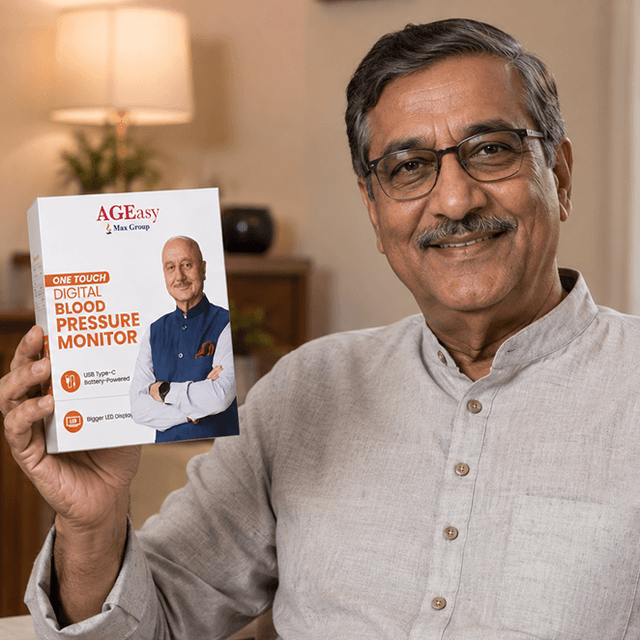
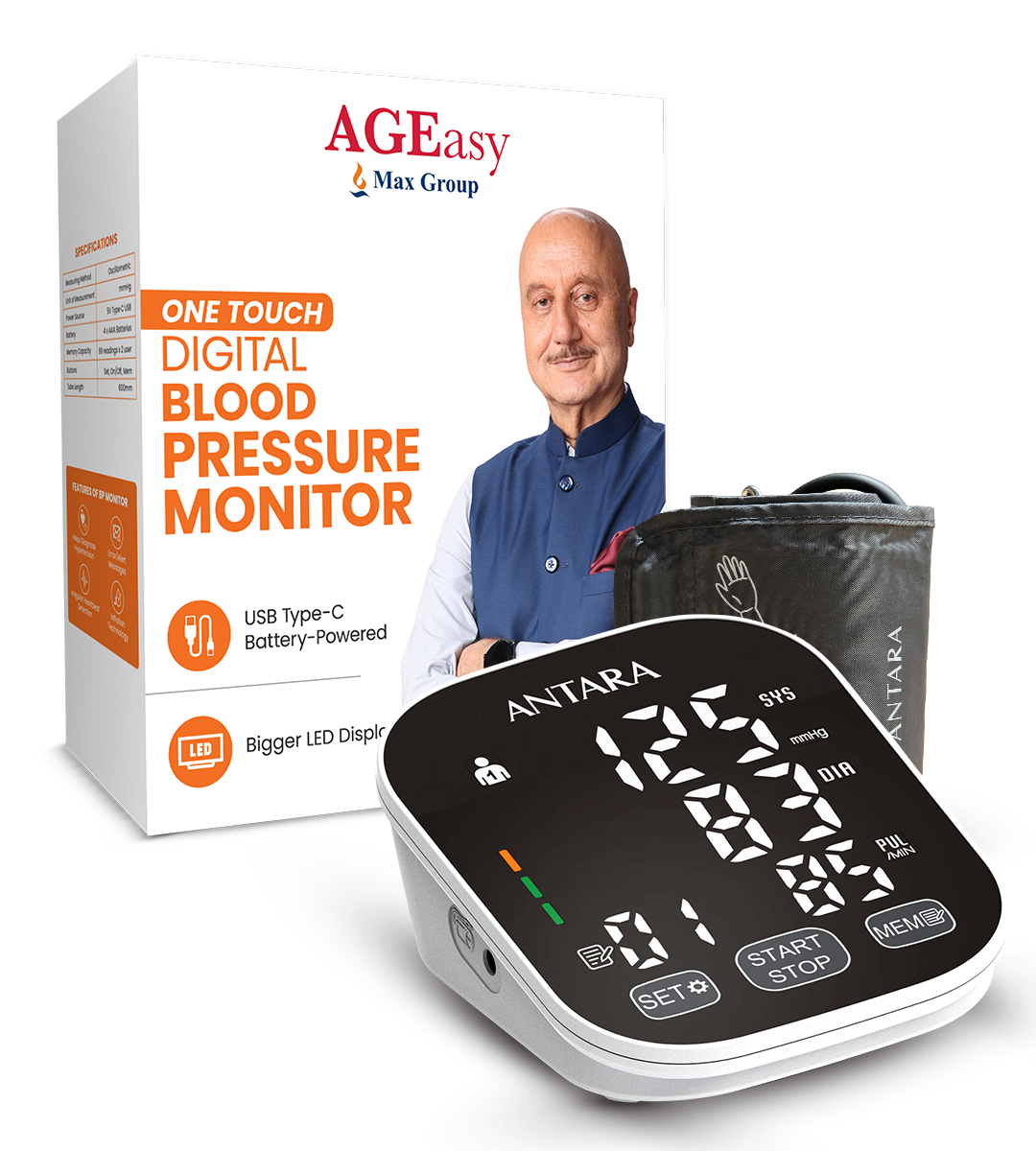
- One-button operation: The fewer steps there are from sitting down to getting a reading, the better. Devices that require you to go through a menu, push several buttons in a sequence, or connect to an app before taking a reading create opportunities for error. This problem is solved by the AGEasy One Touch Digital BP Monitor. One button. One press. The reading appears.
- Cuff fit indication: Some monitors detect whether the cuff is positioned correctly before deflating the cuff. This feature reduces the chances of having a bad reading due to the incorrect placement of the cuff, so it is worth the cost.
- Irregular heartbeat detection: Many monitors flag readings for which an irregular heartbeat was detected during the measurement. This is a useful safety signal for elderly users, as they are more likely to have arrhythmias. It does not diagnose anything, but it reminds them to call their doctor.
- Memory with date and time: A monitor that counts and stores readings along with the date and time offers a doctor a useful record. A log of 60 numbers without a time stamp does not tell much.
- Compatibility with larger cuffs: Standard cuffs accommodate arms with circumferences between 22cm and 32cm. If the arm is larger than this, a large cuff would be necessary. Using a standard cuff on larger arms will yield inaccurately high blood pressure results. Ensure the upper arm measurement is within the range of the specified cuff size before purchasing. Most AGEasy monitors have a cuff size range from 22 to 42cm, meaning most people won't have to buy extra cuffs in order to use the monitor.
- Voice Guidance: Monitors with this feature give audio instructions and will read the blood pressure results aloud. This makes the monitor usable for visually impaired users that would find it difficult to use otherwise. This feature is present on the AGEasy Automatic BP Monitor with Voice Assistant. This capability makes it highly suited for elderly users living alone.
3 Mistakes Families Make When Buying a BP Monitor
- Buying cheaper monitors, not validating monitors before purchasing. A blood pressure monitor priced at Rs 800 is not a deal if it lacks clinical validation. It's a number generator. The reading displayed on the monitor is not necessarily what is occurring in the arteries. A validated monitor priced at Rs 1,399, like the AGEasy One Touch Digital BP Monitor, is worth more than an unvalidated monitor priced at Rs 800.
- Assuming that a wrist BP monitor is more suitable for an elderly parent because the cuff looks smaller and lighter, and therefore, it seems easier, is a mistake. In practice, elderly users are more likely to hold their wrist in the wrong position, which produces inconsistent readings. Upper-arm monitors with a one-button design are easier to use correctly, even if they look more complicated in the box.
- Buying one monitor and sharing it across the household without checking cuff size. A cuff that fits one person's arm may not fit another's. If your parent has a larger upper arm and you hand them a standard-cuff monitor, the readings will be wrong. Check arm circumference for every person who will use the device regularly and match it to the cuff specification. AGEasy monitors cover 22 to 42 cm, which reduces this problem for most families.
Budget, Mid-Range, and Premium Buying Guide
- Budget: Rs 1,399 to Rs 2,500
At this price, you want a clinically accurate upper-arm monitor with basic memory and a readable display. The AGEasy One Touch Digital BP Monitor sits at Rs 1,399 and is built around single-button operation, a clear display, and a cuff that fits 22 to 42 cm. It runs on AAA batteries or USB Type-C. You won't get irregular heartbeat detection or multi-user memory logs. You will get accurate readings from a device that works without instruction.
Good for: First-time buyers, families monitoring one person occasionally, and households that want a reliable device without spending beyond what the use case demands. - Mid-Range: Rs 2,500 to Rs 5,000
This range adds a larger display, better build quality, and features that matter when someone is checking BP every day. The AGEasy Advanced Digital BP Monitor at Rs 3,749 fits here. It stores 90 readings for two users, runs on battery or USB Type-C, has a large LED screen, and comes with a 2-year warranty. For a family where one or two people are actively managing hypertension, this is the level to buy at.
Good for: Elderly users monitoring hypertension daily, caregivers tracking readings for a family member, and anyone whose doctor has asked for a regular log. - Premium: Rs 5,000 and above
At this level, you get features like dual-user memory, advanced arrhythmia detection, voice assistance, and multi-reading averaging. The AGEasy Automatic BP Monitor with Voice Assistant is worth considering here, particularly for elderly users with low vision or those who live alone and need full audio guidance through each reading. These devices are useful when a doctor is actively managing treatment based on home readings or when two users in the same household need separate logs.
Good for: People with complex cardiovascular conditions, multi-user households where both users need individual tracking, and anyone in a formal remote monitoring programme with their doctor.
Bottomline
When choosing between automatic, digital, and manual home blood pressure monitors, digital and automatic refer to the same category of home monitors, whereas manual monitors are meant for clinical environments.
Of the options available, upper-arm monitors are more accurate than wrist monitors, and clinical validation trumps marketing speak every time. If you're purchasing for an older parent, choose a validated upper-arm monitor that has a large screen, is easy to use (one-button operation), and has a cuff that will fit their arm. The AGEasy One Touch Digital BP Monitor at Rs 1,399 hits all those requirements.
If daily monitoring and two-user memory storage functionality is what you need, that's available on the AGEasy Advanced Digital BP Monitor priced at Rs 3,749. Both can be found on the AGEasy health monitoring collection page.
If you are purchasing for yourself to monitor BP at home, the same reasoning applies. Validation first, then features, then price. The monitor that 'works' is the one you will be using on a consistent basis. The more consistent readings are over a time period, the more information you are providing to the doctor compared to a single reading taken at the clinic under stressful conditions. That is the essence of monitoring at home.