
Ambulatory BP Monitoring: What Is a 24-Hour BP Monitor, How It Works, and Where to Get One in India
Aug 12, 2026


So your cardiologist referred you to a clinic to do a 24-hour blood pressure test. You probably nodded, thanked the doctor, put the referral in your pocket, and the moment you got outside, pulled out your phone to see what you could find.
Good, that's exactly what you should do.
So let's work through what this test actually is, what it is for, what is going to happen to your arm every half hour through the night, what the numbers mean when you get the report, and how much it is going to cost you in India.
But before we do that, there is something very important that you need to know about blood pressure. Most people don't understand this, and to be honest, many doctors working in busy outpatient departments do not fully appreciate this either.
The single number that a doctor gets as a reading in a clinic is unlikely to be the number that is hurting you. In fact, it may even be one of a group of numbers that are alarming you unnecessarily. One single reading cannot tell you the real issue. The single reading that a doctor got in a clinic completely misses the big picture.
Understanding why your doctor ordered this test requires a quick look at what it is actually.
What is Ambulatory Blood Pressure Monitoring?
An ABPM test is carried out using a small portable device that measures blood pressure at 15-minute intervals over a 24-hour period.
This means you wear the device in a non-clinical setting, during your normal daily activities, such as work, eating, arguing on the phone, and even while you are asleep.
This is how ABPM diagnostic testing is different from a single clinic measurement. ABPM measures the BP entire day, whereas a clinic measurement captures just one "moment in time."
The device captures how your BP is responsive to the morning hustle, stress, and afternoon quiet hours. Most importantly, it captures the hours that have previously never been measured, during sleep.
This is how every significant organization in the world of cardiology, including the latest international guidelines from the European Society of Hypertension (2023) and the European Society of Cardiology (2024) and the Indian Guidelines for Hypertension (IGH-IV, co-released in 2019 by the Cardiological Society of India, the Association of Physicians of India, and other organizations) has recommended the use of ABPM as the gold standard of hypertension measurement.
No other home monitor is better than ABPM, and neither are more frequent visits to the clinic.
The 3 Scenarios That a Clinic Reading Cannot Detect
The India study identified three scenarios. Knowing these scenarios explains why your cardiologist ordered this test.
White-Coat Hypertension: When the Clinic Itself Is the Problem
12% of patients who are labeled as hypertensive in the clinics have normal blood pressure elsewhere.
The title is about the old myth of the white coat doctor but the anxiety response happens regardless of whether there is a white coat. It can trigger in any medical setting. Some people experience it acutely, while others hardly notice it. However, the measuring process, and the anxiety that accompanies it, is the cause for elevated pressure in a significant number of patients.
What this means is that patients are at a high risk of being wrongly diagnosed with hypertension in case ABPM is not done. It means they may take the medication for years with real side effects, and a false sense that something is wrong with them.
ABPM captures this. Given the context, the absence of a recorded average value of 130/80 mmHg over 24 hours shows that the patient is experiencing white coat hypertension, where the reading in the clinics was greater than 140/90. Hence, no medications are required.
Masked Hypertension: The One That Worries Cardiologists More
This is the pattern that keeps cardiologists up at night. And it is the one that is most dangerous to miss.
The study from India showed that about 19.3% of the people who had blood pressure that appeared normal in the clinic, had nothing to flag. The doctors reassured the patients and they went home.
However, their blood pressure during actual daily life, whether at work, during stress, physical exertion, and during the early mornings, was chronically and significantly elevated. The clinic just never saw it.
Masked hypertension is associated with worse cardiovascular outcomes than white-coat hypertension. Think about that. The pattern that appears dangerous (elevated in clinic) is often less harmful than the pattern that appears fine. Because the one that appears fine has been quietly straining the heart and arteries with no treatment, no monitoring, and no awareness.
The clinic reading said everything was fine but it was not.
Night-Time Hypertension: The Pattern Nobody Else Can Find
Your blood pressure is supposed to fall during sleep. Typically by about 10 to 20 percent. This is not an option, from the body's perspective. It is a nightly recovery window that the cardiovascular system depends on.
During sleep, some individuals' blood pressures either do not dip as it should, or may even increase. This phenomenon is known as non-dipping or nocturnal hypertension.
Research supports the claim that the phenomenon is associated with a substantially higher risk of stroke, heart attack, and even damage to the kidneys.
To make matters worse, only 11.9% of the patients in the India study presented with blood pressure that was elevated only at night while their daytime blood pressure readings and tests performed at clinics indicated that they were healthy.
This is where the power of ABPM comes into play. It is the only test that provides a measurement of blood pressure during sleep.
If your cardiologist is looking into unexplained cardiovascular risk, or if your symptoms seem to worsen in the mornings, they may be looking for this pattern.
This is how the test works. What to expect?
Let's be realistic.
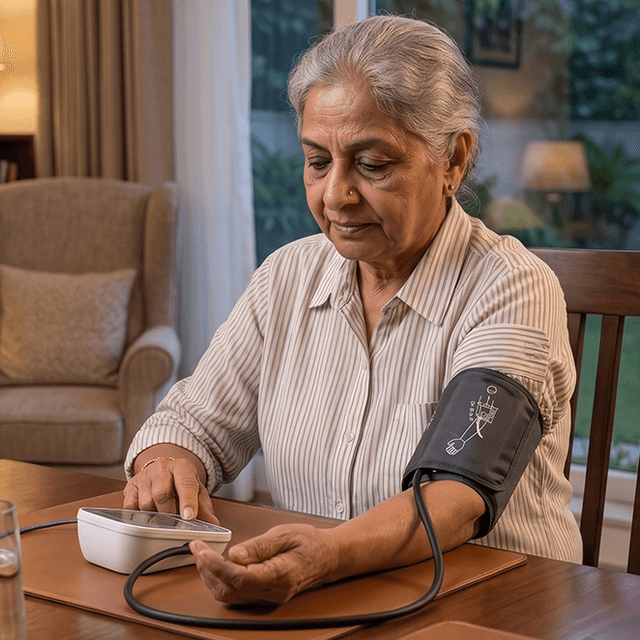
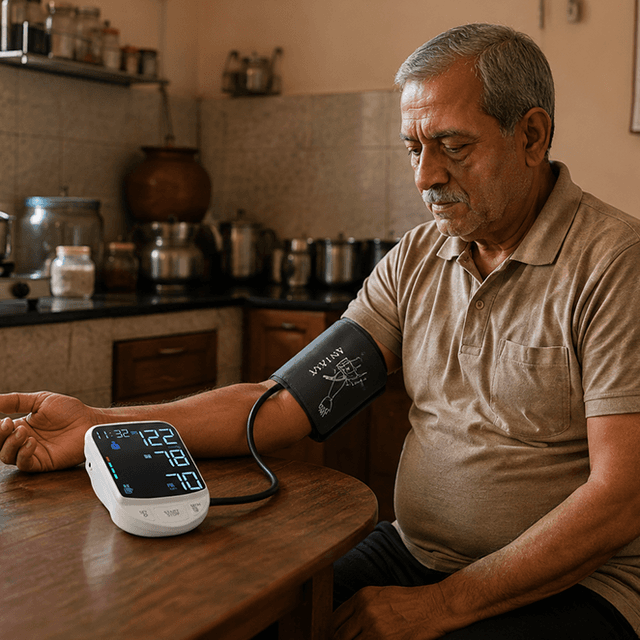
The device is small. It is roughly the size of a deck of cards and weighs between 200 and 300 grams. You can clip it to your belt or store it in a pouch around your waist. A thin tube connects the device to a standard blood pressure cuff that you will be wearing around your upper arm.
The nurse or technician who works at the clinic or diagnostic center will prepare everything. This will take about five minutes. They will explain how it works, answer your questions, and then you can go home.
Then you live your day. That is literally the instruction.
During the day and while you are awake, the cuff will inflate every 15 to 30 minutes. You will feel the pressure as it is squeezing you. This is a sensation you are likely familiar with from previous blood pressure checks. This process lasts only a few seconds. It takes a reading and then the cuff releases. If it is overnight, the process will repeat at 20 to 30-minute intervals.
You will be aware of the inflation at the start of the test but most people tend to stop noticing. For some people, they can just end up sleeping through the night and just have their test device be a routine part of their sleep.
The test device is to be returned after 24 hours. The test data will be downloaded and a detailed report will be generated for your cardiologist to review.
What to Do and What to Avoid on Test Day
The whole idea is for the machine to capture real blood pressure. So the main instruction is to just act naturally. Go to work, cook, take a walk, have your meals. Do not try to manipulate the test by being especially calm or especially active.
That said, a few things do matter:
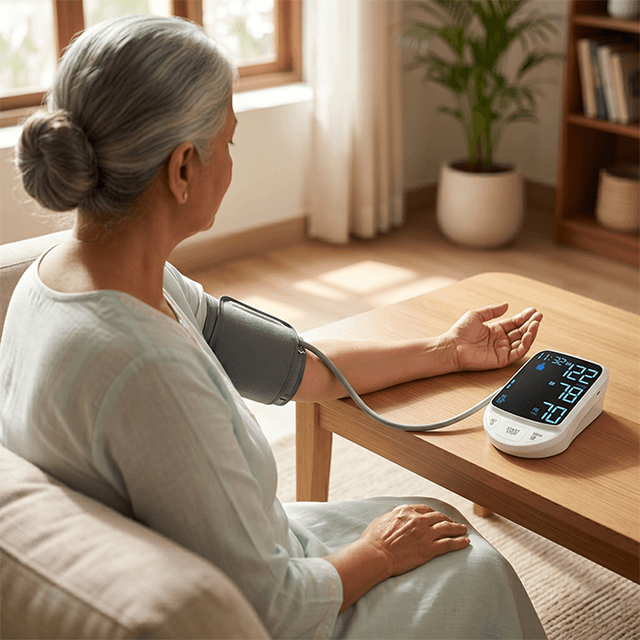
- When the cuff begins inflating, be sure to keep your arm still and at your side, since any movement could alter the result.
- On the day on which you will be taking this measurement, please avoid any vigorous exercise beyond the level of a casual walk. Any activity such as a lengthy run or a workout at the gym, will create activity spikes that are not representative of the activity levels of your average day.
- If something notable happens, make sure to write down the time. This might include a stressful phone call, an argument, a large meal, problems sleeping, etc. This detail will help your cardiologist better understand the readings instead of assuming the individual reading is an anomaly.
- Make sure to remove the device before showering or bathing, since it is not waterproof.
- You do not have to avoid your normal sleeping routine, since the device is made for that.
One practical note on validity: the European Society of Hypertension suggests that for the test to be considered valid, at least 70% of the expected measurements should be captured. This usually indicates a minimum of 20 readings during the wake hours, and a minimum of 7 readings during the sleep hours. Should you have an atypical night, or if the device faces issues, your cardiologist will likely ask you to repeat the test.
What the Numbers in Your Report Actually Mean
Your ABPM report will show averages for each of the time intervals throughout the 24 hour period for which the test was administered. It is important to note that each of these averages will show some numbers that are considered lower than the acceptable limit of the clinic threshold of 140/90.
This is intentional, not a quirk. Readings outside of a clinic will always be calibrated to be lower, and the thresholds will be adjusted accordingly. Therefore, do not be concerned if your ABPM thresholds seem stricter than your clinic report.
| Measurement Type | Hypertension Threshold |
|---|---|
| 24-hour average | ≥130/80 mmHg |
| Daytime / awake average | ≥135/85 mmHg |
| Night-time / sleep average | ≥120/70 mmHg |
| Clinic BP (for comparison) | ≥140/90 mmHg |
Source: European Society of Hypertension Practice Guidelines for Ambulatory Blood Pressure Monitoring
Having an average of 130/80 mmHg or more over 24 hours qualifies as ambulatory hypertension. Each of these individually qualifies as a daytime average of 135/85 or a night time average of 120/70.
However, this is critical: please do not attempt to analyze this report by yourself. There is a pattern that your cardiologist has to assess every single value. They will look to see how much your pressure falls at night, the early morning spike, and the differences in each individual reading hour by hour.
The averages do not tell the whole story.
The report may not give a conclusion. It provides your physician with a new perspective on your blood pressure. For the first time, they can see an entire day's worth of data collected from previous clinic visits.
Where to Get the Test in India
In every large city, you have four realistic choices.
- Standalone diagnostic centers situated in your city include SRL Diagnostics, Metropolis, Medanta Diagnostics, and similar networks in Delhi, Mumbai, Bengaluru, Hyderabad, Chennai, and Pune.
- Cardiology outpatient departments of the major hospital networks, namely Apollo, Fortis, Max, Manipal, Kokilaben and AIIMS.
- Home technician services are available in Bengaluru through Okto Healthcare, and are set to expand to other metros. A trained technician visits your home, sets up the device, and returns the following day to retrieve it.
- Dedicated cardiology clinics, which feature their own ABPM apparatus, are commonplace at the private practices of senior cardiologists in the metro cities.
Your cardiologist's referral will typically specify where to book. If this is not the case, you can contact nearby diagnostic centers, as not all branches have an ABPM device available.
What It Costs in India (2026)
Based on rates obtained from verified sources in metropolitan India, cardiology clinics, diagnostic centers, and health aggregators, the ranges are estimated to be between INR 2,500 - 7,000. At the premium end, private hospital cardiology departments can charge up to INR 10,000. No credible source we found quotes the complete test at a clinical setting for less than INR 2,500.
| Provider Type | Approx. Cost (2026) | Notes |
|---|---|---|
| Standalone diagnostic centres (metros) | Rs 2,500–Rs 5,000 | SRL, Metropolis, Medanta Diagnostics and similar labs |
| Cardiology OPD (major hospitals) | Rs 3,000–Rs 7,000 | Apollo, Fortis, Max, Manipal, Kokilaben, AIIMS |
| At-home technician service (Bengaluru) | Rs 3,000 (flat) | Okto Healthcare; technician visits, attaches device, collects next day |
| Private hospital (premium) | Up to Rs 10,000 | Tier-1 private hospital cardiology departments |
Sources: Vaidam Health; Dr. Kartik Bhosale Cardiology Clinic, Pune; Okto Healthcare, Bengaluru (2026 quoted rates)
A practical tip on cost is that if you are booking at a diagnostic center instead of the cardiology department of a hospital, you should contact two or three centers and compare prices directly. There can be branch-to-branch price differences, especially at the same chain. Having a referral letter from your cardiologist can influence pricing, so it's also worth asking about it on the phone.
Regarding insurance, most standard health insurance policies in India do not cover ABPM. However, a few corporate health plans and some comprehensive cardiac riders might provide partial reimbursement. Be sure to verify with your policy documents, or contact your insurer, before making a payment.
Why Is This Test Not Common Practice Among Most Indian Doctors?
If ABPM is the gold standard, and one in three hypertensive patients are misled without it, then why is it almost never done?
That's a fair question.
CSICON-2014 has shown that in one of the biggest cardiology conferences in India, many Indian doctors (less than 5%) reported routinely using ABPM in their clinical practice. There is no mystery as to why not. These include the cost of the device, availability of the device, and lack of awareness among patients. Operationally, it is quite challenging to set up a special device for each of the 80 patients seen in an outpatient department.
This is what the India ABPM study clearly highlighted. It required a medical device company to sponsor equipment at all 574 clinics. The research was only possible because the devices were donated. Routine primary care in India did not have enough devices to conduct the study.
This is not meant to criticize Indian cardiologists. This is the extent of existing systems in a middle-income country.
This means that your cardiologist ordered this test because they believe it will have a significant impact on your future treatment. This referral isn't routine, so it's important that you complete it.
A Section for Families and Caregivers
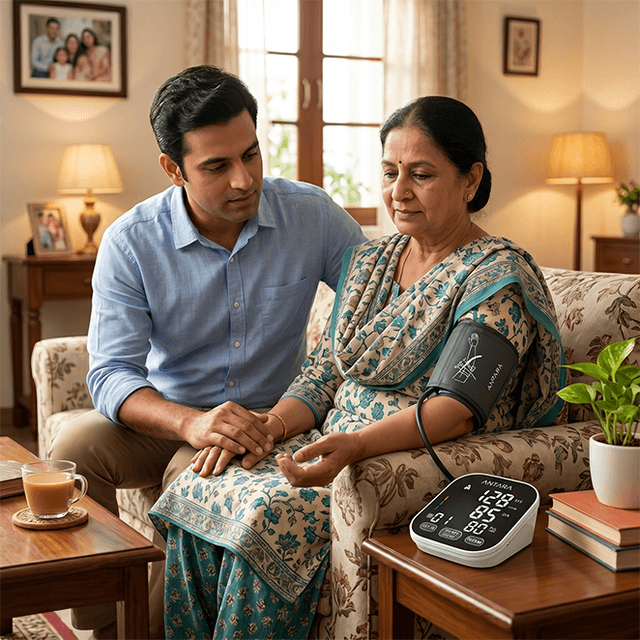
If you have come across this article because a parent or spouse has ordered this test, and you are trying to understand what is involved before assisting them in booking it, this section is for you.
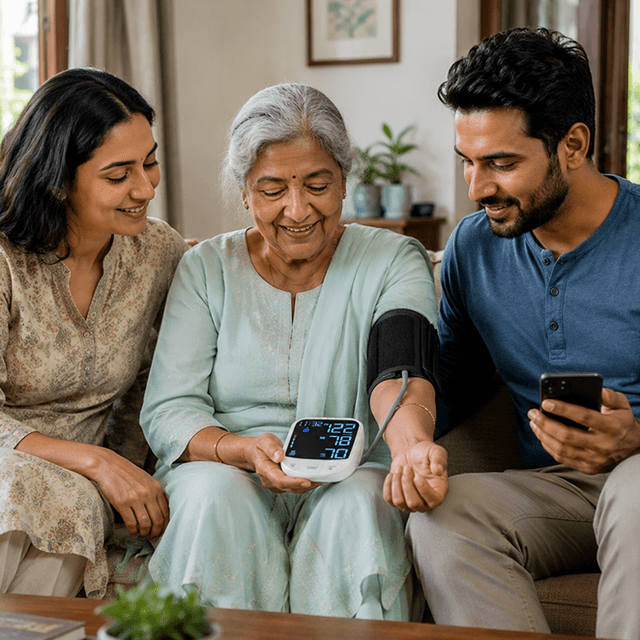
The test is simple and safe. There are no injections, fasting, or even a hospital stay. The device used is intended for everyday use, and most older adults are able to manage it with ease, especially with a family member assisting them with the initial adjustment.
Most families wonder if 'Ama or Papa' will be able to sleep with the device on their arm and will actually inflate it every 30 minutes during the night. The truth is that the first two or three times the device may wake them, but most people do become accustomed and are able to sleep through it.
Here are a few tips to make the day go more smoothly.
- Choose clothing that is loose fitting. A kurta or a loose shirt will work well to cover the cuff on the arm.
- If mobility is limited, consider asking about the availability of at-home technicians in your city. Not having to make a round trip to and from the clinic saves a lot of time.
- Before you leave the diagnostic centre, be sure to ask the technician to show you how to use the device and tell you what to expect during the inflation process. Anticipating what is going to happen and knowing what to expect can alleviate a lot of anxiety, especially overnight.
- If your family member employs other medical devices or has sensitive skin, please let us know at the time of cuff fitting.
This device will be worn for one day, but the data it yields will inform blood pressure management, medication adjustments, and long-term cardiovascular risk assessment.
The most concerning example for older adults is night-time hypertension, a completely silent condition. It often goes undetected by clinic visits and standard home monitoring for years, while the cardiovascular system suffers the strain.
What This Test Is Really Asking
Blood pressure is quantified by a number. Hypertension is not.
Hypertension exists as a condition that spans long durations, various scenarios, and different iterations of an everyday routine.
It exists distinctly at 6 am as your father is rising to prepare tea. It exists distinctly at noon as you are at work. Dissimilarly at 3 am when the house is dark and supposedly calm.
Think of a clinical reading as one moment captured. An image that is of high quality, but nevertheless, just one image.
What this test has produced is something that has long been sought by cardiologists; the complete picture.
The evidence from India is now indisputable. Approximately one out of three patients with hypertension showed the clinic reading to be incorrect. It either provided an unnecessary cause for concern, or it failed to flag concern when it was appropriate. This is the problem that ABPM seeks to address.
The research is conclusive. The challenge has always been the same as it was in 2017, when researchers had to borrow devices from a company to conduct the study. It has always been about getting the test to the target population.
Hence this is something you should consider seriously.
Medical Disclaimer
This article is intended for general patient and caregiver education only. It does not constitute medical advice and should not replace a consultation with a qualified physician or cardiologist. Clinical guidelines, institutional protocols, and pricing may vary. Always discuss test results and treatment decisions with your healthcare provider.
Sources and References
- India ABPM Study: Bharati et al., Journal of Human Hypertension (Nature), 2019. 32,808 patients, 574 primary care clinics, nationwide. 12% white-coat hypertension, 19.3% masked hypertension, 11.9% isolated night-time hypertension.
- Indian Guidelines for Hypertension (IGH-IV), 2019. Joint publication by the Cardiological Society of India (CSI), Association of Physicians of India (API), Indian College of Physicians (ICP), and Hypertension Society of India (HSI). Journal of Human Hypertension.
- ABPM as Gold Standard: Indian Heart Journal (PMC). States that ABPM is the gold standard for diagnosis of hypertension to identify white coat hypertension, masked hypertension and nocturnal hypertension.
- ESH 2023 Practice Guidelines for ABPM. Diagnostic thresholds: 24-hr ≥130/80 mmHg, daytime ≥135/85 mmHg, night-time ≥120/70 mmHg.
- ESC 2024 Guidelines on Hypertension. Both ESH 2023 and ESC 2024 cited in: Kauvery Hospital, IMA Journal, May 2026.
- ABPM Utilisation in India: PMC survey at CSICON-2014. Found that ABPM was practiced by less than 5% of patients per most physicians (71.93%) surveyed in India.
- Cost data: Vaidam Health (USD 94-151 international patient range); Dr. Kartik Bhosale Cardiology Clinic, Pune (Rs 2,500-Rs 10,000, 2026); Okto Healthcare, Bengaluru (Rs 3,000 flat, at-home service, 2026).
AGEasy.co.in | Helping families create safer, healthier lives for ageing parents