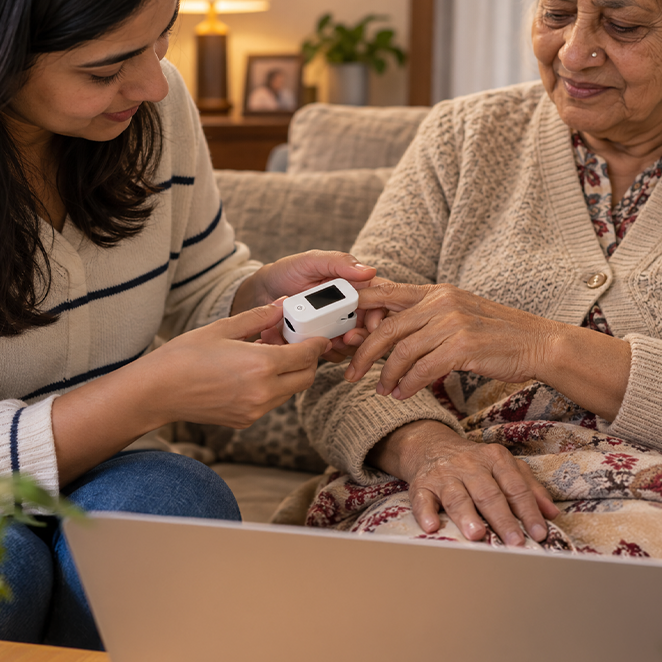

Pulse Oximeter Buying Guide: Why Cheap Ones Fail on Cold, Dark or Polished Fingers
Oct 26, 2026
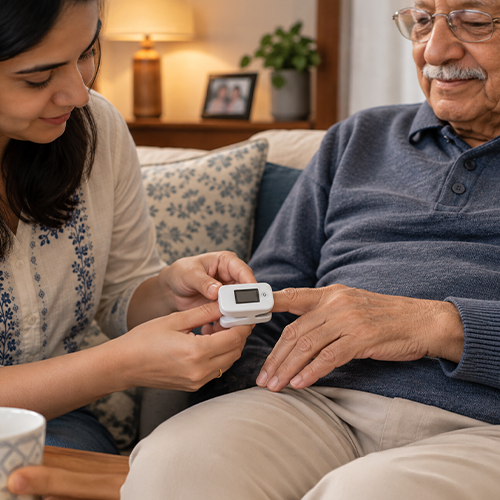
Pulse Oximeter Buying Guide: Why Cheap Ones Fail on Cold, Dark or Polished Fingers
When you’re dealing with a parent experiencing breathlessness, a worrisome number showing on a small display of an oximeter can be quite frightening. A reassuring number can mean they have adequate oxygen saturation, but it can also be alarming if the oximeter is showing low oxygen saturation.
There is no need to panic, as cold fingers, dark nail polish, and poor circulation can all generate unreliable readings, the number that pulse oximeters show can be misleading.
A pulse oximeter is a convenient tool, but it is certainly not a replacement for a clinical assessment. A low reading requires a clinical assessment. Conversely, a normal reading does not mean that everything is normal. Choosing a quality device is imperative in this case.
How Pulse Oximeters Work
Pulse oximeters use light to estimate two measurements: oxygen saturation (SpO2) and pulse rate (PR). Pulse oximeters shine red and infrared lights through the finger to estimate oxygen saturation. Oxygen-saturated and oxygen-deficient blood absorb these light rays differently. A pulse oximeter assesses the oscillation of light caused by each beat to estimate the oxygen saturation of the blood in the finger.
Pulse oximeters provide a reading if the finger is warm and the blood is flowing well. The pulse oximeter does not draw blood or provide an on-site measurement of the oxygen in the lungs, and therefore should be used as an estimate.
Issues With Cheap Pulse Oximeters
Technology evolves rapidly. Some low-cost products now perform as well as more expensive versions. That said, it's important to understand that a pulse oximeter with poor components cannot be "fixed" and should be avoided. These include poor calibration, weak sensors, loose hinges, dim displays, and insufficient signal processing.
There are numerous examples of poor pulse oximeter design. For example, some devices provide readings within seconds to caregivers while the signal is still unstable. Poor design also may fail to indicate to the caregiver the strength of the pulse. This leads to caregivers being left to their own judgment regarding the quality of the measurement.
Good pulse oximeters do the following:
- Fit the finger snugly without squeezing
- Display SpO2 and the heart rate separately
- Reach a stable reading quickly
- Display a pulse wave or signal, when available
- Provide constant readings
- Include easy-to-understand directions and contact information
- Use a sensor made for measuring the fingertip
Cold Fingertips Decrease Blood Flow
The #1 reason for a low pulse oximeter reading is cold hands. The body's blood vessels constrict and reduce blood flow, making more heat escape.
Pulse oximeters depend on the pulse from fingers. A weak pulse produces a weak signal, resulting in a low number, or possibly no reading at all. A poor reading may even be indicated by a fluctuating number.
Before taking a reading:
- Have your parent put their hands in a warm location.
- Have them sit quietly for 5 minutes.
- Rub hands gently or place them under a light blanket.
- Keep the hand relaxed and below the heart level.
- Remove tight rings if the finger looks swollen.
- Wait until the number settles.
You should not place a hot heating pad on your skin and remove all layers. This can lead to burns on the skin, especially with older adults who have a reduced sensation.
Dark Skin and Nail Polish Need Careful Handling
The skin tone itself will not make a pulse oximeter useless. The device works by sensing light and reading it. Many things affect light readings. There have been some studies and regulatory reviews that state the accuracy of pulse oximeters varies for different skin tones and colours when the oxygen levels are low. One reading should not be interpreted in isolation.
Dark blue and black polish, as well as green and purple polish, create more interference than light polish. Dark-coloured nail polish and gel and acrylic nails create a barrier between the sensor and the finger.
To record a clear reading:
- Remove dark nail polish on the finger.
- Remove gel and artificial nails, if possible.
- Slightly rotate the sensor.
- Record the reading for both fingers.
- Check if the reading matches your parent's pulse.
A reading that changes sharply between fingers needs to be repeated. Do not spend a long time trying to adjust the device if you notice some serious symptoms.
Movement Causes Poor Readings
Shivering, trembling, talking, arm movement, and/or fidgeting to adjust an oximeter part cause an artifact. The device is unable to differentiate movement from a pulse or confuses the signal with background noise.
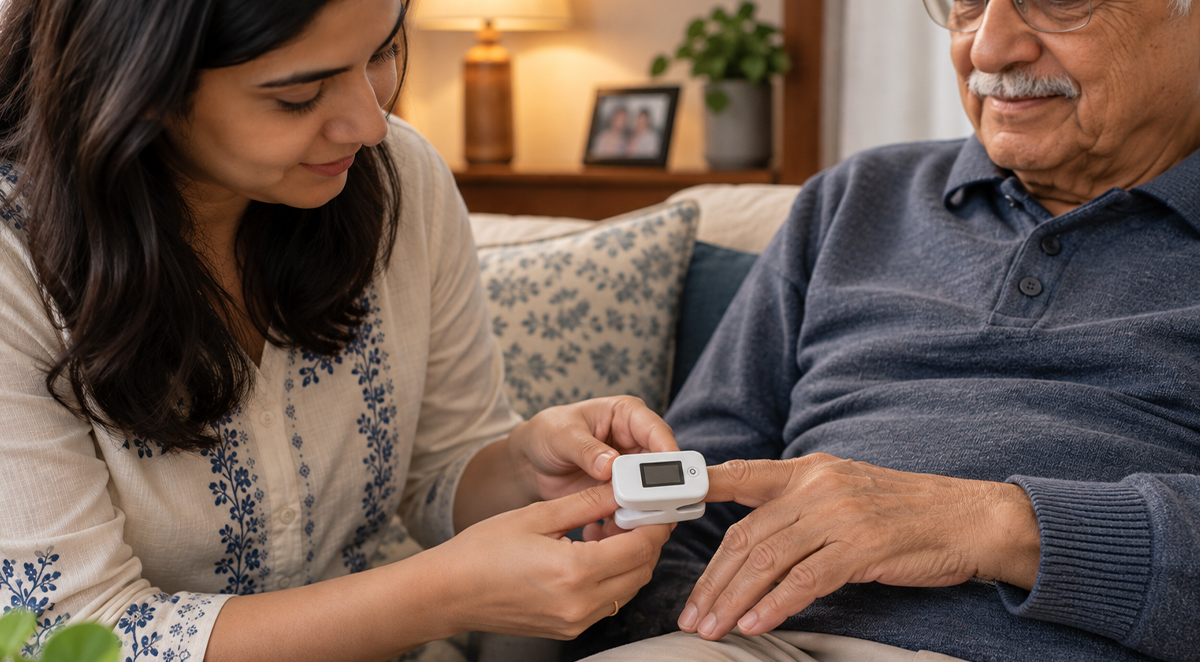
Have the user place their hand on the table with a finger still and the clip properly positioned. Ensure the sensor is fully over the finger and NOT over the nail. Do not measure when the user is shaking, walking, or has just finished an activity.
Poor contact with the sensor results in poor readings. A sensor that is too loose is uncomfortable and can affect circulation. A secure fit, but not too tight, is important.
What to Look for When Buying a Pulse Oximeter
Caregivers tend to focus on price. However, when an older user requires repeated checks, reliability and ease of use are more important than cost.
Check the Display
Look for a clear display with large digits and good contrast. A rotating display is helpful when a caregiver has to check a parent’s finger. A screen display for SpO2 and pulse rate eliminates the need to switch readings.
Check the Signal
A bar, waveform, or signal indicator lets you know the device is able to detect a stable pulse. A number without a signal indicator provides minimal information and poor measurement assessment.
Check the Fit
The clip should fit the user's finger without excess pressure. Older adults have fragile nails, swollen fingers, or stiff joints. A simple button and smooth hinge reduce difficulties with use.
Check the Included Instructions
Make sure there are instructions for battery usage, how and when to clean it, and how long to keep your fingers still. Whether the vendor is a reliable seller and whether there is product support are also important factors to consider.
See How You Will Use It
If your parent’s doctor has designed a plan that involves frequent monitoring at home, choose a device that is appropriate for that home use.
Make a record of the monitoring with the time, SpO2, pulse rate, symptoms, and activity. Results happen in isolation, but observing the changes, or lack of changes, in symptoms, activity, and other factors is often more important. AGEasy’s Advanced Sensor Pulse Oximeter is a good example of a fingertip monitoring device for a caregiver to consider.
Comparison: Cheap vs. Better Quality Pulse Oximeters
| Feature | Cheap or Poor Quality Models | Better Quality Models |
|---|---|---|
| Sensor quality | May use weak or poorly calibrated sensors | Designed for more reliable fingertip measurement |
| Reading stability | May display numbers while the signal is still unstable | Reaches a stable reading more reliably |
| Signal indicator | May provide little information about signal quality | May display a pulse wave, bar, or signal indicator |
| Display | May have dim or difficult-to-read displays | Clear display with large, visible digits |
| Fit | May fit loosely or create excessive pressure | Fits the finger securely without squeezing |
| Signal processing | May have insufficient processing of weak or unstable signals | Better processing helps interpret the fingertip pulse signal |
| Build quality | May have loose hinges or poor components | Typically has a smoother hinge and more reliable construction |
| Instructions | May provide limited directions or support information | Includes clearer directions and product support information |
How to Take a More Reliable Reading
Your process should be consistent. Here are the steps:
- Rest for 5 minutes.
- Remove any nail polish that is preventing a good reading.
- Place the oximeter on a fingertip.
- Relax the hand.
- Wait for the reading to stop changing.
- Record symptoms, SpO2, and pulse rate.
- Repeat if the reading does not match the symptoms.
A stable reading should match the parent's pulse rate and physical signs. An oximeter reading of 82% would normally cause concern. However, if the parent were alert, comfortable, and speaking normally, we should check the finger, warmth, fit, and signal. If the number stays low or the parent appears unwell, call for medical help rather than repeatedly checking at home.
Low Readings That Require Medical Attention
Contact the treating clinician if readings repeatedly fall below the parent's range. Also, contact the clinician for readings near or below 90% unless the parent has a clinician’s order for a specific plan for low readings.
Call for help for severe breathing difficulty, blue or grey lips, chest pain, new confusion, fainting, extreme drowsiness, or sudden worsening. Care should not be delayed while trying different fingers or replacing batteries.
Chronic lung or heart disease patients may have an individual oxygen target. Their normal range and its reference values may differ from general medical standards. Follow the plan made by the health care team.
Bottom Line
Even when the number on the screen is normal, carers should monitor the person for breathlessness, unusual sleepiness, confusion, or sudden decline.
Best practices when using a pulse oximeter include performing measurements in a controlled environment and monitoring changes over time. Cold fingers, dark nail polish, poor circulation, and movement affect all fingertip pulse oximeters. Poor sensor quality creates the risk of inaccuracies. Measurement technique helps decide when to triple-check a reading or call for help for your parent.
Disclaimer
This article is strictly for your general knowledge and is not to be used as a substitute for a licensed medical professional, diagnosis, or treatment. Pulse oximeters are not 100% accurate and can be affected by circulation, skin pigmentation, nail polish and coverings, movement, temperature, and the quality of the device.