


What to Change at Home After a Fall - Before It Happens Again
Article by: Ayushi
Jul 13, 2026. 7 min read
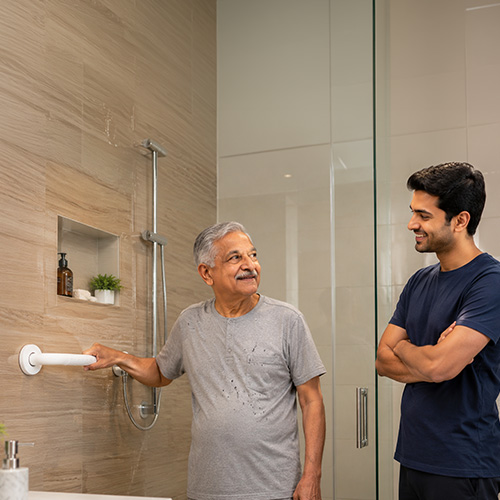
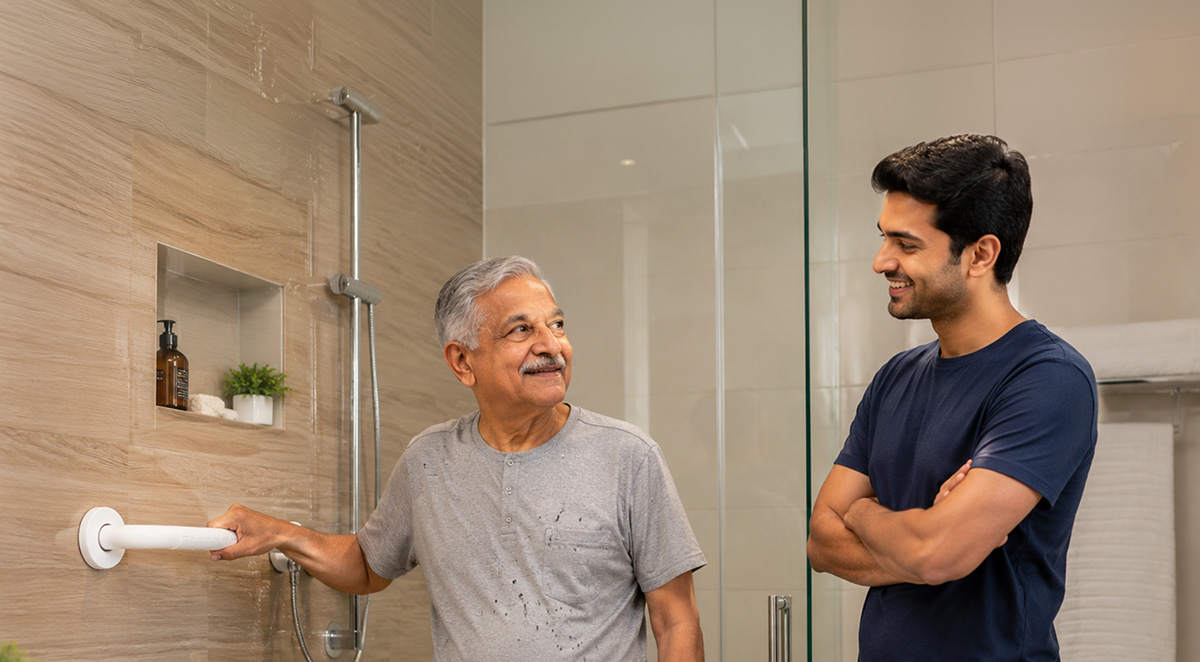
A fall can impact a person's confidence in themselves and their mobility. It can often have this effect on their loved ones as well.
Your parent may return to normal after a fall, but walking may take on a new level of cautiousness. They may choose to stay out of certain rooms, avoid using the stairs, and even stay away from locations where they fell as the fear of falling often exceeds the pain associated with the fall.
Letting your parent fall and treating the fall as the problem is not only problematic but also a mistake. The fall is a warning sign.
It is also a mistake to think that a fall means that someone was distracted, lost their balance, or experienced a simple accident. The question that needs to be asked is what inside the home made that fall possible? Was it that the bathroom was overly slippery? Was there enough grip available to stand up? Did the furniture and other items in the room create a safety hazard?
It is the familiarity with the home that makes falls more likely rather than less.
When a parent is left in a home that has not been altered to suit their safety their confidence will be lost each time they walk, further limiting their activity. A loss of independence will occur and may be well before it should.
When you make the right changes to a home, a parent will begin to feel more safe to move around the home, increasing their confidence and decreasing the chances of falling again.
This article includes changes necessary for each area of the home, such as the living room, stairs, bedrooms, and bathrooms, leading a parent's home to become a part of their recuperation instead of a cause for re-injury.
Bathroom Safety Comes First
Most injuries to seniors happen in the bathroom. Floors are slippery and prone to cause injuries, toilets that are too low and no grab bars to hold on to transform a simple bathroom trip into a serious accident. The first step is safety at the toilet.
A grab bar with floor support like the AGEasy Grab Bar for Toilet with Floor Support is a much needed support to help and assist during sit to stand as this is one of the highest risk moments for falling. In smaller bathrooms, space saving fold up grab bars are available.
If your parent finds sitting to stand difficult, this also means the toilet seat is too low and is more of a struggle than a help. Toilet seats that are raised are available to set in place to ease and reduce the strain on knees and hips during sit to stand so that wobbles are avoided.
Wet floors are also a danger and need some consideration. Anti slip mats should be used to cover the shower, sink and toilet as these can help with slipping and skidding on wet tiles. The mats need to have been specially designed to stay in place as the old ones glide under pressure to become a slipping hazard.
Bedroom Changes That Protect Nighttime Movement
Bathroom trips at night can be dangerous. Many people fall during the night due to the combination of the darkness and having not fully woken up, and trips to the bathroom can be especially dangerous. Installed at home motion sensor lights create paths of light to help parents see the way to the bathroom without having to turn on a light which could disrupt a parent's sleep.
Getting in or out of bed can also be dangerous when there can be a chance of falling when sitting up or lying down. One product that can help is a safety bed rail, which is able to attach to any standard bed without any tools.
Fall risks can be hidden in the living room too, which is often a calm space. Loose rugs and clutter can create an obstacle course from a once familiar space. Remove any dangerous clutter that can be a fall risk.
Another way to consider fall risk is the mobility aids in the home. Walking sticks and walkers should be adjustable to the height of the person who will use the aid to ensure the most support is provided. Also encourage the use of walking aids if they are not being used. Remind parents that walking aids should be accessible to encourage their use to assist with mobility.
Stairs and Hallways
Some parents prefer walking barefoot on their home's slippery surfaces. Anti-slip socks are a good idea for these kinds of parents since they help prevent slips on wood and tile floors.
Injuries due to falls can occur at all ages and stages of life, and the home is no exception. For this reason, stairs can be one of the most hazardous parts of any home for elderly occupants.
Signs of wobbling in handrails can be a cause for concern and should be evaluated and rectified when necessary. Additionally, to improve the grips on stairs and to make the surfaces of stairs less slippery and worn, apply non-slip tape to the edges of steps.
Good lighting also can be an important factor, and to eliminate the guesswork of walking in dimly lit locations, install a motion sensor light on the top and bottom of each staircase.
Hallways should stay clear of obstructive furniture, electrical cords, etc. so parents can move freely in the space. When moving with assistive devices, parents should be able to do so without having to turn sideways.
Added Peace of Mind for Caregivers
Fall detection extends peace of mind and adds layers of safety beyond modifications made to a home, through wearing a special device. For example, the AGEasy Protec Smartwatch is built with SOS and fall detection features and, even when no one is in the room, alerts designated contacts when a fall occurs.
Along with home modifications, wearable devices act to improve safety and fall detection in the home. These modifications, however, do not work on their own, and their potential is limited when only one modification has been implemented in isolation from the others.
For example, without proper lighting, a grab bar does little to improve the safety of a walker's path, and without a clear path, a walker also provides limited safety. There are many more examples of modifications that act to improve safety and fall detection at home, and the modifications are numerous.
Ultimately, the goal is to view the home as a singular system when making multiple home modifications at the same time. Look for ways to make your modifications unique to the space in each room where your parent spends most of their time.
Making the Home Part of the Recovery
A fall impacts how your parent navigates their home. Gradually, with increased confidence, positive changes can be made. Begin with the most challenging areas first, namely the bathroom and bedroom, then progress to the living room, stairs and hallways. Over time, small and practical changes throughout the home will provide significant protection.
If your parent continues to experience pain, dizziness or repeat instances of near-falls after home modifications have been made, it is important to consult a physician or a physiotherapist. Professional assessments will identify unaddressed potential causes such as muscle weakness, medication side effects, or vision alterations that are not likely to be resolved with home modifications.
Recommended Blogs



You May Also Like
 No products found
Article by:

Ayushi
Article Category:
Fall Prevention