

Vision Changes That Raise Fall Risk: Bifocals, Glare, Night Vision and Depth Perception
Article by: Lara
Article Category: Fall Prevention
Aug 4, 2026
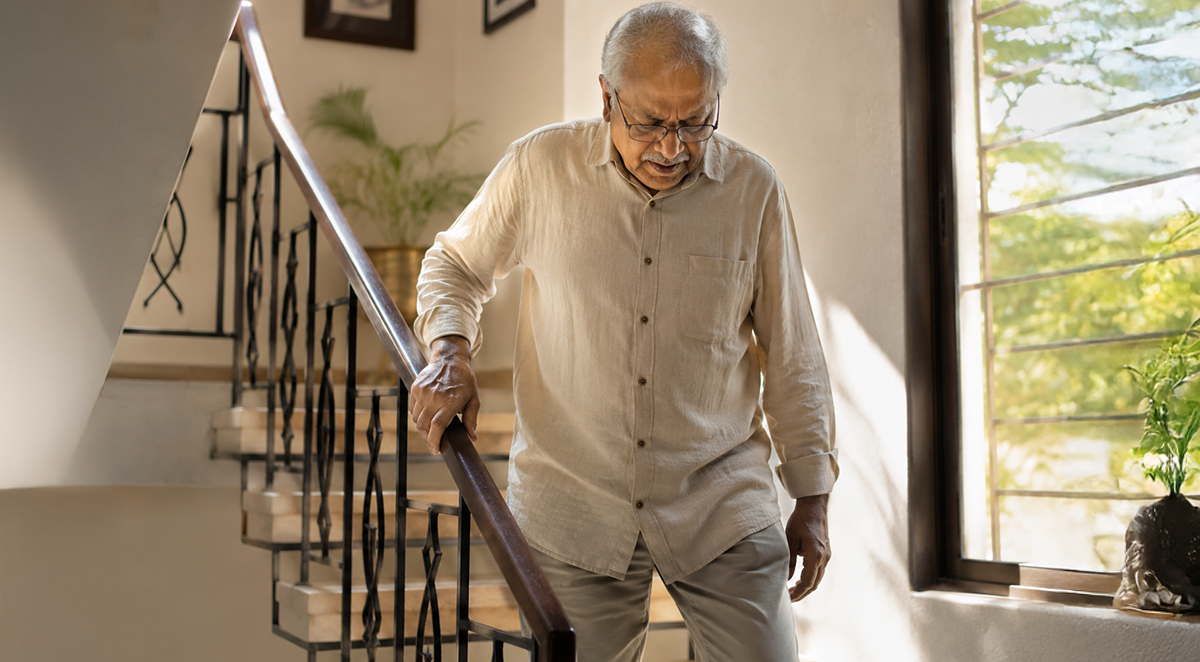
Your eyes show your feet where to go
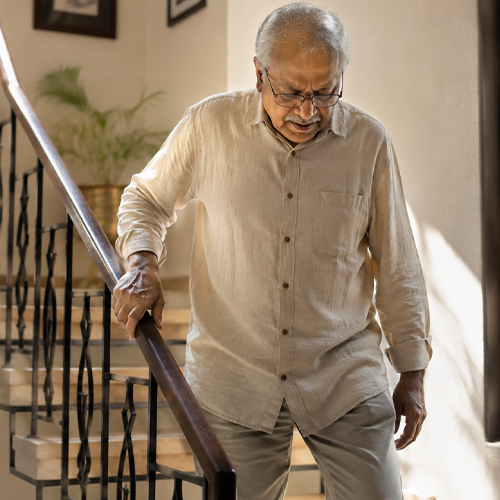
If you have less than perfect sight, it may be harder for you to see where you are going and if you are even able to see where a step ends, you could find yourself stuck and hesitating to step forward. It could even prevent you from driving, and this is a reality for many as they find themselves driving less once nighttime comes as they are unable to see where the road ends.
Many people see falls happening and blame weak legs or uneven surfaces. Poor vision could be a greater contributing factor to falling than weak legs or slippery surfaces. Problems like not being able to judge where steps are with bifocals, age-related night vision glare or even simple things like bottomless pits of poor depth perception.
To avoid falling, a clear sight of all the risks and hazards is essential. Making sure you have the right prescription and spectacles is a key to walking more safely. A simple night light is a great way to reduce hazards and risks at night walking. Torch lights and simple things like walking cane can help easily.
If you or even your parents are having issues with their vision or balance, this is a helpful guide to explain how vision affects balance and the role of bifocals, glare, night vision, depth perception as you age.
The Importance of the Relationship Between Vision and Balance
The brain relies on several different sources to maintain balance. All of these work together to keep the body from tipping over by using the feedback that the brain receives from the muscles, the sensation from the inner ear, and the most crucial one, visual information. When visual input is unclear, distorted or too slow, the brain has to fill in the gap, and this is when most people guess incorrectly resulting in stumbles, missing steps or having to grab on to the hand rail for support.
Vision decline with age occurs gradually and without warning, it starts affecting our balance. This gradual process is the reason most people overlook these changes, and incorrectly attribute them to weak legs, or "getting older".
Bifocals: How Small a Thing Can Make Big Changes at Stairs
Bifocal and progressive lenses divide your field of vision into 'zones.' The top zone is for distance viewing and the next zone down is for near vision (reading). These divisions are highly practical for switching the vision between a menu and a doorway across the room. However, when you are on the stairs, they are much less practical.
People wearing bifocal lenses tend to notice the edges of steps as shifting or unclear. For many people it becomes so disoriented that they will wear distance vision eyeglasses as an alternative gait. It has been noted that bifocal users are more frequent stair-trippers, and curb trippers in comparison to users of single vision eyeglasses.
Some simple adjustments can help fix these issues:
- Keep a pair of single-vision glasses separate for walking.
- When you ask for new glasses, make sure you ask for lenses that are designed for looking and moving, not just reading and driving.
- Try to keep your head down when you are using stairs, rather than tilting your head
Glare: When Too Much Light Becomes a Hazard
As people age, the pupils in their eyes slow down in response to changes to light levels that leads to an increase in glare. This makes it very difficult to see the edges of the steps and curbs that are most often in the way of an obstacle that needs to be seen.
This is why people use great caution when walking from darker areas to brightly lit areas. While it may seem that they are moving with caution, it is a sign of struggle with their eyesight.
There are several simple changes you can make:
- Add anti-reflective coating on prescription glasses as they reduce glare.
- Use polarized sunglasses outdoors especially when walking on wet or slippery surfaces.
- Use diffused lighting instead of a single bright bulb at home; also matte floors can minimize hotspot glare.
Night Vision: Why Familiar Paths Become Strange After Dark
Night blindness refers to the inability to see in low-light conditions. It may also cause difficulty transitioning from a bright environment into a dark one, as their vision has trouble adjusting.
Those affected from night blindness face issues require simple and inexpensive home improvements to eliminate any dangers to their movement. One of the most effective is to install motion activated lights. These lights eliminate the need to find a switch in the dark, where the majority of nighttime falls occur.
The AGEasy Motion Sensor Light was created to serve that purpose. It activates when the sensor is activated, and rather than an overhead beam, it provides a gentle and non-glare illumination to the specific locations where falls are most likely.
In addition to lighting, the following practices can minimize risk:
- Do not just use your memory while walking through dark pathways at night
- Make sure pathways are clear and well lit during night.
- Get an eye test done if you are experience discomfort while driving at night
Depth Perception: The Quiet Change Behind Missed Steps
Depth perception is the measurement of distance that relies on the eyes working in tandem, and sensitivity to contrast. This is the perception of a figure against a background. Contrast sensitivity and depth perception both suffer perceptibly with age, and smoking also contributes to this condition. The biggest issue is that steps and curbs start to look flat, making it hard to tell where the edge actually is.
When the edge of a step seems to catch your foot on the first or second attempt, your estimations of where the step ends are off. This happens not because of carelessness, it is because of the poor perception.
Some steps that help directly:
- Conspicuous tape or paint on the edges of stairs makes the difference in elevation easier to see.
- Regular eye examinations that specifically assess contrast sensitivity, not just visual acuity, are likely to detect this sooner.
- Bathroom and kitchen anti-slip mats mitigate the risks associated with misjudged steps, even before addressing vision problems, something AGEasy's anti-slip mats and high-grip anti-skid tape which glows in the dark are designed for.
Putting It Together: A Practical, Low-Disruption Approach
None of this needs radical changes to your daily life. Typically, only a few adjustments need to be made:
- Get an updated eye exam, including an updated prescription, check for contrast sensitivity, and check for cataracts.
- Use a separate pair of glasses for walking and for climbing stairs in case you are using bifocal glasses.
- Enhance lighting and reduce glare at home, especially at risky areas such as hallways, stairs, bathrooms. Add motion sensor based lights.
- Use visual cues and physical barriers where vision alone is insufficient. This includes grab bars, non-slip surfaces, and contrasting edges of stairs.
- Consider a safety net for when a fall happens. The AGEasy Protec Fall Detection Smartwatch is a device that will notify family or caregivers of a fall. This is especially important for individuals living alone or those experiencing vision changes that present a greater risk.
The Bottom Line
Issues other than weak legs may be contributing to falls. Problems with vision include having bifocals which split your field of view, issues with glare or night vision, and difficulties with perceiving depth.
The good news is that the majority of these issues can be resolved with simple changes such as an updated prescription, improved lighting, visual cues in the home, and glasses that are matched to the activity rather than a generic pair.
Add regular eye check ups into your fall prevention plan in consultation with your doctor. Combined together, one can easily maintain independence and mobility while aging.