

When Does a Commode Wheelchair Make Sense for Your Parent?
Article by: Ayush
Article Category: Bathroom and Home Safety
Aug 24, 2026
The hardest part of assisting parents in using the bathroom happens before they reach the bathroom. They have to move from the bed to the wheelchair, from the wheelchair to the toilet, and back again. Each of these steps requires standing and balancing. Each step also adds an additional physical step for you.
A commode wheelchair is a combination of a wheelchair and a toilet. It helps you avoid other transfers when providing toilet access to your parent.
However, just having a combination of two functions does not provide safer care. You should not use a commode wheelchair if your parent has a problem of not being able to reach the bathroom, it looks convenient, or it was recommended and one piece of equipment is better than two.
You should focus on the safety and fit questions.
- Will your parent be able to sit upright?
- Will your parent be able to transfer into the chair safely?
- Is there space for the chair around the bed and bathroom?
- Will the chair fit over the toilet if used in that way?
- Can you position and manage the chair safely?
The right piece of equipment eliminates additional transfers. The wrong choice of equipment adds risks. Poor fit equipment may be harder to use, transfer more, and create more balance problems for your parent in the small bathroom. The right commode wheelchair may reduce additional transfers, be easier to use, better for residents' comfort and provide staff more rest and less back injuries.
This guide breaks down when a commode wheelchair is right for your parent, when separate equipment is necessary, and how transfers, bathroom space, and caregiver support can impact your decision.
What Is a Commode Wheelchair?
A commode wheelchair combines the functions of a conventional wheelchair with the functions of a traditional toilet. Most models feature a removable seat with a built-in toilet frame, making for an easier transfer over the toilet.
A commode wheelchair greatly decreases the number of transfers. Most commode wheelchairs have a locking mechanism to prevent their movement while positioned over the toilet. Your parent's balance when seated, as well as their ability to pivot, will help you decide if a commode wheelchair will decrease the transfers for your parent. This decision should be made carefully.
A commode wheelchair requires some maneuvering. Like any other wheelchair, thorough research should be done to determine how to remove the toilet frame for cleaning and ease of transfer over the toilet. A commode wheelchair lessens, but should not eliminate, the need for other assessments. Your parent's strength, balance, cognitive ability, continence, and the layout of your house are all considerations for this equipment.
When a Commode Wheelchair Might Suit Your Parent
A commode wheelchair might work if your parent:
- Has short or limited walking capacity and becomes quickly fatigued.
- Needs help with most transfers.
- Has difficulty reaching the bathroom in time.
- Typically relies on a wheelchair to move about in the home.
- Has enough trunk control to sit safely during movement.
- Lives in a home with adequate space for the wheelchair.
- Needs assistance with toileting during the night or upon illness.
A person must balance the advantages of the commode wheelchair against the disadvantages of mobility. It might be worth considering a commode wheelchair if your parent is able to sit still, but is not able to walk to the bathroom from the bedroom.
If your parent slides forward in their seat, leans heavily on one side, is confused or requires two persons to remain in a sitting position, they should not use this type of wheelchair. In such cases, it would be worthwhile contacting an assessment company to arrange a special assessment before purchasing the equipment.
When Separate Equipment Might Work Better
A separate wheelchair and commode usually offer more flexibility. Your parent could use a wheelchair to move about the house and a commode close to the bed for toileting.
This arrangement works best for your family when:
- The bathroom door is narrow.
- The toilet area does not provide enough turning space.
- The wheelchair does not fit securely over the toilet.
- Your parent needs a more supportive chair for toileting.
- Different family members use the equipment for different tasks.
- You need a lightweight commode beside the bed at night.
A bedside commode might also reduce urgent trips to the bathroom. All you need to do is place it within safe reach, clear a path to it, and add a nightlight.
If your parent needs assistance standing, sitting, or transferring, contact a healthcare professional for additional advice.
A separate toilet frame is an option for people who can walk to the bathroom with assistance and must have support to sit and stand. The AGEasy Commode Frame for Elders includes supportive armrests, adjustable height, and a rubber base with a rust-resistant design. It offers support around the toilet area and is an alternative to a wheelchair for this use.
Assess Your Parent's Transfer Ability
A commode wheelchair still requires at least one safe transfer, usually from the bed or another seat into the chair. Assess the movement rather than only the distance to the bathroom.
Determine if your parent:
- Can place their feet securely on the ground.
- Follows simple instructions.
- Pushes up from a stable surface.
- Turns without losing balance.
- Sits down in a controlled way.
- Keeps their hips safely in the chair.
- Requires one person, two people, or a transfer aid.
Never pull your parent by the arms. Keep the chair close to the transfer surface, lower the footrests and lock any casters.
If your parent has had a stroke, hip surgery, a fracture, Parkinson's disease, dementia, or repeated falls, ask a physiotherapist or occupational therapist to demonstrate a safe method of transfer.
A transfer assessment should be the basis for the purchase of a transfer solution rather than being a substitution for it.
Measure the Bedroom, Hallway, and Bathroom
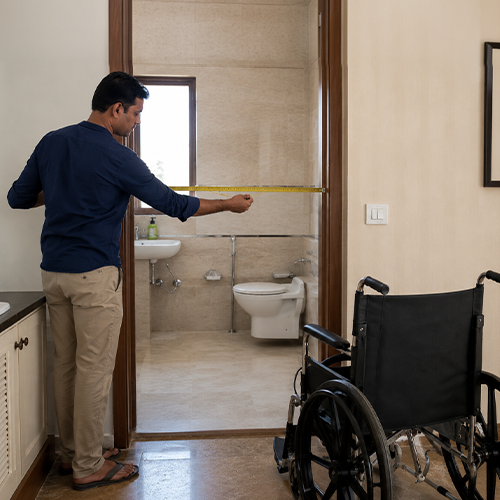
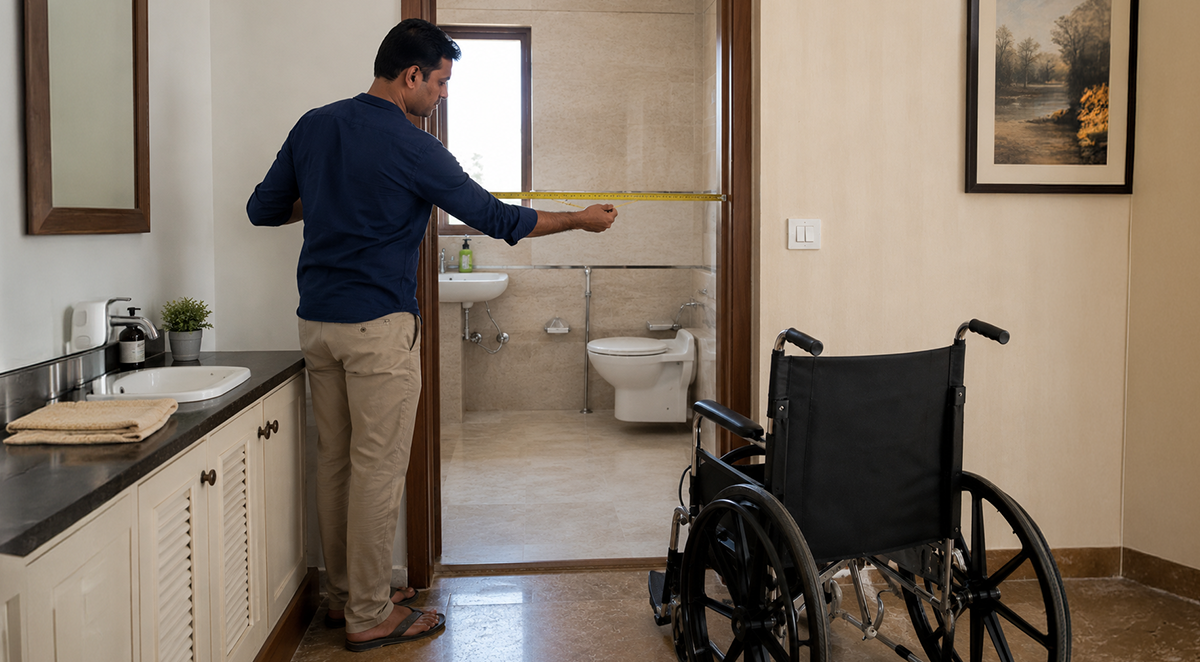
Measure your home before purchasing any wheelchair or commode. Check:
- The narrowest doorway.
- The bathroom door opening with the door fully open.
- The space beside the bed.
- The distance between the toilet and nearby walls.
- The turning space in front of the toilet.
- Raised thresholds and floor transitions.
- The chair's overall width, depth and turning radius.
AGEasy's WheelEasy for Seniors has an 18-inch seat, a foldable frame, rear wheel locks, and attendant-controlled brakes. The product page lists a 100 kg weight capacity, indoor and light outdoor use, and a one-year warranty. These preliminary details help to compare the chair to other chairs available in the market, but you also need to compare the full dimensions to your home.
An 18-inch seat does not equal an 18-inch overall width. Storage space for wheels, armrests, and frame pieces adds to the footprint of a chair. Make sure that the dimensions of the chair and your actual doorway add up.
Check Sitting Support and Comfort
Your parent needs support in order to stay seated when moving or accomplishing the act of toileting. Think about the backrest, armrests, footrests, seat width, cushion, and posture. A seat that is too narrow can cause pressure on the hips. A seat that is too wide might make your parent lean or slide in the seat. The footrest must rest the legs in a comfortable position and should prevent the knees from being too high.
If your parent is going to spend a lot of time in the chair, contact a healthcare professional for recommendations to alleviate pressure and support the seating position. You must check your parent's skin, especially at the hips, buttocks and heels, on a regular basis.
Remove the equipment and call your healthcare professional if your parent begins to experience painful, numb, or skin damage as a result of the equipment.
Think About Bathroom Hygiene
There is a cleaning routine that comes with a commode wheelchair. To clean the frame, pan and wheels you must follow the cleaning instructions.
You should check the wheel locks, footrests and the rubber tips often and make sure the chair is dry. If the chair comes in contact with the toilet, you must confirm that it is a safe and effective configuration to remain in place during the process of toileting. A toilet frame that provides support is a viable option for the bathroom if your parent is able to independently walk to the toilet.
Positioning the height adjuster on AGEasy's commode frame is easy, but the frame is only as stable as its foundation. Be mindful of clearance space.
Use Other Bathroom Safety Equipment With Care
A commode wheelchair or toilet frame addresses one aspect of bathroom safety. You may also require:
- Non-slip flooring or bath mat with a secure footing.
- Adequate lighting.
- Grab bars, if supported wall space allows.
- A raised toilet seat.
- A handheld shower.
- A clear route from the bedroom.
Avoid using towel rails or loose furniture for support. Ask the grab bar installer to check placement. A trusted installer should be used to double check the placement of grab bars, especially with significant reliance on arm strength.
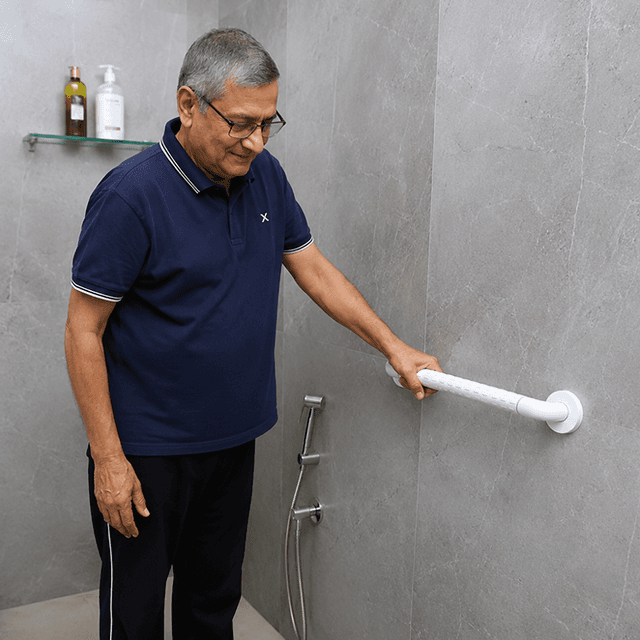
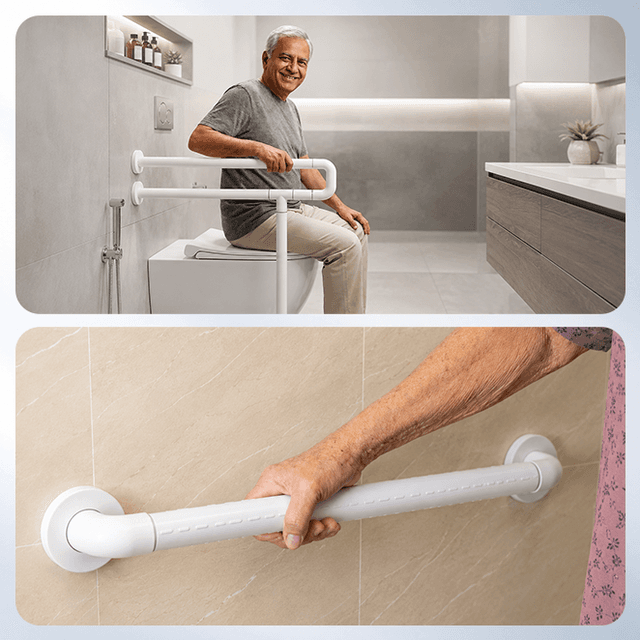
AGEasy also sells bathroom safety products such as anti-slip grab bars. Installation specifications should be reviewed, along with the wall type, before purchasing. A poorly secured grab bar is a serious safety concern.
How to Decide
Determine the highest level of independence your parent can achieve during daily transfers. Measure the dimensions of each route.
A commode wheelchair may support posture and seating, be appropriate to use, and help reduce transfers. If the bathroom is small and/or your parent requires greater seating/back support then this equipment may be safer than a bedside commode.
If your parent has poor balance, recent surgery, repeat falls, significant weakness or instruction-following difficulties, schedule an assessment for physiotherapy or occupational therapy.
During the assessment, provide the dimensions of the product and the measurements of the space in your home. We need to select equipment that will aid in assisting safe movement, practical toileting and maintain the dignity of your parent throughout the day.
Disclaimer: This article provides general health information and does not replace advice from a healthcare professional.