


The Bathroom Fall Nobody Talks About Until It Happens
Article by: Aryan
Jul 10, 2026. 7 min read
The most dangerous room in the house is usually the one that feels the safest. You go into the bathroom at home, turn on the tap in the sink, and step on the wet floor, probably because you've done it thousands of times. But another day, you could lose balance and slip.
Most people think that falls happen on uneven ground, but it is usually the plain floors that easily become slippery even when they are just slightly wet.
For senior adults, falls usually happen in the moments when they are getting up or trying to sit in the bathroom. Even a single fall like that can be catastrophic for a senior adult.
The good news is that falls in the bathroom can be easily prevented with the use of shower chairs, non-slip mats, and grab bars.
This guide examines several issues pertaining to the frequency of accidents that occur in the bathroom, the profile of the individuals who are most at risk of being affected, and the steps that can be taken to prevent serious accidents, whether your concern is related to your elderly parents wanting to maintain their independence, or you having issues with your own bathroom.
What makes bathrooms the most dangerous rooms in the house?
It all comes down to physics. Bathrooms are designed with hard surfaces and wet tiles that are slippery. They are also small, and create potential danger with body movements that involve sitting, standing, bending, and turning. Additionally, it becomes more risky when water is added and steam is present to obscure and confuse users' perception of depth. There is also little to no ability to grasp surfaces to maintain balance or protection during such movements, so bathrooms are designed to be against balance in a way that no other rooms are.
For senior citizens, risks increase even further. Natural changes in aging affect muscle strength, flexibility of joints, reaction times, and balance, which are all critical in small, wet environments. When combined with common contributing factors such as blood pressure medications that cause dizziness upon standing and a diminished sense of confidence regarding one's balance, blurred vision, the act of visiting a bathroom goes from an automatic daily ritual to a task that requires a great deal of consideration.
Who's most at risk for a fall
Falls in the bathroom are rarely random. Certain groups face meaningfully higher odds:
- Elderly people over the age of 65 living alone
- People recovering from a hip/knee surgery, stroke, or any other condition that limits mobility
- Elders who are on medications that can lead to unstable balance, and/or altered levels of consciousness
- People with vision impairments which lead to miscalculating the edge of a bathtub, step, or a similar type of elevation
- Caregivers who may hurt their back or lose their foot while assisting someone
When two or more of these conditions exist, the bathroom is just as important to assess as the brakes on a car before driving cross country.
Important Moments
There are three major transitions that result in falls:
- Entering and exiting a shower/tub: The step is often the largest elevation change in the bathroom and is the wettest.
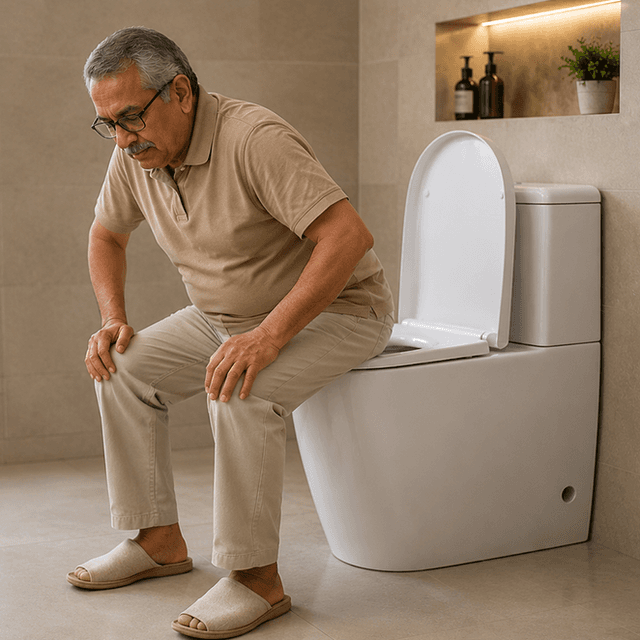
- Sitting and standing from a toilet seat: This requires a complete shift of one's body weight, and there is nothing to grab on to for support.
- Reaching: This may be required for a towel, shampoo, or robe. Reaching alters one's center of gravity which is especially precarious when one's foot is wet.
These are the three important moments that will help in pinpointing where the support may be required before trying to make the entire space anti-slip.
Constructing a Safer Bathroom One Layer at a Time
The best approach is making several smaller purchases that work together.
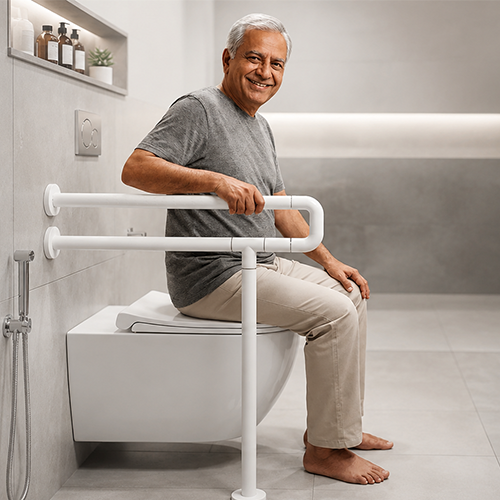
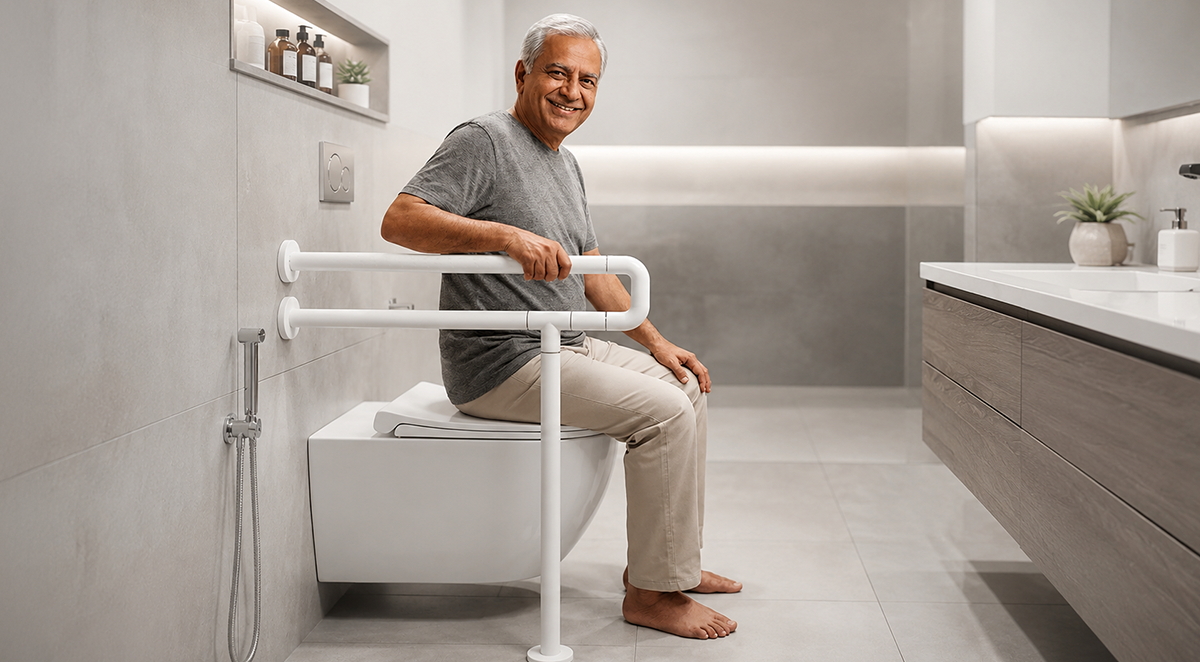
Start with grab bars near the shower and toilet. An example of a properly mounted bar is the AGEasy Toilet Grab Bar with Floor Support which provides a solid support for sit-to-stand transitions from the toilet, which is the most dangerous maneuver in the entire room.
In smaller bathrooms where a wall-mounted bar may be in the way, there is a folding grab bar option, the AGEasy Fold-Up Support Grab Bar, which can be put out of the way.
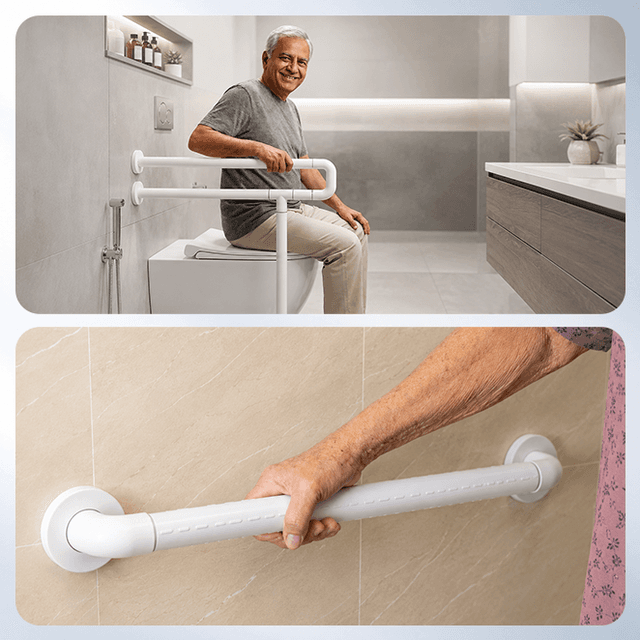
For the inside wet area, a bar like the AGEasy Anti-Slip Grab Bar (which is water resistant and has an anti-slip grip) is great for providing support while under the shower, approaching the rinse, or reaching for soap on slippery tiles. It is important for all bars to be anchored into a wall stud or other solid backing because a bar that is not anchored properly can do more harm than good if it gives way under the weight.
Flooring is just as important. Bath mats that slide are worse than not having a mat at all as they create a false sense of security. Bath mats like the ones in AGEasy's fall prevention collection are designed to give a grip to the feet when entering and exiting the shower.
Shower chairs eliminate the requirement of standing during bathing, which is very important to those who have joint pain, fatigue, or issues with balance. Likewise, an elevated toilet seat brings the body less distance to travel when sitting or standing. This decreases strain on the knees and hips, while decreasing the risk of falling during that transition.
Think about what occurs if a fall does happen. No amount of preparation can take the risk to zero. Because of this, many caregivers look at fall detection technology that can be worn, like a watch that has an SOS feature, so that help can be called without anyone else in the house.
These amendments do not have to all be done at once, and do not need major changes. In less than an hour, most bars can be put up, and most mats can be placed, with basic installation tools.
Habits That Cost Nothing
In addition to equipment, some daily habits can significantly minimize risk:
- For trips to the toilet during the night, leave a nightlight on in or near the bathroom.
- Rather than "later," use a paper towel and wipe up spills immediately.
- Place soap, shampoo, towels, and other items within easy reach in order to avoid excessive stretching.
- Be careful getting up or sitting down in the bathroom. Do it slowly to give your blood flow some time to adapt before taking any further steps.
- Instead of being barefoot on the slippery floor, wear socks that have slip-resistant bottoms, or use bathroom shoes.
- Caregivers can do a walk-through of the bathroom and view it from the users' perspective. For example, they can check the eye level of a person who steps into the bathtub and see whether the towel rail is loose or wobbles when someone pulls on it (because towel rails are not designed to support the weight that grab bars do, it can be dangerous).
A Room Worth Getting Right
It is quite easy to ignore the bathroom when considering safety in the home due to the fact that it is quite familiar. However, the very fact that it is familiar makes it very dangerous. The fall happens in the ordinary moment that everyone thinks is safe. It happens when no one notices that someone has been adequately prepared for the moment.
What is most reassuring is that this is one of the more easily managed risks in a home. Unlike other health risks, the hazards of a bathroom can be significantly reduced with simple and inexpensive alterations. The addition of a grab bar, an anti-slip mat, a shower chair, and so on can make a bathroom much safer. Each of these alterations is individually a small change, but collectively they can make a bathroom safe for the users and those who care about them.
Recommended Blogs

You May Also Like
 No products found
Article by:

Aryan
Article Category:
Bathroom Safety