


A Room-by-Room Fall Risk Checklist for Aging Parents
Article by: Archana
Jul 13, 2026. 7 min read
A fall rarely starts with the slip itself. It starts with the hazard nobody noticed; a loose rug in the living room, a dim hallway at night, a slippery bathroom floor, a staircase with no handrail. None of these seem dangerous on their own. But put them together, and you've got a home that's quietly working against the very people it's supposed to protect.
Many families view falls as unfortunate accidents. However, falls are typically predictable and preventable. They occur as a result of numerous small and unaddressed risks. Over time, we get used to the spaces in our homes and fail to notice hazards. We tend to leave them until something goes wrong before we intercede.
The great news is that small changes can make big impacts on safety. This does not require a large remodeling project; it requires looking objectively at the home.
Changes can be as simple as adding a secure handrail, brighter light, a non-slip mat, or adjusting a pathway to become safer.
If you are helping an aging parent or loved one stay safe at home, this room-by-room guide will help you identify the most significant hidden risks and most impactful changes to create a home that fosters independence and safety for years to come.
Why the Room-by-Room Strategy is an Advance Planning Step
Often the first fall prevention advice received is treated as one huge list to accomplish. When recommendations are broken into smaller points based on each individual room, it becomes more approachable and less overwhelming. You are not trying to "fall-proof" the entire house in a weekend. You are addressing one room, looking at it with fresh eyes and asking the question: if my parents were tired, a little unsteady, or moving in the dark, what could potentially trip them?
This shift in thinking is more important than any individual product or single change. Once you begin to look at your home in this manner, the threats and risks become much easier to identify.
Living Room and General Use Areas
This is where most families begin as it is the most frequented room in the household.
- Rugs and mats: Loose and curling rugs are frequent triggers for falls. Consider removing rugs or using anti-slide rug pads.
- Furniture arrangement: Walking paths should be unblocked and unobstructed. Coffee tables, footstools, and electrical cords can cause someone to trip and fall.
- Seating height: Chairs and couches that are too low make it more difficult to get up. Offering a surface to push up easily from lower surfaces can be helpful. Firm armrests are great for this.
- Lighting: Complete reliance on one overhead light or dimly lit corners may cause an area to be overlooked. Floor lamps or table lamps may be needed.
- Door Mats: Tripping over an unstable mat or a raised threshold is a common hazard. Securing or replacing these mats removes this risk completely.
Hallways, Staircases, and Entryways
- Handrails: Ideally, every staircase should have handrails anchored on both sides. If one side has no handrail, then this fix is among the most important.
- Stairwell Lighting: If the top of a staircase is dimly lit, while the bottom is brightly lit, there is a higher than average risk of falls due to missed steps.
- Bathroom Hallway Lighting: Predicting the location of the bathroom is not easy when you have to walk through a dark hallway. However, motion-sensing lights offer a simple and inexpensive solution to the problem.
Bathroom Safety
The unique combination of water, hard surfaces, and the actions of sitting, standing, and stepping over tub rims make the bathroom one of the highest risk areas of the house.
- Flooring: Tile becomes extremely dangerous when wet and provides no margin for error even for people who are highly skilled at balancing. The difference anti-slip mats can make is immense. The AGEasy anti slip mats are perfectly designed for such space.
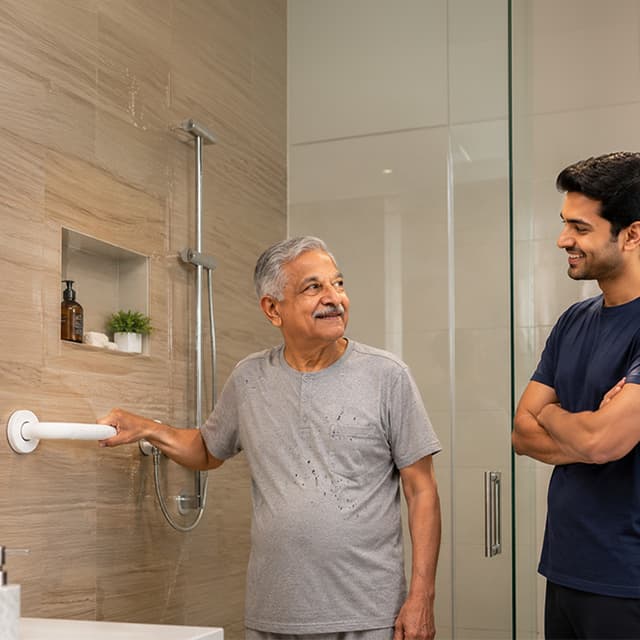
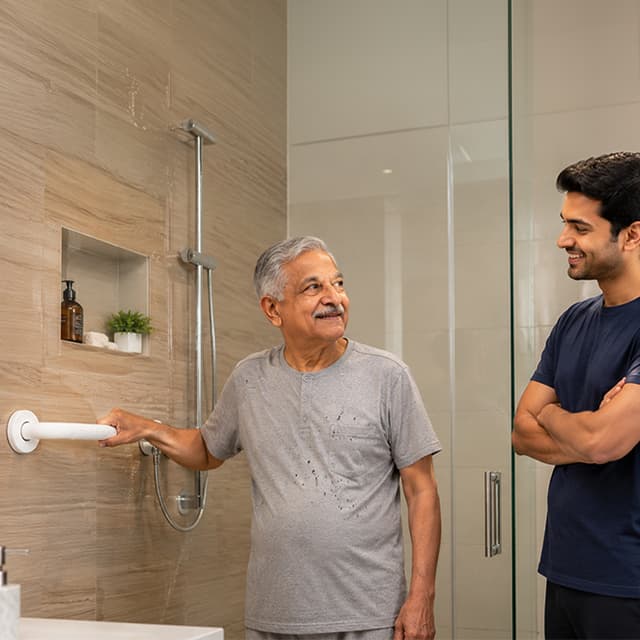
- Grab bars: Placing these within the shower, along the tub edge, and near the toilet offers stability to hold onto during the most sensitive movements in the area. AGEasy offers a range of grab bars designed for each such area.
- Shower seating: For parents who tire easily or feel unsteady, a sturdy shower chair can make bathing easier as it removes the need to stand. This can mean the difference between having to assist a parent bathe or allowing them to do so independently.
- Raised toilet seats: These help with the strain of sitting and standing. This is especially useful for those with knee or hip pain. AGEasy Commode Seat Raiser can be easily installed on any regular toilet seat to raise the height without changing the full seat.
Bedroom Safety
Most of the risk in the bedroom comes around sleep. Getting in and out of bed and the time spent in between can be risky.
- Bed height: Getting in and out of a bed that's too high or too low can be more difficult than it needs to be.
- Bed rails: Secure bed rails provide necessary leverage for parents who need to shift position frequently or need support to get up.
- Obstruction free path to the door: A common cause of falls at night are charging cables, left slippers, nightstands, and anything else that obstructs the walking pathway.
- Light within reach: For a quick trip to the bathroom, avoid the dark by using a bedside touch-lamp or motion-sensor light so your parents don't have to walk across a dark room.
Kitchen Safety
Step stools, hard flooring, and reaching up high to grab items all simultaneously present risk in the kitchen.
- Reach and Step Stools: Step stools should be sturdy with a handrail. Prioritize moving frequently used items to lower shelves so a step stool isn't needed at all.
- Spills: Clean quickly after a spill, and consider getting a mat by the sink and stove where the spills happen a lot.
- Chair stability: Never use kitchen chairs to stand on. Prioritize keeping items within reach, and use a step stool with a handrail if necessary.
When Mobility Support Comes Into Play
Sometimes, doing these fixes room by room is not enough. If a parent's balance has declined enough to warrant using walking aids, like a cane or a walker, that is a clear sign that rearranging furniture isn't going to be effective.
For families that cannot be there at all times, there are wearable fall detection devices that are not a substitute for making the home safer but are an added peace of mind. The watches from AGEasy such as the AGEasy Fall Detection Smartwatch and the AGEasy Protec Neo are an example of this and also provide a way for caregivers to know if a fall does occur. Using a checklist is not going to eliminate every risk, so it is better to have a secondary option to cover the risks that checklists cannot eliminate.
Turning the Checklist Into Action
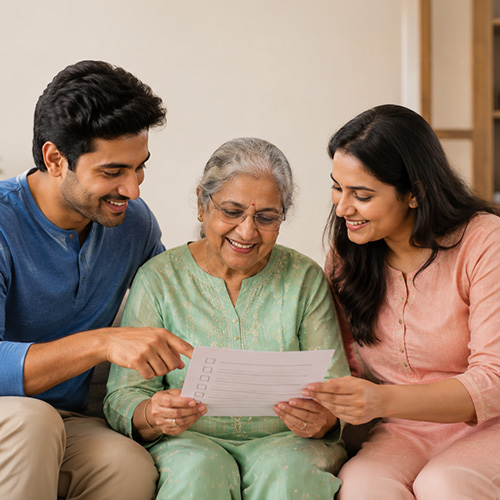
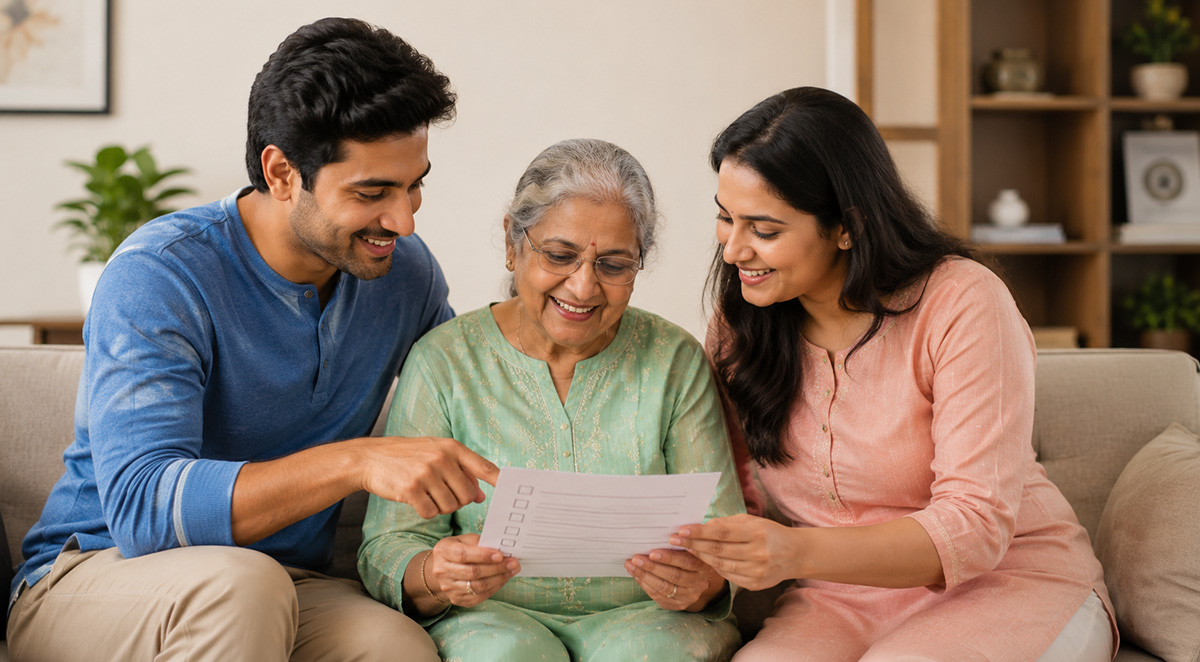
A checklist is only useful if it turns into a short list of real changes. A practical way to approach it:
- Walk through each room of your home along with your parents, because they will often notice things you miss.
- Mark anything that you think has a risk associated with it such as loose rugs, handrails that are missing, and dark staircases.
- Install products that contribute to safety and risk reduction such as non-slip mats in wet areas, grab bars by toilets and showers, stair rails, and improved lighting in transitional areas.
- Review the checklist periodically for your parent's safety.
The Bigger Picture
We are not trying to build a hospital in the home. The goal is to identify hazards that may impede a person's ability to navigate their home freely. Changing the space from a potential obstacle to a supportive aid is what provides the most significant change. These home modifications do not need to be grand gestures. Simply incorporating a supportive handrail, improved lighting, and slip resistant mats will reinforce supporting an individual's ability to do what they want with their home.
This article has been designed to be as informative as possible and should not be seen in place of medical or occupational therapy treatment or consultation. If your parent has been falling or displaying signs of compromised balance, it is advisable to approach their physician regarding undertaking a formal fall-risk assessment.
Recommended Blogs




You May Also Like
 No products found
Article by:

Archana
Article Category:
Fall Prevention