

Ergonomic Back Support Pillows for Office Chairs: Memory Foam, Lumbar Rolls & What WFH Workers Actually Need
Article by: Tina
Article Category: Cushions & Pillows
Aug 12, 2026


Your office chair doesn't match the kind of day you're having.
You got your morning coffee and wrote a few emails, only for one meeting to get extended and another to take its place. Time flies, three hours later your lower back quietly reminds you about how long you've been sitting.
While people tend to assume that the issue is long hours of sitting, and yes time is a factor, but it is not the only one.
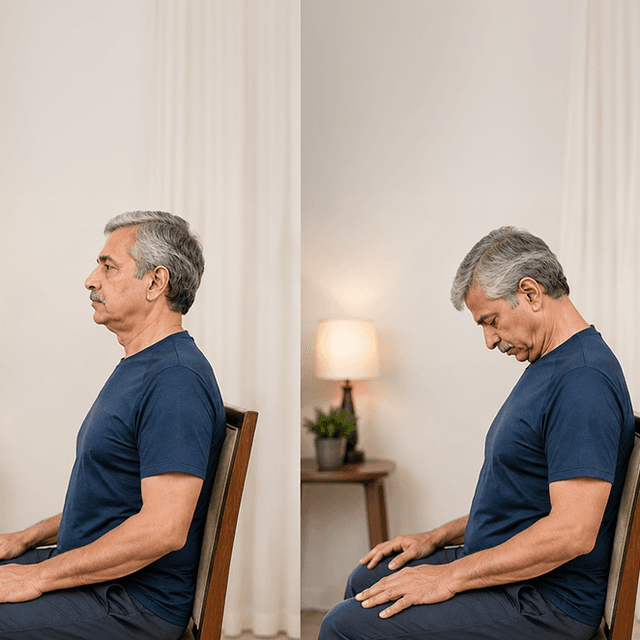
After one hour your body starts to shift. First, it's a forward lean, then a rounded back, a slightly disengaged spine and then you repeat the cycle. Slowly, and often imperceptibly, your 9 am posture is unrecognizable. By the time three hours are gone, your chair just holds whatever shape you have settled into. That's the primary selling point of a back support.
Memory foam cushions take the shape of your body, distributing the pressure evenly by pushing back into the areas that are getting the most pressure. Whereas, lumbar rolls are designed to assist by creating a supportive arch of your lower back which keeps you from slipping back into the inferior position. All day ergonomic support pillows are meant to keep your posture aligned. They are not identical. All offer different solutions to different problems, and there is no one "one size fits all" solution.
Your back will face new challenges working from home, traveling three times a week, or alternating between a standing desk and kitchen chair. These problems will differ from those with a permanent office setup. This guide covers all the different types of chair supports, how each one works, what each type aims to correct, and how to find out what support best fits your working style.
Why Your Chair Is Already Working Against You
All office chairs are designed to a standard. This is based on a rough average of human dimensions, sitting habits and price points.
Most designers have a few assumptions, including: you will sit up straight; your spine will have a curve, and not a flat one; you won't cross your legs, lean toward the monitor, or gradually move toward the front of the seat and stand up.
You and everyone else will do all of the above. The end result is a slow, cumulative load on your lowest lumbar spine. Discs get compressed, and muscles get fatigued as they compensate. The normal curve in your lower back flattens out, and by 4pm you are no longer sitting. You are slouching. This is why back pain from sitting at a desk is not an issue that is associated with age or poor fitness. It's an issue of support.
Memory Foam Back Cushions: For Pressure, Not Just Posture
There is a reason memory foam is synonymous with mattresses. It reacts to both heat and weight, meaning it will mold to your unique shape rather than push back uniformly with the same resistance across all contacts.
The foam in back support cushions is made to adapt to the specific contours of each user's back. This means that the foam will adjust to the user's spinal alignment and fill the area between the user's back and the chair without discomfort from the chair forcing the user's spine in an unnatural position.
This design is optimal for someone with discomfort or mild pain in their lower or middle back. While the pain may not be debilitating, the cushion will help relieve the pain from prolonged discomfort. This is the type of pain commonly felt by those who sit for long periods at a time, which happens to be what memory foam was designed to alleviate.
Correction of posture is not in the design of these foam cushions. If someone is slumping in their chair, and then adds the memory foam cushion, it is likely that the cushion will support that slumped posture. While this is supportive for pain relief, a slouched position is not conducive to good posture. The cushion is good for general back fatigue due to long, continuous periods of sitting and also helps those who sit in chairs with backrests that offer little or no support.
The Spine Doesn't Negotiate - Lumbar Rolls
The lower back, also known as the lumbar region, and for that matter any region of the spine has a natural inward curvature called the lordotic curve. This curve changes when you sit, especially when sitting in a soft chair. When sitting, a person's spine flexes forward, unevenly distributing weight across the spinal discs. Moreover, the back muscles contract and work to pull the spine back into alignment, as supported with additional load in the anterior direction.
A lumbar roll, or lumbar support cushion is a cylindrical foam roll designed to keep the lumbar spine in its natural position by preventing the spine from flexing.
Rather than a discomfort aid, lumbar rolls should be considered structural support.
A lumbar roll is specifically engineered to provide support to the lumbar spine, and is meant to be used by those who suffer from pain confined to the lower regions of their back, just above the waistband, and not from upper back pain. Lumbar rolls are intended to alleviate the pain associated with lumbar strains that result from being unsupported.
Not only do they provide lumbar support when seated in a chair, they also provide the option of maintaining lumbar support when moving between home and office, and can even be placed in car seats, since they can be strapped to any chair, providing lumbar support to those who know they will be sitting for prolonged periods (beyond 30-45 minutes) in a poor postural position.
Ergonomic Back Support Pillows
While the lumbar rolls are intended to support the lumbar area of the spine, the back support pillows used for the same purpose can be distinguished in terms of their greater width.
Many of them, especially the better ones, are designed to cover the entire back so that they help maintain proper posture of the whole spine as opposed to just the lumbar area. The best designs serve to support the natural S-curve of the spine. This level of function ensures both adequate support and freedom from undue pressure in the lumbar as well as the upper back and shoulder areas.
The range of quality in this category of products is some of the widest, and an ill-designed ergonomic pillow can be worse than having no pillow at all, as it can cause your spine to assume positions that are averted. The materials and firmness used as well as the way the pillow is designed to contour to your chair are all important. AGEasy lumbar back support is made to foster comfort in older adults and those who require long sitting durations.
For this particular group of individuals, enduring back pain is not a choice, they require daily alleviation and relaxation from this monotonous burden. The design of this cushion enhances comfort; it is firm where needed and aggressively contoured to cater to the majority of average home and standard office chairs, not just premium ergonomic ones. If you require a cushion to relieve the discomfort from your chair for the entire duration of your work day and one that will not deteriorate in comfort and support after long hours of sitting, then this is the cushion you need.
Best for people: who want just one product instead of layering multiple solutions, or those who have discomfort in both the lower and upper backs.
The Setup Question: What Actually Goes Wrong
Most people buy a back support product and wonder why it doesn't fully solve the problem. Usually, it is one of three things.
Incorrect placement: Whether it's a roll, a cushion, or built into the chair, lumbar support needs to be placed at the small of your back, roughly at belt level. Not mid-back. Not against your shoulder blades. Support has to start where the natural curve of your spine starts.
Chair height: No matter how good the back support is, a chair that is lower than your knees will cause your pelvis to rotate backward. You should have your feet flat on the ground, your knees should be at a right angle, and your hips should be at or just above the height of your knees.
Sitting too far back: Many people have a habit of leaving some space between the rearmost part of their backs and the backrest of the chair. As a result, they need to add a cushion to enable that space. However, they fail to clear the gap behind them. You need to shift your hips fully backward in your chair so that the entire backrest is in contact with the back support.
Standing desks offer a solution to a problem, but also pose another. Prolonged standing is problematic without proper supportive footwear and an anti-fatigue mat as the primary load is now shifted from your spine to your legs and feet. While better than sitting, this is far from an ideal solution.
Mobile workdays will always be more effective than being in a single position all day. Better results come from the work and then stand and move method than just sitting or standing at any desk.
The variability of different work spaces adds its own set of problems. Your office and home chairs likely support your back differently. You should use portable back support to stop your spine from adapting to different baselines.
Matching the Support to Your Pain Profile
It depends on each situation, however, here are some helpful starting points:
Try a memory foam cushion first if the pain is spread out and builds gradually throughout the day. You require pressure distribution more than structural correction.
Try a lumbar roll if the pain is concentrated and starts earlier. You more likely have a curve support issue that a more firm and targeted product would address better.
When choosing back supports, consider the AGEasy range for something that provides support at home and at the office. Look for anything that has plenty of adjustability to get the best result.
Prior to making a purchase, sciatica, scoliosis, or disc issues should be addressed by a physiotherapist. Support products are meant to manage a healthy spine under the stress of work, not to address clinical concerns.
The Reality Check
Your chair and work hours will most probably stay the same. How you bolster your back will change. Support products are designed to remove built-up stress. They will not be able to cure any of the symptoms.
While lumbar rolls keep the spine's natural curve and the right materials are used for comfort, pillow foam is customizable to support whatever back pain you have along with your daily routine.
Prioritize operational adjustment and frequent position changes. Your back will definitely feel the difference.