

How to Talk to a Parent About Bowel Health Without Making It Awkward
Article by: Asfee
Article Category: Gut Care
Jul 14, 2026


The most challenging part of dealing with bowel health problems isn't the symptoms, it's having to talk about it.
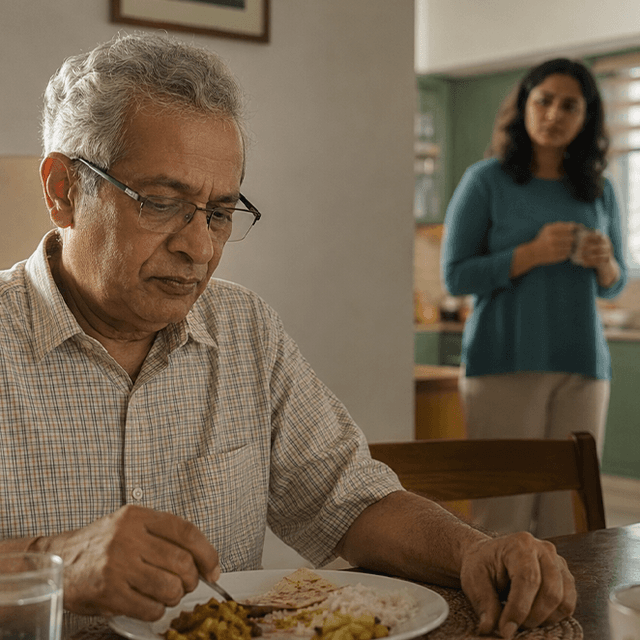
Families can typically sense a change when a parent has to spend significantly more time in the bathroom. They may even notice a parent's food preferences shifting, particularly when they stop eating certain items. Travel avoidance can be tough for some people, but it is also common practice to do anything to avoid the discomfort of public restrooms. No one brings it up though.
Most people touch on some of the issues while waiting for a parent to discuss the matter first. What is even worse is the mistake of assuming there is no problem to address. People tend to avoid the complaints due to embarrassment, so it is very understandable for a person to be concerned about a problem that is relevant to the situation.
Contrary to popular belief, bowel issues are exceptionally common, but that makes the nuisance of talking about them even less justifiable.
Ignoring the issues will do nothing but increase the discomfort your parent might be living with. Choosing to avoid the issue will lead to prolonged suffering and increased anxious isolation. More serious problems are likely to go unnoticed until the problems become difficult to address due to the delays.
On the bright side, starting the conversation will reduce the embarrassment your parent is feeling and ease the burden of discussing the issue. It will allow you to be involved in monitoring the symptoms and assessing when it is time to seek professional assistance. You will contribute to the establishment of daily habits and rational eating patterns, as well as showing them that they are valued and worthy of being treated with respect.
Why Bowel Health Feels So Hard to Discuss
Health-related discussions have their specific boundaries but discussions about bowel health are even more restricted. Parents might complain about their knees or their blood pressure but saying something about their bowel habits, or even asking their children to go to their bowels, has a stigma attached to it that has existed for generations. It's common among older generations, more so than younger ones, to have grown up in a household where talking about bodily functions, or using the bathroom, was not part of the family conversation.
When a parent also has the discomfort of aging, the problem gets worse. Having constipation, or being unable to use the toilet when one wants, or even having to wear adult diapers are all connected to loss of autonomy. When a parent has spent almost their entire life being independent, the last thing they want is to have to admit that using the toilet is something that they can no longer do without assistance. It is like admitting that they are getting old.
These parents also have enormous uncertainty about what is normal. Some parents believe that getting older is a perfectly valid reason for slower digestion, and so they do not mention it. Others notice something that they feel is different but are too worried about the potential doctor visit to speak up. They are also not ready to give up their privacy, which contributes to the problem greatly.
Signs Something Has Changed
Look for signs, not the complaints. If your parent won't share the problem, you would need to notice the issue in the routine.
- An example is spending a lot more time in the bathroom.
- Another is them stopping the eating of certain foods for no clear reason, including ones they used to enjoy.
- If they used to enjoy day trips and travel plans and have since stopped going because they seem concerned about being far from a bathroom, this is a sign of worry.
- Changes in appetite, ongoing fatigue, and sudden weight loss point to digestive discomfort.
By themselves, any of these signs cannot confirm a diagnosis. Together, they suggest it's time to check in.
How to Bring It Up Without Embarrassing Them
The most important part of a conversation like this is timing, not wording. Choose a moment that is private and reserved. Try not to bring this situation up when members of the family are eating dinner or if there are siblings around. Try a calm evening at the house or a walk rather than a situation that clearly feels like an intervention.
Start with an observation rather than an accusation. Saying an entire sentence like "I have seen you have been home more" is better than saying "Do you have constipation?"
Try to normalize the problem you are about to speak about as much as you can prior to bringing it up. These sorts of issues are normal and so many people deal with them. This sort of statement will help the situation feel much less serious.
Try to avoid speaking too much. Open ended questions will allow the most talking from the other side. Let them finish the sentences and resist the urge to fill the silence.
Jumping to a solution too fast can make a parent feel managed rather than heard. Listen first to understand. In trust the solutions will follow.
Making Daily Life Easier Once the Conversation Starts
When your parent starts to open up, try to implement smaller changes at home instead of having large conversations. Make changes to the family diet. Increasing the amount of fibre and water your family consumes will help regulate your family's bowel movements. If ongoing digestive support rather than one-time fixes are needed for parents, products like AGEasy Consti Calm are gentler than laxatives and are prebiotic fibre combined with clinically proven actives formulated for the ageing digestive system.
AGEasy Bloat Calm is for parents who experience bloating, gas, and general digestive unease. It contains digestive enzymes and prebiotic fibre to aid slow digestion and the discomfort that accompanies it due to ageing.
Changing the way bathrooms look can also help parents feel better about themselves. If your parent is avoiding the toilet because it is too difficult, look at what you can change. It can be less of a hassle to use the toilet if you have grab bars, non-slip mats, or elevated toilet seats. These items are provided through AGEasy's bathroom safety range.
Parents who may have the occasional accident or need extra protection at night or while traveling will find AGEasy Adult Diaper Pants with Intelligent Liquid Distribution technology to be supportive and dignifying. Additionally, some parents may view these items as practical tools as opposed to medical devices, enabling them to maintain their independence.
AGEasy Disposable Undersheets will keep your parent's favorite chair and bed dry and clean while reducing the number of cleanups and changes your parent has to do.
When to See a Doctor
Some symptoms cannot be managed at home and require an evaluation by a physician.
Especially when they are symptoms like blood in the stool, unexplained persistent pain, unintentional weight loss, unexplained changes in bowel habits over several weeks, and constipation that does not improve with dietary changes.
While changes in bowel habits are part of the normal aging process, an evaluation sooner will allow your parent to receive a simple treatment plan (if needed) sooner.
To your parent, describe the doctor's visit as a routine appointment so they do not perceive it as an emergency. Offering to go with them, or even just driving them, tends to remove the last barrier to their resistance.
Building Trust for the Long Term
This is certainly not going to be the last conversation you will have about this. Just as bowel health changes over months and years, your parent will grow in their ability to talk about it. Each time you speak to them on the subject and keep calm, as opposed to panicking, you make it that little bit easier.
There is no expectation that the scope of conversation will be completed in one go. What you want to achieve here is to let your parent know that it's okay to talk about this part of their health, that you care about it, and most of all, that you are on their side, this is not a judgmental conversation.
If your parent shows any of the described red flags, or their changes in bowel habits are affecting their day to day life, you should be advocating for them to see their doctor about this.