

38% of Indian Seniors Are Socially Isolated
Article by: Admin
Jun 20, 2026. 18 min read
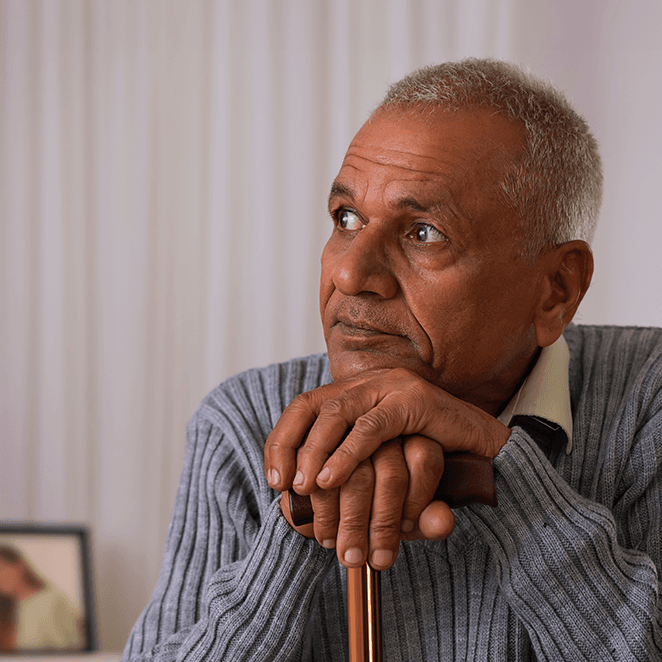
Why Loneliness Is a Physical Health Crisis, Not Just an Emotional One
When was the last time you called your parents?
Not the last time you meant to…but actually did
You talked about the usual things, right? Eating okay? Medicines? Doctor? Sure, everything's fine. And you went about your day feeling like a good son or daughter.
Here’s what that conversation almost certainly didn’t cover: Have your parents talked to any friends this week? Did they even leave the house? Was the TV on since breakfast not because something good is on, but it’s the only thing keeping the silence at bay.
We don’t ask these questions. We don’t even think about it. Yet this is exactly what is eroding our parents' health.
Things change after children leave home. Whatsapp stays active. Birthday calls come and visits for diwali and holi. But parents, without anyone meaning to, are living all but the last of their day’s frontline hours alone.
Not abandoned. Not unloved. Just...alone. Meals are eaten in silence. Weeks go by without a single visitor to the front door. The TV just sits there. Nobody thinks about it and to quiet a family, this is aging. Sad, of course, but not urgent.
That assumption, it turns out, is dangerously wrong.
Feeling lonely is not a mood. It isn't a personality issue or an unavoidable part of getting older. It is an evident and definable danger to one's health. In fact, the mortality risk associated with loneliness is as profound as the health risk from smoking more than a pack of cigarettes each day. No, this isn't a metaphor. This is what the literature shows.
The Numbers Are Larger Than Most People Realise
In a first-of-its-kind, landmark study published in the Alzheimer’s Association’s journal, Alzheimer’s & Dementia (December 2025), researchers examined the Longitudinal Ageing Study of India and reported findings based on a nationally representative sample of 31,464 individuals aged 60 years and older. This study provided two critical numbers that every family with aging parents should know.
SOCIAL ISOLATION AMONG INDIAN SENIORS (60+)
38.8%
Source: Alzheimer's & Dementia (Dec 2025) | LASI data, n = 31,464
REPORT EXPERIENCING LONELINESS
37.2%
Nearly 4 in 10 older Indians feel lonely, regardless of living situation
Almost 4 out of 10 is no small number. That includes the person living in the same apartment as you, the mother-in-law in the adjacent room, the father who claims he is doing well.
What is social isolation? It is not merely the state of living alone. It is the depth and breadth of their social network: whether they are married, whether they are part of any social club, and how frequently they have any meaningful social contacts.
It’s possible for a senior to be entirely socially isolated even when living in a full house. If interactions are short and commonplace, if there are family members who are physically there but emotionally absent, or extremely busy, and if a household member’s only human contact is the person who helps facilitate the household’s functioning, then you are isolated. Many people may live or have lived in a house, but that does not change the reality.
It is elder women who are most at risk, as are people living in rural areas. However, the problem is pervasive in older people across all of India’s diverse populations, regardless of family composition, geographic region, or economic status.
This Is Where Most Families Get It Wrong
Concerns about a parent’s loneliness are justified, and worries of adult children in this regard are understandable, but they often focus on the wrong things.
They focus on the parent’s mood. On the risk of depression. On the possibility that the parent may feel unloved or forgotten. These are real issues, and, yes, they matter.
But they are completely missing the bigger danger.
Because what two decades of medical research show us, and show us reproducibly, across countries and study designs, is that loneliness is not simply a psychosocial issue. It is a syndrome that has far-reaching, negative consequences primarily, and in some ways more seriously than the psychosocial consequences we all worry about.
The body does not know the difference between being physically unsafe and being socially alone. To the nervous system, both feel like danger.
Let it sink in. Because this explains everything that follows.
Over hundreds of thousands of years, human brains adapted to stimuli that involved social functioning. Being alone posed a real threat to survival. When one was alone, he or she would not have protection from enemies, no one to assist if he or she was hurt, and no one to help if he or she was not able to hunt or gather. Being alone equated to danger. Danger caused people to become stressed.
This stress response continues in an isolated condition. Chronic stress caused by isolation or loneliness becomes a continuous cause of stress.
Over a long period of time, stress increases the level of cortisol. The system goes into a state of inflammation and the immune system becomes less effective. Blood pressure also tends to rise. After a prolonged period, these factors lead to damage of the brain, heart, and the immune system.
The scientific community had replicated these findings many times, yet they were not surprised. It had become a consistent finding in their studies.
What Loneliness Actually Does to the Body
The Heart
It all becomes more evident in the heart.
According to one researcher, their review of the data from the big cohort studies and the US Surgeon General’s Office showed social isolation led to a 29% increase in heart disease and a 32% increase in strokes.
Like other established cardiovascular risks, such as high cholesterol, poor diet and low physical activity, the aforementioned factors elicit attention from cardiologists who construct comprehensive treatment strategies around them. But what is surprising is that, despite their significance, cardiologists seldom discuss or assess the role of loneliness in heart health. It is almost never cited on patient questionnaires, rendering it as the risk factor that is most often overlooked.
More direct and concrete negative health impacts from loneliness are Chronic high blood pressure is one potential pathway. Research has indicated that loneliness can contribute an increase of upwards of 14 mmHg to one’s systolic blood pressure, and the damage caused to arteries, heart muscle, and kidneys holds significant morbidity for those increases and goes unnoticed for an extended length of time. It is the stranglehold of small numbers and great effects.
The Brain
There is a growing body of very disturbing evidence within this research area.
Social isolation has been found to increase the risk of dementia in older adults by 50%.
DEMENTIA RISK INCREASE FROM SOCIAL ISOLATION
50%
Among isolated older adults, comparable to major genetic and lifestyle risk factors
In women, isolation has been found to increase the prevalence of cognitive impairment by 72% compared to socially connected peers. This is certainly not a small statistical signal, but a large and dramatic effect that was observed within a sample of more than 31,000 individuals. This was pointed out in the 2025 LASI study, which is the same study that reported the 38.8% statistic.
What is happening in your brain due to social isolation? Think of talking to someone as a form of mental exercise, and one of the most difficult ones to complete. One has to continuously monitor multiple discussion threads and manage their brain’s attention to various emotional cues while selecting and formulating the desired response. This massive mental output must occur in real time. With stimulation gone, the brain simply does not get one of its most vital exercises.
Now consider this. Socializing is like a workout for the brain, and without it, the brain just becomes stagnant. When the brain eventually does begin to show signs of cognitive decline, it has, however, been unhealthy for a long time.
The Immune System
To chronically isolated people, social isolation triggers something known as conserved transcriptional response to adversity. This leads to changes in how genes respond to ongoing changes in stress. The body’s immune system increases the production of inflammation and decreases its responses to antivirals.
Simply put, socially isolated people become worse at fighting infections. They develop an increased susceptibility to chronic inflammation, which increases their susceptibility to type-2 diabetes and certain cancers.
The Mortality Risk Nobody Mentions
All of these factors ultimately lead to this risk.
Dr. Julianne Holt-Lunstad has done groundbreaking work in the fields of psychology and social connections and their impact on mortality. She conducted meta-analyses on dozens of studies of hundreds of thousands of adults. She reached a striking conclusion: the risk of premature death increases by approximately 60% for individuals who lack social connections.
EQUIVALENT DAILY HEALTH RISK OF SOCIAL ISOLATION
~15 cigarettes / day
Per Holt-Lunstad meta-analyses, exceeds obesity and physical inactivity as mortality risk factors
Sixty percent. Thus, researchers further analyzed the data: the risk of premature mortality due to social isolation is 29%, and due to loneliness it is 26%. These figures are greater than the mortality risk attributable to obesity. These figures are comparable to the risks associated with being physically inactive.
When we make the cigarette comparison, we do so based on the actual number of cigarettes attributed to the mortality risks associated with isolation as outlined in the study. No one reads the isolation study and says, ‘Oh, the mortality risk of isolations is equivalent to smoking 15 cigarettes a day. That’s just an emotional problem. Let’s manage it with some occasional phone calls.'
And yet, that is what most families do with loneliness.
The Connection to Falls, Mobility, and Independence
There’s one other element here that I think warrants attention, especially for families that are trying to help out a parent who is living alone.
Researchers at the University of California, San Francisco, followed older adults and found that those who were alone most of the time were 59% more likely to struggle with the types of tasks required in everyday life: climbing stairs, walking a short distance, or getting up from a chair.
STRUGGLE WITH EVERYDAY PHYSICAL TASKS
59% more likely
Among seniors who spent most time alone. UCSF research
Think about what that means in practice.
Isolation results in decreased mobility. This lack of activity may stem from the fact that the individual does not have an incentive to move. They have no one to visit or walk to. There are no shared meals that require them to get up and assist in the kitchen. There are no grandchildren who are eager to go to the park. The everyday tasks and activities that require movement are predominantly social in nature, and as a result, their opportunities to engage in them vanish.
The skills and abilities of strength, balance, and coordination can be thought of as depreciating assets that will decline with lack of use. It may not be a natural byproduct of aging, but it is a byproduct of prolonged inactivity. Physical inactivity for long stretches of time indicates a state of physical deconditioning, and for older adults, that state of deconditioning results in:
- A decline of grip strength and weakness in the legs
- Poor balance and coordination, especially on irregular ground
- Delayed responses to sudden disturbances that result in a loss of balance
- Decreased tolerance coupled with increased severity of injuries sustained from a fall
Among the older population in India, falls are the most common causes of accidental death. Plus, an isolated older adult will be at a higher risk of falling and lying on the ground for prolonged periods of time until someone discovers them. The longer the time that passes after the individual falls and before someone finds them increases the risk of sustaining life-altering injuries as a result from the fall.
Isolation does not just raise the risk of a fall. It raises the cost of the fall that happens.
The chain moves in one direction and it speeds up. Isolation causes inactivity. Inactivity causes weakness. Weakness causes falls. Falls cause loss of autonomy. In a home not meant for a fragile, isolated elderly person loss of autonomy becomes a crisis. That chain moves in the opposite direction. A senior who is physically stuck and is not only fearful of the stairs, and unsure of her feet is in pain when she moves. The problem of physical decline and isolation rise in the same system.
Why is this happening in India? India used to not have this problem, or it could be said that the problem was solved without anyone needing to name it. Shared multi-generational families were not just culture. It was a form of elder care system. The older adults remained social, physically active because the household system pulled them into activity. They were supervised without being watched. The system just worked.
Why This Is Happening Now in India
The movement of children in the family unit leaves the families of the parents behind; The parents stayed in the original nation, while the children migrated to new countries. Over the past few years, multi-generational households have become the exception in most large Indian cities. While families may sincerely want their home to be multi-generational, the costs of housing, work, and schools make the spatial arrangements impossible. The consequence of this development is that many Indian parents who expected to grow old surrounded by family, have to grow old in silence.
The isolation of elderly parents will continue unless policies are implemented to make the elderly parent less of a demographic burden. India's population age 60 and above is expected to be 320 million by 2050, accounting for 20% of the population. This does not account for the aged population of the natives of the countries that parents' children have migrated to.
The unified family system provided support to many members in a household; this is what the western system of social support has not yet provided
We have not yet built the infrastructure to replace what the joint family used to provide automatically. And the gap shows up directly in the health data.
The LASI team made an insightful observation, income inequality exacerbates the impact of health. The less financially able families do not have health workarounds that wealthier urban families have. Companion provision. Individual healthcare. Housing for the aged. Senior citizen community centers. The countryside has the most isolated elderly people and the fewest alternatives available.
The scale of this problem exceeds the capacity of any care system that has been built to alleviate it.
What an Adult Child Actually Sees
Renu's mother lives in Lucknow and Renu lives in Bengaluru. They video call each other three times a week, sometimes more.
What Renu knows: her mother had her blood pressure checked last month, and she is eating well. She also visited the temple on Tuesday.
What Renu does not know: her mother hasn’t talked to a close friend since November. She stays in her apartment and doesn’t leave on the days the cleaning lady doesn’t come. The television has been on since early morning, not because she is watching it, but because she needs the noise and the silence is worse. She finds the stairs harder than she used to, and has not mentioned this to anyone.
This is not an atypical family. It is a very typical one.
It is not a matter of a lack of love or care. It is an issue of a lack of visibility. Families coping from a distance track the things that get reported: doctor visits, medications, meals. They lose sight of the quality of social interaction, the world physically closing in around them, the stagnant inactivity that builds up — the things that are not reported, but are the most risky in the long run.
The body often whispers before it screams. An isolated senior’s health can deteriorate in ways that the family can see: a fall, a hospitalisation, a sudden cognitive decline. The isolation driving it, however, has usually been present for years.
What Families Can Actually Do, and What It Requires
Let's be honest. Phone calls are not enough, and even to some extent, they are something. Almost any structure is better than no structure at all.
The More Routine, The Better
The social contact and well-being studies of older adults consistently demonstrate that regular routine-style contact is significantly more beneficial than sporadic contact of a more active nature. For example, weekly, longitudinal studies show that daily, punctual calls are better than one weekly call, no matter how long or how many people, due to the social structures and emotional responses the calls create.
An elderly parent, for example, is expected to be awake for the call. It sounds trivial, but it's a remarkably encouraging social structure. That's why social scientists are so active.
The Emotional Gesture of In-Person Visits
Video calls are better than nothing, but are not as impactful as in-person visits. This is the case even though the visits are perceived as neurologically and physiologically positive because of oxytocin release and mutual nervous system regulation. The social contact studies show no screen to in-person interaction replacement, and for this reason, in-person visits are not a luxury, but rather a necessity. Treat them that way.
Family Connection Cannot Compensate a Social World
This will sound uncomfortable, albeit true. Family contact, even regular and loving, does not equate to a social world. Older adults who maintain connections to community groups, be they religious congregations, senior groups, cultural associations, neighbourhood friendships, or activity clubs, have consistently better health outcomes than older adults whose social world is comprised solely of family.
For a family with an ageing parent, defending that social world is a core element of the care plan. It is not a bonus. That could mean assisting a parent to reconnect with a group after an illness, organizing transport to community activities, or being mindful of which friendships are silently deteriorating and acting on it before they are gone for good.
The Home Environment Is Not Separate from the Social Problem
This is the connection that is easiest to miss.
An isolated senior who is also physically constrained, by pain, fear of falling, difficulty navigating stairs, or by the absence of adequate mobility support, becomes progressively more housebound. Housebound deepens isolation. Isolation accelerates physical decline. The cycle tightens.
A home designed for safe mobility, with proper support in the right places, with fall-prevention measures in place, and with physical confidence that allows an older adult to move freely, and of course, independently, is what keeps an isolated person from becoming a trapped one. The ability to step outside and walk to a neighbour and move through daily life without fear of doing so, is itself a form of social access.
Recall the UCSF finding that isolated seniors are 59% more likely to struggle with everyday physical tasks. Isolation causes physical decline. Physical decline deepens isolation. A parent who is afraid of walking on uneven surfaces simply stops going to the market. A parent who cannot manage stairs will not visit the family that lives downstairs when they come to visit.
Physical safety and social connection are not separate care categories. They are one system.
This Is Not Only India's Problem, But India Has a Specific Version of It
The WHO estimates that approximately one in four of older adults experience social isolation, and one in ten older adults report feelings of loneliness, which can be severe. In 2023, loneliness was declared a public health emergency by the United States Surgeon General which is significant as it translates into policy action, not just symbolic recognition.
The science has moved, and rapidly. The consensus has gone from ‘loneliness causes emotional distress’ to ‘loneliness causes disease and death.’ This has been seen in multiple studies, regardless of geography, gender, age, and health status. Such studies have also led major health systems to restructure in order to deal with the issues arising from social isolation.
However, India’s version of this problem is different. The LASI data showing a 38.8% rate of social isolation is a figure describing this rapid social change outpacing the development of social care. The rest of the world has had decades to build alternatives to family-based elder care. India is building these systems out of necessity, demographic pressure, as its older adult population is set to nearly double in 25 years.
Families are making decisions about how often to visit, whether to relocate a parent, how to organize a parent’s home, or what services and routines to implement. These decisions are being made in the midst of social transitions that have no clear historical precedent.
I understand how difficult this situation must be. Families’ decisions today, however, are more impactful than they may seem.
The Real Issue
Here is the version of this dialogue that is always too late.
An incident occurs, be it a fall, hospitalization, or sudden disturbing alterations in cognition. The family comes together. The doctor poses a few questions. At some point during this process, it is apparent that the underlying isolation has been contributing to this situation for many years; quietly, and without anyone deeming it urgent.
The research implores us to have a different conversation, and to have it sooner.
Social health exists as a component of physical health. Remaining engaged in the life of your aging parent, in ways that far surpass mere obligation, inquiring about their medications, is an act of love. It is, more literally, an act of preventative health care.
Ensuring that older adults can maintain independence within their living environment is the foundation that holds everything together.
The most important health decisions for an ageing parent are rarely made in hospitals. They are made quietly: in the choice to call regularly, to visit more than feels convenient, to build a home that supports movement, and to treat isolation as the medical risk it actually is.
The body records the toll of loneliness just as it records the toll of everything we endure. It does not forget years of chronic disconnection, just because the family meant well.
These families, the ones who see social connection as health rather than sentiment, are the ones who act early enough to effect real change.
Recommended Blogs
You May Also Like
 No products found
Article by:

Admin
Article Category:
General Wellness