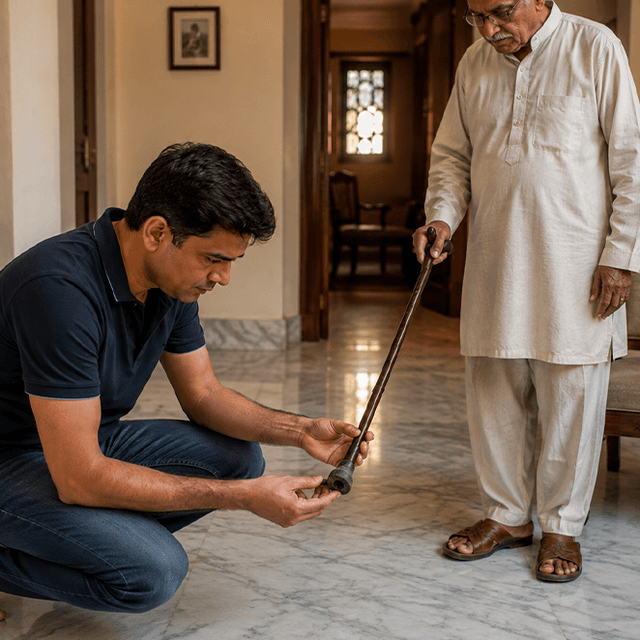


The Walking Stick Reinvented: A Real Person's Guide to Folding and Adjustable Sticks for Travel, Trekking, and Everyday Life in India
Article by: Shreya
Article Category: Walking Sticks
Aug 10, 2026

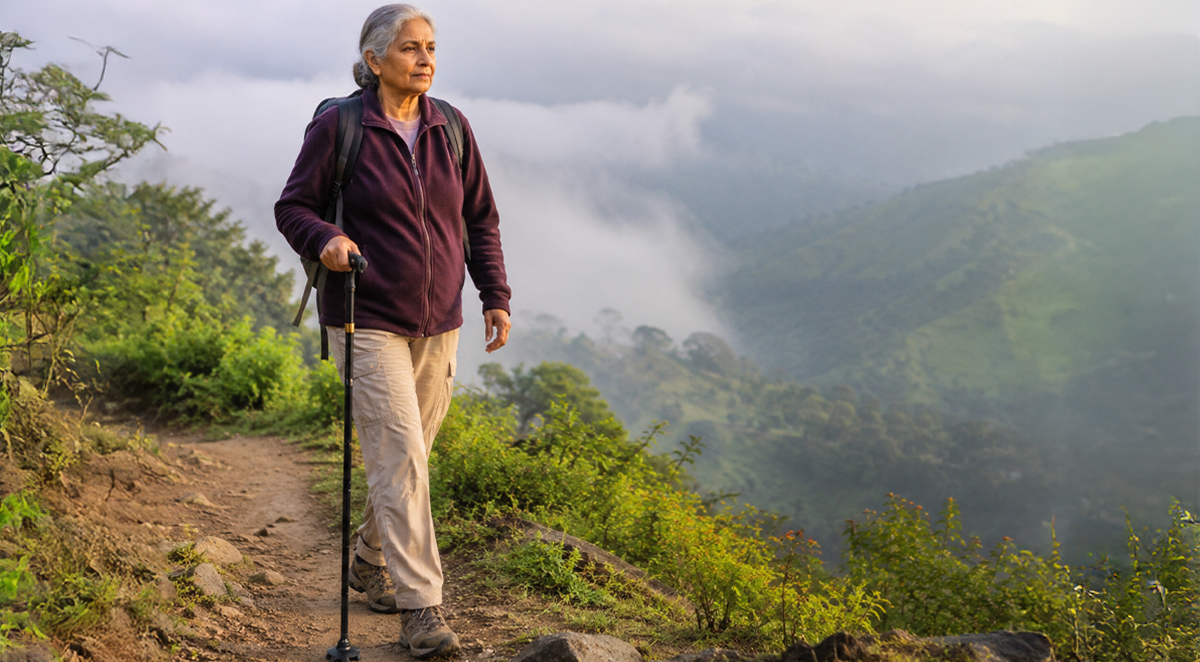
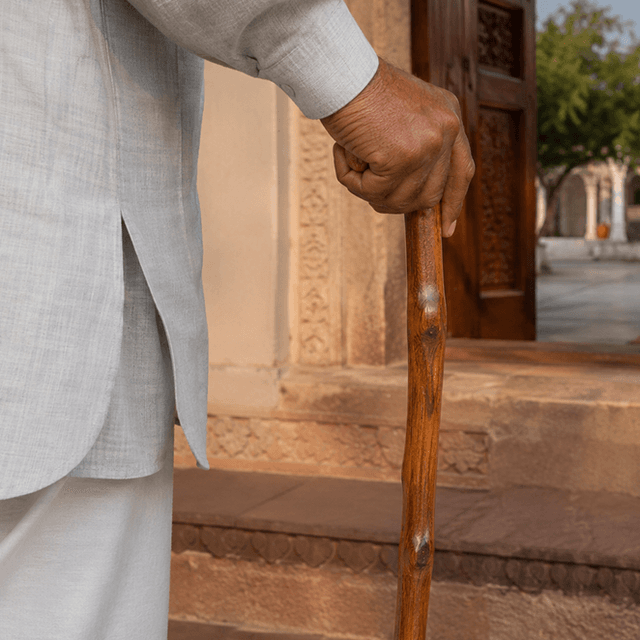
A walking stick is one of those things most people never think about, until they need one.
Whether you are walking on uneven sidewalks of a busy Indian market, or planning to go on a trek in Kodaikanal, or traversing an airport terminal, your mobility shouldn't be limited by your gear.
Modern, folding, and adjustable walking sticks have evolved into high-performance tools that offer more than just stability, they offer freedom.
The term 'walking stick' encompasses a ton of walking sticks meant for very different situations.
For example, consider the following people:
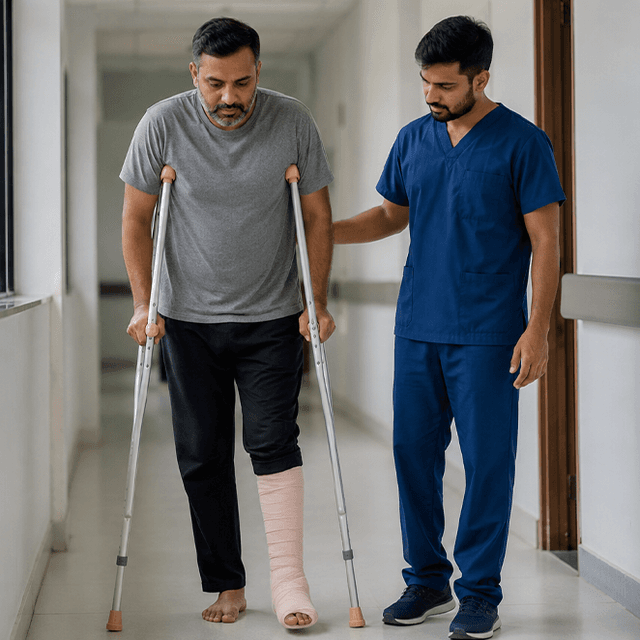
- A knee replacement patient who needs support if they are going to be putting weight on the leg. They will need assistance during recovery until they can walk on their own.
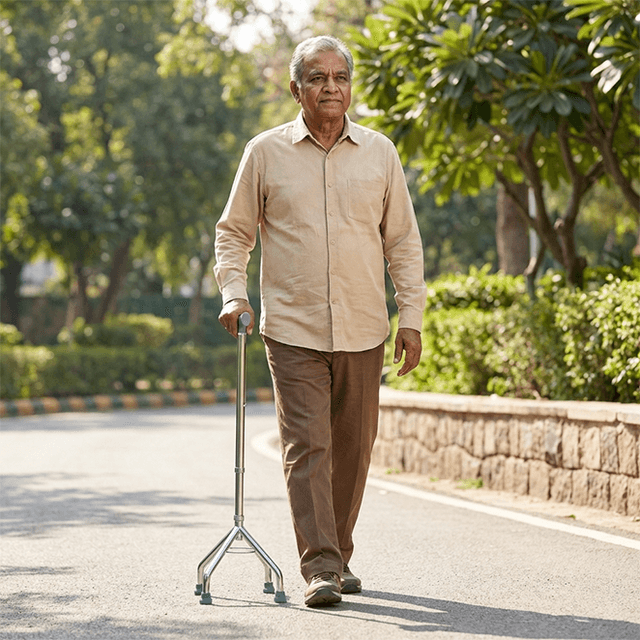
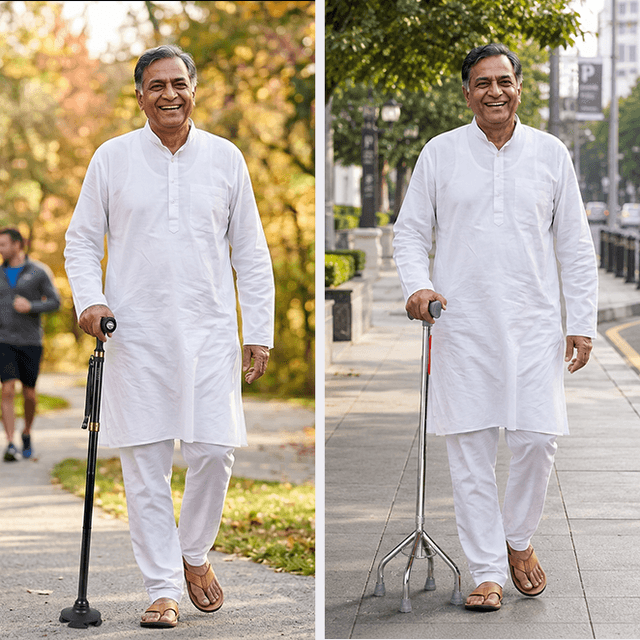
- An older lady, maybe age 68, who walks 2 kilometers every morning and just would like mental support to walk on uneven roads.
- An avid trekker going to Kasol or Kodaikanal who needs a walking stick that can collapse and easily be stowed away for the uphill portions of the trek.
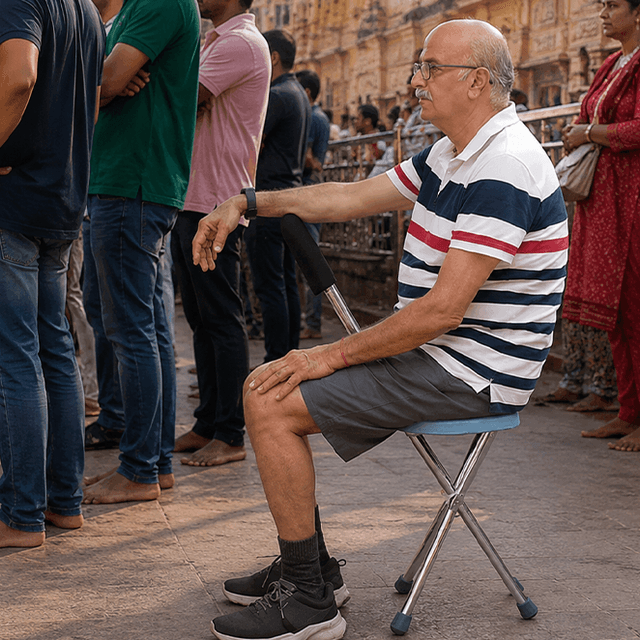
- A frequent flyer who has a walking stick that can fit inside the overhead compartment of an airplane and can survive the airport, cobblestones, and a market.
Each example requires a different stick with different features and in order to be supportive, a walking stick has to be designed specifically to meet the needs of a specific user. There are serious injuries that can be caused by an ill-fitting stick that doesn't match the user's needs.
Before we dive into the technical details, here are 5 essential checks to ensure your next walking stick is a tool for freedom, not frustration.
5 Things to Do Before Any Purchase
Whether you're buying for yourself or someone you care about, here are 5 things you can do in 5 minutes that will save you a lot of unnecessary regret.
- Take measurements first. Stand up straight, arms down. Measure from the floor to the wrist bone of your dominant hand. That's about stick height. Check the model you are choosing can actually be set to that height.
- Test the lock mechanism on the stick under load. Adjust the stick and lean some weight on it. There should be no movement or slippage at the joint. A lock that feels even slightly loose in the shop will loosen further with use.
- Grip the handle for thirty seconds. Discomfort in the shop becomes real pain on a two-kilometer walk. A handle should feel natural and not something you have to adapt to.
- Check the tip. Press it against a smooth floor and put some pressure sideways. It should not slide. It's best to test this on a slightly damp surface.
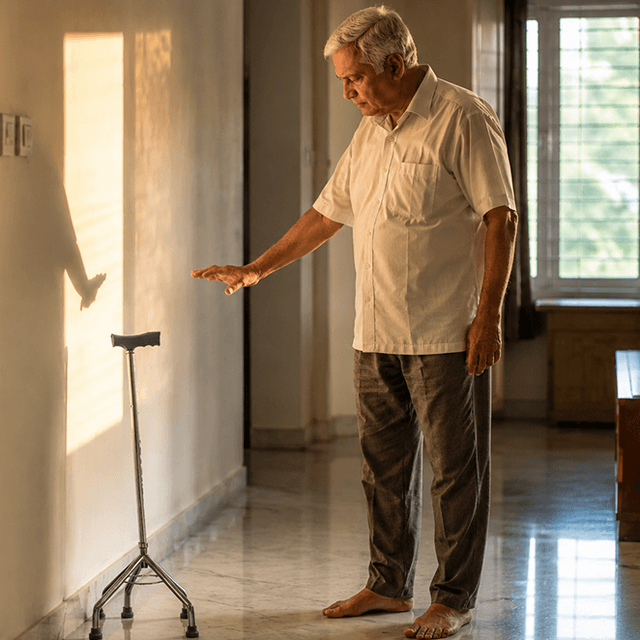
- Consider who might be making the adjustments. Is it going to be an older adult with hand weakness? If so, lever-lock is a lot easier compared to twist-lock. This is a practical accessibility issue that almost no product description addresses, yet it is extremely important in practice.
Finding Your Perfect Fit: Why Height Matters
The most important and most overlooked aspect of an adjustable walking stick is the height range. And how the locking mechanism holds the stick at a certain height is an equally important second aspect.
Now let us examine why both of these aspects are important.
A stick placed at an inappropriate height will impact your body posture. If it is too short, you will be leaning forward, which will cause a little strain on your lower back today, but over weeks this could develop into a more serious problem. If the stick is too tall, your arm will not be able to bend at the elbow, and as a result, you will not be able to properly transfer weight through the stick as you are supposed to.
The correct height adjustment will mean your elbow will be at an angle between 15 and 20 degrees when your hand is on the handle with the tip of the stick touching the ground beside your foot. This angle will position your arm into a natural posture where it is designed to take a load.
Locking Systems and Which One Is Most Important to You
- Twist-lock (screw-lock): This is where you have to rotate the different parts of the stick in opposite directions to either tighten them or loosen them. This is simple and works well when they are properly tightened. However, the problem is that with time, especially if it is used frequently, the twist-lock joints tend to develop a little play. If you are doing daily walks, and setting it once and leaving it, this will be fine. However, if you are doing a lot of trekking, then this is not ideal.
- Lever-lock (flip-lock or clamp-lock): A small exterior lever clamps two sections together. These types of locks are much easier to operate for users with reduced hand strength or arthritic fingers. You can also see that it's locked which is really important when you are on a trail.
With older adults, who will use a stick mainly for walking, either mechanism is fine as long as the height adjustment is set once and not changed. If adjustments are to be done regularly, then lever-lock is better.
When it comes to trekking, lever-lock is the only option.
Folding vs. Fixed: The Honest Trade-Off
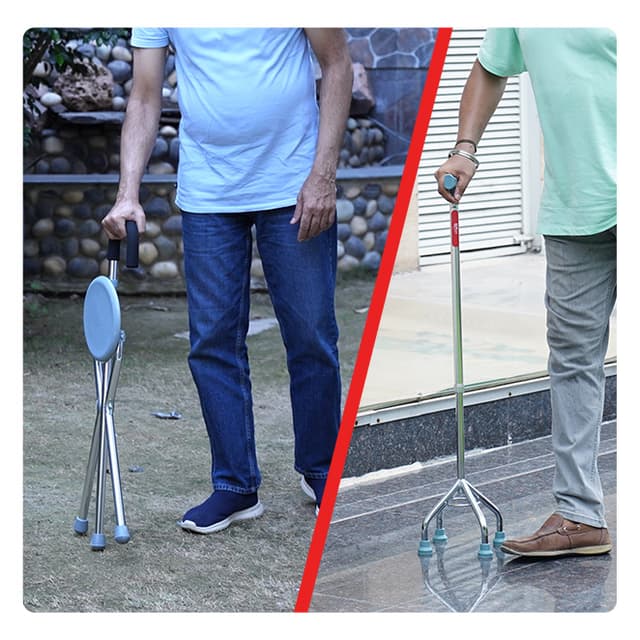
A fixed-length stick is more simple and easier to construct. With lesser joints, there are less chances of failure. Also one-piece shafts are slightly stiffer under load. For home use, a fixed stick works better and is more affordable.
But when you're moving or traveling, a portable and foldable stick is the better alternative.
Modern folding trekking poles collapse into sections connected by an internal elastic cord like tent poles, which allows the stick to collapse down to approximately 30 to 40 centimetres to slide into a handbag and fit into a carry-on, while assembling in under ten seconds. If someone uses a stick occasionally on uneven ground (but not at home), in unfamiliar cities (but not in their own building), this is genuinely useful.
There is a trade-off with the joints and folds of the stick, as each fold point becomes a potential weak point. Some less-expensive models may feel more flexible than a fixed-length stick, though the materials used do improve this. That would only be a concern for those putting a lot of pressure on the stick.
Here's the practical question for yourself: Is this stick meant to be discreet or is it meant for continuous use? If the stick needs to fit in a bag, slide under a table, be put in an airplane overhead locker, or not be visible then a folding stick is the most appropriate option. However if it is not meant to be put away and the user will be holding it all day, then a fixed length, adjustable stick is going to be easier to handle, and often be more durable.
Aluminium vs. Carbon Fibre: Decoding the Materials
Aluminium: The Heavier Alternative
For good reason, Aluminium is the most popular material used in the Indian walking stick market. Aluminium sticks are sturdy, readily available, and significantly cheaper than sticks made of carbon fibre. A decent aluminium folding stick weighs about 250-350 grams and will handle impact without shattering.
This makes aluminium the best choice for people who do their walking in urban areas, hospital recovery, or any kind of travel that may involve navigating an airport.
The only real issue is that, over long distances, the weight will add up. This matters for trekking. For daily walks, it won't.
Carbon Fibre: Worth It for the Right Person
A carbon fibre stick can weigh around 120 to 180 grams which is about half the weight of an aluminium stick. For someone with a trekking route of about 10 to 15 kilometres a day, this will make a difference. Carbon fibre also has greater stiffness, which means that more energy is transferred directly during push-off which is a positive for trekking technique.
The downsides: It is more expensive, and it can fracture under high stress impact, whereas aluminium would bend. For most recreational trekking, this isn't an issue, but it's the reason why many experienced trekkers do pre-trip inspections on their poles instead of just grabbing one and going.
Sticks made from genuine high-quality carbon fibre from reputable brands start around ₹3,000 and full carbon models range from ₹8,000 to ₹12,000.
The honest bottom line: A cheap carbon fibre model will always be inferior to a good aluminium folding stick at the right price point. For serious trekking, where weight is a crucial factor, quality carbon fibre is worth it.
Matching the Stick to the Situation
Daily Walking: Pavements, Parks, and Neighbourhood Roads
This is the typical scenario in India, and it is also the one that has the greatest variability depending on personal preference.
More than anything else, a few aspects are of greater importance to more buyers than they realize:
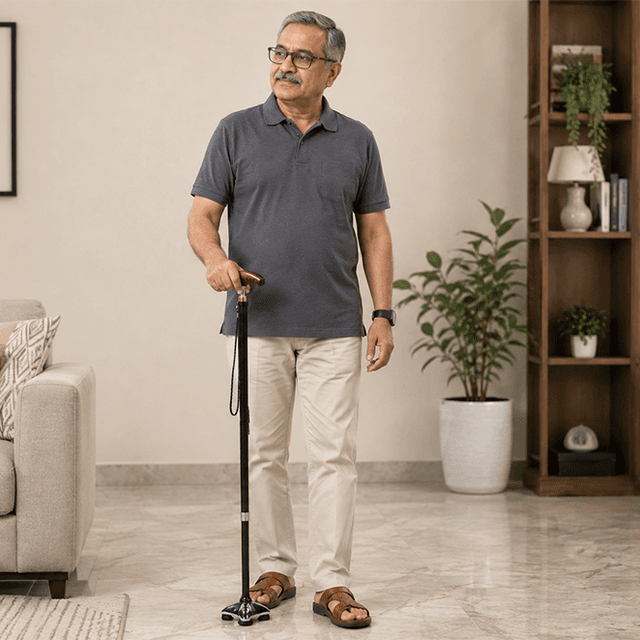
- An offset handle (also called a functional grip handle) shifts the weight more evenly across the wrist and forearm than does a straight crook handle. For regular walkers covering meaningful distances, this noticeably reduces cumulative strain.
- Wrist strap: This stops the stick from falling if your hand relaxes. An adjustable strap that isn't too tight should create a feeling of security, rather than feeling confined.
- Ferrule tip quality: Indian roads are, to be diplomatic, diverse. A thick, high-quality rubber tip will grip on stone, tile, packed earth, and will be tricky to walk on when it's wet. Replace it when the centre starts to flatten.
- Weight: If it's a stick you barely notice, it's a stick you'll use consistently.
One note worth mentioning: a walking stick is usually used on the opposite side from the weaker or recovering limb. If the left knee is the concern then the stick goes in the right hand. For anyone in recovery, this is worth checking with a physio as it can vary a lot.
Walkers may not have considered this yet. The design of the stick is one element of comfort when walking, but there are others. People who have flat feet or low arch syndrome typically require additional comfort aids, and they can reduce walking stick fatigue by pairing a supportive walking stick with proper, supportive footwear.
Air Travel and Urban Travel
For those travelling to an airport or have to take public transport or wish to go to a place where they don't know the layout, it is important to have a walking stick that can fold and is compact enough to fit anywhere.
The practical checklist:
- Under 40 cm in collapsed length ensures fit in cabin bags
- Easy and quick to assemble in 20 seconds — in fact, one should be able to set it up with one hand alone while the other hand is carrying a bag
- Should weigh under 300 grams, so it doesn't meaningfully eat into your carry-on allowance
- Durable tip for hard surfaces — places like airport terminals and hotels with marble flooring are dangerous for a tip that slides
While most mid-range aluminium sticks would fit the above criteria, it's still worth comparing quality. Because a ₹600 folding stick might not be as strong as the ₹2,000 folding stick. Look for handle quality, tightness of joints and tip reliability before you consider a stick for purchase.
As far as airports are concerned, walking sticks are allowed as carry-on items under DGCA regulations for passengers who need them, but this policy can change, so check with your airline before your flight.
Hill Trekking
This is where the difference between a walking stick and a trekking pole becomes truly important.
A walking stick is intended to provide vertical support. A trekking pole serves that purpose but also facilitates forward propulsion with a design for that purpose including wrist loops, sweat-controlling cork or foam grips, and shaft materials that are optimized for repeated light impacts.
For basic trekking activities like day hikes in Coorg or family trips to Munnar, and walks through the ghats of Mahabaleshwar, good quality folding trekking poles will be perfect for you. These poles have the following important features for hill trekking:
- Adjustable length for gradient: When going up, the pole will be shorter and this encourages you to keep an erect posture. When going down, a longer pole will help absorb some of the impact. A pole that can be adjusted between 85 cm and 120 cm is suitable for most adults and most terrain.
- Wrist strap: This is useful on downhill sections especially. The strap will carry some of the load through to the forearm instead of relying entirely on grip strength.
- Dual-tip design: Most poles have a rubber tip with a metal spike at the end. The rubber tip is used on paved trails while the metal spike is used on soft earth. Having poles like this is good for mixed terrain.
- Grip material: Most trekking pole brands use cork, foam or EVA foam. Cork grips sponge up moisture and then custom mold to the trekker's grip over time. Foam grips are lighter and are immediately comfortable. EVA foam is firmer and more durable than standard foam and is used on most mid-range poles.
In case of regular trekking (especially multi-day hikes) involving sustained single day outings with very high vertical gains, a specialist trekking pole from a credible company is justified. Otherwise, a decent trekking pole that folds is good enough.
Budget Guide: What You're Actually Getting at Each Price Point
The Indian market offers a variety of sticks at different price points. Here's a breakdown:
Entry Level: Under ₹800
At this price, you can get a basic folding or fixed-length aluminium stick designed for light, casual use. The handles are usually made up of plastic. And usually you get a twist-lock mechanism as well.
Good for: Infrequent use, light walking, very short-term use during early recovery.
Be cautious of: Poor quality, choosing the correct height and checking if the available features work well for you.
Mid-Range: ₹800 to ₹2,500
This is the best value range for the majority of the people.
Most of the mid range sticks provide folding or adjustable designs with decent lock systems, offset or ergonomic handles made up of foam or rubber, height adjustability covering most of the adult height range (75 cm – 120 cm) and replaceable tips.
Good for: Daily walks, travel, moderate trekking, non-acute post-recovery stages.
Be aware of: Test the lock before buying. It should feel stable and strong when adjusted, and the handle should be a good fit, because some mid-range handles are designed for smaller hands and will be less comfortable for larger adults.
Premium: ₹2,500 and Above
Premium sticks are the imported ones which are now also available in India. These sticks are made up of original carbon fibre or high-grade aluminium alloy, contain lever-lock systems, anatomical grips, and dual tip systems for trekking.
Good for: Serious trekkers, frequent travellers who want a long-lasting stick, and anyone looking for a lightweight stick.
Make sure: Carbon content is 100% versus carbon composite and the tip replacements must be available in the Indian market.
Closing Note
A walking stick is just a tool to provide better mobility. The main focus should be on what activities you wish to continue and how a walking stick can help you do them with more ease, comfort, and confidence especially as you get older. And in order to achieve that goal, it is essential to select the right walking stick.