

Choosing the Right Walking Aid After Surgery: A Recovery Guide
Article by: Kunal
Article Category: Walking Sticks
Aug 12, 2026
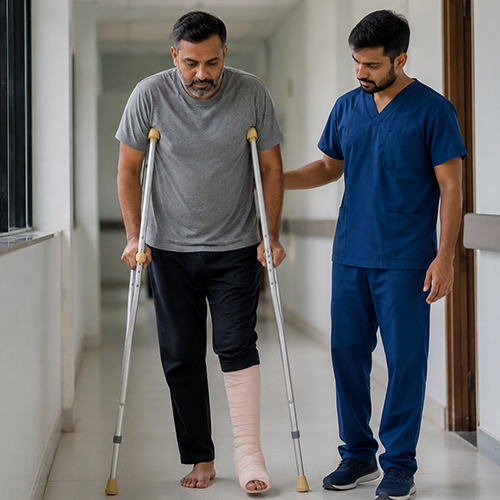
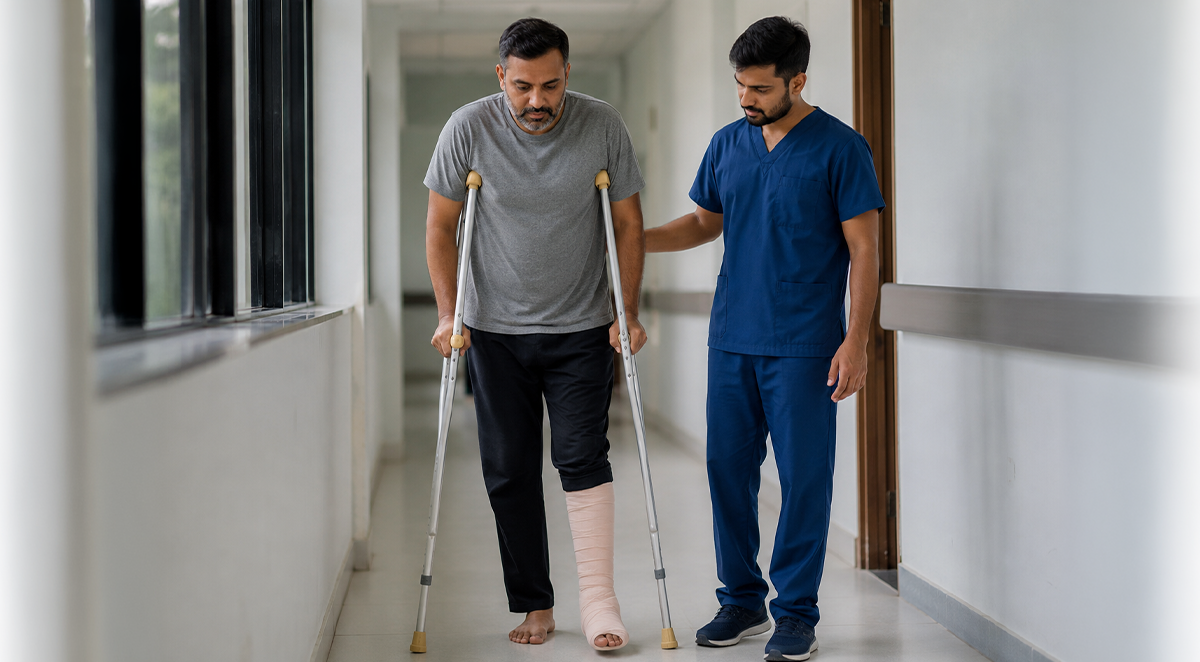
The first few steps after surgery come with their challenges and frustrations. And choosing the wrong walking aid can complicate the situation further.
Recovery is not just about healing. It is about learning to walk safely again.
One of the major misconceptions regarding the recovery process is thinking that any walking stick, cane or crutches can be used as mobility aids as they do the same job. It is not so.
Choosing a walking stick because it is the cheapest, or picking up crutches because a family member used them after their operation, or going for a quad cane because it looks more stable, are all ways to get this wrong.
Every mobility aid solves a different problem.
Selecting the wrong type of cane or crutches means slowing down your recovery process, putting excessive load onto an injured leg, increasing the risks of falling and making each step painful for yourself.
Picking the right walking aid means protecting a fractured/broken bone/joint, walking in a balanced manner, following the doctor's weight bearing instructions properly and restoring your independence gradually and safely.
This applies to both fractures, hip/knee surgeries, strokes or whatever injuries one may have. The best walking aid is not the one that looks the strongest. It is the one that was developed specifically for your recovery stage.
This guide breaks down the difference between walking sticks, forearm crutches, elbow crutches, axillary crutches and quad canes.
If you want to understand when doctors and physiotherapists recommend each one, and how to choose the right option for where you are in your recovery, then let's dive in.
Walking Sticks
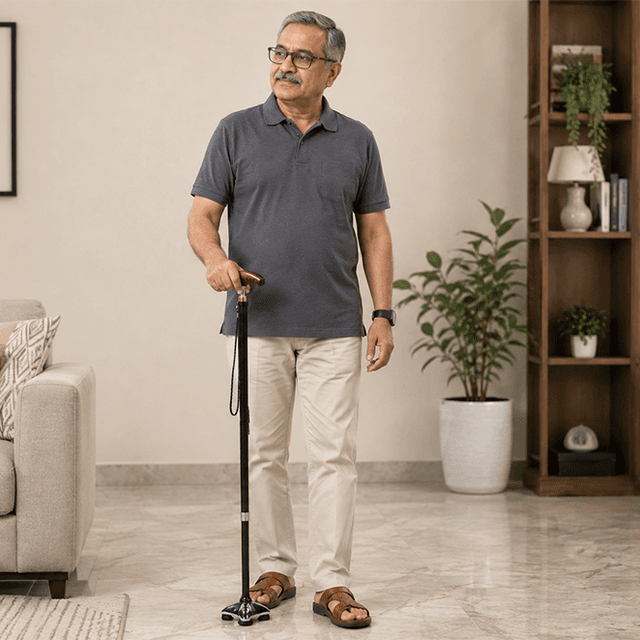
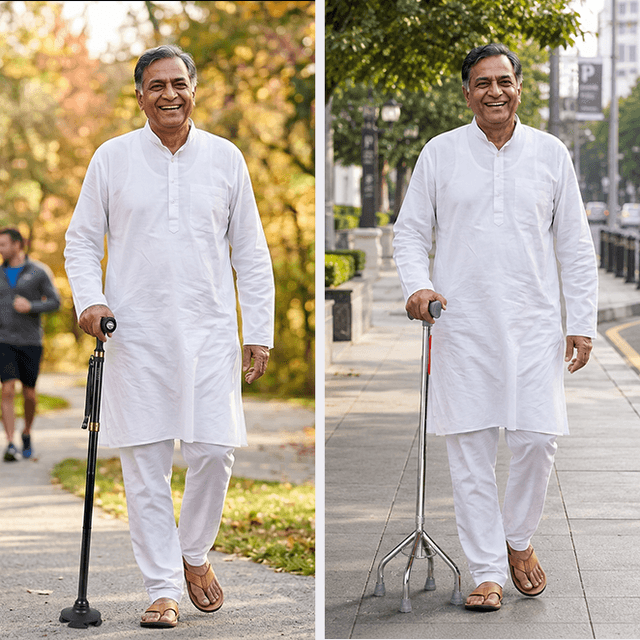
A walking stick, also known as a cane, is one of the most widely used mobility aids. This is a single-point support held in one hand, designed for those who can bear most of their body weight themselves.
It is suitable if you have problems with your balance, some kind of weakness on one side or at the initial stages of your joint pain. You will usually be recommended a walking stick by a doctor, once you have passed a non-weight-bearing phase and got a clearance to partially weight your injured leg.
Technique: Which Hand to Hold It In
The most common mistake that many people make: the walking stick must be held in your hand opposite to the side, which is weakened or injured. The reason is that the walking stick and your injured leg should move together just as if you were moving like that without any problem. If you are holding a walking stick with your stronger side, it changes your body posture and puts additional strain on the injured joint.
Height and Fit
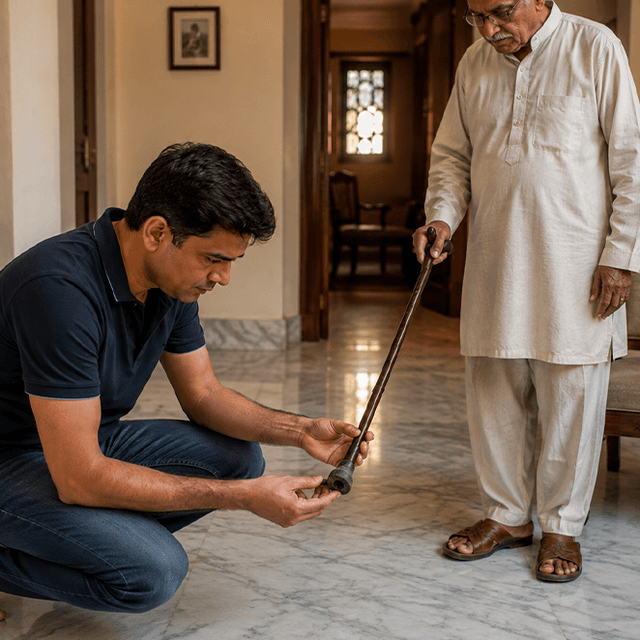
If you are going to use a walking stick after surgery in your rehabilitation at home, you need a walking stick with an ergonomic handle, adjustable height and anti-slip tip. Height is much more important than most people think. When you are holding your walking stick with your arm at your side, your elbow should be bent at roughly 15 to 20 degrees. If the stick is too long, you will lean away from it. If it is too short, you will hunch forward.
What to Consider for Post-Surgery Recovery
AGEasy's walking stick range covers most recovery situations.
- The AGEasy Single Leg Walking Stick is a good starting point for people transitioning out of crutch use. It has an adjustable height mechanism, an anti-slip base, and a grip designed to reduce wrist strain.
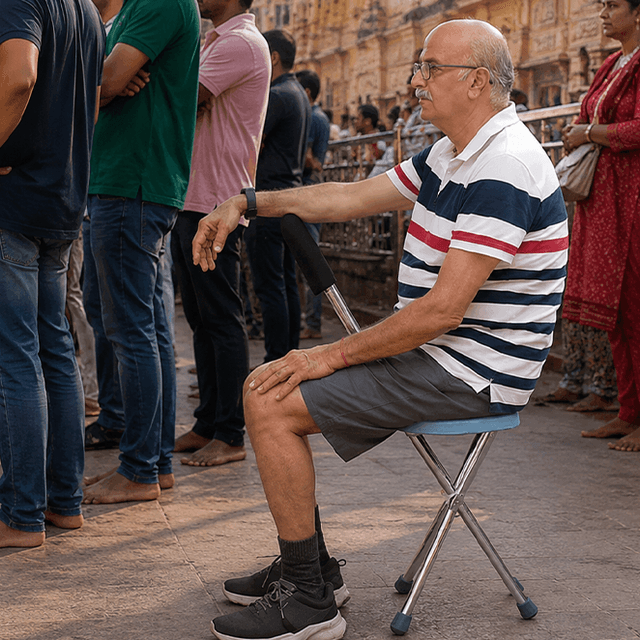
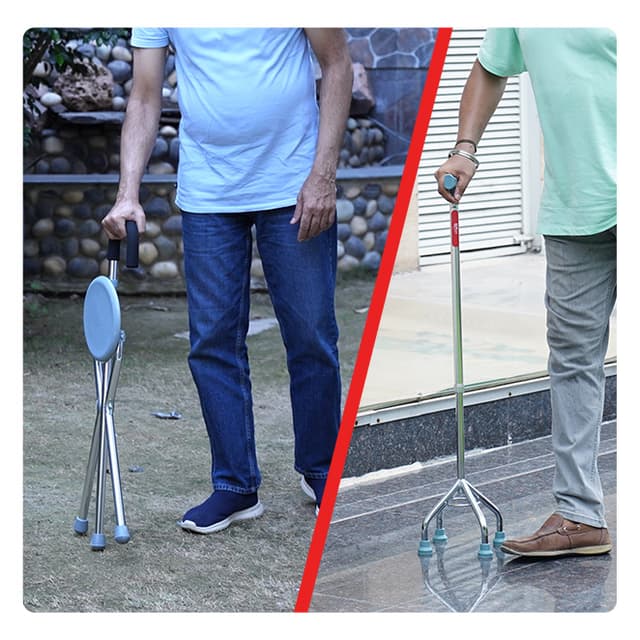
- For those who tire easily during recovery and need the option to sit down mid-walk, the AGEasy Walk and Rest Walking Stick includes a fold-out seat, making it practical for outings or longer periods on your feet.
Quad Canes
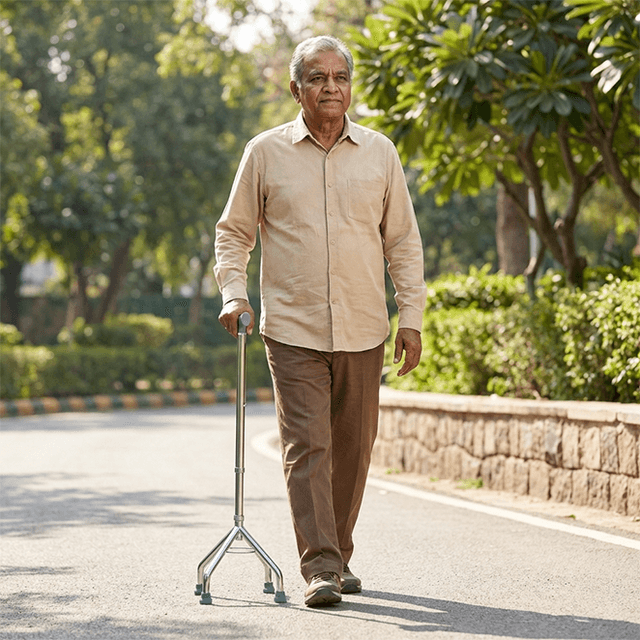
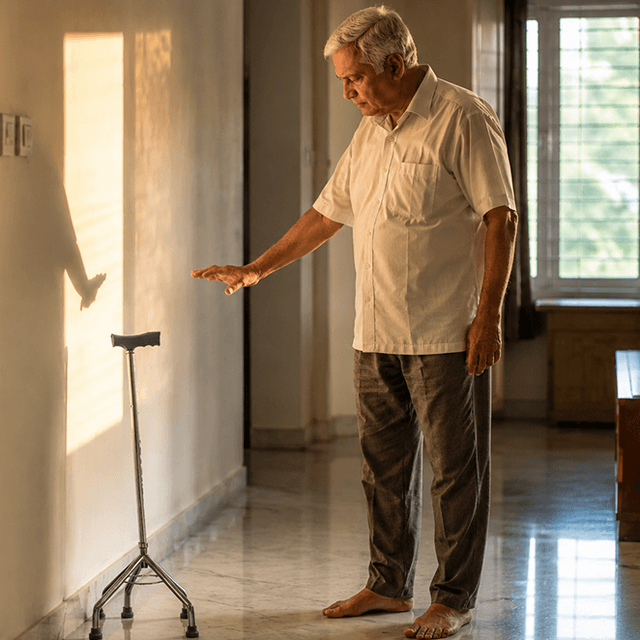
A quad cane is a walking stick with four tiny legs at its bottom rather than the single rubber tip that is used in most other canes. Those four contact points give it a wider stance, allowing the cane to stand upright on its own without any support.
When it comes to recommending quad canes, physicians typically consider patients in need of additional lateral support that a single-tip cane cannot provide, but who have not yet reached the level of needing full upper-body support via crutches. These canes are often prescribed post-stroke, for patients with considerable unilaterally (one-sided) balance instability, or mid-recovery phases after hip or knee surgical procedures, when patients feel unstable while standing from a chair or moving in a compromised environment.
The four-point base does its job best on flat surfaces. On stairs or very uneven ground, the quad base can become awkward because not all four feet make contact at the same time.
If your physiotherapist has given you the green light to start putting some weight on your leg and you're feeling a bit unsteady using a standard walking stick, a quad cane is typically the next option prior to moving to crutches.
The AGEasy Four Leg Walking Stick is designed specifically for these kinds of scenarios. It's made from lightweight aluminium to keep the weight as low as possible, and its four-point base is designed to support users up to 100 kg.
The Quadbase Elite Walking Stick goes one step further and offers a more ergonomic handle, and a flex base that adapts to the angle of the ground which is beneficial for outdoor terrain.
Forearm Crutches
Forearm crutches, sometimes referred to as elbow crutches or Lofstrand crutches, are the most commonly used type of crutches across Europe and are becoming increasingly popular in India as a recovery solution in both short- and long-term use.
The design includes a single upright with a forearm cuff that wraps around your arm below the elbow joint, as well as a handgrip located below it. You will wear the cuff while holding onto the grip, which means that not only your hands and wrists but your forearms will take up the load created when you place your weight on the crutch.
Why Your Doctor May Prescribe Them
Unlike walking sticks, forearm crutches offer much more support. They are generally prescribed by doctors when you need to stay in a partial weight-bearing phase, meaning that your doctor tells you to put some, but not the whole of your weight on your leg. Following a lower limb fracture, foot or ankle surgery, your physician or physiotherapist will typically specify how much weight you're allowed to bear. Forearm crutches ensure that you can follow those instructions precisely.
Research on Forearm vs. Axillary Crutches
Forearm (elbow) crutches are preferred by some users because they allow for better movement and do not cause discomfort and pressure in the armpits. However, they do require a good amount of upper body strength as well as good balance and coordination. Due to the limited amount of time it takes to learn to use axillary (underarm) crutches, a lot of hospitals continue to issue them as a part of post-operative or post-fracture recovery for a short period of time. Ultimately, the best option is going to be dependent on your specific medical situation and should be discussed with your orthopaedic surgeon or physiotherapist.
How to Adjust Them Properly
Properly adjusting forearm crutches means that your hand grip should be on the level of your hip when you stand straight, and the cuff should rest 2 to 3 cm below the tip of your elbow. In correct posture, your elbow would be slightly bent at around 15 degrees with your arm at rest on the crutch.
AGEasy currently doesn't list any standalone forearm crutches. Your physiotherapist or orthopaedic clinic would be your best option in acquiring a medically appropriate pair.
Axillary Crutches
Axillary crutches are the classic underarm crutches most people picture when they hear the word "crutch." They have a padded bar that sits under the armpit, with a handgrip in the middle on the vertical length on the shaft.
They are used when you require maximum support, especially when you cannot put any weight on the affected leg. After a major fracture, certain surgeries of the foot or ankle, or when one leg is in a non-weight-bearing state, for the most part, axillary crutches are the most secure multiple-crutch alternative because there is additional contact support from the bar.
The Most Common Mistake with Axillary Crutches
People are often misinformed that underarm pads are meant to take in body weight. The pads are meant to be positioned 2 to 3 fingers width below the armpits. All the weight is borne through the hands at the handgrip. Body weight on the underarm pads presses down on blood vessels and nerves in the armpit that could lead to an issue known as crutch palsy, a condition characterized by a loss of sensation or motor control of that arm.
When to Transition Away
Using axillary crutches requires more energy than that needed to use forearm crutches. There is a higher increase in heart rate, along with a more significant effort from the shoulders and upper back. Therefore, therapists are more inclined to switch patients to forearm crutches as soon as their clinical condition permits them to start weight bearing.
If you are in the early post-operative or acute injury phase and your surgeon has indicated a non-weight-bearing status, axillary crutches are a suitable option for this period. They can be easily obtained at pharmacies and medical supply shops across India.
How to Know Which Aid Is Right for You
The answer almost always depends on what your doctor or physiotherapist has told you about weight bearing. Here is a simple framework.
- Non-weight-bearing: You have been instructed to keep the foot entirely off the ground. This means using axillary crutches.
- Partial weight-bearing: You are allowed to touch the foot down but are not to take the full load. This means using forearm crutches.
- Weight-bearing as tolerated: You may put weight through the leg depending on comfort, but are still supported. This means a quad cane or a single-tip walking stick, depending on stability.
- Full weight-bearing with balance support: You can do full weight walking but need support. Generally, a single leg walking stick is enough.
These categories are not permanent. Most recoveries progress through them in order and the assistance suitable for you in week 1 after surgery is not the same as the assistance you need in week 6. Physiotherapists address this at every appointment. Do not change aids without guidance.
What to Look for When Buying
Height Adjustment
Height adjustment is one of the most crucial features, as having a mobility aid that is the wrong height for your body can lead to poor posture and stress on the body in places that should not go to. Look for height adjustability features that have push buttons or pin holes, as these tend to lock in place securely.
Anti-Slip Tips
Most buyers overlook the importance of anti-slip tips. Indian homes classically have marble and tiled indoor surfaces. These surfaces are especially unforgiving in the event that they get wet. A worn rubber tip on a walking stick is one of the most frequent causes of falls during recovery.
Weight of Aid
The weight of the aid will also greatly contribute to the overall fatigue of the user. If you are recovering from surgery and have little to no upper body strength, then a stick or crutch that is made of a heavier material will wear you out quicker. This is why aluminium models are the standard.
Grip Comfort
Grip comfort is a huge factor in how far you can walk before experiencing pain. If you have arthritis, or if you have very little grip strength, be on the lookout for walking aids that have handles that are designed to accommodate the natural hand position.
The AGEasy Walking Stick Range covers the most important bases.
- The standard Single Leg Walking Stick is appropriate for use in the home on a daily basis.
- The Four Leg and Quadbase variants are for those who require increased ground support.
- The Foldable Walking Stick (in black or copper) is for users who need a stick that is packable for travel/outings.
- If you have low stamina and need the option to sit without finding a chair, the Walk and Rest stick is a good option.
A Word on Safety at Home
Safe walking aids are just one part of the recovery process. Equally important is the recovery environment.
During recovery post surgery, slips and falls most often occur in home environments than outside. Bathroom floors can be slippery, excessive room thresholds and dim lighting at home during nighttime can create risks that supportive walking aids simply cannot mitigate.
Walking aids can be combined with grab bars in bathrooms, walking aids should be used in combination with shower and toilet anti-slip mats, and keep main walkways in the home clear during use to make a significant difference.
AGEasy's fall prevention range at ageasy.co.in covers grab bars, bed rails, and toilet anti-slip mats to help recover from home.
Progressive independence and self-sufficiency are the primary goals of recovery. In this journey, the appropriate walking aid is used, modified, or replaced as your condition evolves, and this slow conditioning is what helps you recover safely.