

Single-Point vs Tripod vs Quadpod Walking Stick: Which One Your Parent Actually Needs
Article by: Jai
Article Category: Walking Sticks
Jul 31, 2026
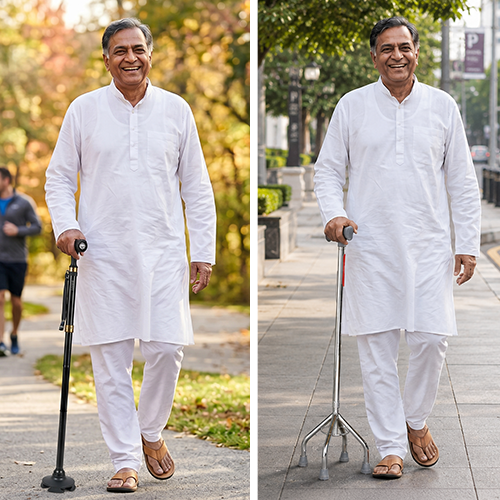
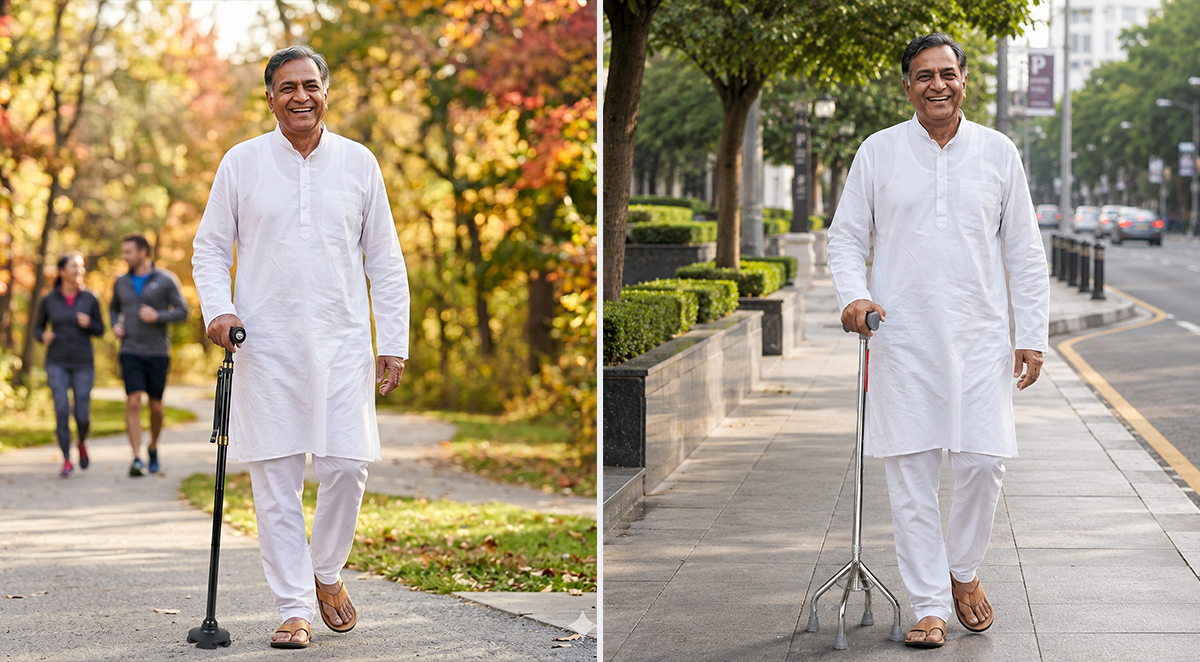
A walking stick should imbue confidence in your parent's mobility, not uncertainty with each step. A more visually supportive walking stick may lead family members to incorrectly assume enhanced mobility support. This phenomena yields more support than is needed or insufficient support altogether.
Perhaps the most common misunderstanding is assuming a quadpod walking stick is always safer than a single-point walking stick. This is false.
Avoid walking sticks solely for the perceived support given the quad, or due to stigmas surrounding single-point sticks. Instead, ask how much support your parent needs for safe walking. Do they need some assistance with balance, are they recovering from a surgery or stroke, or do they have difficulty bearing weight on one leg? Do they require greater stability when standing still, turning, or while walking outdoors?
The ideal walking stick for your parent is one that fits their mobility and not one that simply reflects their age.
Choosing too little benefit may cause your parent to feel unsteady with each step. This can make them lose confidence in their ability to walk, and face a higher risk of stumbling or falling and lead them to avoid walking altogether.
Choosing more support than they need may result in them walking far more slowly than necessary, find the stick awkward to use, lose their natural walking rhythm, and grow frustrated with a mobility aid that doesn't fit their abilities.
With the correct walking stick, your parent can walk with more confidence, stay active without hurting their independence, and reduce the chances of falling.
This guide looks at the differences between single-point walking sticks, tripod walking sticks, and quadpod walking sticks, who each type is best for, and how to find the best match for your parent's balance, strength, and mobility.
What Single-Point Walking Stick Is Good For
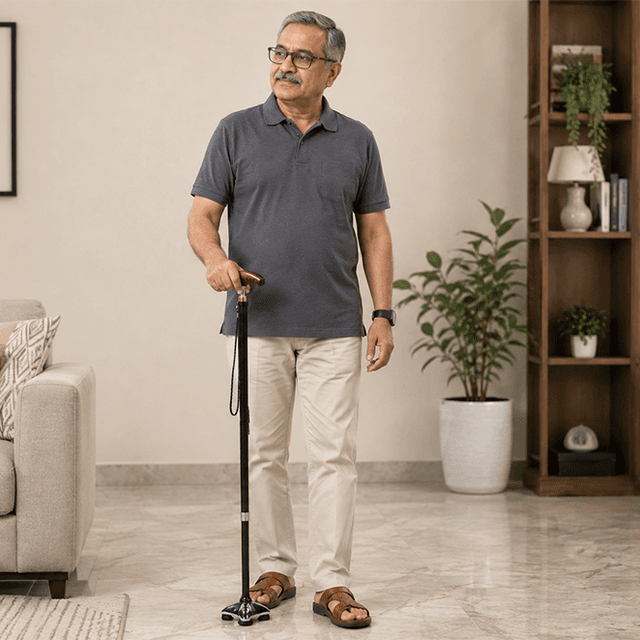
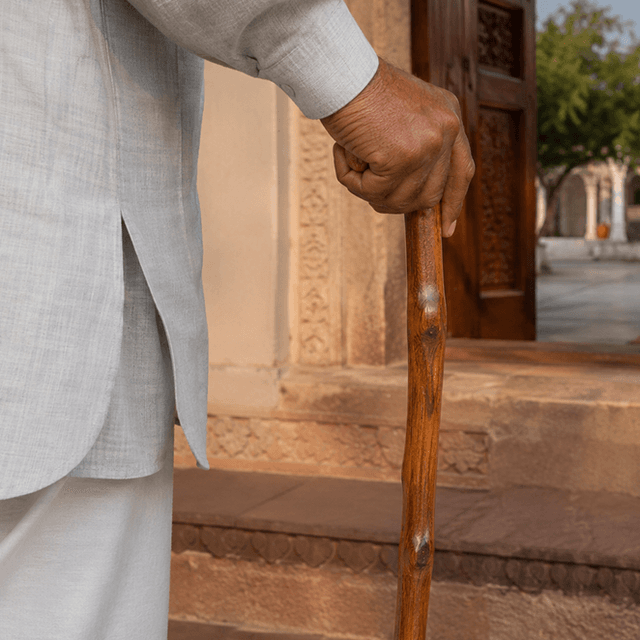
A single point walking stick is designed for patrons needing a little more confidence. A single-point stick is adequate for a parent walks independently, but would like to hold something for a little more confidence.
This type is best for people who:
- Walk unassisted but want a little confidence boost
- Have a slight balance issue but are not significantly weak
- Need a lightweight option
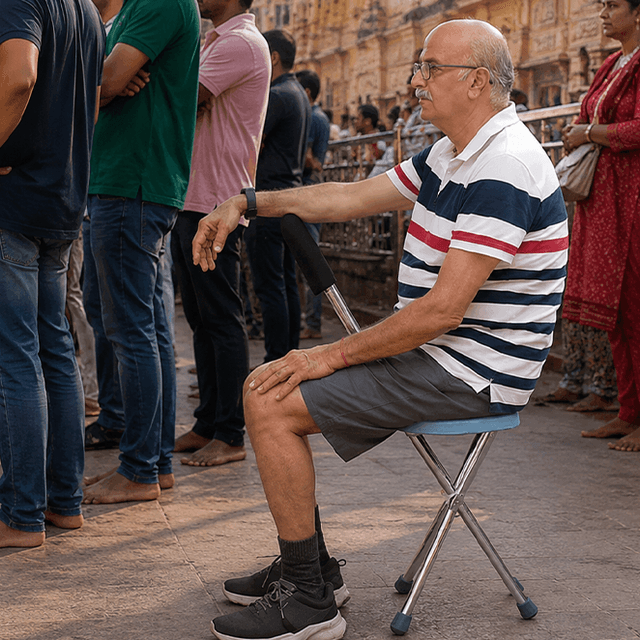
- Want a stick that folds easily for travel
For these reasons, the AGEasy folding walking stick is good for your parent. It is lightweight, height adjustable, and folds small enough to fit in a bag or car seat pocket so your parent can use it on errands, walks in the park with family, or any other family activities without feeling like he is using a piece of medical equipment.
Since single-point sticks have a narrower base, they are less stable than a tripod or quadpod. If your parent has a history of falls or struggles with weight bearing on one of the legs, a single-point stick is likely not the best choice.
Benefits of using a tripod walking stick
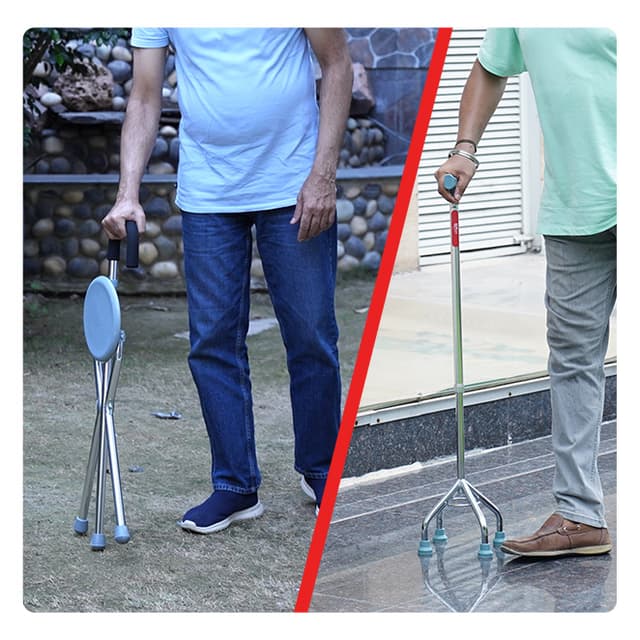
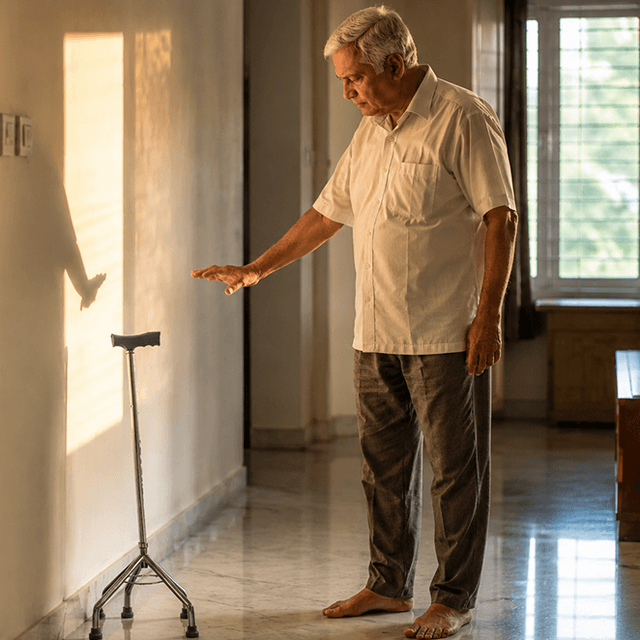
Tripod walking sticks are a middle ground option between a single-point stick and a four-legged base stick. It has three legs, which is a bit more compact and lightweight than a quadpod, while also providing more stability than a single-point stick.
This type of stick is good for parents who:
- Need support with balance or weight bearing
- Are recovering from a joint replacement or minor stroke.
- Are recovering from extended bed rest
- Walks indoors on uneven and flat surfaces
- Wants a stick that can stand on its own
When tripod sticks are used outdoors, the ground needs to be flat. Stairs and uneven ground can cause the legs to catch, so tripod sticks are best for parents who primarily walk inside on even surfaces.
What a Quadpod Walking Stick Is Best For
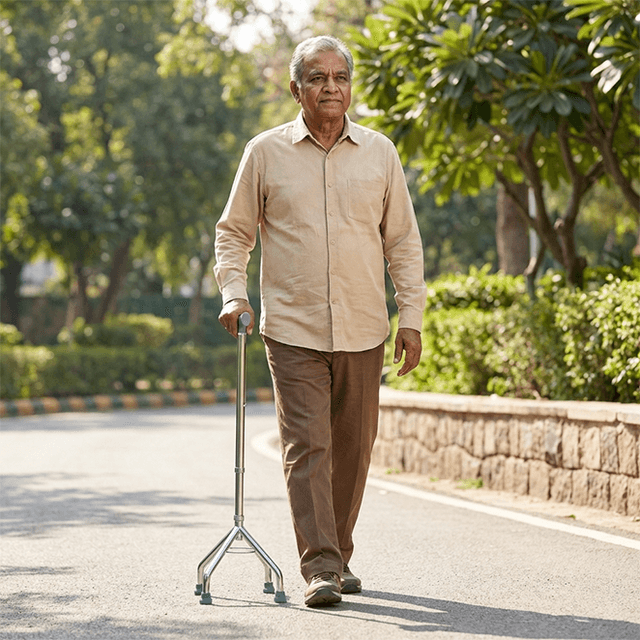
Quadpod, four-legged, walking sticks distribute weight across four points, meaning they are the most supportive and stable option available. This is the best choice for parents who need to lean on the stick for actual support.
This type of stick is good for parents who:
- Have trouble bearing weight on one leg
- Are recovering from serious falls, strokes, or surgeries
- Need to be able to stand still at any point, like when cooking, brushing their teeth, or waiting in line.
- Have poor balance or coordination.
The AGEasy four-leg walking stick has adjustable height settings and also features an anti-slip handle. This will provide your parent with a steady grip and the stick will also stay upright, even when it is set down on its own. This is important for parents who need to take a break and rest their hands (while they may be opening a door or picking up something) because they do not have to worry about the walking stick tipping over.
The wide base of a quadpod offers great stability, but it also presents some drawbacks. They are heavier, more difficult to maneuver around furniture, and they can feel bulky on stairs as well as in tight spaces like bathrooms. If your parent needs strong support while also being able to navigate through a cluttered home, check out the AGEasy Quadbase Flex walking stick. This will provide the stability of four legs while allowing for better adaptability to uneven surfaces.
Matching the Stick to Your Parent, Not the Situation
Choosing the correct stick requires an up-to-date analysis of how your parent walks. A physiotherapist or doctor will look at factors such as gait, how much weight your parent can bear, and the risk of falling. This assessment is more valuable than any online guide, including this one.
Look for these signs to help your parent at home:
If your parent grabs furniture or the walls when moving around, it means they need more support than a single-point stick can offer. If a parent stands unassisted, but needs a little extra support on the stairs or outside, a single-point or tripod stick should be enough. If a parent has recently fallen, undergone surgery, or has a diagnosis resulting in a loss of balance, a quadpod stick might be necessary, or talking to their doctor about getting a walker might be a safer option.
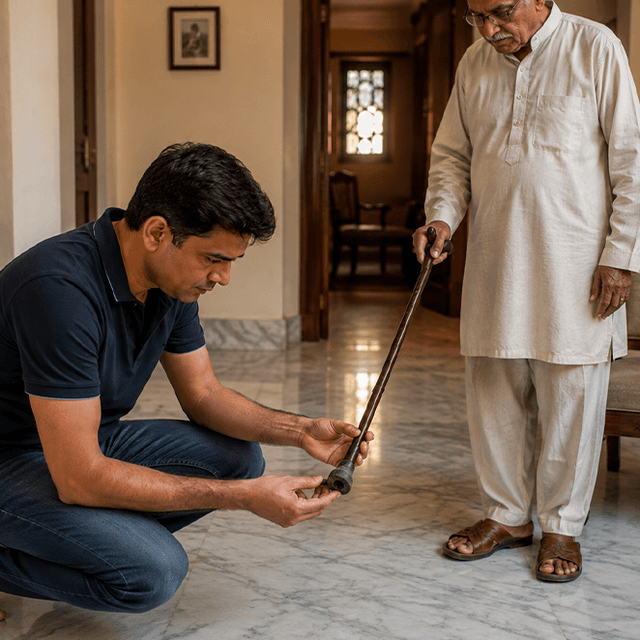
Height is as important as the base when selecting a walking stick. A stick that is too tall or too short will reduce your parent's posture and increase strain on the wrist, shoulder, and back. Most adjustable sticks, like those from AGEasy, let you set the height so your parent's elbow is at a 90-degree angle when the stick is at their side. This minor adjustment will improve comfort throughout the day.
Aside from the walking stick, there are several things to consider for your parent's safety at home. Health and safety risks such as falls and balance issues often accompany other medical conditions that should be monitored, like blood pressure. Checking their blood pressure at home without rolling up their sleeve might be difficult, especially if they have joint pain or a weak grip, but the AGEasy wrist BP monitor makes it simple.
Combining blood pressure monitoring with mobility aids creates a more complete picture of your parent's daily safety, rather than considering falls and health monitoring as separate issues.
Getting It Right
When deciding between a single-point, tripod, or quadpod walking stick, it depends on how much walking support your parent requires, and how much support the parent requires at that moment in time. You should observe your parent's movements at home, consult their doctor or physiotherapist for a full assessment, and then choose a stick that is appropriate for their current level of mobility - not for their age or based on how the stick looks in the store.
Choosing the right walking stick will allow your parent to walk confidently, remain active, and maintain their freedom longer. Choosing the right stick will save your parent from having to adjust to the wrong walking aid for weeks.